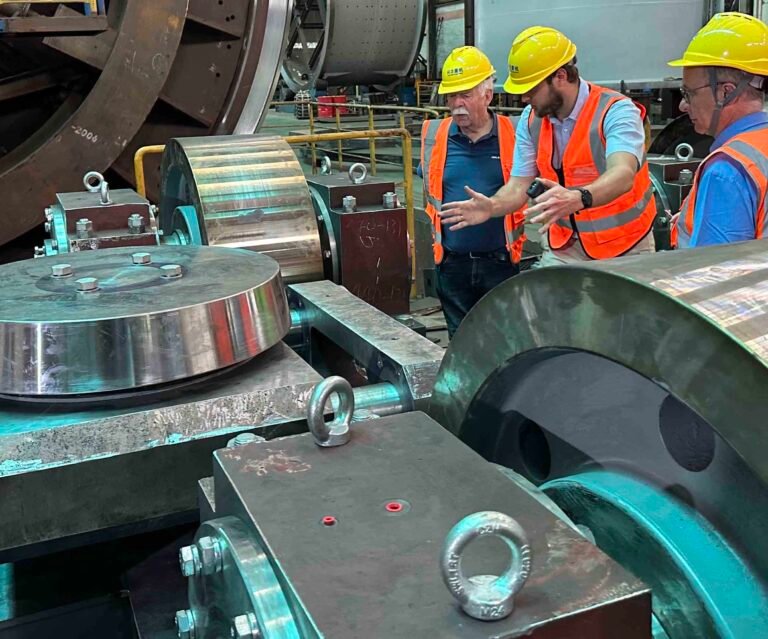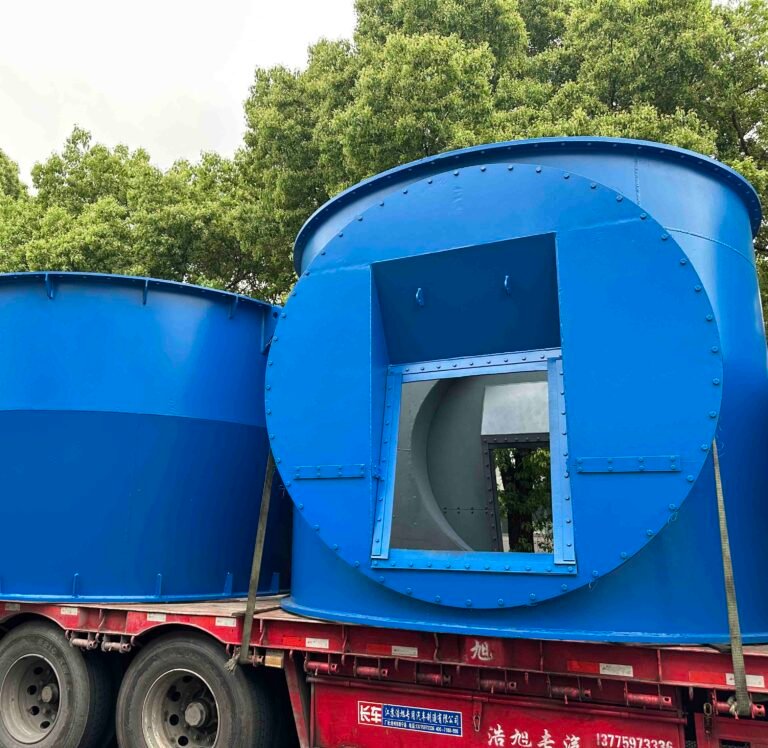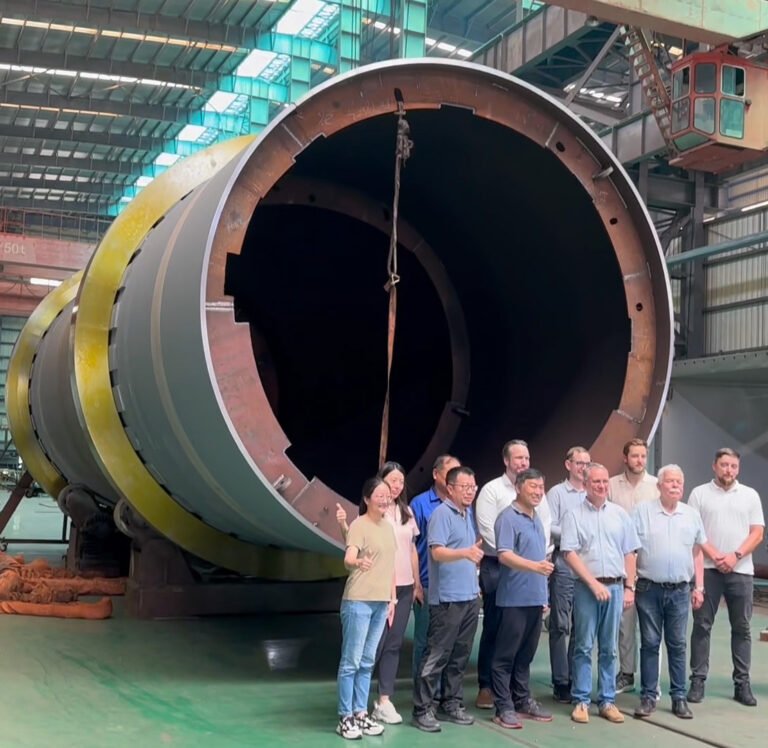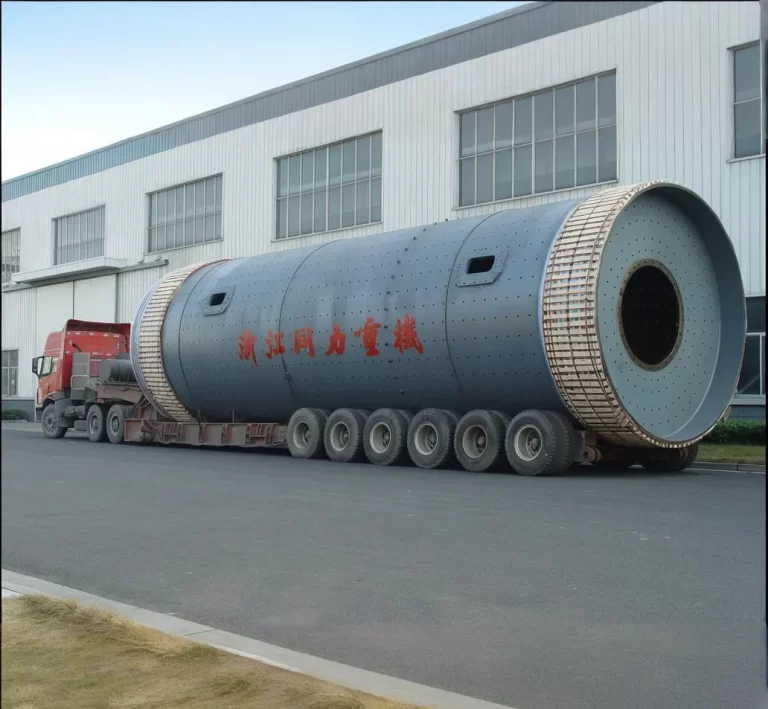




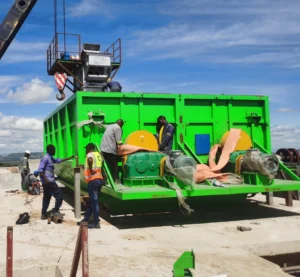


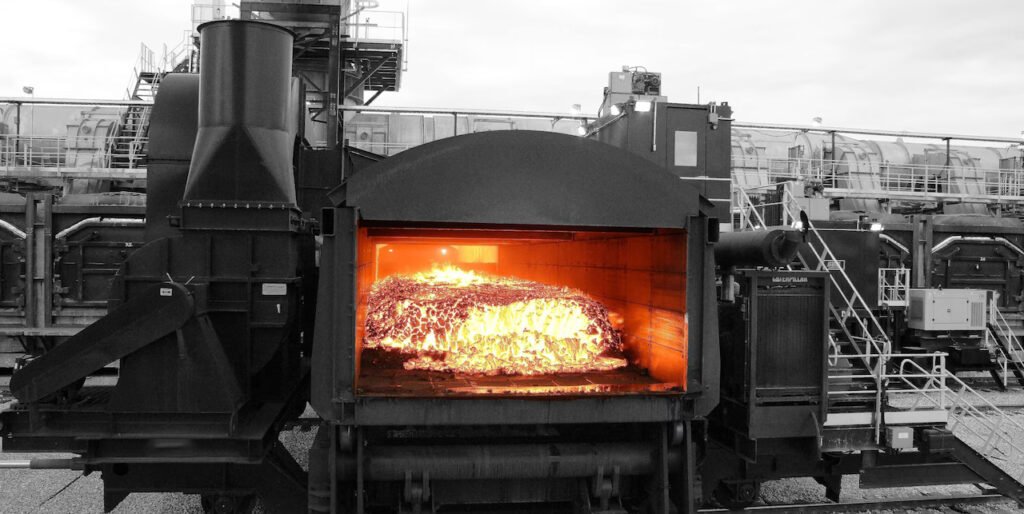
Coke, as an indispensable raw material and energy source for modern blast furnace ironmaking, directly determines the blast furnace's operating efficiency, energy consumption level, and pig iron quality through its physicochemical properties. Coking plants are the core facilities for producing high-quality metallurgical coke. Coke production begins at the coking plant, a complex industrial system integrating coal conversion, chemical product recovery, and energy recycling. Traditional wet quenching processes result in high moisture content in the coke, negatively impacting subsequent smelting processes. Coke rotary dryers are crucial equipment in the later stages of coke production, ensuring stable moisture content and improving smelting efficiency. In the blast furnace ironmaking system, which emphasizes both chemical and physical processes, metallurgical coke plays a vital role. As a heat source, its combustion provides all the heat for the reduction, melting, and heating of iron ore and the furnace charge. As a reducing agent, its fixed carbon and the CO gas produced during combustion gradually reduce iron oxides to metallic iron. As the backbone of the blast furnace charge, only coke remains solid in the high-temperature softening zone, maintaining the permeability and liquid permeability of the lower charge column, ensuring smooth blast furnace operation. Therefore, the quality of coke, especially its cold/hot strength, reactivity, and compositional stability, directly determines the technical and economic indicators of the blast furnace. Coking plants are the birthplace of high-quality coke, and coke drying technology is the final crucial step in ensuring its quality before it enters the furnace. This article aims to systematically and deeply analyze the complete process flow of a modern coking plant, focusing on the core technical principles, key equipment configurations, and comprehensive benefits of rotary dryers as an efficient and reliable solution for deep coke dehydration, improving overall energy efficiency, and promoting cleaner steel production.
Coking plant production process
A modern coking plant is a complex industrial system that integrates chemical processes, thermal energy engineering, mechanical manufacturing, and automated control.
Raw material preparation: Science and technology of coal blending
The key to coke quality lies in coal blending. Coal blending is not a simple physical mixing, but a scientific formula based on coal petrology, coke formation theory, and a large amount of experimental data.
- Coal blending theory: Different coal types exhibit varying degrees of caking, coking properties, and fluidity during coking. Coal blending aims to utilize the complementarity between coal types; for example, blending highly caking coal (which may cause excessive expansion pressure) with weakly caking coal (which provides a framework) to produce high-quality coke with high strength, moderate reactivity, and low impurities, while keeping costs under control.
- Refined coal preparation process:
- 1.Coal Receiving and Storage: Different types of raw coal are transported to the coal yard by rail or belt conveyor and stacked according to type, typically in open-air storage or large silos.
- 2.Pre-crushing: Coal types with higher hardness or larger particle size undergo preliminary crushing to create conditions for subsequent uniform blending.
- 3.Blending Baskets and Feeders: Different types of coal enter their respective blending baskets, which are equipped with automatic feeding equipment (such as disc feeders or vibrating feeders). Electronic belt scales enable precise control and real-time adjustment of the flow rate for each coal type.
- 4.Crushing and Mixing: The blended coals are fed into a crusher (such as a hammer mill or impact crusher) and pulverized to a specified fineness (typically requiring approximately 80% of the particles to be <3mm). The crushed coal is then uniformly mixed via belt conveyor and multi-point unloading devices. The entire process is monitored by a distributed control system (DCS) to ensure accurate and stable blending.
Coke oven structure and coking chemistry

The coke oven is the core reactor of a coking plant, and its design life can reach more than 30 years.
Detailed Structural Explanation
- Carbonization Chamber and Combustion Chamber: Alternating between the two chambers, separated by a wall. The carbonization chamber is a sealed space for the dry distillation of coal into coke, typically 450-500mm wide, 6-8 meters high, and 15-18 meters long. The combustion chamber uses dozens of vertical flues to provide heat to the carbonization chamber from the burning coal gas. The partition wall is constructed of high-quality silica bricks, capable of withstanding long-term high temperatures and temperature fluctuations.
- Furnace Top and Auxiliary Equipment: The furnace top is equipped with a coal charging hole and an ascent pipe (for discharging raw coal gas). The ascent pipe usually contains an ammonia spraying device, which rapidly cools the raw coal gas at approximately 800°C through ammonia evaporation, causing the tar and other heavy components to condense.
- Furnace Bottom and Foundation: The entire furnace body rests on a solid concrete foundation, with exhaust gas vents and a basement below for distributing air and coal gas.
Coking Process
After being loaded into the furnace, the coal begins to be heated from both sides of the furnace walls, and the carbonization process progresses from the sides towards the center. The coal sequentially undergoes four stages: drying and preheating (<350°C), formation of colloids (350-480°C), semi-coke shrinkage (480-650°C), and coke formation and maturation (650-1100°C). During this process, the organic matter in the coal undergoes a series of complex chemical reactions such as cracking and condensation, ultimately forming porous coke that is predominantly carbon and has a silvery-gray metallic luster.
Development of Coke Quenching Technology
Coke quenching is the process of terminating the coke reaction and cooling it to a processable temperature.
- Wet quenching: A traditional method that uses a large amount of water (approximately 0.5 cubic meters per ton of coke) to spray onto the red-hot coke. Its advantages are simple equipment, low investment, and high speed. However, its fatal drawback is:
- Large amounts of water vapor carrying dust and harmful substances (such as phenols and cyanides) are directly released into the atmosphere, causing severe pollution.
- The coke absorbs a large amount of moisture into its pores, leading to increased energy consumption during subsequent use.
- Water reacts violently with red-hot coke at approximately 1000°C, generating thermal stress that causes microcracks in the coke, reducing its mechanical strength.
- Dry quenching: An advanced energy-saving and environmentally friendly technology. It utilizes an inert gas (usually nitrogen) circulating in a closed system to cool the red-hot coke. The heated inert gas is then used to generate steam via a waste heat boiler for power generation; the gas is then cooled and recirculated. CDQ can recover approximately 80% of the sensible heat of the red-hot coke, increasing coke strength and achieving zero water pollution. However, its investment and operating costs are high. Wet quenching followed by a rotary dryer provides a cost-effective solution between traditional wet quenching and fully dry quenching.
Coke Oven Gas Purification and Chemical Product Refining
The raw coke gas extracted from the carbonization chamber has a complex composition and is a valuable source of chemical raw materials. Its purification process is rigorous and meticulous:
- Primary Cooling and Tar Separation: The raw coal gas is first cooled from 80°C to 20-25°C in a primary cooler, where most of the tar and ammonia water are condensed and separated. Tar is an important chemical raw material, used in the production of asphalt, carbon black, etc.
- Ammonia Removal: The coal gas enters a saturator, where it reacts with sulfuric acid to form ammonium sulfate crystals. After centrifugation and drying, fertilizer products are obtained.
- Benzene Removal: The coal gas enters a benzene washing tower, where wash oil absorbs the crude benzene (mainly containing benzene, toluene, and xylene). The rich oil is desorbed in a benzene removal tower to obtain crude benzene products.
- Desulfurization and Cyanide Removal: Finally, the coal gas enters a desulfurization section (such as the vacuum carbonate method or AS method) to remove hydrogen sulfide and hydrogen cyanide, producing byproducts such as sulfur or sulfuric acid. The purified coal gas has a high calorific value of 17-18 MJ/Nm³, becoming a high-quality fuel.
The Necessity of Deep Coke Drying
Why Coke Drying is Important
Various impurities in coke affect its quality, and consequently its performance in the blast furnace. These impurities include moisture, volatile matter, ash, sulfur, phosphorus, and alkali content. Among other characteristics, low moisture content plays a crucial role in coke quality, thus affecting its performance in the blast furnace and the quality of the final molten iron. A moisture content of 2.5% (by weight) is considered an acceptable average. Coke absorbs moisture during quenching, which refers to the cooling process after coke processing. Although blast furnaces can remove moisture from coke, this was not their original design purpose, resulting in very low efficiency. Furthermore, coke with high moisture content has reduced strength, thus affecting its quality as blast furnace coke. Drying has become an indispensable step in producing high-quality coke, and therefore many companies equip their plants with dedicated drying equipment.
Following wet quenching, fluctuations in coke moisture content (Wc) have a systemic negative impact on steel production, the effects of which can be quantified.
| Impact Aspect | Mechanism of Action | Quantitative Impact Estimate |
| Energy Consumption | Water evaporation (100°C → 500°C superheated steam) consumes valuable high-temperature heat from the lower part of the blast furnace. | For every 1% increase in coke moisture, the blast furnace coke ratio (fuel ratio) increases by approximately 1.0 - 1.5%. For a blast furnace producing 5 million tons of hot metal annually, this means tens of thousands of tons of additional coke consumption per year. |
| Blast Furnace Productivity | To evaporate moisture, blast temperature must be reduced or coke increased, limiting intensified smelting. Moisture vaporization generates powder, worsening column permeability. | When coke moisture is stabilized at <1%, compared to 4% moisture, the blast furnace utilization coefficient (productivity) can increase by 2 - 4%. |
| Hot Metal Quality and Cost | Furnace condition fluctuations cause variations in hot metal temperature and composition (e.g., Si, S), increasing downstream processing costs. Increased powder leads to higher dust blow-out and reduced metal yield. | Can reduce pig iron cost by approximately 1 - 2% and improve product quality stability. |
| Transportation and Storage | Invalid transportation of moisture; freezing in winter blocks silos and vehicles. | (No quantitative estimate provided) |
Therefore, maintaining the moisture content of coke at an extremely low level of 0.5% - 1.0% is an engineering measure that directly improves the efficiency of ironmaking.
Coke Rotary Drying System
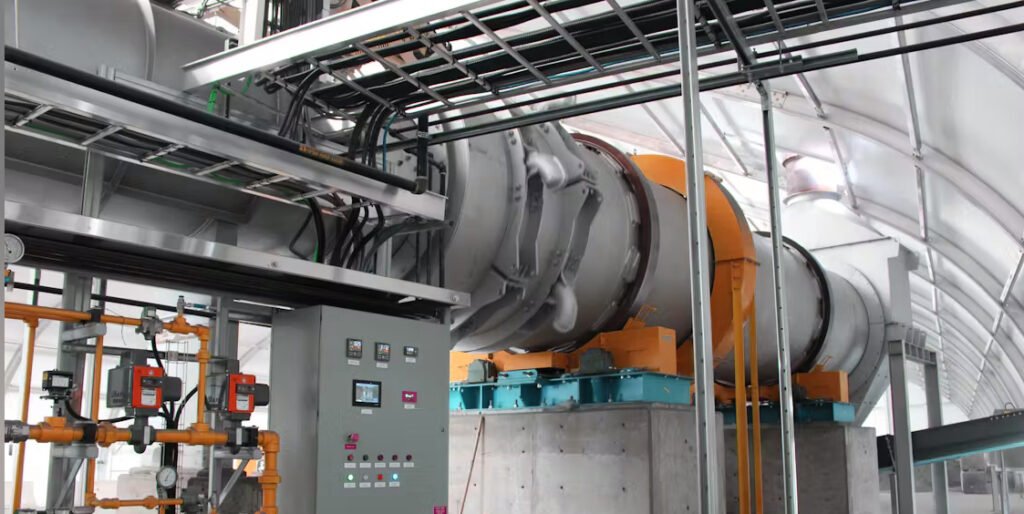
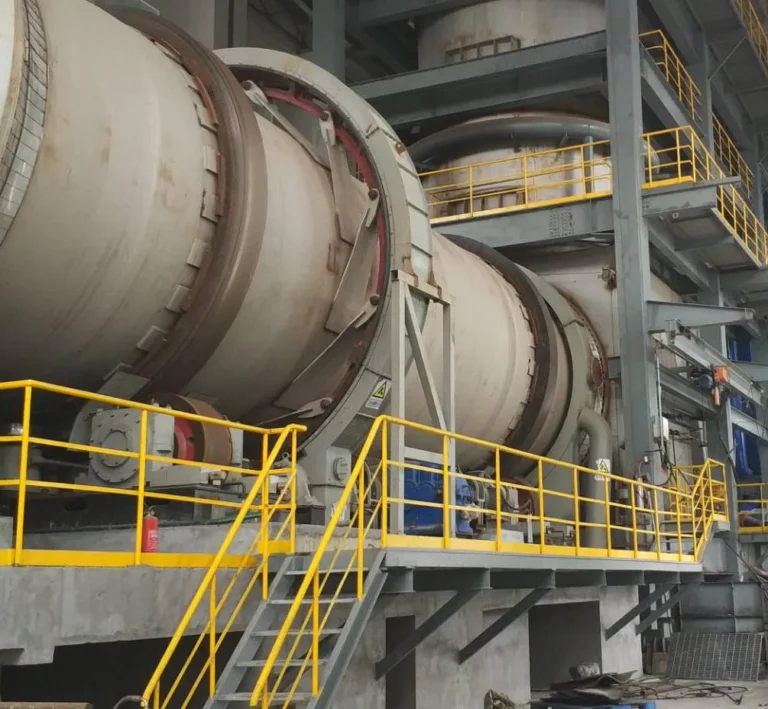
A rotary dryer is a classic continuous contact drying device. Its application in coke drying requires specific design and optimization.
System overall structure and functions
A complete system includes:
- Feeding and Loading System: Wet coke bin (with bin wall vibrator for anti-clogging), bar valve or rotary valve (for airlock function), quantitative feeder (such as belt scale). The core is to ensure continuous, stable, and accurate feeding.
- Rotary Dryer Main Unit:
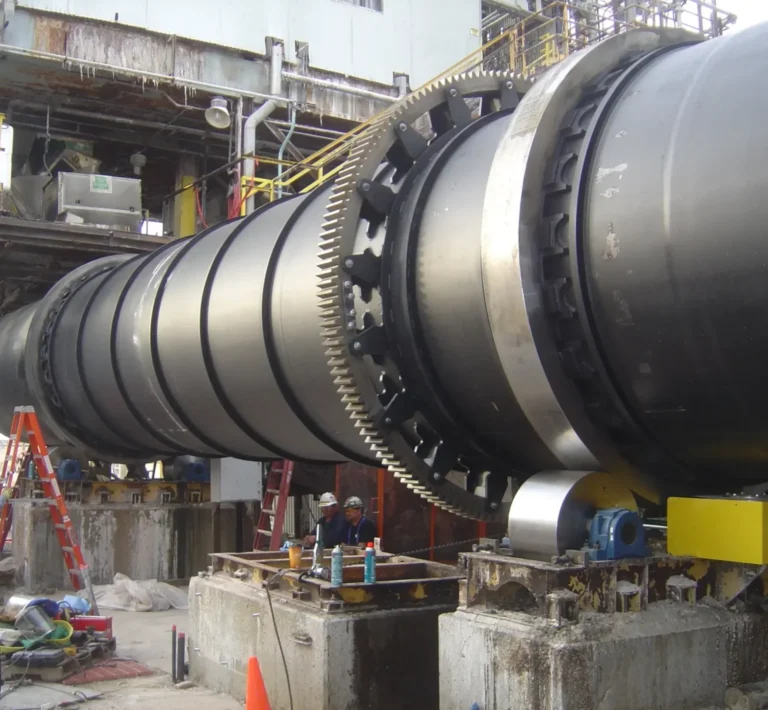
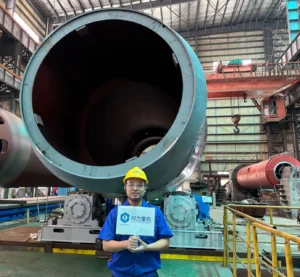
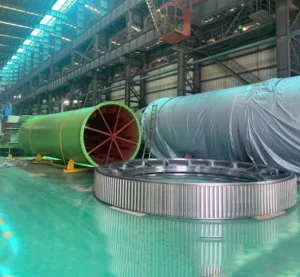
- Cylinder: Rolled and welded from Q345B or higher strength steel plate, with an inclination angle typically between 3° and 5°. The length-to-diameter ratio (L/D) is generally between 8 and 12. Rolling rings, thrust rollers, and a large drive gear ring are installed on the outer wall of the cylinder.
- Internal Lifting Device: This is the "heart" of the dryer. For fragile coke requiring uniform drying, a combined lifting plate design is typically used. Spiral lifting plates are used at the feed end (preheating zone) to promote material forward movement and initial dispersion; uniformly distributed lifting plates are used in the middle section (high-efficiency drying zone) to form a dense and uniform material curtain; honeycomb lifting plates can be used at the discharge end (cooling zone) to increase the heat exchange area and reduce dust. The material of the lifting plate must be wear-resistant (such as NM360 or higher grade wear-resistant steel).
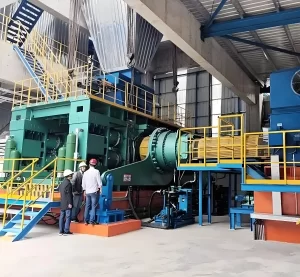
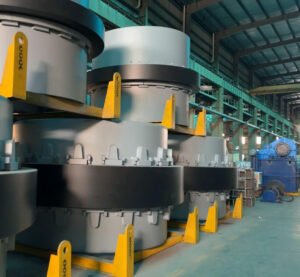
- Drive system: Typically, a "main drive + auxiliary drive" configuration is used. The main drive consists of a three-phase asynchronous motor + hardened gear reducer + open gear. The auxiliary drive (slow drive) is driven by a small motor and used for slow rotation during maintenance and furnace drying.
- Hot air system: Includes gas burners (suitable for coke oven gas/natural gas), combustion fans, high-temperature fans, hot air ducts, and compensators. Burners typically use proportional control to precisely regulate the hot air temperature.
- Dust removal and exhaust gas treatment system: This is crucial for environmental protection. The process is as follows: dryer → cyclone dust collector (collects coarse particles) → induced draft fan → pulse jet bag filter (filters fine particles). The bag material must be heat-resistant (e.g., P84, coated fiberglass). After treatment, the dust concentration in the exhaust gas can be below 20 mg/Nm³.
- Discharge and finished product processing system: The dried coke temperature is still relatively high (approximately 80-100°C), requiring further cooling via an annular cooler or a cooling section on a conveyor. It is then graded by a vibrating screen and finally transported to the blast furnace silo by belt conveyor.
Rotary dryers need to take into account the characteristics of coke.
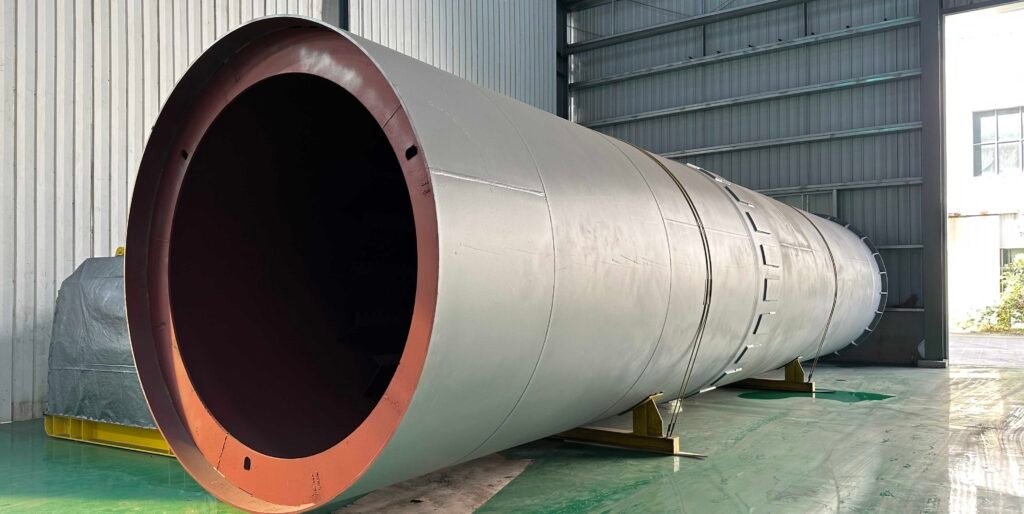
- Abrasiveness: Coke is an abrasive material, requiring special structural materials to enhance its wear resistance. This may include wear-resistant linings for the feed trough and the inner walls of the drum. In many cases, internal lifting blades are made of wear-resistant steel and bolted in place for easy replacement when worn. As with most abrasive drying applications, most wear occurs in the first quarter of the drum's length.
- Volatility: Coke is slightly volatile, and its combustion must be prevented. In addition to selecting appropriate temperatures and residence times, coke rotary dryers employ a co-flow airflow design, meaning that the material and process gas flow in the same direction. Co-flow airflow brings the wettest material into contact with the hottest gas, minimizing the possibility of combustion. If the dryer uses a counter-flow configuration, the hottest gas will come into contact with the driest material, increasing the likelihood of combustion.
Thermodynamic and mass transfer analysis of the drying process
Inside the rotary dryer, heat and mass transfer between hot air and coke occurs simultaneously.
- Constant-rate drying stage: This stage mainly occurs when free water exists on the coke surface. The drying rate is determined by the heat transfer rate from the hot air to the coke surface. During this stage, the moisture evaporation rate is fast and stable, and the coke surface temperature is approximately equal to the wet-bulb temperature of the hot air.
- Decreasing-rate drying stage: Once the surface free water has evaporated, moisture needs to diffuse from the internal pores of the coke to the surface before evaporating again. During this stage, the drying rate is controlled by internal diffusion, gradually decreasing, and the coke temperature begins to rise, approaching the hot air temperature.
For coke drying, the goal is to remove most of the free water and some of the attached water. Therefore, the system design needs to consider both constant-rate and decreasing-rate stages to ensure deep drying within the limited cylinder length and residence time. Counter-current arrangement is more advantageous in this case because the driest coke at the outlet comes into contact with the hottest and driest air at the inlet, resulting in a large mass transfer driving force. This effectively overcomes the bottleneck of decreasing-rate drying and achieves lower final moisture content.
Key design parameters and operational control logic
The stable and efficient operation of the system depends on a series of interrelated parameters.
| Category | Parameter Item | Design Considerations & Typical Values | Control Strategy |
| Structural Parameters | Cylinder size (diameter × length) | Determined by throughput, initial/final moisture, and hot air temperature. Example: Φ3.2 m × 24 m. | Fixed parameter, determined during design phase. |
| Cylinder rotation speed (n) | Together with inclination angle, determines axial material flow velocity and residence time (t). t ∝ L/(nD tanα). Typically 3–6 RPM. | Variable frequency drive (VFD) speed control, used as an auxiliary means to adjust residence time. | |
| Lifter form and distribution | Determines material throwing trajectory and curtain uniformity, directly affecting volumetric heat transfer coefficient. | Fixed parameter, must be optimized based on material characteristics. | |
| Thermal Parameters | Inlet hot air temperature (T₁) | Coke ignition point ~400°C; safe upper limit typically 220–250°C. Higher temperature increases drying driving force, but requires safety margin. | Core control loop. PID regulates burner fuel gas and combustion air flow to stabilize T₁. |
| Outlet exhaust gas temperature (T₂) | Reflects heat utilization efficiency. Too low risks acid dew-point corrosion; too high causes excessive heat loss. Typically 100–120°C. | Monitoring indicator. Abnormal T₂ rise may indicate feed interruption or hot air short-circuit. | |
| System operating pressure | Dryer feed end under slight negative pressure (-100 ~ -300 Pa) to prevent dust escape. | Adjusted via induced draft fan inlet damper to maintain set negative pressure. | |
| Material & Operating Parameters | Coke throughput (G) | Equipment nominal capacity, e.g., 100 t/h. Should operate stably near rated load. | Set via quantitative feeder to maintain constant flow. |
| Inlet/outlet moisture (W_in / W_out) | W_in: 2–10%; Target W_out: <0.5–1.0%. | Core control objective. Online moisture analyzer monitors W_out in real time, feedback fine-tunes T₁ or G for adaptive control. | |
| Material residence time (t) | Typically 20–40 minutes. Must ensure sufficient time in the falling-rate drying stage. | (Controlled indirectly via n, inclination, and G) |
Automated Control System: Modern drying systems generally employ PLC+HMI or DCS control. The system integrates safety interlocks (e.g., feed interruption → sudden drop in hot air temperature → interlock to stop the burner; induced draft fan failure → interlock to stop the entire system) to ensure equipment safety. Simultaneously, based on fuzzy control or predictive control algorithms, it can cope with disturbances such as initial moisture fluctuations in coke, achieving stable final moisture control.
Economic and Environmental Benefits of Investing in Coke Dryers
Life Cycle Economic Benefit Analysis
The return on investment (ROI) of a rotary drying system is mainly reflected in cost savings and efficiency improvements in the blast furnace ironmaking process.
Direct investment recovery
- Coke Saving Benefits: Based on an annual production of 2 million tons of molten iron, a coke ratio of 360 kg/t, and a coke price of 2000 yuan/ton, reducing moisture content from 4% to 0.8% results in annual savings of approximately (4% - 0.8%) * 360 kg/t * 2,000,000 t = 23,040 tons of coke, valued at approximately 46.08 million yuan.
- Increased Production Benefits: A 2% increase in utilization coefficient leads to an additional 40,000 tons of molten iron annually, demonstrating significant marginal benefits.
Indirect and operating costs
- Operating costs: These mainly include fuel (coke oven gas), electricity consumption (fans, transmission), maintenance, and labor. Fuel costs are the primary component.
- Investment costs: A system with a processing capacity of 100-150 t/h may require a total investment in the tens of millions of yuan.
Based on comprehensive calculations, the static investment payback period is typically 2-4 years, demonstrating good economic feasibility.
Environmental and Social Benefits
- Emission Reduction: By replacing some wet quenching, emissions of phenol and cyanide vapors are reduced. The system itself is equipped with high-efficiency dust removal, achieving ultra-low dust emissions.
- Energy Saving: Although it does not directly generate electricity like CDQ, it indirectly reduces carbon emissions from the entire steel production system by lowering the blast furnace coke ratio.
- Resource Utilization: The collected coke powder can be reused as sintering fuel, realizing the resource utilization of solid waste.
Conclusion
The coking plant converts coking coal into metallurgical coke through high-temperature dry distillation, while recovering chemical by-products, achieving comprehensive utilization of energy and resources. The system includes multiple processes such as coal blending, coking, coke quenching, and gas purification, with tight process integration and energy balance between each stage.The coke rotary drying system, as a key post-treatment unit after wet quenching, controls hot air temperature within 180–250°C and adopts counter-current heat exchange to stably reduce coke moisture from 2–15% to 0.5–1.0%. The system consists of a feeding device, rotary cylinder, hot air system, dust removal unit, etc., where the design of internal lifting flights directly affects heat transfer efficiency. Operational data shows that coke resides in the cylinder for 20–40 minutes, achieving uniform drying.Technical and economic benefit analysis indicates that for every 1% reduction in coke moisture, the blast furnace coke rate can be reduced by 1.0–1.5%. For a production scale of 2 million tons of hot metal per year, this translates to annual savings of over 20,000 tons of coke.In terms of equipment operation, the system’s main energy consumption comes from coke oven gas and fan electricity. Stable control of process parameters is achieved through an automated control system. The supporting bag filter ensures emission concentrations below 20 mg/Nm³, and the collected coke fines can be reused as sintering fuel, realizing solid waste resource recovery. The entire system operates under slight negative pressure, effectively controlling fugitive emissions.In summary, the coke rotary drying system is highly compatible with the coking production process. It ensures stable coke quality while providing reliable raw material support for downstream processes. Then the next process is grinding coke to powder using a vertical roller mill or ball mill, which if you are interested please contact me.