








Sand, as a core natural fine aggregate in civil engineering and industrial production, has a density that is a crucial parameter characterizing its physical properties and determining its suitability for various applications. This density directly impacts the stability of engineering structures, the quality of industrial products, and cost control efficiency. Sand density refers to the mass of sand particles per unit volume and is a fundamental physical property reflecting the degree of particle packing density, unaffected by the gravitational environment of the measurement location. In engineering practice, this parameter is a core basis for fine aggregate selection, composite material mix design, and construction quality control. It directly determines the applicability of sand in concrete preparation, foundation backfilling, and filtration and purification processes, serving as a key link between the characteristics of natural materials and engineering application requirements. The commonly used unit of measurement is kilograms per cubic meter (kg/m³), while precise laboratory measurements may use grams per cubic centimeter (g/cm³), with the conversion relationship being 1 g/cm³ = 1000 kg/m³.
Parameters related to sand density

Unit weight (bulk density)
Unit weight refers to the gravitational force exerted on a unit volume of sand, expressed in kilonewtons per cubic meter (kN/m³). It is calculated as the product of density and the standard gravitational acceleration of the Earth (9.81 m/s²). In engineering applications, because the gravitational acceleration is a constant value, the two values are often simplified and used interchangeably, but there is a fundamental difference in their physical meaning: density reflects the ratio of mass to volume, emphasizing the intrinsic physical properties of the material; unit weight reflects the ratio of gravitational force to volume, emphasizing the material's behavior under gravity, and is often used in calculations of foundation bearing capacity and structural self-weight.
Specific gravity (relative density)
Specific gravity is the ratio of the density of sand to the density of distilled water at the same temperature. It has no units and only reflects the compactness of the sand particles themselves, independent of the spaces between the particles. The specific gravity of natural building sand is stable at around 2.65, while manufactured sand, due to more thorough particle crushing and higher purity during processing, has a slightly higher specific gravity of around 2.73. This parameter is an important auxiliary indicator for determining the impurity content of sand: if the specific gravity deviates significantly from the standard range, it usually indicates that the sand is mixed with low-density impurities such as clay and organic matter, requiring further testing and screening.
Fineness modulus
The fineness modulus is an indicator of the coarseness of sand particles, determined by standard sieve analysis, and shows a positive correlation with density. A higher fineness modulus indicates coarser sand particles overall, with relatively smaller voids between particles, resulting in higher density; conversely, a lower fineness modulus results in lower density. The fineness modulus of natural construction sand is approximately 5.24, while that of manufactured sand is approximately 4.66. Although the latter has a slightly lower fineness modulus, the precise control of fine particle content through artificial grading leads to better filling effects, allowing its bulk density to reach or even exceed that of natural sand.
Key factors affecting sand density and their engineering implications
Water content
Water content is a core factor in controlling sand density, and its influence exhibits clear, practically applicable engineering principles: in a dry state, sand particles are surrounded by air, resulting in high porosity and the lowest density; as water content increases, water gradually fills the inter-particle spaces, reducing air content and increasing the total mass per unit volume, thus increasing density; when the sand reaches a saturated state, the inter-particle spaces are completely filled with water, and the density stabilizes. At this point, the sand body has the strongest bearing capacity and is ideal for foundation backfilling and roadbed compaction. It should be noted that if the water content is too high, leading to a "slurry" phenomenon in the sand, it will actually reduce the sand's compactness and affect engineering quality.
Compaction degree
Compaction, which reduces the void space between particles through external force, is a core method for actively increasing the density of sand in engineering projects. In its naturally deposited state, sand particles are randomly arranged, resulting in the highest void ratio and lowest density; after artificial or mechanical compaction, the particles are more tightly packed, the void ratio decreases, and the density increases significantly. Different degrees of compaction correspond to different engineering scenarios: light compaction is suitable for temporary backfilling and leveling of roadbed subgrades; medium compaction is a common requirement for concrete aggregates and masonry mortar; and heavy compaction is used in critical areas such as heavy engineering foundations and high-load-bearing roadbeds to ensure the long-term stability of the sand mass.
Particle characteristics
Particle size distribution and shape directly affect the density of sand. Well-graded sand (with a reasonable distribution of different particle sizes) allows fine particles to effectively fill the gaps between coarse particles, resulting in the lowest void ratio and highest density, making it the preferred type of sand for construction projects. If the particle size distribution is uniform (a single particle size dominates), the gaps between particles cannot be effectively filled, resulting in a high void ratio and lower density, making it only suitable for non-load-bearing structures or filling applications. Regarding particle shape, rounded particles (such as river sand) have less sliding resistance and pack more tightly, resulting in slightly higher density; angular particles (such as pit sand and manufactured sand) exhibit a "bridging effect" due to interlocking, resulting in a slightly higher void ratio. However, this defect in manufactured sand can be compensated for through artificial grading, and the interlocking effect of angular particles improves the bond strength with cement paste, making it more suitable for concrete structures.
Sand type and processing method
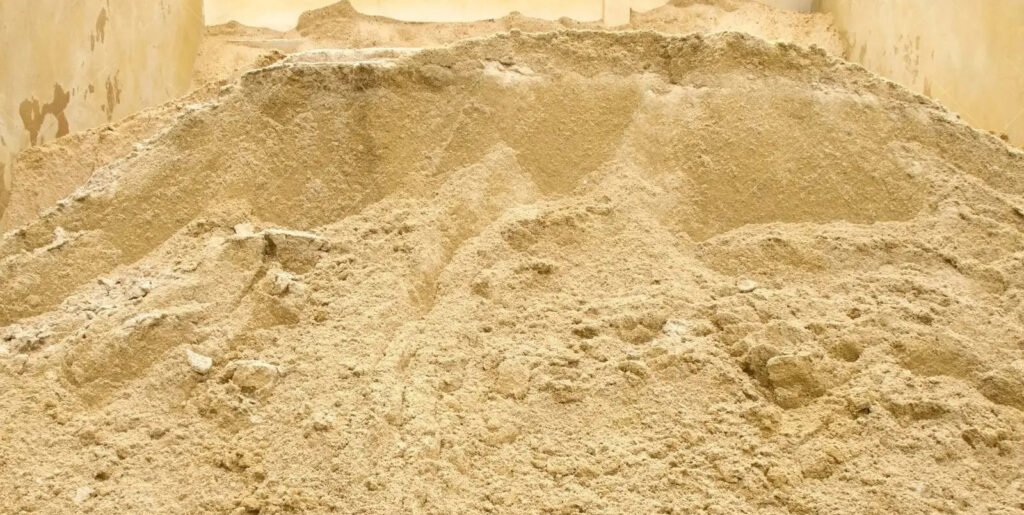
The source, composition, and processing method of sand determine its basic density. Natural sand (river sand, lake sand) mainly consists of quartz and feldspar, with low impurity content and stable density; pit sand is extracted from deep underground, contains iron oxide components, and has coarse, angular particles, resulting in a slightly higher density; manufactured sand is produced by crushing rocks such as granite and basalt, has a single composition, and its gradation can be controlled, allowing for precise density adjustment according to engineering requirements; silica sand, due to its main component being high-purity silicon dioxide, has dense particles and a high density, making it suitable for high-precision industrial applications.
Sand core density data
The density and related parameters of sand in different states and types.
| Sand State/Type | Density (kg/m³) | Core Application Scenarios |
| Loose dry sand | 1442 | Material stockpiling, temporary backfill |
| Natural dry sand | 1602 | Concrete aggregate, mortar preparation |
| Compacted sand (dry) | 1682 | Subgrade cushion layer, foundation backfill |
| Wet compacted sand | 2082 | Heavy engineering foundations, high load-bearing subgrades |
| River sand (natural sand) | 1500-1710 | Main sand for concrete and mortar |
| Manufactured sand | 1500-1750 | Alternative to natural sand, concrete pouring |
| Silica sand | 1500-1800 | Glass manufacturing, corrosion-resistant engineering |
Comparison of the densities of sand and related building materials
| Material Category | Specific Material | Density (kg/m³) | Engineering Association with Sand |
| Cementitious Material | Ordinary Portland Cement | 1440 | Mixed with sand to form mortar and concrete binding system |
| Coarse Aggregate | Crushed stone (5-20mm) | 2850-2960 | Paired with sand to fill the main body of concrete, with sand filling the gaps between aggregates |
| Composite Material | Plain concrete | 2400 | Sand density directly affects its compactness and compressive strength |
| Composite Material | Reinforced concrete | 2500 | Sand ensures the bond between concrete and steel reinforcement as well as overall compactness |
| Other Material | Water | 1000 | Regulates the moisture of the sand-cementitious material system, affecting sand density and forming effect |
Methods for measuring sand density and the criteria for selecting them
Sample pretreatment before measurement
Sample pretreatment is a prerequisite for ensuring accurate measurement results and must follow a standardized procedure:
- First, representative samples were collected from the top, middle, and bottom of the sand pile at different depths. These samples were mixed thoroughly and then reduced to the required mass using the quartering method.
- Next, the sample was sieved through a 4.75 mm standard sieve to remove stones, wood chips, and other impurities, preventing these impurities from affecting the volume measurement.
- Finally, the sample was dried in an oven at 105±5℃ until a constant weight was achieved. After cooling to room temperature, any clumps were broken up to ensure a uniform sample state and eliminate the influence of moisture content on the measurement results.
Core measurement methods and applicable scenarios
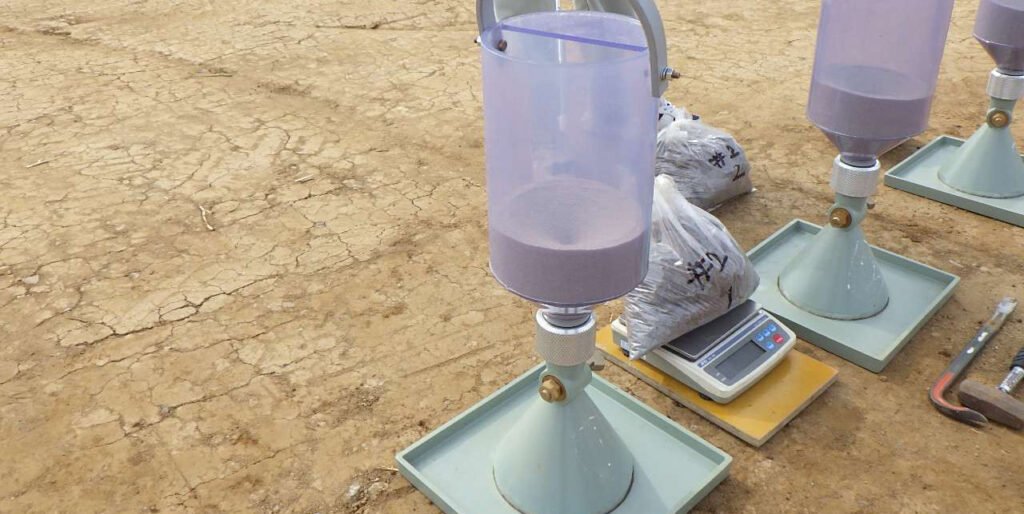
Specific gravity bottle method (precise laboratory measurement)
This method is used to determine the true density of sand (excluding the influence of inter-particle voids) and is suitable for applications such as building material quality certification and high-precision engineering design. The core principle is to utilize the fixed volume of a specific gravity bottle and calculate the density by measuring the mass difference between the sample and water. During the operation, it is necessary to eliminate air bubble interference, perform three parallel measurements, and take the average value to ensure that the error is within the acceptable range.
Ring cutter method (in-situ measurement of compacted sand)
This method directly measures the unit volume mass of sand in a compacted state and is suitable for on-site quality control in applications such as foundation backfilling and roadbed construction. By using a ring cutter of known volume to extract a compacted sand sample, and then weighing it to calculate the density, the actual compaction effect of the project can be directly reflected. During measurement, it is necessary to ensure that the ring cutter is inserted vertically into the sand layer, that the sand sample completely fills the cutter without any looseness, and that at least three measurements are taken at the same testing point to ensure reliable results.
Measuring cylinder method (rapid on-site testing)
This method measures the volume of sand using the displacement method to quickly calculate its density. It is suitable for routine sampling on construction sites and rapid screening of incoming materials. The operation is simple and requires no complex equipment, but the accuracy is relatively low. It is important to consider the effect of moisture content on the dry density. This method is only suitable for preliminary assessment of whether the sand density meets basic engineering requirements.
Key considerations for measurement
Measuring instruments must be calibrated regularly to ensure accuracy meets requirements; measurements involving water should be performed slowly to avoid the formation of air bubbles, and if necessary, the sample should be allowed to settle before reading the volume; on-site sampling should cover different areas to avoid bias from sampling at a single location; measurement results must clearly indicate the state of the sand (dry/wet, loose/compacted), and data from different states should not be used interchangeably; laboratory measurements require controlling the ambient temperature to prevent fluctuations in water temperature from affecting the accuracy of the results.
The engineering and industrial applications of sand density
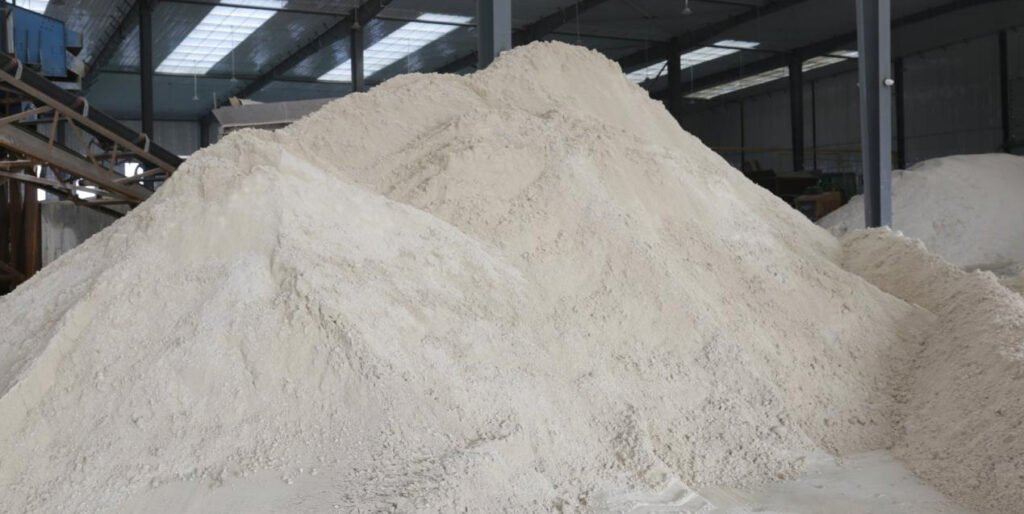
Construction engineering field
- Concrete and Mortar Mix Design: Sand density is a fundamental parameter in mix design, directly determining the effectiveness of aggregate void filling and the amount of binder material required. Ordinary concrete uses well-graded sand with a density of 1500-1650 kg/m³, optimizing aggregate void filling, reducing cement consumption while maintaining strength; heavy-duty concrete requires higher density sand to ensure structural compressive strength and durability; lightweight mortar uses low-density sand to improve workability, suitable for plastering non-load-bearing walls.
- Foundation and Subgrade Construction: Foundation backfill requires wet-compacted sand (density ≥ 2000 kg/m³), ensuring a compaction degree of ≥ 95% through heavy compaction to reduce the risk of foundation settlement; subgrade base layers use compacted sand (density 1682-1922 kg/m³) to ensure the subgrade bearing capacity meets design requirements and prevent future road surface cracking. Precise control of sand density is crucial for improving the long-term stability of foundation engineering.
Filtration and purification field
The density of sand determines its porosity and permeability, directly affecting the filtration effect. High-precision filtration (such as drinking water purification) uses silica sand with a density of 1700-1800 kg/m³, which has low porosity and can trap tiny impurities; conventional filtration (such as wastewater treatment) uses medium-grained sand with a density of 1500-1600 kg/m³, balancing filtration efficiency and drainage efficiency; and deep filtration (such as industrial exhaust gas purification) uses coarse sand with a density of 1600-1700 kg/m³, forming a porous filter layer to adsorb particulate matter in the exhaust gas.
Industrial manufacturing sector
- Glass manufacturing uses high-purity silica sand (density 1700-1800 kg/m³) to ensure uniform glass melting, optimal light transmittance, and strength;
- Ceramic production utilizes fine sand with a density of 1600-1700 kg/m³ to improve the density and wear resistance of the finished products;
- Sand casting employs quartz sand with a density of 1500-1600 kg/m³, combined with binders to create molds that are high-temperature resistant and ensure dimensional accuracy of the castings.
- The suitability of sand density directly determines the quality and stability of industrial products.
Quality control and industry standards for sand density
- Qualification Standards: Natural building sand in a dry state must have a density between 1500-1710 kg/m³, a specific gravity of 2.60-2.70, and a fineness modulus of 3.7-5.3; manufactured sand must have a dry bulk density ≥1500 kg/m³ and a specific gravity of 2.65-2.75; special-purpose sands (such as silica sand) must meet the corresponding industrial standards, such as silica sand for glass production requiring a density ≥1700 kg/m³ and a purity ≥95%.
- Abnormal Handling Measures: If the sand density is too low (<1400 kg/m³), it may be due to excessive moisture content, excessive impurities, or poor gradation. Measures such as drying, removing impurities by screening, and adding coarse sand to adjust the gradation should be taken. If the density is too high (>2000 kg/m³, dry state), it may be due to excessively fine particles or high clay content. Adding medium sand, air-drying to loosen the material, or screening out fine particles should be implemented to ensure the sand meets engineering application requirements.
- Engineering Control Key Points: In concrete construction, the dry density of each batch of sand entering the site must be tested to ensure the fluctuation range is ≤±50 kg/m³; after layered compaction of foundation backfill, there should be ≥4 test points per layer, and the wet compacted sand density must be ≥2000 kg/m³; for filtration projects, sand with the appropriate density should be selected according to the required filtration accuracy, and the porosity should be tested after installation to ensure it matches the density parameters and guarantees filtration efficiency.
Conclusion
Sand density is a core parameter that permeates the characteristics of natural materials, engineering design, construction management, and industrial production. Its value is influenced by a combination of factors including water content, compaction degree, particle characteristics, and processing methods, exhibiting clear and predictable patterns. Standardized measurement methods allow for the accurate acquisition of density data, providing a basis for material selection. In practical applications, it is necessary to select a sand type with an appropriate density based on the requirements of the engineering scenario, and to ensure the effectiveness of the application through strict quality control. The rational utilization of sand density can not only improve the stability of engineering structures and the quality of industrial products but also optimize material usage and reduce costs.