





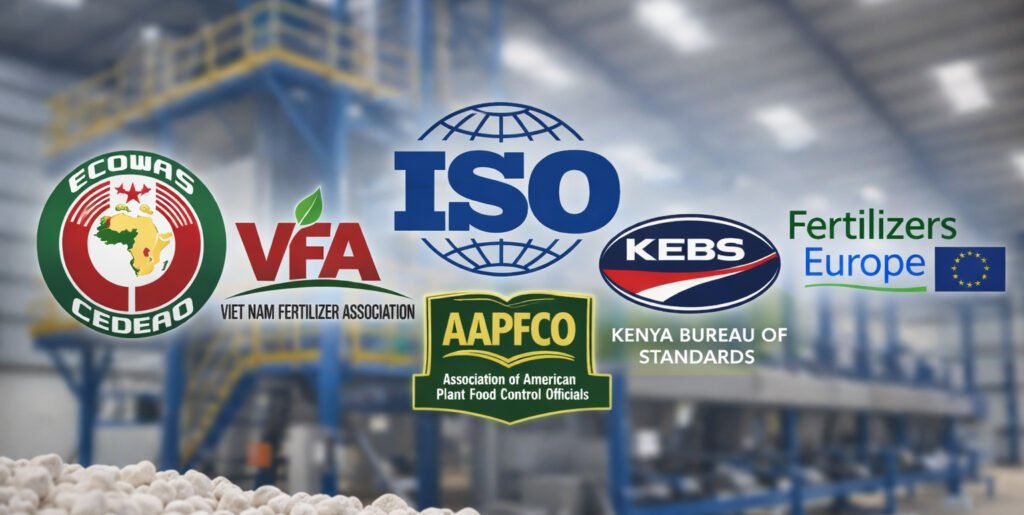
Are you planning to build a BB fertilizer blending production line? Before selecting equipment or finalizing your process design, the first step is understanding the applicable industry standards in your target market. BB fertilizer is regulated differently across regions, with compliance frameworks such as ECOWAS fertilizer regulations in West Africa, the EU Fertilising Products Regulation (EU) 2019/1009 in Europe, the Fertilizer Control Order (FCO) in India, GB standards in China, and ISO-based methods referenced worldwide. These standards define critical requirements for mixing uniformity, nutrient tolerance, labeling, and quality verification. Ignoring national or regional regulations can result in off-spec products, regulatory rejection, and failed market entry. This article breaks down the major BB fertilizer industry standards by country and region, highlighting each system’s core quality and production requirements. Whether you are building a plant for domestic supply or export markets, this guide provides the essential regulatory insight needed to design a compliant, market-ready declining-weight blending system.
Why Industry Standards Matter for BB Fertilizer Plants?
Because they directly determine whether a product can be legally sold, trusted by farmers, and accepted by regulators, and this is clearly reflected in both the United States and ECOWAS frameworks. In the U.S., AAPFCO-based fertilizer laws adopted by individual states enforce strict nutrient labeling accuracy, typically allowing only narrow tolerance bands, with inspections focused on declared N-P-K content, batch records, and weighing accuracy; repeated deviations can trigger product seizure, stop-sale orders, fines, or license suspension. Similarly, ECOWAS fertilizer regulations establish harmonized regional requirements for bulk blended fertilizers across West Africa, emphasizing uniform mixing, nutrient conformity to label claims, and traceable production records to protect farmers from under-formulated products. Under both systems, inconsistent blending, poor weighing control, or inadequate documentation exposes BB fertilizer plants to regulatory penalties and loss of market access, making compliance-driven plant design, especially accurate declining-weight or loss-in-weight blending systems essential not only for legal operation but for long-term commercial credibility.
Key Quality Requirements for Bulk Blended Fertilizers
- Accurate nutrient content matching the label declaration
- Nutrient tolerance usually within ±0.3–0.5% per major nutrient
- Good mixing uniformity to avoid segregation
- Accurate weighing and dosing of each raw material
- Compatible particle size and bulk density of materials
- Moisture control to prevent caking and separation
- Clear labeling and product identification
- Proper production records for traceability and inspection
Global Fertilizer (Bulk Blending) Regulatory Frameworks by Country
| Country / Region | Regulation / Standard Code |
| Global (International) | ISO |
| Global (Industry) | IFA Guidelines |
| European Union | EU Fertilising Products Regulation (EU) 2019/1009 |
| ECOWAS (West Africa – regional) | ECOWAS Regulation C/REG.13/12/12 |
| UEMOA (West Africa) | UEMOA Fertilizer Harmonization Framework |
| East African Community (EAC) | EAS (East African Standards) |
| United States | AAPFCO Model Fertilizer Bill |
| Canada | Fertilizers Act (CFIA) |
| China | GB/T 21633 |
| China | GB 18382 |
| India | Fertilizer Control Order (FCO) |
| Japan | Fertilizer Control Act |
| South Korea | Fertilizer Control Act |
| Australia | Australian Fertilizer Standards (AFS) |
| New Zealand | Fertiliser Act 1983 |
| Brazil | MAPA Normative Instruction (IN) |
| Argentina | SENASA Fertilizer Regulations |
| Mexico | NOM Fertilizer Standards |
| Russia / EAEU | TR CU / EAEU Technical Regulations |
| Kazakhstan / EAEU | TR CU / EAEU Technical Regulations |
| South Africa | Fertilizers, Farm Feeds, Seeds and Remedies Act (Act 36) |
| Nigeria | National Fertilizer Act |
| Ghana | Plants and Fertilizer Act |
| Kenya | Fertilizer and Animal Foodstuffs Act |
| Egypt | MALR Fertilizer Regulations |
| Saudi Arabia / GCC | GSO Fertilizer Standards |
| UAE | MOCCAE Fertilizer Regulations |
| Turkey | Turkish Fertilizer Regulation |
| Pakistan | Fertilizer Control Act |
| Indonesia | Ministry of Agriculture Fertilizer Regulation |
| Vietnam | Decree No. 84/2019/ND-CP |
| Thailand | Fertilizer Act B.E. |
ISO (International Organization for Standardization)
ISO sets voluntary, consensus-based test methods and specifications widely adopted as compliance benchmarks by countries and regions. Used by ECOWAS, EU, and national regulators (e.g., China, Brazil) to align testing protocols, reducing cross-border trade friction. Core Standards:
- ISO 8157: Determination of total nitrogen (Kjeldahl method), the global reference for N testing in BB fertilizers.
- ISO 6598: Determination of phosphorus (phosphomolybdate method), ensuring consistent P₂O₅ measurement.
- ISO 5318: Determination of potassium (flame photometry), the standard for K₂O analysis.
- ISO 7408: Determination of water content (gravimetric method), critical for BB fertilizer storage stability.
IFA Guidelines (International Fertilizer Association)
IFA provides non-binding, industry-led best practices for BB fertilizer production, quality control, and safety. Followed by major BB fertilizer producers to enhance product quality and market acceptance, often referenced in regional standards (e.g., ECOWAS, EAC). Key Guidelines:
- Physical Compatibility: Emphasizes particle size matching (SGN: 250–350, UI: 40–60) and moisture control (<2%) to prevent caking and segregation during blending/storage.
- Nutrient Uniformity: Recommends minimum total nutrients (N+P₂O₅+K₂O ≥35%) and water-soluble P ≥60% of total P₂O₅ for agronomic effectiveness.
- Safety Protocols: Advises on heavy metal limits (As <10 mg/kg, Cd <5 mg/kg, Pb <20 mg/kg) and dust emission controls during manufacturing.
United States: AAPFCO (Association of American Plant Food Control Officials)
North America United States AAPFCO Model Fertilizer Bill: A voluntary model adopted by all 50 states to standardize BB fertilizer regulation, with state-specific variations. State departments of agriculture conduct inspections; EPA regulates environmental emissions (40 CFR Part 418) from blend manufacturing facilities. Core Provisions:
- Nutrient Guarantees: Minimum N-P₂O₅-K₂O percentages with a maximum deviation of ≤1.5% per nutrient (e.g., 15% N must test ≥13.5%).
- Heavy Metals: Strict limits in California, Washington, and Oregon (e.g., CA: As ≤2 mg/kg, Cd ≤4 mg/kg, Pb ≤20 mg/kg per 1% P₂O₅).
- Labeling: State-specific tags with grade, net weight, and "bulk blend" designation; bulk sales require delivery tickets with nutrient data.
European Union: EU Fertilising Products Regulation (EU) 2019/1009

Replaced Regulation (EC) No 2003/2003 to harmonize EU fertilizer rules, including BB blends, with a focus on sustainability and safety. Enforcement: Member states (e.g., Spain, Germany) transpose the regulation into national law, with penalties for non-compliance (fines, product seizure). Key Provisions:
- Nutrient Requirements: Minimum total nutrients (N+P₂O₅+K₂O ≥35%); water-soluble P ≥60% of total P₂O₅ to ensure plant availability.
- Sustainability Criteria: Promotes recycled raw materials (e.g., recovered phosphates) and sets carbon footprint reporting for high-nitrogen BB fertilizers.
- Conformity Assessment: Mandatory Module A (self-declaration) or Module B/C/D1 (third-party certification) for CE marking, required for EU market access.
- Labeling: CE marking, product name, nutrient grades, manufacturer details, and safety warnings (e.g., "Keep away from children").
ECOWAS (Economic Community of West African States)

Regulation C/REG.13/12/12: Harmonizes fertilizer quality control across 15 member states to combat substandard products and boost intra-regional trade. Key Requirements:
- Nutrient Guarantees: Mandatory N-P₂O₅-K₂O labeling with tolerance limits (±1.5% per nutrient) enforced by the ECOWAS Commission.
- Heavy Metals: Strict limits (As ≤10 mg/kg, Cd ≤5 mg/kg, Pb ≤20 mg/kg) to protect soil and food safety.
- Labeling: Truth-in-labeling with grade (e.g., 15-15-15), origin, and usage instructions; misbranding (false claims) is prohibited.
- Inspection: Regional labs use ISO/AOAC methods; member states conduct border checks and market surveillance to enforce compliance.
UEMOA Fertilizer Harmonization Framework

Aligns with ECOWAS standards, with additional provisions for monetary union members (Benin, Burkina Faso, Côte d’Ivoire, etc.).
- Price Regulation: Caps fertilizer retail margins to ensure affordability for smallholder farmers.
- Subsidy Alignment: Coordinates government subsidy programs to avoid cross-border arbitrage of subsidized BB fertilizers.
- Certification: Mutual recognition of UEMOA/ECOWAS-compliant products, enabling seamless trade within the monetary union.
East African Community (EAC) EAS (East African Standards)

EAC’s EAS 2001–2010 series sets regional standards for BB fertilizers, adopted by Kenya, Uganda, Tanzania, Rwanda, Burundi, and South Sudan. EAC’s Standards Compliance Committee (SCC) oversees national implementation, with non-compliant products barred from the regional market. Technical Specifications:
- Total Nutrients: N+P₂O₅+K₂O ≥35% for standard BB blends.
- Water-Soluble P: ≥60% of total P₂O₅ to meet tropical soil agronomic needs.
- Moisture: ≤2% to prevent caking in humid East African conditions.
- Particle Size: 2.0–4.75 mm (≥90% retention) for uniform blending and spreading.
Canada Fertilizers Act (CFIA)

Administered by the Canadian Food Inspection Agency (CFIA), it sets federal standards for BB fertilizer safety, labeling, and quality. Key Requirements:
- Nutrient Content: Minimum N-P₂O₅-K₂O guarantees with tolerance limits (±1.0% for N, ±1.5% for P₂O₅/K₂O).
- Heavy Metals: Limits (As ≤10 mg/kg, Cd ≤5 mg/kg, Pb ≤20 mg/kg) aligned with international standards.
- Labeling: Bilingual (English/French) tags with product name, grade, manufacturer, and usage instructions.
- Registration: Mandatory CFIA registration before market entry, requiring batch test reports and safety data sheets.
Asia China GB/T 21633-2020 (Bulk Blending Fertilizer)
National standard for BB fertilizer technical requirements and testing methods Technical Parameters:
- Total Nutrients: N+P₂O₅+K₂O ≥30% (grade-dependent; ≥35% for high-grade blends).
- Water-Soluble P: ≥60% of total P₂O₅ for enhanced plant uptake.
- Moisture: ≤2.0% to prevent caking and nutrient loss.
- Particle Size: 2.0–4.75 mm (≥90% retention) for uniform spreading.
- Heavy Metals: Comply with GB 18382 (fertilizer labeling) and GB 38400 (toxic substances limit: As ≤10 mg/kg, Cd ≤5 mg/kg, Pb ≤50 mg/kg).
China GB 18382-2001 (Fertilizer Labeling): Mandatory labeling rules for BB fertilizers
- Mandatory Info: Product name, grade (N-P₂O₅-K₂O), net weight, manufacturer, and production date.
- Prohibited Claims: False or misleading statements (e.g., "100% organic" for mineral BB blends).
India Fertilizer Control Order (FCO)

Enforced by the Ministry of Chemicals and Fertilizers, regulating BB fertilizer quality, pricing, and distribution.
- Nutrient Guarantees: Minimum N-P₂O₅-K₂O percentages with tolerance limits (±1.5% per nutrient).
- Heavy Metals: Limits (As ≤10 mg/kg, Cd ≤5 mg/kg, Pb ≤25 mg/kg) to protect soil health in intensive farming regions.
- Labeling: Hindi/English tags with grade, net weight, and "FCO Approved" logo; unapproved products face fines or seizure.
- Price Control: Government sets maximum retail prices (MRPs) for essential BB fertilizers (e.g., 10-26-26) to ensure affordability.
Japan Fertilizer Control Act
Administered by the Ministry of Agriculture, Forestry and Fisheries (MAFF), it mandates strict quality and safety standards for BB fertilizers. Key Requirements:
- Nutrient Uniformity: Total nutrients (N+P₂O₅+K₂O ≥35%); water-soluble P ≥60% of total P₂O₅.
- Heavy Metals: Strict limits (Cd ≤1 mg/kg, Pb ≤10 mg/kg) to meet Japan’s high food safety standards.
- Registration: Mandatory MAFF approval with batch test reports and manufacturing process documentation.
- Labeling: Japanese tags with grade, manufacturer, and usage instructions; "Agricultural Chemical Registration Number" is required.
South Korea Fertilizer Control Act
Enforced by the Ministry of Agriculture, Food and Rural Affairs (MAFRA), it aligns with international standards while addressing local agronomic needs. Technical Specifications:
- Total Nutrients: N+P₂O₅+K₂O ≥35% for standard BB blends.
- Water-Soluble P: ≥60% of total P₂O₅; moisture ≤2%.
- Heavy Metals: Limits (As ≤5 mg/kg, Cd ≤3 mg/kg, Pb ≤15 mg/kg) stricter than global averages.
- Labeling: Korean tags with grade, net weight, and "MAFRA Certified" mark; bulk sales require delivery certificates with nutrient data.
Vietnam Decree No. 84/2019/ND-CP

Governs BB fertilizer quality, labeling, and registration, with technical standards aligned with ASEAN guidelines. Key Provisions:
- Nutrient Content: N+P₂O₅+K₂O ≥30%; water-soluble P ≥55% of total P₂O₅.
- Moisture: ≤2.5% (higher tolerance for tropical storage conditions).
- Heavy Metals: Limits (As ≤15 mg/kg, Cd ≤5 mg/kg, Pb ≤30 mg/kg) consistent with regional norms.
- Registration: Mandatory approval from the Ministry of Agriculture and Rural Development (MARD) before market entry.
Indonesia Ministry of Agriculture Fertilizer Regulation

Sets national standards for BB fertilizer production, quality control, and safety. Technical Parameters:
- Total Nutrients: N+P₂O₅+K₂O ≥35% for high-grade blends; ≥30% for low-grade products.
- Water-Soluble P: ≥60% of total P₂O₅; particle size 2.0–4.75 mm (≥90% retention).
- Heavy Metals: Limits (As ≤10 mg/kg, Cd ≤5 mg/kg, Pb ≤20 mg/kg) to protect Indonesia’s diverse ecosystems.
- Labeling: Indonesian tags with grade, net weight, and manufacturer details; "Registered with Ministry of Agriculture" logo is mandatory.
Pakistan Fertilizer Control Act
Administered by the Fertilizer Control Department (FCD), it regulates BB fertilizer quality and pricing to support agricultural productivity. Key Rules:
- Nutrient Guarantees: Minimum N-P₂O₅-K₂O percentages with tolerance limits (±1.5% per nutrient).
- Heavy Metals: Limits (As ≤10 mg/kg, Cd ≤5 mg/kg, Pb ≤25 mg/kg) aligned with South Asian standards.
- Labeling: Urdu/English tags with grade, net weight, and "FCD Approved" mark; unlabeled products are banned from sale.
Australian Fertilizer Standards (AFS)

Developed by Fertilizers Australia, the AFS sets voluntary technical guidelines widely adopted by industry and enforced by state authorities. Technical Specifications:
- Total Nutrients: N+P₂O₅+K₂O ≥35%; water-soluble P ≥60% of total P₂O₅.
- Moisture: ≤2% to prevent caking in Australia’s arid climate.
- Heavy Metals: Limits (As ≤10 mg/kg, Cd ≤5 mg/kg, Pb ≤20 mg/kg) consistent with international best practices.
- Labeling: Australian Standard Mark for compliant products; mandatory nutrient grade and safety warnings.
New Zealand Fertiliser Act 1983
Administered by the Ministry for Primary Industries (MPI), it regulates BB fertilizer safety, labeling, and quality. Key Requirements:
- Nutrient Content: Minimum N-P₂O₅-K₂O guarantees with tolerance limits (±1.0% for N, ±1.5% for P₂O₅/K₂O).
- Heavy Metals: Strict limits (Cd ≤2 mg/kg, Pb ≤10 mg/kg) to protect New Zealand’s clean agriculture reputation.
- Labeling: English tags with grade, net weight, and manufacturer details; "MPI Approved" logo is required for market entry.
Brazil MAPA Normative Instruction (IN)
Issued by the Ministry of Agriculture, Livestock, and Food Supply (MAPA), it sets mandatory standards for BB fertilizer quality and registration.
- Nutrient Guarantees: Minimum N-P₂O₅-K₂O percentages with tolerance ±1.5% per nutrient.
- Heavy Metals: Strict limits (Pb ≤50 mg/kg, Cd ≤10 mg/kg) enforced by MAPA/ANVISA joint inspections.
- Registration: Mandatory MAPA approval with product composition and safety data; state-level commercialization requires local permits.
- Labeling: Portuguese tags with grade, net weight, and "Fertilizante Registrado no MAPA" (MAPA-Registered Fertilizer) mark.
- IN SDA nº 61/2020: Defines nutrient guarantees, heavy metal limits, and labeling rules for mineral/organic BB blends.
- ABNT Standards: NBR 14094 (total N), NBR 15822 (density) used for compliance testing.
Argentina SENASA Fertilizer Regulations
Enforced by the National Service of Agricultural Health and Quality (SENASA), regulating BB fertilizer safety and quality. Technical Parameters:
- Total Nutrients: N+P₂O₅+K₂O ≥35%; water-soluble P ≥60% of total P₂O₅.
- Moisture: ≤2%; particle size 2.0–4.75 mm (≥90% retention).
- Heavy Metals: Limits (As ≤10 mg/kg, Cd ≤5 mg/kg, Pb ≤20 mg/kg) aligned with MERCOSUR standards.
- Registration: Mandatory SENASA approval with batch test reports and manufacturing process documentation.
Mexico NOM Fertilizer Standards
Official Mexican Standards (NOM) set by the Ministry of Agriculture and Rural Development (SADER) for BB fertilizer quality and labeling. Key Provisions:
- Nutrient Content: N+P₂O₅+K₂O ≥30%; water-soluble P ≥55% of total P₂O₅.
- Heavy Metals: Limits (As ≤15 mg/kg, Cd ≤5 mg/kg, Pb ≤30 mg/kg) consistent with North American norms.
- Labeling: Spanish tags with grade, net weight, and "NOM Certified" mark; bulk sales require delivery certificates with nutrient data.
Russia/Kazakhstan TR CU/EAEU Technical Regulations

Mandatory technical regulations for BB fertilizers in the Eurasian Economic Union (EAEU: Russia, Kazakhstan, Belarus, Armenia, Kyrgyzstan). Sets safety requirements for mineral fertilizers, including BB blends, covering heavy metals, nutrient content, and labeling. Core Regulation:
- Nutrient Guarantees: Minimum N-P₂O₅-K₂O percentages with tolerance ±1.5% per nutrient.
- Heavy Metals: Limits (As ≤10 mg/kg, Cd ≤5 mg/kg, Pb ≤20 mg/kg) to protect soil and water resources.
- Labeling: Russian/Kazakh tags with grade, net weight, and "EAC Certified" mark; mandatory for EAEU market access.
- Certification: EAC certification via authorized bodies (e.g., Rosaccreditation in Russia, Kazakstandart in Kazakhstan) is required.
South Africa Fertilizers, Farm Feeds, Seeds and Remedies Act (Act 36)

Administered by the Department of Agriculture, Land Reform and Rural Development (DALRRD), regulating BB fertilizer quality and safety.
- Nutrient Guarantees: Minimum N-P₂O₅-K₂O percentages with tolerance ±1.5% per nutrient.
- Heavy Metals: Limits (As ≤10 mg/kg, Cd ≤5 mg/kg, Pb ≤20 mg/kg) aligned with international standards.
- Labeling: English/Afrikaans tags with grade, net weight, and "DALRRD Approved" mark; unapproved products face fines or seizure.
Nigeria National Fertilizer Act:
Enforced by the Federal Ministry of Agriculture and Rural Development (FMARD), regulating BB fertilizer production, importation, and quality. Key Provisions:
- Nutrient Content: N+P₂O₅+K₂O ≥35%; water-soluble P ≥60% of total P₂O₅.
- Heavy Metals: Strict limits (As ≤10 mg/kg, Cd ≤5 mg/kg, Pb ≤20 mg/kg) to combat substandard imports.
- Registration: Mandatory FMARD approval with product composition and safety data; border inspections enforce compliance.
Ghana Plants and Fertilizer Act
Administered by the Ministry of Food and Agriculture (MoFA), regulating BB fertilizer quality and labeling to support smallholder farmers. Technical Parameters:
- Total Nutrients: N+P₂O₅+K₂O ≥35%; water-soluble P ≥60% of total P₂O₅.
- Moisture: ≤2%; particle size 2.0–4.75 mm (≥90% retention).
- Heavy Metals: Limits (As ≤10 mg/kg, Cd ≤5 mg/kg, Pb ≤20 mg/kg) aligned with ECOWAS standards.
- Labeling: English tags with grade, net weight, and "MoFA Approved" mark; bulk sales require delivery certificates with nutrient data.
Kenya Fertilizer and Animal Foodstuffs Act
Enforced by the Pest Control Products Board (PCPB), regulating BB fertilizer quality and safety in line with EAC standards. Key Rules:
- Nutrient Guarantees: Minimum N-P₂O₅-K₂O percentages with tolerance ±1.5% per nutrient.
- Heavy Metals: Limits (As ≤10 mg/kg, Cd ≤5 mg/kg, Pb ≤20 mg/kg) to protect Kenya’s fragile ecosystems.
- Registration: Mandatory PCPB approval with batch test reports and manufacturing process documentation.
Egypt MALR Fertilizer Regulations

Issued by the Ministry of Agriculture and Land Reclamation (MALR), regulating BB fertilizer quality and importation. Technical Specifications:
- Total Nutrients: N+P₂O₅+K₂O ≥35%; water-soluble P ≥60% of total P₂O₅.
- Moisture: ≤2%; particle size 2.0–4.75 mm (≥90% retention).
- Heavy Metals: Limits (As ≤10 mg/kg, Cd ≤5 mg/kg, Pb ≤20 mg/kg) consistent with North African norms.
- Labeling: Arabic/English tags with grade, net weight, and "MALR Approved" mark; import permits require compliance certificates.
Saudi Arabia / GCC GSO Fertilizer Standards:

Gulf Standardization Organization (GSO) sets regional standards for BB fertilizers, adopted by Saudi Arabia, UAE, and other GCC states. Key Provisions:
- Nutrient Content: N+P₂O₅+K₂O ≥35%; water-soluble P ≥60% of total P₂O₅.
- Heavy Metals: Limits (As ≤10 mg/kg, Cd ≤5 mg/kg, Pb ≤20 mg/kg) to protect arid soil and water resources.
- Labeling: Arabic/English tags with grade, net weight, and "GSO Certified" mark; mandatory for GCC market access.
UAE MOCCAE Fertilizer Regulations

Enforced by the Ministry of Climate Change and Environment (MOCCAE), regulating BB fertilizer quality and safety in the UAE. Technical Parameters:
- Total Nutrients: N+P₂O₅+K₂O ≥35%; water-soluble P ≥60% of total P₂O₅.
- Moisture: ≤2%; particle size 2.0–4.75 mm (≥90% retention).
- Heavy Metals: Limits (As ≤10 mg/kg, Cd ≤5 mg/kg, Pb ≤20 mg/kg) aligned with GSO standards.
- Registration: Mandatory MOCCAE approval with product composition and safety data; market inspections enforce compliance.
Turkish Fertilizer Regulation

Enforced by the Ministry of Agriculture and Forestry, aligning with EU standards to facilitate trade with the bloc. Key Requirements:
- Nutrient Content: N+P₂O₅+K₂O ≥35%; water-soluble P ≥60% of total P₂O₅.
- Heavy Metals: Limits (As ≤10 mg/kg, Cd ≤5 mg/kg, Pb ≤20 mg/kg) consistent with EU norms.
- Labeling: Turkish/English tags with grade, net weight, and "Ministry of Agriculture Approved" mark; CE marking is optional for EU exports.
What are the frequently asked questions about bulk blending fertilizer plant regulations?
Most regulations require nutrient deviations to stay within ±0.3–0.5% per major nutrient or within legally defined label tolerances, verified through random sampling and laboratory analysis.
Regulations are system-neutral, but batch systems are easier to audit due to clear batch records, while continuous (declining-weight) systems must demonstrate real-time weighing accuracy and data traceability.
Accuracy is typically verified through production records, scale calibration logs, formulation recipes, and random product sampling, sometimes combined with mass-balance checks on raw material consumption.
Yes, most authorities require regular calibration of weighing systems (daily checks and periodic third-party certification) to ensure compliance with declared nutrient content.
Yes, provided the plant has adequate bin segregation, controlled dosing, documented recipes, and cleaning procedures to prevent cross-contamination between different formulas.
The plant must follow standard decling weight blending system operating procedures (SOPs) covering raw material inspection, recipe selection, weighing and blending sequence, equipment cleaning, scale calibration, production record keeping, and corrective actions for any detected nutrient deviation, ensuring every blend is traceable and auditable.
Mixing Uniformity and Nutrient Tolerance Standards
Mixing uniformity and nutrient tolerance standards for bulk blending (BB) fertilizer are regulated differently by country, but most markets require tight control of nutrient deviation. In the United States, AAPFCO-based state laws require BB fertilizer to meet the guaranteed analysis on the label, and products that fall below the declared N, P₂O₅, or K₂O values are considered non-compliant, with practical tolerance usually around ±0.3–0.5% per major nutrient in enforcement testing. Under ECOWAS regulations in West Africa, BB fertilizers must meet declared nutrient content within commonly applied limits of about ±0.5%, and poor mixing that causes uneven nutrient distribution can lead to rejection. In the European Union, the Fertilising Products Regulation allows nutrient tolerances generally up to ±25% of the declared value, with a maximum deviation of about ±2 percentage points per nutrient, while still requiring good uniformity. In China, GB/T standards for bulk blending fertilizer set defined nutrient deviation limits and require consistent mixing across samples, typically within ±0.5%. Across all regions, regulators check not only average nutrient values but also sample-to-sample consistency, making accurate weighing and proper mixing essential for BB fertilizer plants.
Weighing Accuracy and Blending Control Standards
Weighing accuracy and blending control standards are critical for bulk blending (BB) fertilizer plants because they directly affect nutrient accuracy and regulatory compliance. In the United States, AAPFCO-based inspections expect weighing systems to control each raw material within about ±0.2–0.3% accuracy, as larger feeder errors can cause nutrient deficiencies and label violations. Under ECOWAS regulations, BB fertilizer plants are expected to use calibrated scales and controlled dosing systems, with practical weighing accuracy typically around ±0.3–0.5% to ensure nutrient tolerance limits are met. In the European Union, blending control systems must achieve consistent dosing accuracy that supports nutrient tolerances, and loss-in-weight or declining-weight feeders commonly operate within ±0.2–0.5% accuracy. In China, GB/T standards for bulk blending fertilizer require calibrated weighing equipment and stable control systems, with feeder accuracy generally expected to be within ±0.3%. Across all markets, poor weighing accuracy or unstable control leads to nutrient deviation, failed inspections, and rejected BB fertilizer products, making precise weighing and automated blending control essential.
Batch vs Continuous Blending – Which Complies Better?
Continuous blending systems generally comply better with modern industry standards for nutrient tolerance and weighing accuracy. Batch blending relies on fixed batch weights and mixer time, which can lead to higher nutrient variation if raw materials segregate or if manual weighing errors occur, especially at higher capacities. Continuous blending uses loss-in-weight or declining-weight feeders to control each nutrient stream in real time, allowing typical accuracy of ±0.2–0.3% and better control of mixing uniformity, which aligns more closely with AAPFCO enforcement in the United States, ECOWAS nutrient conformity rules, and EU tolerance requirements. While batch systems can meet standards at small scale with strict procedures, continuous blending provides more consistent compliance, better traceability, and easier inspection records, making it the preferred choice for plants targeting strict regulations or export markets.
Role of Declining Weight Blending Systems in Compliance
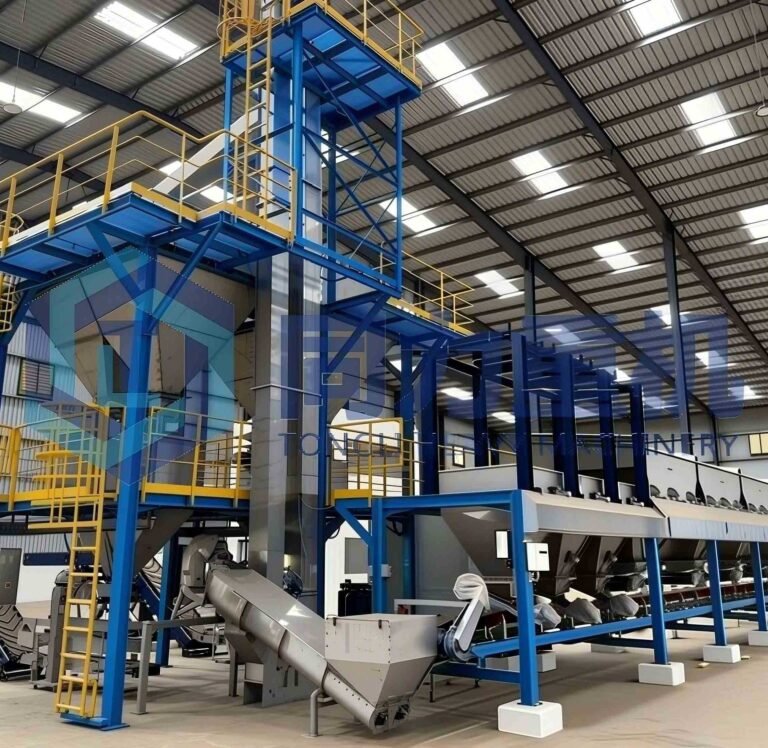
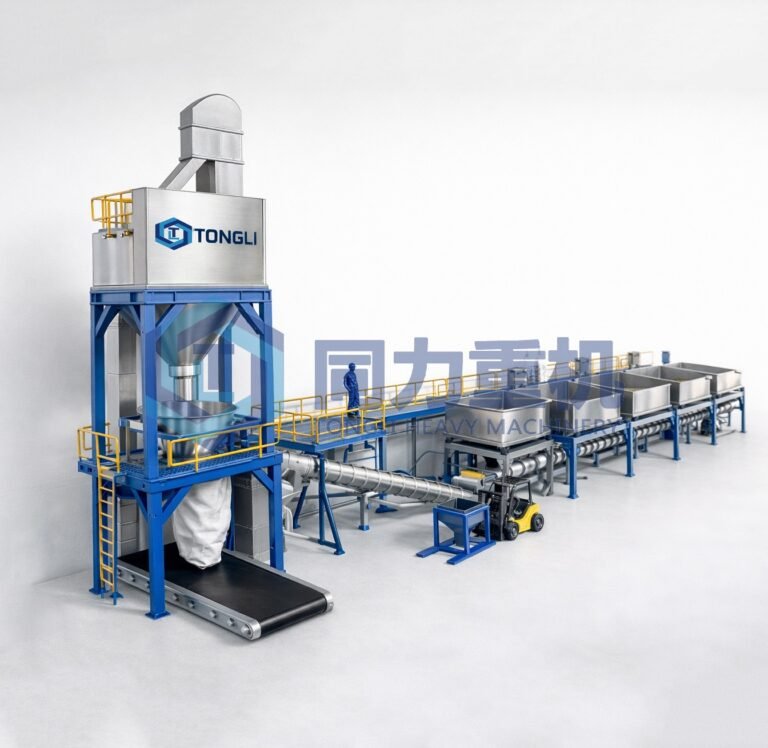
To meet these strict compliance requirements, Tongli Accu BB Blend Declining Weight Blending System is engineered specifically for modern BB fertilizer plants targeting regulated markets. The system uses high-precision loss-in-weight feeders to control each nutrient stream in real time, achieving stable weighing accuracy of ±0.2–0.3%, which directly supports AAPFCO, ECOWAS, EU, and other international standards. With automatic calibration, closed-loop control, and full production data recording, Tongli Accu BB Blend minimizes nutrient deviation, improves mixing uniformity, and provides inspectors with clear, traceable compliance records. Whether for domestic sales or export markets, this system offers a reliable, market-ready solution for producing compliant bulk blended fertilizers at industrial scale.
Common Mistakes When Designing BB Fertilizer Plant
Ignoring Local Industry Standards
Many BB fertilizer plants are designed without fully understanding local regulations such as AAPFCO, ECOWAS, or EU requirements. This often leads to systems that cannot meet nutrient tolerance, labeling, or inspection rules, resulting in failed approvals and limited market access.
Choosing Low-Accuracy Weighing Systems
Using volumetric feeders or low-precision scales is a common mistake. These systems cannot control nutrients within tight tolerance limits, causing frequent off-spec products and regulatory penalties.
Poor Mixing and Segregation Control
Incorrect mixer selection or incompatible raw material particle sizes can cause uneven nutrient distribution. Even if average nutrient values are correct, poor mixing can lead to sample-to-sample variation and inspection failure.
Over-reliance on Manual Operation
Plants that depend heavily on manual weighing, dosing, or record-keeping are more prone to human error. Manual control makes it difficult to maintain consistency and provide reliable inspection records.
Underestimating Capacity and Expansion Needs
Designing a plant only for current demand can limit future growth. Many plants struggle to upgrade later because the original layout cannot support higher throughput or continuous blending systems.
Lack of Data Recording and Traceability
Failing to include automatic data logging and batch records is a serious compliance risk. Inspectors often require clear production data to verify nutrient accuracy and blending consistency.
Focusing Only on Initial Cost
Choosing equipment based only on low upfront cost often results in higher long-term losses due to rejected products, rework, and regulatory issues. A compliance-focused design delivers better long-term value and market stability.
What is the allowable nutrient tolerance (±%) for BB fertilizer in different countries?
- In the European Union, the older Regulation (EC) No. 2003/2003 specifies that primary nutrients like N, P₂O₅, and K₂O in fertilizers must stay within defined negative deviation limits, for example, up to about ±1.1% absolute deviation for individual primary nutrients and up to about ±1.9% for total NPK values in multi-nutrient products like NPK blends.
- In the United States, AAPFCO and state fertilizer laws do not publish a single unified number; instead, products must meet the guaranteed label values, and practical enforcement often treats deviations beyond roughly ±0.3–0.5% per major nutrient as non-compliant in inspection results.
- Based on Chinese practice and standard tolerances referenced in product quality specifications, China generally uses an absolute tolerance of about ±0.5% for each macronutrient (N, P₂O₅, K₂O) from the declared value.
- In India, the Fertilizer Control Order defines tolerance limits in its schedules, for some straight fertilizers with over 20% nutrient, tolerances around ±0.2% are indicated, though specific numbers for blended fertilizers depend on product type and declared levels.
- Under ECOWAS, regional frameworks follow national tolerances and generally align with practice in West African states where regulators require nutrient deviation to be within practical limits such as ±0.5% to ensure uniformity and compliance (based on field enforcement practice and extensions of ECOWAS quality control guidance).
How do inspectors detect nutrient deviation in bulk blending fertilizer plants
Bulk blended fertilizer bag sampling is carried out using standardized procedures to ensure the sample truly represents the entire lot. For bagged fertilizer over 10 pounds, a defined “lot” is identified, usually based on a single production period or shipment, and if the lot contains 10 bags or more, 10 bags are randomly selected, with one core sample taken from each bag using a stainless-steel or brass sampling trier; if fewer than 10 bags are present, 10 cores are taken across all bags. Before sampling, each bag is rolled or flipped to loosen the material, then placed horizontally, and the trier is inserted diagonally from corner to corner to collect a full core without material loss. All cores are combined into a composite sample, placed in a moisture-proof container, properly labeled, and sent to the laboratory for analysis. This composite sampling method reduces error, supports regulatory compliance, and provides reliable evidence in case of inspection, dispute, or legal action.
Why do some bulk blending fertilizer plants repeatedly fail uniformity tests?
There are many potential factors contribute to the uniformity of the bulk blending fertilizer, for more detail please see our previous article: "What affects the uniformity of BB fertilizer"
1. Poor Raw Material Particle Size Matching
- Reason: Materials with very different particle sizes or bulk densities separate during mixing and discharge.
- Solution: Use screened raw materials with similar particle size ranges and bulk density, or pre-condition materials before blending.
2. Low-Accuracy Weighing Systems
- Reason: Volumetric feeders or worn scales cannot dose nutrients accurately, causing uneven nutrient distribution.
- Solution: Upgrade to loss-in-weight or declining-weight feeders with regular calibration and accuracy checks.
3. Inadequate Mixer Design or Size
- Reason: Mixers that are too small, overfilled, or incorrectly designed do not allow enough mixing action.
- Solution: Select a mixer designed for BB fertilizer with proper capacity, mixing time, and discharge control.
4. Short or Inconsistent Mixing Time
- Reason: Operators reduce mixing time to increase output, leading to incomplete blending.
- Solution: Set and lock minimum mixing time based on material characteristics and mixer performance tests.
5. Material Segregation After Mixing
- Reason: Poor chute design, long drop heights, or improper bagging cause separation after mixing.
- Solution: Improve discharge chute design, reduce drop height, and use controlled feeding into bagging or bulk loading.
6. High Moisture or Caking Materials
- Reason: Wet or caked materials do not flow evenly, causing feeder surging and poor distribution.
- Solution: Control moisture, improve storage conditions, and break lumps before feeding materials.
7. Manual Operation and Human Error
- Reason: Manual weighing, valve control, or inconsistent operating practices introduce variability.
- Solution: Automate dosing and blending control and standardize operating procedures.
8. Lack of Quality Monitoring and Sampling
- Reason: Plants only test final products after problems occur, not during routine operation.
- Solution: Implement regular sampling, trend analysis, and corrective action before products leave the plant.
What documentation and production records do fertilizer inspectors usually check first?
- Product Label and Guaranteed Analysis: Inspectors first check the fertilizer label to confirm the declared N-P-K values, product name, and registration details match legal requirements.
- Production Records / Batch or Run Logs: They review daily production records showing formulation, batch size or continuous run data, production date, and quantity produced to verify consistency and traceability.
- Weighing and Dosing Records: Inspectors look at feeder logs or system data to confirm each raw material was weighed accurately and within required tolerance during production.
- Calibration Records: Scale and feeder calibration certificates are checked to ensure weighing equipment was calibrated regularly and correctly.
- Raw Material Receiving Records: Documents showing supplier information, material specifications, delivery dates, and acceptance checks (particle size, nutrient content) are reviewed.
- Sampling and Test Reports: Inspectors examine sampling logs and laboratory analysis results to confirm nutrient levels and mixing uniformity meet standards.
- Non-Conformance and Corrective Action Records: If past deviations occurred, inspectors check how problems were handled and whether corrective actions were documented and effective.
- Sales, Shipment, and Lot Identification Records: These records link finished fertilizer to specific customers, dates, and lots, allowing inspectors to trace products if complaints arise.
What are the penalties for bulk blending fertilizer nutrient levels not meeting industry standards?
When bulk blending fertilizer nutrient levels do not meet industry standards, regulators can apply serious penalties because under- or over-formulated fertilizer directly harms farmers and market trust. In the United States, under AAPFCO-based state fertilizer laws, inspectors can issue stop-sale or stop-distribution orders, seize non-compliant product, require relabeling or reblending, and impose civil fines, which commonly range from several thousand to tens of thousands of USD depending on volume and repeat offenses; repeated violations may also lead to license suspension or revocation, and documented cases show states ordering entire truckloads or storage bins of BB fertilizer to be held or destroyed when nutrient guarantees were not met. In West Africa, under ECOWAS fertilizer regulations and national enforcement, non-compliant BB fertilizer can be rejected at inspection points, banned from sale, confiscated, or ordered off the market, with financial penalties and loss of operating permits, and in some countries fertilizer that fails nutrient conformity has been publicly withdrawn to protect farmers during planting seasons. In the European Union, under the EU Fertilising Products Regulation, fertilizers that exceed allowable nutrient deviation can be removed from the market, denied CE marking, and subject to administrative fines, mandatory corrective action, or product recall, especially if repeated non-compliance is found. Across all regions, the most damaging penalty is often loss of market access and buyer confidence, which is why accurate weighing, good mixing uniformity, and traceable production records are essential for BB fertilizer plants. And below are some cases that company fail to meet the standards:
United States – California Case
- In California, the Department of Food and Agriculture (CDFA) issued a $1.89 million penalty to Agro Research International LLC for adulteration and mislabeling of a registered organic fertilizing material, because the product contained prohibited substances not declared on the label. This penalty was upheld by an administrative law judge and included reimbursement of investigative costs.
- Under the California Food and Agriculture Code, smaller fertilizer misbranding violations can carry fines such as $1,000 for a first violation, $2,500 for a second, and up to $5,000 for subsequent violations, with higher fines (e.g., $5,000+) for fraud or misconduct.
Vietnam – Administrative Penalties
Vietnam’s fertilizer sector regulations (e.g., Decree 31/2023/ND-CP) show that fines for non-compliant fertilizer quality testing and sampling violations range from about VND 5,000,000 to VND 50,000,000 (~USD 200–2,000+) depending on the specific violation (e.g., improper sampling, unaccredited testing). For individuals, the overall maximum fine for fertilizer violations can reach VND 50,000,000 (~USD 2,000), and for organizations up to VND 100,000,000 (~USD 4,000).
Nigeria – National Fertilizer Quality Control Act (2019)
- The National Fertilizer Quality Control Act in Nigeria explicitly states that anyone who manufactures, blends, imports, sells or distributes fertilizer that is nutrient-deficient, adulterated, underweight, misbranded, or otherwise non-compliant is liable on conviction to at least five years imprisonment with no option of fine.
- The same law also specifies financial penalties: manufacturers, blenders, or importers can be fined at least ₦5,000,000 up to ₦10,000,000 (~USD 6,000–12,000 depending on exchange rates), and distributors can face fines of ₦500,000 per day the offence continues if they operate without proper compliance.
- Nigerian authorities have arrested more than 50 sub-standard fertilizer producers under this Act as part of enforcement efforts, though detailed sentencing outcomes for these arrests are typically handled through Nigeria’s judicial system.
How poor mixing design increases regulatory and commercial risk in BB fertilizer plants
Poor mixing design increases regulatory and commercial risk in BB fertilizer plants because it creates measurable, repeatable failures against how inspectors test products and how customers judge performance. When a mixer is undersized, overfilled, or uses an unsuitable mixing mechanism (for example, insufficient turnover or dead zones), nutrients such as urea, DAP, potash, and micronutrients do not distribute evenly. This directly leads to sample-to-sample nutrient variation that exceeds regulatory limits, typically ±0.3–0.5% per major nutrient in systems such as AAPFCO (U.S.), ECOWAS, and EU frameworks. Inspectors take bag or truck samples from different points; poor mixing design causes one sample to test low and another high, triggering stop-sale orders, product holds, forced reblending, or fines, even if average formulation looks correct on paper. Commercially, the same uneven distribution causes farmers to see inconsistent crop response within the same field, leading to complaints, rejected loads, chargebacks, and loss of distributor contracts. In practice, plants with poor mixing design face higher risk than those with weighing errors, because mixing defects cannot be corrected after discharge, making every shipment a potential compliance and reputation failure. Therefore Choosing a realiable declining weight fertilizer mixing system is the key to success.
What to Consider When Building & Investing a Fertilizer Bulk Blending Plant?
When building and investing in a fertilizer bulk blending plant, the key considerations are local fertilizer regulations and nutrient tolerance limits, because these directly determine whether a batch or continuous (declining-weight) blending system is required; target capacity and product range, including NPK formulas, micronutrients, and seasonal demand flexibility; weighing and dosing accuracy, as loss-in-weight feeders, surge bin scales, and PLC control are critical to consistently meet ±0.3–0.5% nutrient deviation requirements; raw material logistics, such as silo layout, bagged vs bulk intake, dust control, and material segregation; operating cost and labor intensity, where higher automation reduces manpower but increases initial CAPEX; and future expandability, ensuring the layout allows additional bins, higher throughput, or upgrades from batch to continuous blending without major shutdowns—since long-term profitability depends more on compliance, reliability, and scalability than on the lowest initial equipment price. If you are looking for more practical guide please check our previous article: "What to Consider When Building & Investing a Fertilizer Bulk Blending Plant?"