





Limonite is a typical naturally occurring aggregate of hydrous iron oxides and an important type of iron ore for industrial iron extraction. Its geological occurrence characteristics can serve as an important indicator for sulfide deposit exploration. In the global iron ore resource structure, limonite, along with hematite, magnetite, and siderite, is ranked as one of the four major industrial iron ores. Its formation is highly related to surface oxidation and hydrogeological sedimentary environments; it is not a single mineral but a mixture of various iron oxides and impurity minerals. Due to its high water content, diverse gangue minerals, and uneven iron grade distribution, limonite is more difficult to process than conventional dense iron ores, and single beneficiation technologies are insufficient to meet the quality requirements of industrial iron concentrate. With the continuous development of high-quality, easily beneficiated iron ore resources, the resource utilization of low-grade, complex limonite has become a research direction in the industry. This article takes the basic properties of limonite as its starting point, refines its mineral composition, physicochemical parameters, and global distribution characteristics, breaks down the core links and technological advantages of different beneficiation processes, clarifies the functions and suitable scenarios of the entire process processing equipment, expands the specific scenarios of industrial applications, distinguishes the characteristics of similar iron ores, and compares the differences in beneficiation processes, providing objective and reliable reference for geological exploration, beneficiation design, and industrial production.
Mineralogical characteristics of limonite
Material composition and origin types
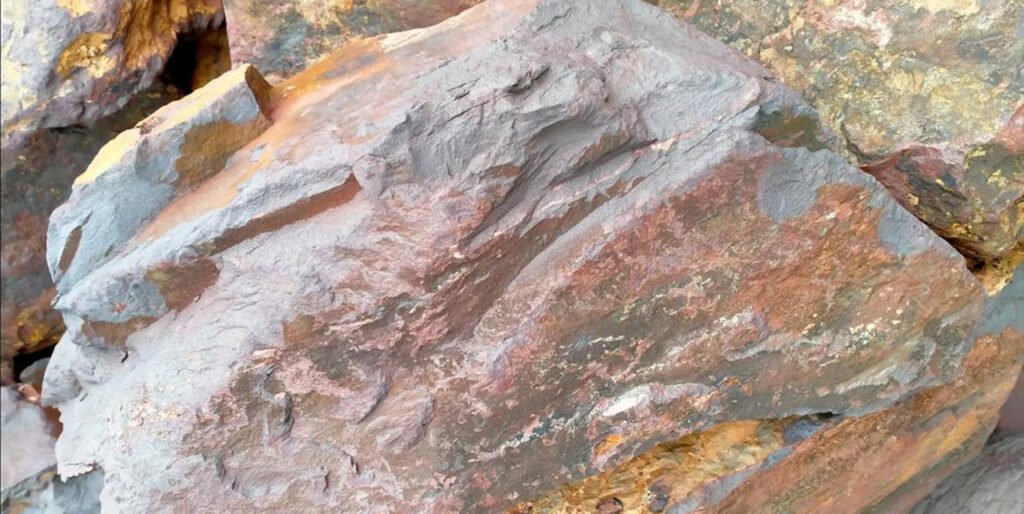
Limonite is not an independent mineral species, but rather an aggregate composed primarily of goethite, lepidocrocite, and fibrous hydrometallurgical minerals, mixed with impurities such as silica, clay minerals, and carbonates. Based on its geological origin and associated mineral assemblage, it can be divided into two types: oxidative residual limonite and sedimentary limonite. Oxidative residual limonite forms in the oxidation zone of sulfide deposits, developing a distinctive iron cap structure under long-term oxidation, serving as a direct indicator for geological prospecting. Sedimentary limonite is mostly developed in reducing environments such as swamps and wetlands with long-term water accumulation, also known as swamp limonite; this type of limonite has a relatively lower impurity content.
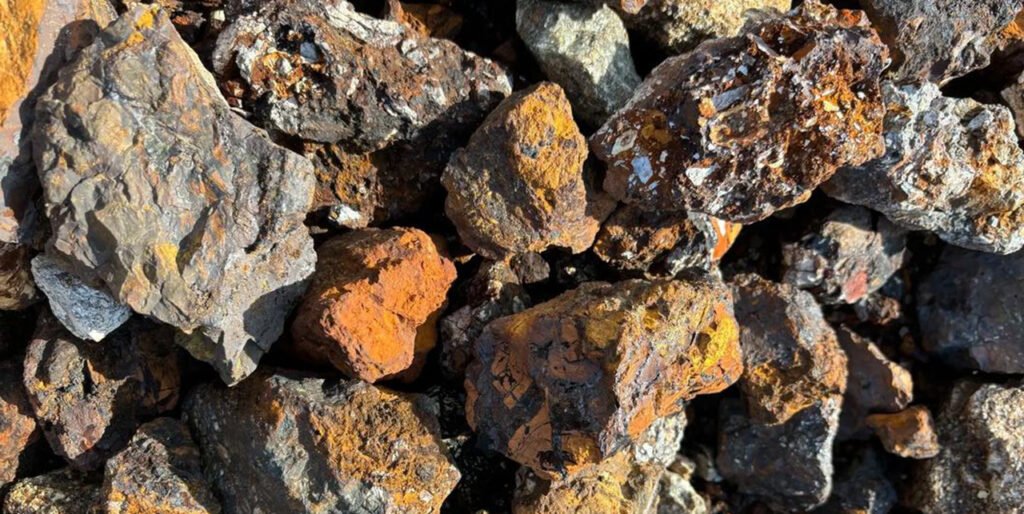
In industrial production, based on the main components of the associated gangue, limonite is classified into two types: skarn type and high-silica type. Skarn type limonite is mainly composed of limonite, hematite, and quartz, while high-silica type limonite is mainly composed of limonite, hematite, goethite, and quartz. Both types of limonite have a yellowish-brown appearance and are the main targets for industrial beneficiation.
Physicochemical properties
The physicochemical properties of limonite are the core basis for mineral identification and beneficiation process design. Its key physicochemical parameters have been tested and verified by long-term industrial testing and geological analysis, and the stable range is shown in the table below:
| Property Category | Specific Indicator | Characteristic Description |
| Chemical Composition | FeO(OH)·nH₂O | Mixture of hydrated iron oxides, no fixed single molecular formula |
| Total Iron Content | 37%~55% | Significantly affected by water content and clay impurities, resulting in wide grade fluctuation |
| Macroscopic Morphology | Stalactitic, botryoidal, massive, porous | Different forms correspond to different geological origins; porous limonite is easy to grind and beneficiate |
| Specific Gravity Range | 2.9~4.3 | Density lower than hematite and magnetite, providing a basis for gravity separation processes |
| Mohs Hardness | 4~5.5 | Relatively low hardness, making crushing and grinding operations less difficult |
| Appearance Characteristics | Yellowish-brown to brownish-black, yellowish-brown streak | Stable surface color, an important basis for rapid field identification |
| Optical Properties | Earthy luster, opaque | No translucency, crystal system is orthorhombic |
| Magnetic Properties | Weakly magnetic | Extremely weak magnetism in natural state, cannot be directly separated by conventional magnetic separation |
Global distribution characteristics of limonite resources
Limonite is found on every continent globally, primarily as an associated deposit, with relatively few large, independent deposits. Its distribution is highly correlated with geological structure and sedimentary environment, mainly concentrated in oxidation zones and wetland sedimentary areas.
In the Americas, US limonite is mainly distributed in the Appalachian Mountains and the Midwest geological zone, primarily in small to medium-sized deposits. Brazil's Iron Quadrangle region boasts significant limonite reserves, associated with high-grade iron ore, possessing high potential for collaborative development. In Europe and Russia, the Ural Mountains, with their complex geological structure, are the primary limonite deposit area in Russia, often associated with other metal deposits.
In Oceania, Australian limonite is concentrated in the Pilbara region of Western Australia, coexisting with hematite and magnetite, serving as a supplementary type of regional iron ore resource. In Asia, Indian limonite is mainly distributed in Prakkasan district along the Andhra Pradesh coast, with a stable occurrence. Limonite resources have been discovered in several provinces of China, all existing as associated deposits within various iron ore deposits, without large-scale independent mining areas. In Africa, limonite is distributed among various iron ore deposits, mainly in a dispersed manner, with no large, contiguous deposits.
Limonite beneficiation and processing technology and supporting equipment
The core technological challenges of limonite are its naturally weak magnetism, high water content, and dispersed gangue impurities. Single sorting technology cannot achieve efficient enrichment of iron minerals. In industrial production, it is necessary to select a combined process or a single process based on the grade of the raw ore and the type of gangue. Furthermore, ore beneficiation tests must be conducted before all large-scale production to determine the optimal process parameters and supporting equipment.
Mainstream mineral processing technology principles and processes
Magnetized roasting-magnetic separation process
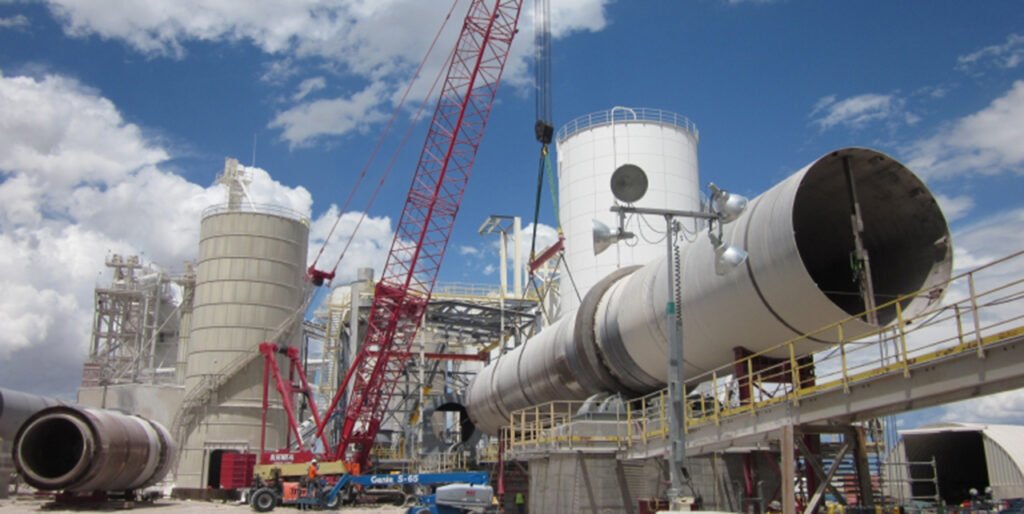
This process is a core technology for processing low-grade, difficult-to-process limonite, suitable for complex limonite with an iron content of around 48% and gangue composed of quartz and illite. The core of the process is high-temperature reduction roasting, which transforms weakly magnetic limonite into strongly magnetic magnetite, while simultaneously removing free water and crystal water from the ore, thus increasing the iron content.
The process flow consists of four stages: The raw ore undergoes coarse and fine crushing to control the particle size to around 2mm, completing particle size pretreatment; the ore is mixed with a reducing agent and then subjected to magnetized roasting at high temperature to achieve mineral phase transformation and dehydration; after roasting, the ore is ground to the target particle size to ensure complete liberation of the iron minerals from the gangue; finally, magnetic separation equipment separates the magnetic iron minerals from the non-magnetic gangue to obtain a high-grade iron concentrate.
When processing raw ore with an iron content of 48.01%, this process can yield an iron concentrate with an iron content of 62.94% and a recovery rate of 87.99%, making it the preferred solution for large-scale mineral processing projects.
Reselection process
Gravity separation relies on differences in mineral density to achieve separation, requiring no high-temperature roasting or chemical reagents. It is suitable for limonite with high iron content, fine particles, and few clay impurities. A typical application scenario is a small to medium-sized concentrator. For example, a raw ore with an iron content of 49.27% and gangue consisting of quartz, calcite, and clay can be separated into iron concentrates with an iron content of 60.1% and a recovery rate of 57.32% after crushing, desliming, grinding, and shaking table gravity separation.
Comparison of Beneficiation Process Adaptability
Different mineral processing technologies have significantly different applicable conditions, technical advantages, and limitations. Industrial design can be flexibly selected based on project scale and ore properties. A detailed comparison is shown in the table below:
| Process Type | Applicable Ore Type | Core Advantages | Existing Limitations | Suitable Project Scale |
| Magnetization Roasting - Magnetic Separation | Low-grade, complex, difficult-to-process limonite | High iron concentrate grade, high resource recovery rate | Long process flow, relatively high energy consumption | Large-scale beneficiation plants |
| Gravity Separation Process | High-grade, fine-grained, easy-to-process limonite | Simple process flow, no chemical pollution, low investment | Relatively low recovery rate, small processing capacity | Medium to small-scale beneficiation projects |
Core processing equipment and functions of the entire mineral processing process
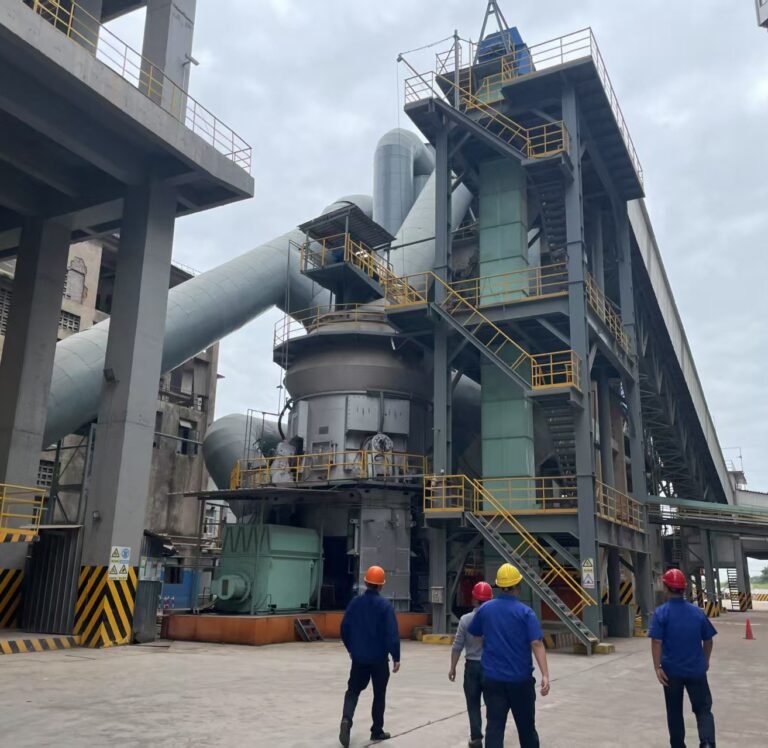
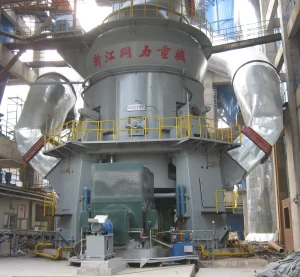
The industrial processing of limonite must follow a complete process of "crushing-screening-vrm grinding-separation". Each step requires dedicated processing equipment to complete continuous operation. Different equipment plays a specific role in the process. Considering the characteristics of limonite, such as low hardness, high clay impurity content, and weak magnetism, the equipment type should be adapted accordingly to ensure beneficiation efficiency and iron concentrate quality.
Crushing process
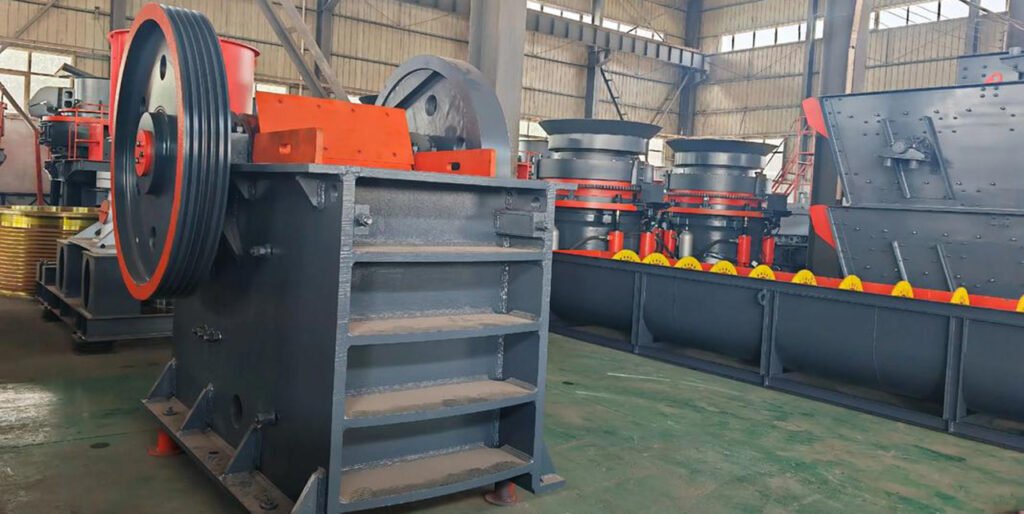
Crushing is the core pretreatment stage in limonite processing, employing a two-stage crushing method with coarse and fine crushing equipment working in tandem. The primary coarse crushing equipment is a jaw crusher, which works by using the relative movement of the moving and fixed jaws to compress and shear the large chunks of limonite ore after mining, reducing the particle size from tens of centimeters to a dozen centimeters. This initial dismantling significantly reduces the workload of subsequent fine crushing processes, perfectly suited to the relatively low hardness and easily crushable characteristics of limonite, avoiding ore pulverization and waste caused by over-crushing. The fine crushing equipment commonly uses a roller crusher, relying on two relatively rotating rollers to grind and crush the coarsely crushed ore, precisely controlling the particle size to around 2mm. This meets the feed requirements for subsequent roasting or grinding processes. Its gentle crushing force reduces the fine mud generated by brittle crushing of limonite, minimizing impurity interference.
Screening process
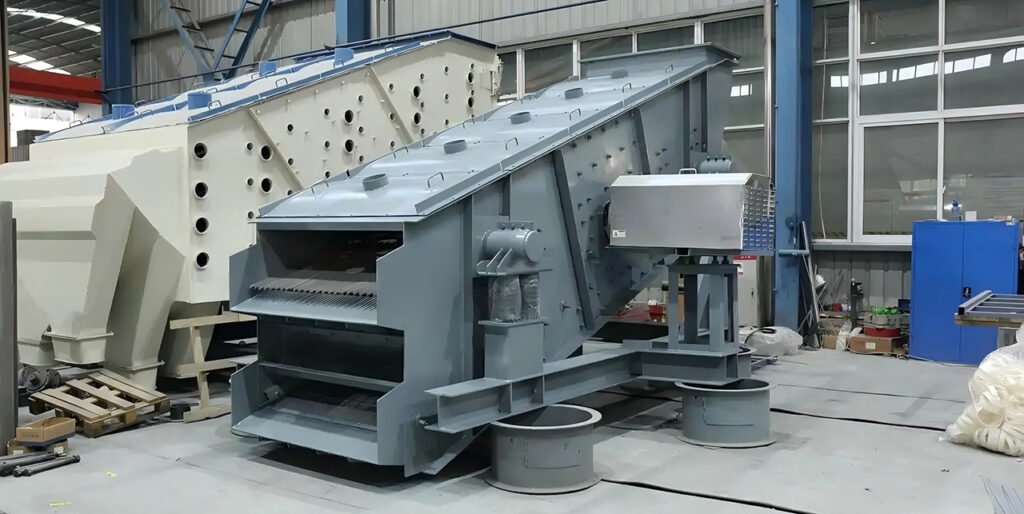
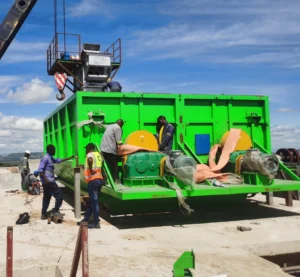
The screening process is equipped with two types of specialized equipment, each suited to different process requirements. Vibrating screens are primarily used for particle size classification after crushing. These typically employ linear vibrating screens, driven by a motor to vibrate the screen body at high frequency. The crushed limonite is then stratified according to particle size. Ore that meets the target particle size enters the next processing stage, while coarse ore is returned to the fine crushing equipment via a reflux device for further crushing. This achieves closed-loop particle size control, ensuring uniform feed to subsequent processes and preventing uneven particle size from affecting grinding or roasting. Drum screens are mainly adapted for gravity separation processes. Their core function is desliming. The main body of the equipment is an inclined drum screen. After the limonite ore enters the drum, as the drum rotates, clay, slurry, and other fine impurities adhering to the ore surface fall off through the screen gaps, completing desliming. This effectively prevents fine mud from encapsulating the iron minerals, improving the separation accuracy of subsequent gravity separation processes and adapting to the characteristic of limonite containing a high amount of clay impurities.
High-temperature roasting equipment
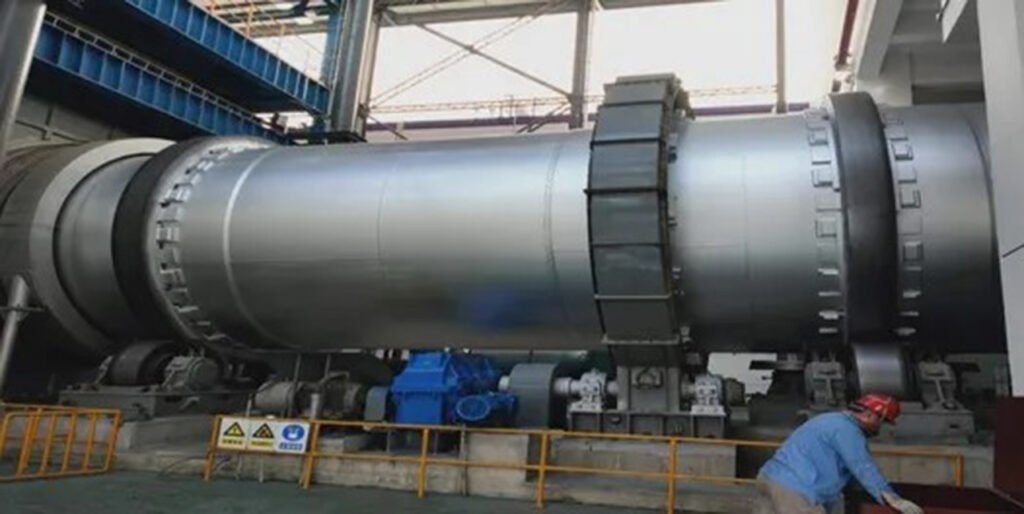
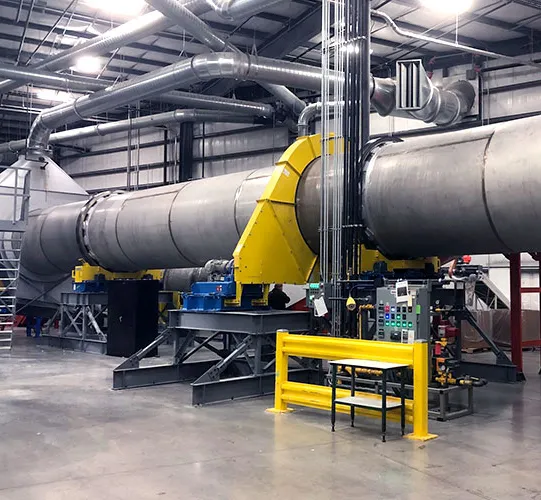
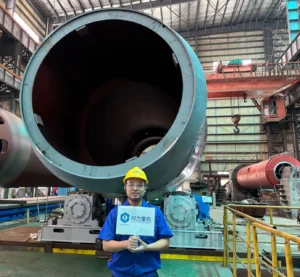
High-temperature roasting equipment is the core equipment in the magnetization roasting-magnetic separation process. It primarily uses a rotary kiln, whose working principle involves the rotation of the kiln body to thoroughly mix the limonite ore with a 5% proportion of pulverized coal reducing agent. Simultaneously, an external heating device maintains the kiln temperature stably at 850℃ for 15 minutes, providing a sealed, constant-temperature operating environment for the reduction and magnetization of limonite. During roasting, the rotation of the rotary kiln ensures uniform heating of the ore, achieving thorough removal of free water and crystal water. It also transforms weakly magnetic limonite into strongly magnetic magnetite, completing a mineral phase transformation and fundamentally improving the ore's separation performance. It is a key piece of equipment for upgrading and improving the efficiency of low-grade limonite, and its operational stability directly determines the iron concentrate grade and recovery rate in subsequent magnetic separation processes.
Grinding equipment
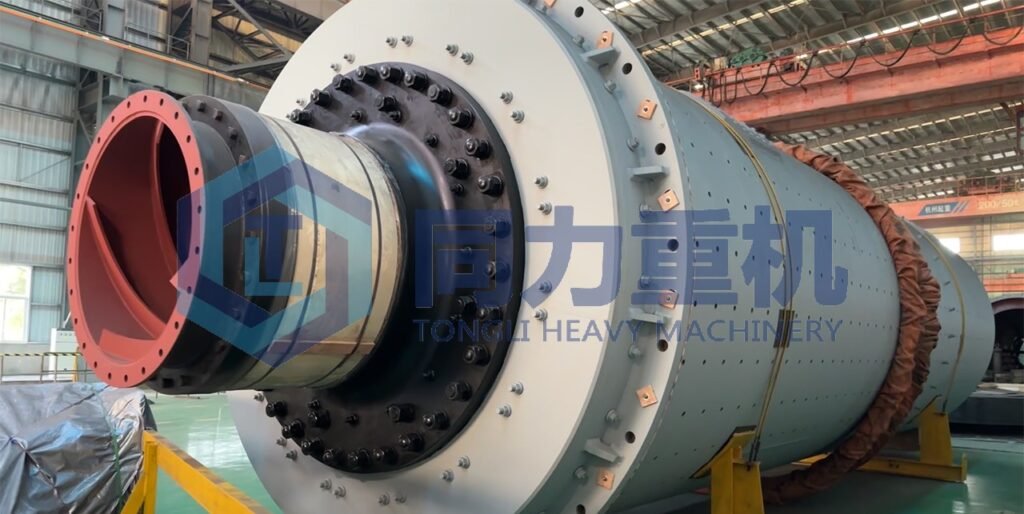
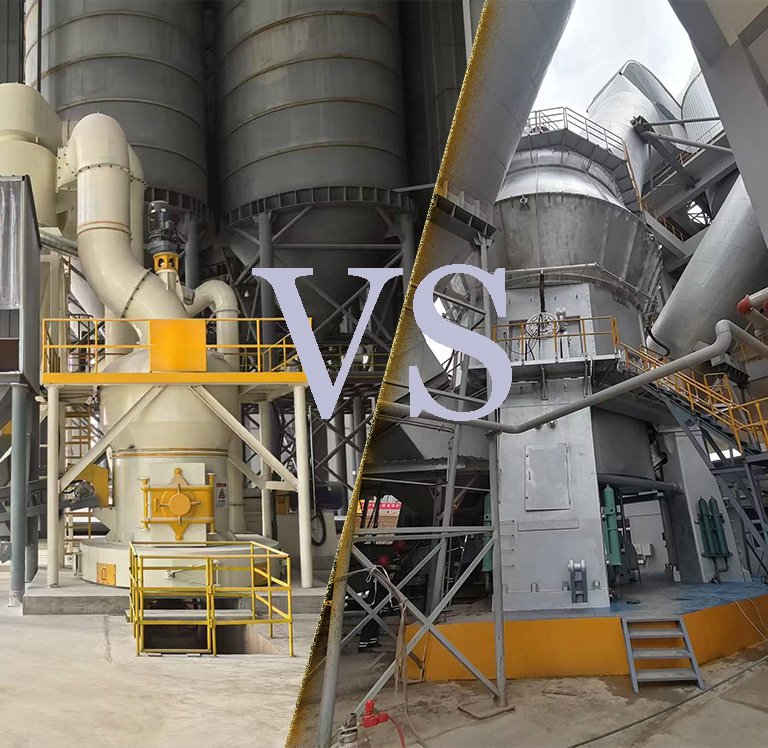
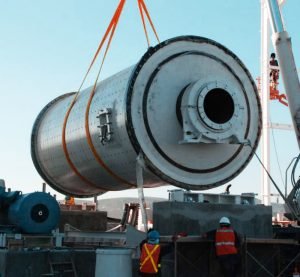
Grinding equipment is mainly used for the fine grinding of ores. The core equipment is the ball mill. Its working principle is that the cylinder is driven by a motor to rotate. The grinding balls (steel balls or wear-resistant alloy balls) inside the cylinder rotate with the cylinder, generating centrifugal force and impact force. This repeatedly impacts and grinds the roasted magnetized ore or the raw ore after gravity separation pretreatment, so that the iron minerals and gangue minerals are fully liberated. In view of the easily grindable characteristics of limonite, the size and filling rate of the grinding balls can be adjusted to control the grinding intensity and ensure that the proportion of 0.074mm particles in the ore after grinding reaches about 85%. This provides a good material basis for subsequent sorting processes. Precise control of grinding particle size is the core prerequisite for improving sorting efficiency.
Sorting equipment
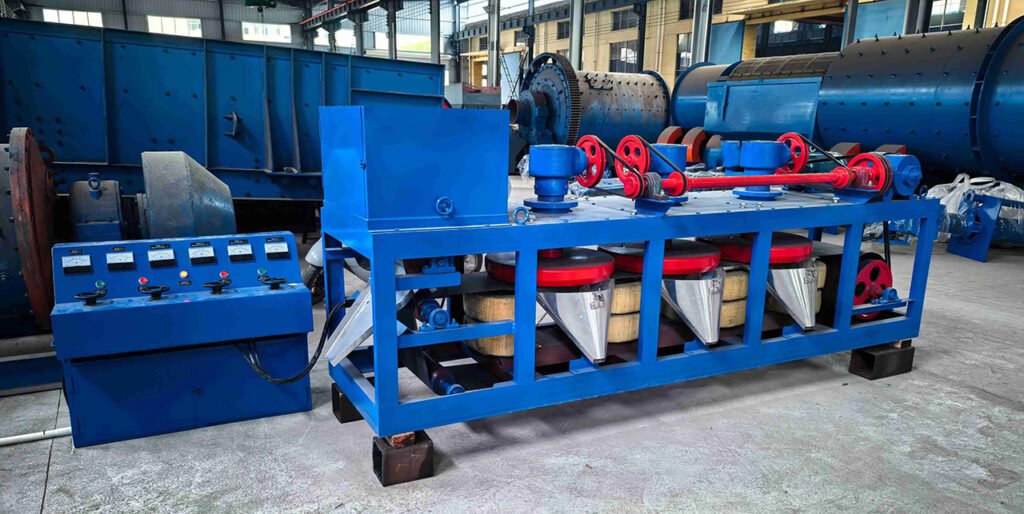
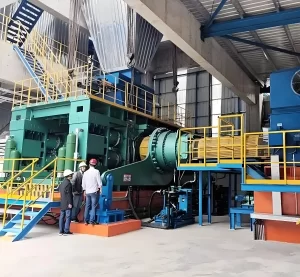
Separation equipment is divided into two categories based on different mineral processing techniques: magnetic separation equipment and gravity separation equipment, specifically designed for different grades of limonite. Magnetic separation equipment is mainly used in the magnetization roasting-magnetic separation process. The core equipment is a permanent magnet separator. Its working principle is to generate a stable magnetic field through permanent magnets. When the roasted magnetized ore (strongly magnetic magnetite) passes through the magnetic field area, the magnetic iron minerals are adsorbed by the magnetic field, while the non-magnetic gangue minerals (quartz, illite, etc.) are not affected by the magnetic field and flow out with the slurry, achieving efficient separation of iron minerals and gangue. The magnetic field strength can be adjusted according to the magnetic properties of the ore to adapt to the magnetic changes of limonite after roasting, ensuring that the iron concentrate grade meets the standards. Gravity separation equipment is mainly used in gravity separation processes. The commonly used equipment is a shaking table. Its working principle relies on the density difference between iron minerals and gangue minerals. Under the reciprocating motion of the shaking table and the washing action of the slurry, the high-density iron minerals settle to the enrichment zone on the surface of the shaking table, while the low-density gangue minerals are discharged with the slurry, thus completing the separation. This equipment does not require chemical reagents or high-temperature treatment, is simple to operate, and is suitable for the separation of high-grade, fine-grained limonite. It is suitable for application in small and medium-sized concentrators.
Diverse industrial applications of limonite
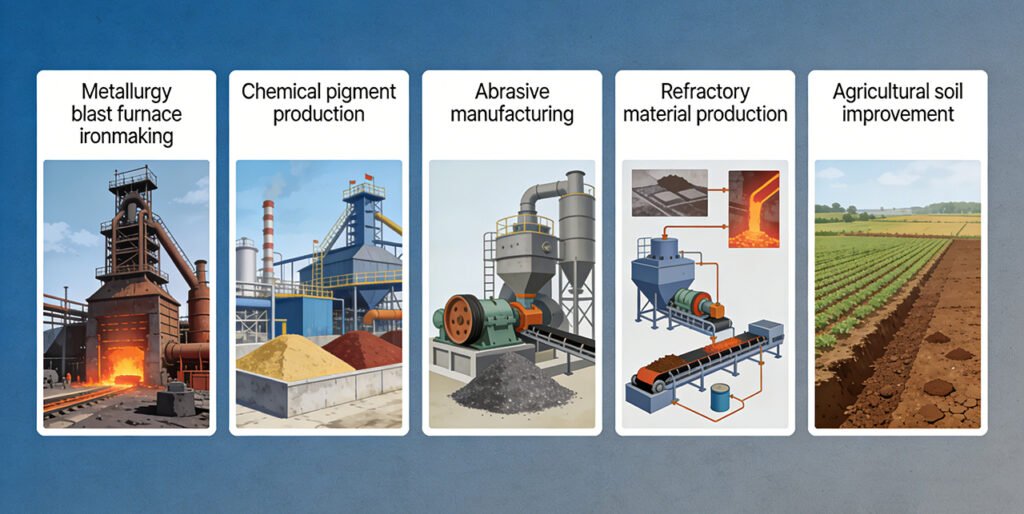
After beneficiation and purification, limonite, with its diverse physicochemical properties, can be applied in multiple fields such as metallurgy, chemical industry, materials manufacturing, and agriculture, making it an industrial raw material with comprehensive utilization value.
- In the metallurgical industry, limonite concentrate, after sintering, can be used as a raw material for blast furnace ironmaking. Sintered lumps improve the permeability of blast furnace burdens, optimize smelting conditions, and reduce energy consumption, serving as an auxiliary raw material for steelmaking and providing basic steel materials for industries such as construction, machinery, and transportation.
- In the chemical industry, limonite is an important raw material for iron-based chemical products. Purified iron can be used to prepare iron powder, magnetic materials, and can also be used to produce inorganic pigments and industrial catalysts, meeting the raw material needs of fine chemicals and materials chemicals.
- In the abrasive manufacturing industry, leveraging the hardness and wear resistance of limonite, it is processed into products such as sandpaper, grinding wheels, and industrial abrasives. These are suitable for surface grinding in industries such as metal processing, tile production, and glass manufacturing, offering low cost and stable wear resistance.
- In the refractory materials field, limonite's high-temperature stability is utilized as a raw material for refractory bricks, refractory coatings, and refractory clays. These products can be applied in metallurgical furnaces, high-temperature chemical equipment, and high-temperature experimental devices, maintaining structural integrity under high-temperature environments, providing protection and insulation.
- In agriculture, limonite can be used as a soil conditioner. The iron and trace elements in the ore can replenish soil nutrients, improve soil aggregate structure, regulate soil pH, reduce soil acidity, enhance soil fertility, and provide a suitable environment for crop growth.
Identification of limonite with similar iron ores and key geological issues
Limonite, hematite, and magnetite are the three most commonly used iron ores in industry. They differ significantly in composition, physical properties, and processing characteristics, and can be accurately distinguished using multi-dimensional indicators, as detailed in the table below:
| Distinguishing Dimension | Limonite | Hematite | Magnetite |
| Total Iron Content | 37%~55% | Approaching 70% (typically 60%~70% in ores) | Exceeding 70% (up to ~72.4% theoretical) |
| Mineral Magnetism | Naturally weakly magnetic | Non-magnetic | Strongly magnetic |
| Mohs Hardness | 4~5.5 | 5.5~6 | 5.5~6.5 |
| Appearance Color | Yellowish-brown to brownish-black | Red (or reddish-brown to steel-gray) | Black, iron-black |
| Mineral Structure | Mixed aggregate, no regular crystals | Regular crystal structure | Regular crystal structure |
| Chemical Composition | Mixture of hydrated iron hydroxides (FeO(OH)·nH₂O) | Ferric oxide (Fe₂O₃) | Ferroso-ferric oxide (Fe₃O₄) |
The relationship between limonite and gold
Limonite minerals themselves do not have the ability to accumulate gold, and there is no inherent gold component in the ore. In nature, gold is mainly found in quartz veins or associated with sulfides such as pyrite. The gold found in limonite deposits is a symbiotic phenomenon of gold with other minerals in the deposit, not that the limonite itself contains gold. This characteristic is an important basis for mineral resource assessment and exploration.
Conclusion
Limonite, as an important component of global iron ore resources, is characterized by low iron grade and complex mineral composition. However, its wide distribution and diversified applications make large-scale development feasible. Mineralogically, limonite is a hydrous iron oxide aggregate with stable physicochemical properties. Its iron cap structure serves as an effective indicator for geological exploration. Globally, it is mainly found in associated deposits, concentrated in core geological structural regions of major continents.
In terms of beneficiation processes, magnetic roasting-magnetic separation can effectively solve the separation problems of low-grade limonite, achieving a dual improvement in iron concentrate grade and recovery rate, suitable for large-scale industrial projects. Gravity separation is environmentally friendly and low-cost, suitable for small-scale high-grade limonite beneficiation. The two processes can be flexibly combined according to the ore properties. Regarding processing equipment, limonite beneficiation requires the coordinated operation of specialized equipment such as jaw crushers, roller crushers, vibrating screens, rotary kilns, ball mills, permanent magnet separators, and shaking tables. Each type of equipment is specifically adapted to the physicochemical characteristics of limonite, and its selection and parameter matching directly determine the beneficiation efficiency and the quality of the final product. In industrial applications, limonite is used in metallurgy, chemicals, abrasives, refractory materials, agriculture, and other fields, making it a mineral raw material with both basic industrial value and practical applications. Furthermore, limonite is easily distinguishable from hematite and magnetite, and can be quickly identified through appearance, magnetism, and composition. Its association with gold also provides a reference for mineral deposit exploration.