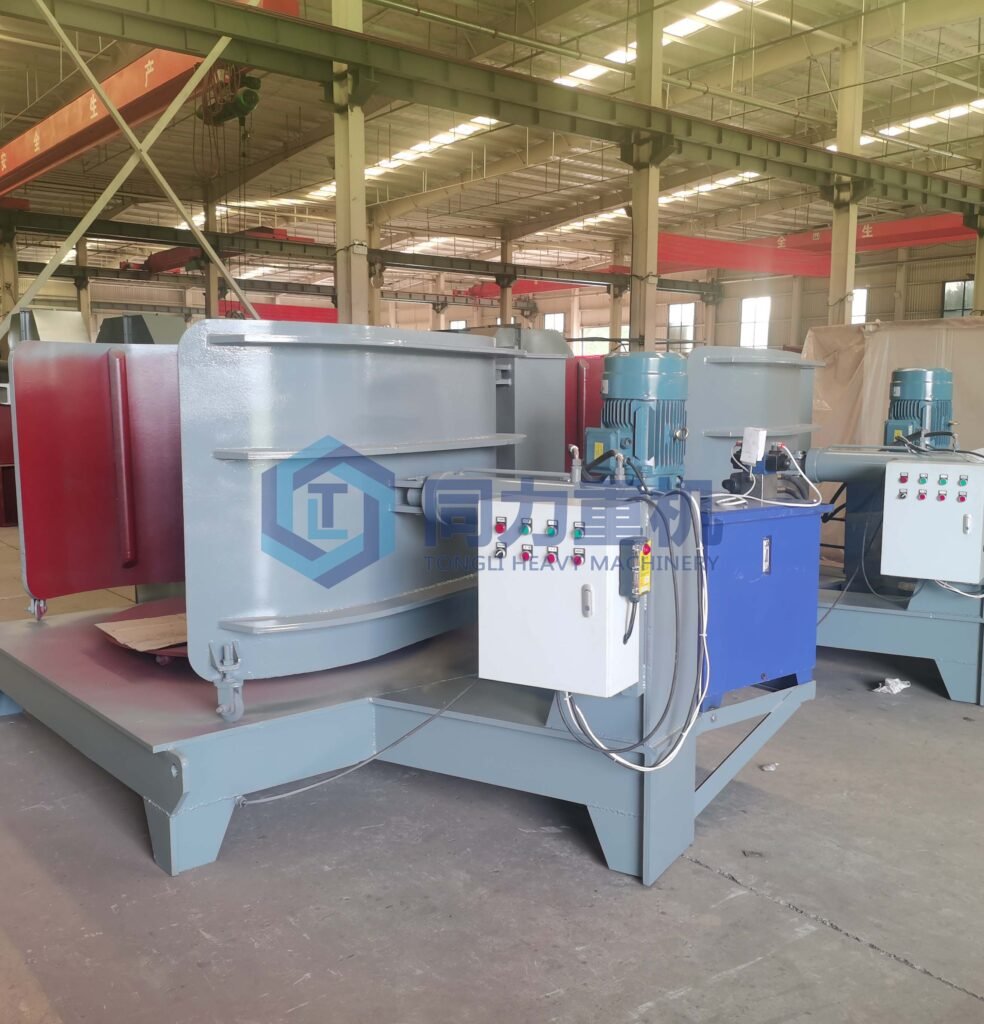
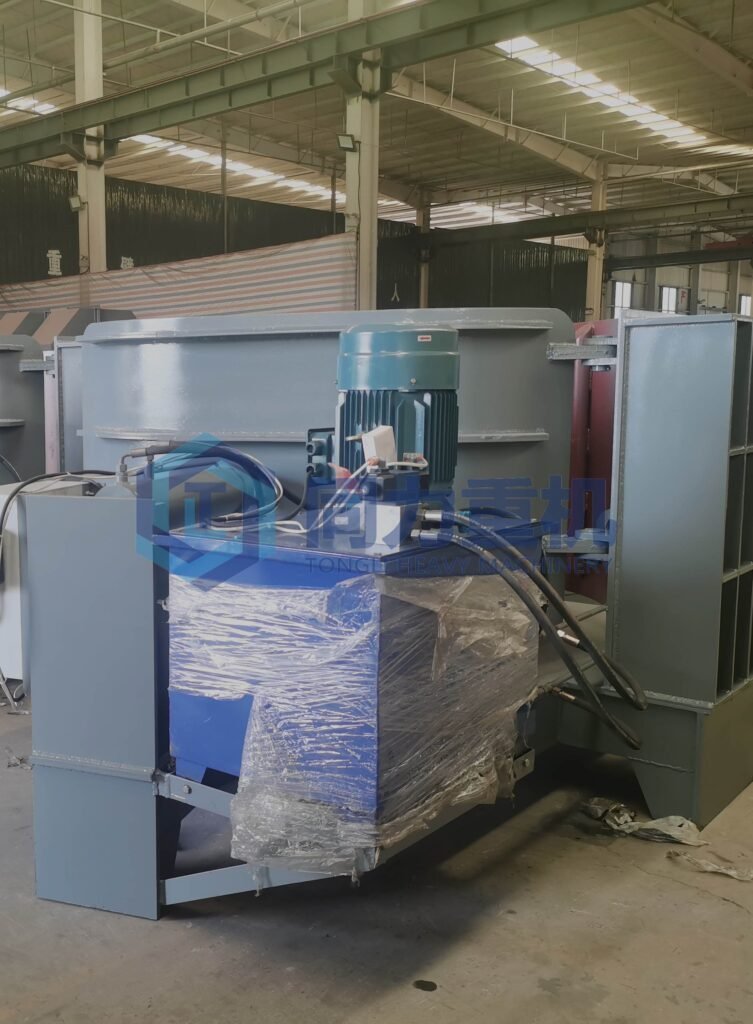
A bulk bag conditioner is a hydraulic machine designed to loosen and break up solid fertilizer materials that become compacted inside jumbo bags during storage or transport. Our TL-2000 series "BulkFlow Liberator" bulk bag conditioners uses powerful hydraulic pressure to soften hardened chemical blocks so they can flow smoothly through a bulk bag discharger. The machine is equipped with two arc-shaped hydraulic press plates that squeeze both sides of the bulk bag. A hydraulic rotary base allows the bag to rotate 0–90°, so the operator can condition multiple sides of the bag for better material flow. Users can easily adjust the hydraulic pressure, flow rate, and rotation angle. The control system supports both a local control cabinet and wireless remote control. This bulk bag conditioner machine can work as a stand-alone unit or as part of a complete bulk bag unloading system. The equipment size is 4200 × 2150 × 1610 mm and fits most standard jumbo bags. It only needs a power connection to start working. The production capacity is 30 bags per hour (continuous). Key technical features include an 11 kW motor, a 20 mm thick Q235B steel frame, reinforced arc press plates, a 90° hydraulic rotary chassis, and a high-pressure hydraulic station with a φ160 × 80 mm cylinder and adjustable 5–15 MPa working pressure. The unit also comes with both wireless remote control and on-site manual operation. If your fertilizer plant has harsh conditions, we can also comply to that by making it all SS304/316L stainless steel!
One machine, two jobs
A MACHINE YOU CAN DEPEND ON!
Tonne Bag Material Lump Extruder with Turntable, Solve the Problem of Hardened Bulk Bags,with 0 damage to the Packaging.
From day one, our "BulkFlow Liberator" was engineered specifically for the demanding environment of fertilizer production. That’s why it stands in a completely different league compared to the small, lightweight conditioners commonly seen on the market. Fertilizer raw materials—NPK, urea, ammonium salts, mineral powders, and other dense, moisture-sensitive chemicals—tend to harden into rock-like masses inside jumbo bags. Breaking them apart requires real industrial power, not hobby-grade hydraulics. TONGLI delivers that power with a massive φ160 × 80 mm hydraulic cylinder paired with an adjustable 5–15 MPa working pressure. This heavy-duty combination unleashes the force needed to penetrate and fracture even the most stubborn, highly compacted materials. While smaller machines struggle or fail, our system drives through solidified blocks with authority, restoring flowability with speed and consistency. Built with heavy-gauge frames, reinforced guides, and industrial-grade components, the TONGLI conditioner isn’t just strong—it’s born for bulk fertilizer conditioning.
The TONGLI Bulk Bag Conditioner can be equipped with a heavy-duty rotating turntable that allows operators to access every side of the jumbo bag without repositioning it manually. During conditioning, the turntable smoothly rotates the bag to multiple angles, enabling the hydraulic rams to target hardened material from all directions for a far more thorough and uniform breakup. This multi-angle conditioning not only improves efficiency and consistency but also eliminates dead zones that fixed-position systems often miss. Built for industrial loads, the turntable operates with precise control and high stability, ensuring safe rotation even when handling fully loaded 1–2 ton bags. The result is faster conditioning cycles, deeper penetration, and complete restoration of material flowability.
TONGLI bulk bag conditioners take the guesswork out of material conditioning with a fully automated control system. Once the operator positions the bag, the machine takes over—executing the entire conditioning cycle with precision, consistency, and zero need for manual intervention. The result is smoother operation, faster processing, and reliably uniform results every time. For added convenience and safety, the system also includes remote control capability, allowing operators to manage the cycle from a distance with ease.
| Item | Details |
| Product Name | Bulk bag conditioner |
| Product Model | TL-2000 |
| Certification | ISO9001/CE/TUV/SGS |
| Production Capacity | 30 packs/hour (continuous) |
| Bulk Bag Specifications | 1000–2000 kg |
| Size of Bulk Bags | 900×900×1000 mm — 1400×1400×1000 mm |
| Bill of Material | Carbon Steel, Stainless Steel(Optional) |
| Conditioner Way | Arc-shaped pressure plate with hydraulic conditioning |
| Base Structure | 90° hydraulic-drive rotary chassis |
| Operational Control | On-site control cabinet or remote control operation |
| Power Supply | 380V, 50/60 Hz, three-phase four-wire, 7.5 kW |
| Dimension | 4200 × 2150 × 1610 mm |
| Weight | 3.5/4t |
| MOQ | 1 set |
| Delivery Time | 30 days |
| Warranty | 1 Year after commissioning |
| Core Components | PLC, Motor, Pressure Vessel |
| Features | High Productivity, Easy To Operate, Long Service Life |
| Video Installation guide | Provided |
| Machinery Test Report | Provided |
| Type | Crusher |
| Place of Origin | Zhejiang, China |
A bulk bag conditioner is suitable for any material that becomes compacted, hardened, or lumpy inside jumbo bags during storage or transport. It is especially effective for bulk bags containing fertilizer, compound fertilizer, ammonium, mineral salt, ammonium chloride, ammonium phosphate, ammonium nitrate, urea, potassium chloride, industrial salt, nickel sulfate, cobalt sulfate, manganese sulfate, lithium-ion battery materials, industrial white/black carbon, sugar, sodium chloride, caustic soda, sodium nitrite, sodium acetate, citric acid, adipic acid, chloroacetic acid, feed, and feed additives. These materials often absorb moisture, pack tightly, or lose flowability, and a bulk bag conditioner helps loosen them to restore smooth and consistent discharge.
FIBC, or Flexible Medium Bulk Container, commonly known as ton bags/jumbo bags/big bags/bulk bags, is a flexible packaging container made primarily of polypropylene woven fabric. It can be lined with PE film, aluminum foil, or other materials as needed. Capacities typically range from 0.5 to 2 tons. It is equipped with lifting straps and inlet/outlet ports for easy loading and unloading by forklifts and cranes. It is widely used in the storage and transportation of powdery and granular materials (such as fertilizers, powdered chemicals, and mineral powders) in industries such as chemical, agricultural, and mining. Customized versions with features such as moisture-proof, anti-static, and food-grade properties are available to meet specific requirements. It complies with relevant standards such as ISO 21898 and offers advantages such as reduced logistics costs and improved loading and unloading efficiency, making it a commonly used piece of equipment for the storage and transportation of bulk materials.
While many suppliers emphasize complex safety enclosures, sensors, and interlock systems designed to satisfy universal applications, we focus on what truly matters to fertilizer plant managers: reliability, simplicity, and uninterrupted production.
Fertilizer plants operate in harsh environments with dust, corrosion, vibration, and continuous heavy loads. In such conditions, easy operation, fast bag handling, and a robust, overbuilt structure consistently outperform delicate mechanisms that require frequent calibration and maintenance.
Our bulk bag conditioner is not designed to impress on paper—it is designed to keep running day after day in real fertilizer plants. This deep understanding of fertilizer plant operations is why a simple, rugged, and purpose-built industrial design ultimately beats complexity every time.
Unlike general-purpose bulk bag conditioners designed for multi-industry use, our bulk bag conditioner is engineered exclusively for NPK compound phosphate fertilizer plants and other heavy industrial environments with established operational discipline and fixed material handling workflows.
In fertilizer production lines, jumbo bag conditioning is typically performed in a dedicated, controlled area where access is restricted by plant-level safety management rather than machine-mounted cages, doors, or light curtain systems.
Eliminating full-height doors, fixed safety cages, and laser light curtains allows our machine to achieve a more compact footprint, higher throughput, and smoother integration with upstream and downstream conveying systems, which are critical requirements in fertilizer plants handling large volumes of caked materials.
More importantly, fertilizer bulk bags often require high-impact, high-pressure conditioning forces, and open industrial layouts provide better visibility, easier maintenance, and faster bag changeover without compromising safety when proper plant procedures are followed. This dedicated industrial design philosophy differentiates our conditioner from universal machines that rely on additional guarding systems to adapt to varied applications and operator skill levels.
Bulk bag conditioning becomes necessary whenever powdered or granular materials fail to flow freely from bulk storage into downstream systems, such as pneumatic conveying lines, hoppers, or feeders for fertilizer processing. Over time, materials can compact, cake, bridge, or form hard lumps due to moisture absorption, vibration during transport, or long storage periods. When this happens, gravity alone is no longer enough to ensure reliable discharge.
Material conditioning refers to the measures used to restore flowability by breaking up compacted zones and loosening settled material. While manual intervention such as hammering bags or manually cutting and agitating material can temporarily solve the problem, it is labor-intensive, inconsistent, and disruptive to production. In contrast, mechanical bulk bag conditioning provides a controlled, repeatable, and highly efficient solution, using compression, impact, or vibration to disintegrate clumps before discharge begins.
By conditioning the bulk bag, compacted material is evenly redistributed and reactivated, allowing smooth, continuous flow into the conveying system. This not only prevents blockages and unplanned shutdowns, but also maximizes product recovery by ensuring that nearly all material is discharged from the bag. As a result, bulk bag conditioning significantly reduces downtime, minimizes material waste, and improves overall plant productivity.
Bulk bag conditioning is widely applied in industries such as fertilizers, chemicals, food processing, and pharmaceuticals where material consistency, flow reliability, and production efficiency are critical. Ultimately, whenever bulk materials show signs of poor flow, caking, or inconsistent discharge, bulk bag conditioning is the most effective way to restore process stability and keep operations running smoothly.
Improved Flow and Reliable Discharge: By breaking up hardened zones and loosening settled material, conditioning restores smooth, consistent discharge of powders and granules. This ensures uninterrupted material transfer, saves operating time, and eliminates the need for manual intervention to clear blockages.
Prevention of Compaction and Bridging: Over time, bulk materials settle, compact, and form bridges that restrict flow inside the bag or bin. Bulk bag conditioning applies controlled compression or vibration to reactivate the material, preventing internal blockages and restoring mass flow. The result is stable handling, higher productivity, and reduced downtime.
Reduced Waste and Maximum Product Recovery: Compacted materials often remain trapped inside the bag, leading to product loss. Proper bulk bag conditioning minimizes blockages and enables complete bag discharge, ensuring that nearly all material is delivered to production. This reduces waste, improves yield, and maximizes the value of every bulk bag.
1. Capacity and Footprint
Bulk bag conditioning systems must be correctly sized to match the bag dimensions, weight, and discharge rate. Undersized or overloaded equipment can lead to incomplete discharge or mechanical stress. In addition, sufficient floor space and headroom must be considered to ensure the conditioner integrates smoothly into the unloading area without restricting operations.
2. Material Compatibility and Structural Strength
Bulk bag conditioning places high dynamic loads on both the equipment and the bag itself. The system must be robustly constructed to withstand repeated compression, vibration, and impact in heavy-duty industrial environments. Equally important, bulk bags should feature reinforced seams, strong lifting loops, and tear-resistant fabric to prevent bag failure and material spillage during conditioning. Durable construction directly translates to safer operation, lower maintenance, and longer service life.
3. Safety and Standards Compliance
Appropriate safety measures—such as emergency stops, guarding, and interlocks—are essential to protect operators during bag handling and conditioning. Compliance with applicable industry and regulatory standards ensures the system delivers safe, reliable, and repeatable performance while minimizing the risk of accidents, contamination, or material loss.
4. Integration with Existing Systems
Seamless integration with existing unloaders, conveyors, hoppers, or silos is critical. A properly matched conditioning system enables continuous material flow, eliminates transfer bottlenecks, and ensures stable, uninterrupted production.
1. Heavy-Duty Main Frame and Compression Plates
The conditioner features a 20 mm thick base plate and 20 mm thick curved compression plates, all manufactured from Q235B structural steel for high strength and durability. The curved plates are reinforced externally with a cross-braced (grid) structure, while the inner arc is strengthened using φ76 × 6 mm seamless steel pipes (20# material). This design ensures maximum resistance to deformation under repeated high-pressure conditioning.
2. Rotating Turntable Assembly
A robust rotating base platform, constructed from Q235B steel, enables uniform conditioning of the bulk bag by allowing controlled rotation during the compression process, improving overall material loosening efficiency.
3. Hydraulic Power Unit
The hydraulic system is equipped with φ160 × 80 mm hydraulic cylinders with a 500 mm effective stroke, powered by a hydraulic plunger pump. The system is rated for 31.5 MPa, with an adjustable working pressure range of 5–15 MPa, providing strong yet controllable conditioning force for various bulk materials.
4. Control System
The conditioner is supplied with a dedicated electrical control cabinet, offering both wireless remote control and local manual operation. This dual-control configuration ensures flexible operation, precise control, and safe on-site handling.
1. Hygroscopic Caking & Salt Reversion
Moisture penetration caused by poor package sealing or high ambient humidity triggers deliquescence of hygroscopic materials like fertilizers, chemical powders. Dissolved components recrystallize upon drying, forming rigid crystal bridges between particles and leading to caking.
2. Mechanical Compaction
Vertical stacking exerts sustained pressure on lower bulk bags, reducing inter-particle voids and enhancing molecular adhesion. Transportation vibration further exacerbates particle friction and aggregation, especially for low-flowability powders, accelerating caking.
3. Temperature Fluctuation
Rapid temperature changes induce condensation inside bags: hot-to-cold transfer creates negative pressure, drawing in moist air that condenses on particle surfaces. Conversely, high temperatures boost moisture migration and surface viscosity, both of which facilitate caking.
4. Intrinsic Material Properties
Materials with strong hygroscopicity, fine particle size (large specific surface area), or soluble crystalline components are inherently caking-prone. Fine particles exhibit intense van der Waals forces, while soluble components form stable crystal bridges in the presence of moisture.
5. Prolonged Storage Time
Extended storage promotes gradual moisture and component migration, strengthening inter-particle bonding. Slow chemical reactions for example oxidation, hydrolysis of unstable materials generate viscous by-products, which accumulate over time and aggravate caking.
6. Packaging & Operational Deficiencies
Sealing defects like pinholes, loose stitching, rough handling-induced bag damage, or excessive moisture content of filled materials directly increase caking risks. Overfilling that stretches bag structures and compromises sealing also contributes to moisture ingress.
1. Control Humidity in Storage and Transportation Environment:
Maintain relative humidity below 60% during storage, and equip the environment with dehumidification equipment. Place pallets under the ton bags to prevent direct contact with damp ground and block moisture penetration. Materials must be dried before packaging to reduce the moisture content to below the critical clumping value (e.g., urea fertilizer must be ≤0.5%).
2. Upgrade the Sealing Performance of Ton Bag Packaging
Utilize multi-layer barrier ton bags, such as polypropylene woven bags with polyethylene linings or aluminum foil coatings, to improve moisture and air resistance. Replace stitched seals with heat-sealing at the bag opening to reinforce seams and prevent pinhole leakage. Control filling density to avoid overfilling that could lead to bag stretching, deformation, and seal failure.
3. Strictly Limit Stacking Height:
For chemical powders and fertilizers, ton bags should generally not be stacked more than 5 layers high. Use rigid pallets to evenly distribute pressure from the upper layers, reducing the risk of material caking and compaction in the lower layers. During loading and unloading, avoid throwing or dragging the ton bags to prevent damage and compaction of internal particles.
4. Store ton bags in a temperature-controlled warehouse:
Control the day-night temperature difference to no more than 5°C to avoid condensation inside the bags caused by sudden temperature changes; use insulated containers or cover with insulated tarpaulins for long-distance transportation to isolate the materials from the impact of external temperature fluctuations.
5. Add anti-caking agents. Add anti-caking agents such as silica, talc, or diatomaceous earth according to the material type and proportion, at a rate of 0.1%–1.0%. This reduces particle surface stickiness and improves flowability; adjusts the particle size distribution, appropriately increasing the proportion of coarse particles to reduce particle specific surface area and intermolecular attraction.
6. Implement First-In, First-Out (FIFO) Implementation
Shorten the storage period of ton bags. The maximum storage time for hygroscopic fertilizers and similar materials should not exceed 3 months. Regularly inspect the condition of ton bags, promptly checking for bag damage, moisture infiltration, and other problems. Handle materials with initial clumping separately.
7. Special Protection for Highly Hygroscopic and Easily Crystallizing Materials
For urea, ammonium nitrate, ammonium sulfate, and some inorganic salts, in addition to conventional moisture-proof measures, it is crucial to prevent dissolution-recrystallization agglomeration. It is recommended to place desiccants inside the ton bags or use airtight inner liners; if necessary, surface coating or anti-crystallization treatment should be applied to the material before packaging or bagging to prevent localized dissolution and re-solidification under fluctuating temperature and humidity conditions.
8. Install a Bulk Bag Conditioner/Bulk Bag Massager at the Discharge End (Last Line of Defense)
Even under strict storage and transportation management conditions, bulging of bulk bags cannot be completely avoided in industrial settings. Therefore, it is recommended to install a bulk bag conditioner/bulk bag massager at the unloading station. By applying controlled pressure to the sidewalls or bottom of the bulk bag, the bulging structure is broken up, restoring the material to a loose state and ensuring that the material smoothly enters downstream equipment, avoiding the safety risks associated with manual knocking or forcibly cutting the bag.
It depends, but for calcium nitrate and NPK compound fertilizer granules, processing with a bulk bag conditioner will not cause breakage or damage to the bulk bags under normal operating conditions.
1. Loose Agglomeration:
The clumping of calcium nitrate and NPK compound fertilizer granules is mainly caused by the compaction of their own weight due to long-term storage or moisture absorption due to environmental humidity. This is a typical loose agglomeration, rather than a high-strength, dense, hard agglomeration. Such agglomerates have low cohesion and their overall hardness is significantly lower than hard materials such as ores and metal particles. Furthermore, the granule surfaces are smooth and without sharp edges, preventing punctures or localized high-stress impacts on the ton bag during extrusion.
2. Low Pressure for De-caking
Addressing the aforementioned loose, agglomerated characteristics, the bulk bag extruder requires only relatively low extrusion pressure during operation to effectively break down the agglomerated structure, restoring the material's good flowability. The extrusion plates of the large-area bulk bag conditioner act evenly on the outer surface of the bulk bag, employing a distributed, flexible extrusion process. The stress level is far below the tensile and tear strength that bulk bags (typically polypropylene woven bags) can withstand, thus eliminating the risk of bulk bag breakage or bursting.
3. Material Compatibility with Ton Bag Materials
Calcium nitrate and NPK compound fertilizer granules are regular or near-regular granules, which will not produce sharp fragments during extrusion. Furthermore, under normal storage, transportation, and extrusion conditions, these materials are non-corrosive and will not chemically erode or structurally weaken the polypropylene material of the ton bag.
4. Controlled Adjustable Hydraulic Pressure
Industrial bulk bag conditioners are designed with adjustable hydraulic pressure and controlled cylinder stroke, allowing operators to precisely match the applied force to the material’s caking strength. For calcium nitrate and NPK granules, the system typically operates well below maximum pressure, ensuring effective de-caking without over-compression of the bag. This controlled movement prevents sudden impact loads that could otherwise damage the fabric or lifting loops of the ton bag.
5. Large-Area Curved Press Plates Reduce Stress Concentration
The conditioner uses large-radius curved pressing plates, which significantly increase the contact area between the machine and the ton bag. This design avoids point loading and edge cutting, distributing compressive stress evenly across the bag surface and eliminating localized stress concentrations that are the primary cause of bag tearing in poorly designed systems.
6. Ton Bag Safety Margin vs. Applied Load
Standard FIBCs (Flexible Intermediate Bulk Containers) are typically designed with a 5:1 or 6:1 safety factor relative to their rated load. The compressive forces applied during de-caking are static and controlled, not dynamic impact forces, and remain well within the structural safety margin of certified ton bags. As a result, bag integrity is maintained throughout the conditioning process.
7. No Relative Motion Between Bag and Press Surface
During operation, the ton bag remains stationary relative to the pressing plates, with no sliding, rubbing, or rotational friction. The absence of relative motion eliminates abrasion damage to the woven polypropylene fabric, which is a far more common cause of bag failure than compressive loading itself.
8. Proven Industrial Application History
Our products have been used in more than 100 fertilizer production lines for loosening hygroscopic raw materials such as urea, ammonium nitrate, ammonium sulfate, and compound fertilizers. Long-term industrial operation has demonstrated that, when properly selected and operated, the conditioner improves discharge flowability without compromising bag integrity.
A urea bulk bag lump breaker is not the same as a bulk bag conditioner, though both address urea caking in bulk bags—their core differences lie in working mechanisms, process placement, and application focus.
A bulk bag conditioner operates as a pre-processing device, using hydraulic/pneumatic pressure plates or arms to gently squeeze or “massage” intact bulk bags (often with turntable rotation) to loosen Lump formation in fertilizers like internal caking without damaging the bag, preparing the urea for smooth discharge before the bag reaches the emptying station.
In contrast, a urea bulk bag lump breaker is a post-discharge device installed at the bulk bag emptying station’s outlet, employing mechanical cutting (blades) or impact (hammerheads) to break down residual hard lumps that remain after initial discharge, reducing them to specified particle sizes via calibrated grids.
The conditioner targets loose agglomerations from storage/transport with a gentle action that minimizes dust and powdering, while the lump breaker handles harder, larger lumps that persist post-conditioning, ensuring compliance with downstream processing (e.g., conveying, dissolution) requirements. They may be used in tandem for comprehensive caking mitigation, but their sequential roles and operational methods are distinct.
In industries handling hygroscopic powders and granules, jumbo bags are widely used—but moisture absorption during storage and transport often leads to poor material flow, poor discharge, and material loss. A jumbo bag conditioner is specifically engineered to overcome this challenge. By applying controlled mechanical kneading, compression, and vibration to the exterior of the bag, the conditioner breaks down hardened agglomerates formed by moisture uptake without damaging the bag itself. This process restores the material’s original flowability, allowing it to discharge smoothly and consistently. As a result, hygroscopic materials such as urea, ammonium nitrate, ammonium sulfate, and compound fertilizers can be unloaded efficiently, eliminating manual intervention, reducing downtime, and ensuring stable downstream feeding.
A material is considered hygroscopic when it naturally draws moisture from the surrounding air during normal storage or handling. This invisible moisture uptake gradually alters the material’s behavior, often resulting in caking, loss of free flow, increased adhesion, or other unwanted physical changes. Hygroscopicity can be reliably identified by combining material documentation, environmental response, and practical handling observations.
The most direct confirmation comes from the material’s technical data. Safety Data Sheets (SDS), product specifications, and chemical reference manuals typically state whether a material is hygroscopic or moisture-sensitive. Many widely used fertilizers—including ammonium nitrate, urea, ammonium sulfate, and monoammonium phosphate—are clearly classified as hygroscopic because of their strong attraction to water vapor in ambient air.
In day-to-day operation, hygroscopic materials reveal themselves through characteristic storage and discharge behavior. Materials that appear dry at packaging may develop lumps or hard cakes after time in bags or silos, even when no liquid water is present. Bulk bags may feel heavier or unusually rigid, material may cling to bag walls, discharge rates become inconsistent, and problems such as bridging or rat-holing occur more frequently during unloading.
Environmental sensitivity provides further confirmation. Hygroscopic materials degrade rapidly in high-humidity environments, particularly when relative humidity exceeds 60–65%. When material performance improves noticeably under humidity control—such as in air-conditioned storage, sealed packaging, or with the use of desiccants—it is a clear indication that moisture absorption from the air is the root cause.
Although big bags are generally dust-tight, most standard FIBCs are not fully resistant to moisture ingress. Even when inner liners or enhanced packaging measures are used, extended storage or transport in humid environments will eventually allow water vapor to penetrate the bag. Hygroscopic materials gradually absorb this moisture, increasing inter-particle adhesion and causing the bulk solid to consolidate. As a result, materials that were originally free-flowing can lose their mobility and fail to discharge through the outlet spout during unloading. Sugar is a well-known example: prolonged exposure to humidity causes individual crystals to bond together, forming a dense, rigid mass that conforms to the internal shape of the bag.
Under these conditions, a bulk conditioner becomes a practical necessity rather than an optional accessory. Once caking has developed, gravity discharge alone is rarely sufficient, and manual intervention is inefficient, unsafe, and inconsistent. A big bag conditioner applies controlled mechanical forces—such as compression, kneading, or vibration to the exterior of the filled bag, breaking internal agglomerates without damaging the packaging. This restores material flowability, ensures complete and stable discharge, reduces unloading time and labor, and protects downstream processes from feed interruptions. For operations handling hygroscopic materials in jumbo bags, especially in regions with high ambient humidity, the use of a big bag conditioner is often the most reliable and cost-effective way to maintain production continuity and product quality.
Yes—fertilizer plants that handle compound fertilizer in bulk bags should use a compound fertilizer FIBC conditioner, and the reasons are practical, measurable, and proven in daily production.
Compound fertilizer stored in FIBCs is far more prone to caking than single-nutrient fertilizers. In fact, it is about three times more likely to form hard clumps due to moisture absorption and component interaction. Once caking occurs, manual breaking becomes slow and ineffective, reducing unloading efficiency by more than 40%. A compound fertilizer FIBC conditioner solves this problem by applying multi-directional compression to the bag, gently loosening internal agglomerates. This restores material flowability, improves unloading smoothness to over 95%, and effectively eliminates chute blockages and unplanned downtime.
From an operational and safety perspective, the benefits are even more significant. Manually handling one one-ton bag typically takes 3–5 minutes, limiting a single worker to only 20–30 tons per day. More importantly, bulk bag handling accounts for approximately 65% of logistics-related workplace injuries in fertilizer plants. An FIBC conditioning machine operates automatically, triples handling efficiency compared with manual work, and can run continuously for 24 hours. By minimizing direct human contact with fertilizer, it reduces safety risks by more than 75%.
Material loss and product quality are also greatly improved. Traditional manual crushing generates excessive dust, leading to material losses of around 3% and negatively affecting product consistency. In contrast, the controlled and gentle conditioning process keeps material loss below 0.5% and prevents nutrient degradation, avoiding the 15%–20% reduction in fertilizer utilization commonly caused by over-crushing and dusting.
In addition, compound fertilizer FIBC conditioners are fully compatible with automated production lines. They can be seamlessly integrated with automatic bag unloading, conveying, packaging, and palletizing systems. A single line can achieve a stable output of 20–30 tons per hour, enabling continuous and largely unmanned operation. With improved efficiency, lower labor costs, reduced losses, and higher safety standards, the typical equipment investment payback period is only 1.5 to 2 years, making it a highly cost-effective solution for modern fertilizer plants.
1. An ammonium nitrate Big bag massaging system improves discharge flow by gradually breaking down caked material through controlled hydraulic compression. The recommended compression force ranges from 40 to 120 tons, depending on the degree of caking:
40–60 tons for lightly caked bags to protect FIBC integrity;
80–100 tons for moderate to severe caking to effectively fracture agglomerates. Excessive force should be avoided, as over-compression can densify the material and worsen flowability.
An intermittent massaging mode is strongly recommended: compress for 10–15 seconds, release for 20–30 seconds, then repeat. This rhythm restores internal particle structure and promotes smooth gravity discharge. Prior to operation, ensure the hydraulic system is filled with ISO VG 46 hydraulic oil to maintain stable and responsive pressure transmission.
2. Use Rotational Massaging for Multi-Directional De-Caking
When equipped with a rotating turntable, the FIBC massager can apply compression from multiple directions. After the initial horizontal compression, rotate the bag 45° or 90° before the next cycle. This multi-axial loading breaks the overall caking structure of ammonium nitrate and eliminates dead zones caused by single-direction force. For heavily caked bags, 2–3 cycles of “compress–rotate–recompress” are typically sufficient to fully loosen the material. Remote or PLC-based control allows precise adjustment of rotation angles while keeping operators at a safe distance.
3. Make sure you correct the bag positioning and optimize the discharge Interface, the bulk bag should be placed centrally between the curved compression plates using a forklift or hoist, with the discharge spout aligned vertically toward the downstream conveyor or feeding system. After massaging, the bag can remain suspended for direct discharge. Installing a flexible discharge hopper below the spout is recommended to prevent spillage and to reduce the risk of re-bridging once the material is loosened. The equipment requires no special foundation and can be operated directly on floors with a bearing capacity of ≥5 t/m².
4. Explosion Protection and System Integration, due to the hazardous nature of ammonium nitrate, the bulk bag massager must be fitted with explosion-proof motors, solenoid valves, and electrical components, and the entire system must be properly grounded to prevent static accumulation. All material-contact parts should preferably be made of AISI 304 stainless steel to minimize friction-induced sparking. For high-throughput operations, a PLC automatic control mode can be activated, with preset compression force, holding time, and rotation cycles, enabling a safe, repeatable, and efficient discharge process. Any remaining large lumps should be manually broken before discharge to prevent downstream blockage.
A bulk bag loosening machine restores fertilizer flowability by mechanically breaking down caked material inside FIBC bags. Although double-plate and double-rod conditioners serve the same bulk bag caking problem, their loosening mechanisms differ due to how force is transmitted to the material. Choosing the correct structure according to the caking pattern is critical to avoid bag damage or secondary compaction.
The double-plate bulk bag loosening machine applies pressure through large-area surface contact using two synchronized hydraulic plates. This uniform compression method is ideal for fertilizers with wide-spread, low to medium density caking, such as urea and compound fertilizers. The plates advance slowly, hold for 10–15 seconds, and then fully retract, allowing the bag to rebound and internal cracks to form within the caked mass. Repeating this compression-release cycle two to three times effectively loosens large agglomerated zones while maintaining bag integrity. Light plate movement during discharge further prevents bridging at the outlet.
The double-rod bulk bag loosening machine uses two cylindrical compression rods to deliver concentrated line pressure, making it suitable for localized, high-density hard lumps formed by moisture-sensitive fertilizers such as ammonium nitrate and monoammonium phosphate (MAP). The rods penetrate the material mass, applying short holding pressure combined with low-speed rotation (5–10 rpm) to introduce shear forces. A controlled back-and-forth motion then kneads and fractures hard lumps progressively, achieving efficient loosening without excessive force.
In practice, double-plate machines are preferred for overall bulk loosening, while double-rod machines excel at targeted hard-lump breakdown. Understanding fertilizer characteristics and caking distribution ensures the correct bulk bag loosening machine is selected for safe, efficient, and reliable FIBC discharge.
A bulk bag discharger is designed to safely support, open, contain, and empty FIBC bags. It includes a rigid support frame, bag lifting and sometimes hoisting device, spout access chamber, dust-tight sealing, and often downstream conveying or metering equipment. Its primary function is to control the entire unloading process from bag positioning and tensioning to clean, contained, and complete discharge. For difficult materials, bulk bag dischargers can be equipped with bulk bag flow aid system such as bag massagers, bag tensioners, or liner clamps to ensure consistent discharge without manual intervention.
A vibratory discharger is not a standalone unloading system. It applies mechanical vibration through a vibrating base, hopper, or chute to encourage material flow. Vibration works by temporarily reducing internal friction, but it does not address bag support, dust containment, spout control, or safety. In many cases, vibration alone is insufficient for compacted or hygroscopic materials, as it can actually cause finer particles to settle and increase compaction rather than relieve it.
From a performance standpoint, a bulk bag discharger provides controlled, repeatable, and safe unloading, especially for materials prone to caking, such as fertilizers, chemicals, and powders. It allows the integration of targeted flow aids (massagers instead of constant vibration), which loosen material progressively without damaging the bag or densifying the product. Vibratory dischargers are more suitable for free-flowing materials or as a minor auxiliary device beneath a hopper, but they lack the process control required for reliable FIBC handling.
1. Compact Design with Heavy-Duty Strength
TONGLI equipment is engineered to save valuable plant space without compromising structural strength. Its industry-leading compact footprint is supported by a heavy-duty 4” × 10” structural carbon steel tube frame, delivering exceptional rigidity and long-term reliability even in demanding industrial environments.
2. Engineered for Safety and Structural Integrity
Safety and durability are core design priorities at TONGLI. Each machine undergoes Finite Element Analysis (FEA) during development to ensure optimal stress distribution, structural stability, and operational safety, providing operators with confidence and long-term peace of mind.
3. Reduced Downtime and Improved Material Flow
To minimize downtime caused by blockages, TONGLI systems apply up to 75,000 lbs of conditioning force, effectively breaking down even the toughest agglomerates. This high-force capability maximizes throughput, improves material consistency, and keeps production running smoothly.
4. Consistent Operation Under Heavy Loads
The use of heavy-duty structural tubing and thick carbon steel plate construction prevents frame deflection and mechanical binding. This robust design ensures smooth, consistent operation even during continuous, high-load conditioning cycles.
5. Patented Pivoting Conditioning Arms
TONGLI’s patented pivoting conditioning arms are designed to apply controlled, adaptive pressure to bulk materials. This dynamic movement improves conditioning efficiency while reducing stress on bags and equipment.
6. Faster Setup and Higher Throughput with Touchscreen HMI
A user-friendly touchscreen HMI allows operators to configure material conditioning recipes quickly using pre-loaded templates. Adjustable parameters—including conditioning height, cycle count, arm pressure, and turntable rotation—enable rapid changeovers and significantly reduce setup time. Integrated features such as bag-top conditioning, bag squaring, and precise pressure control help eliminate production bottlenecks and ensure repeatable results.
7. Industry-Leading Compact Footprint with Maximum Impact
Despite its compact size, TONGLI equipment delivers maximum operational impact. Integrated safety systems—including interlocked access doors, light curtains, and safety scanners—reduce risk, limit liability, and ensure compliance with international safety standards without interrupting workflow.
8. Flexible Machine Guarding Options
To meet specific operational and safety requirements, TONGLI offers customizable guarding solutions, including polycarbonate, acrylic, perforated metal, expanded metal, or solid sheet metal panels, providing flexibility across different plant environments.
9. Hydraulic Lift Platform for Operational Flexibility
The TONGLI hydraulic lift platform accommodates a wide range of bulk bag sizes and configurations. With 48 inches of vertical travel and a 4,000-pound load capacity, it supports flexible material handling while maintaining precise positioning throughout the conditioning process.
10. Optimized Workflow and Rotary Handling
Workflow efficiency is enhanced through a heavy-duty 48-inch powered rotary turntable, a hydraulic lift cylinder, and a precision heavy-rail tracking system. These components work together to ensure smooth rotation, accurate alignment, and minimal downtime.
11. High-Performance Hydraulic System
TONGLI’s hydraulic system is built for demanding continuous-duty applications. Featuring dual 5 GPM pumps, a 10 HP motor, and a 30-gallon hydraulic reservoir, the system delivers stable pressure, fast response, and consistent performance. A durable four-station manifold, pressure relief valve, sight gauge, and plated steel fittings ensure precision control and long service life.
12. Optional Upgrades for Advanced Applications
Optional upgrades are available to meet high-throughput and extreme operating conditions, including automated bag loading and removal systems, reduced cycle-time packages, hydraulic oil coolers, and low-temperature operating configurations.
The pressure of a bulk bag material bridging reconditioning machine is not inherently fixed; it is a design choice determined by the application. In principle, pressure flexibility is fundamental to safe and effective de-bridging because bulk materials behave very differently depending on particle size, moisture uptake, storage time, and degree of compaction. A single, universal pressure setting cannot respond to all material conditions—it may be insufficient for hard bridges or excessive for sensitive products, increasing the risk of FIBC damage or secondary compaction.
In machines designed for multi-product or frequently changing materials, pressure is adjustable through the hydraulic system. Operators can regulate pressure limits, holding time, stroke length, and cycle frequency using hydraulic valves, PLC logic, or an HMI interface. This allows conditioning force to be matched precisely to the material state, ensuring controlled loosening rather than aggressive crushing.
However, in many fertilizer plant applications, the situation is different. Fertilizer production lines typically handle fixed or highly predictable materials—such as urea, ammonium nitrate, compound fertilizer, or monoammonium phosphate. In these cases, a fully adjustable pressure system is not always necessary. Instead, the machine can be engineered with a predefined working pressure that is already optimized for the material bridging in bulk bags.
For TONGLI bulk bag reconditioning machines supplied to fertilizer plants, this optimization is achieved at the design stage. The required conditioning force is calculated based on material properties, and the appropriate hydraulic oil cylinder size is selected accordingly. This results in a pressure range that is effectively “fixed” in operation, yet precisely matched to the application—delivering consistent de-bridging performance without the complexity of frequent pressure adjustment.
In practice, both approaches serve the same goal: reliable material flow without damaging the bag or over-compacting the product. Adjustable-pressure systems offer maximum flexibility for variable materials, while application-specific, pre-configured pressure designs provide stability, simplicity, and repeatability for fertilizer plants with well-defined material profiles.
A bulk bag, formally known as a Flexible Intermediate Bulk Container (FIBC)—and commonly referred to as a tonne bag or super sack—is a high-capacity industrial packaging solution engineered for the storage and transportation of dry, free-flowing bulk materials. Constructed from woven polypropylene fabric, bulk bags combine exceptional tensile strength with low self-weight, enabling the safe handling of payloads of up to 2,000 kg while maintaining structural integrity during lifting, stacking, and transport.
Bulk bags are extensively used across industries to handle materials such as fertilizers, grains, chemicals, minerals, sand, powders, and plastic resins. Their typical construction features a reinforced fabric body, integrated lifting loops compatible with forklifts and cranes, and configurable top and bottom filling or discharge spouts that facilitate efficient loading and controlled, dust-minimized unloading.
To address diverse operational and regulatory requirements, bulk bags are available in a wide range of designs, including food-grade FIBCs, static-control bags (Type C and Type D), and heavy-duty constructions for abrasive, hygroscopic, or high-density materials. Compared with rigid containers, bulk bags offer superior payload efficiency, reduced packaging and transportation costs, minimized storage space requirements, and strong reusability, making them a preferred packaging solution in modern fertilizer plants and bulk material handling systems worldwide.
Within NPK compound fertilizer production lines, bulk bags serve a critical function in both raw material logistics and finished product handling. Key materials such as urea, ammonium phosphate, potassium chloride, and blended NPK granules are routinely packaged in FIBCs for storage, internal transfer, and bulk shipment. Their high capacity and flexible handling characteristics enable fertilizer producers to streamline packaging operations, reduce manual labor, and support efficient downstream processes, including bulk bag discharging, material conditioning, and automated feeding into blending or granulation systems.
Agglomeration, bricking, and solidification inside bulk bags are persistent challenges in bulk material handling. Flexible Intermediate Bulk Containers (FIBCs) are widely used across industries to store and transport materials ranging from food powders to fertilizers, chemicals, and minerals. However, when materials harden or cake during storage or transit, they lose their natural flowability. If left uncorrected, these solidified masses can block downstream equipment, interrupt production flow, increase manual intervention, and introduce serious safety risks during unloading. So in order to solve this you can contact TONGLI at www.cementl.com we will offer you all rounded solution to your bulk bag caking.
The right bulk bag conditioning equipment should be selected based on the severity of material agglomeration inside the FIBC. Different solutions provide very different levels of force, control, and safety.
1. Bag massagers are small pneumatic paddles or vibrators integrated into a bulk bag unloader frame. They provide limited force—typically around three tons—and are intended for minor compaction or light bridging. While helpful for free-flowing powders, they are often ineffective against heavy caking or solidified materials.
Features: Hydraulic compression plates and pivoting massage arms are the core working elements of bulk bag conditioning systems. Compression plate conditioners apply controlled pressure from two opposing sides at a fixed height, making them well suited for moderately caked, uniformly compacted materials. For more demanding applications, advanced conditioners use hydraulic pivoting massage arms that travel vertically along the bag. This full-height, targeted conditioning reaches both the top and bottom zones that fixed plates often miss, making it ideal for severely agglomerated or unevenly compacted materials.
2. Forklift-based manual conditioning, such as shaking, dropping, or striking the bag, is not recommended. This approach offers no force control and significantly increases the risk of FIBC damage, material spills, and operator injury, while delivering inconsistent results.
Features: Rotating turntables further enhance conditioning performance by slowly spinning the bulk bag during operation. This allows pressure to be applied from all sides, ensuring consistent loosening and complete breakdown of stubborn lumps rather than treating only one face of the bag.
3. A bulk bag conditioning system is a dedicated station using hydraulic compression plates or pivoting massage arms to squeeze and knead the bag, effectively breaking up hard agglomerates. Standalone bulk bag conditioners can apply tens of tons of controlled force, making them suitable for moderate to severe caking and bricking. Advanced models feature vertically traveling massage arms and rotating turntables, allowing multi-directional conditioning and full-height coverage of unevenly compacted materials.
Features: Integrated bag massagers, typically mounted on bulk bag unloader frames, use pneumatic paddles or vibratory pads to gently press or shake the bag and encourage material flow. These devices are effective for mild compaction or light bridging, but they provide limited force and are generally ineffective for heavy caking or hard bricking. For materials such as sugar, waxy solids, or wet crystalline powders, a dedicated bulk bag conditioning unit installed upstream of the discharge station is usually required to restore reliable flow.
Not every bulk bag requires mechanical conditioning. The need for conditioning depends on material behavior, bag condition, and process efficiency requirements.
The degree of agglomeration is the primary factor. Light caking or soft lumps can often be handled by built-in bag massagers or may break apart during discharge. However, hard agglomeration or full bricking requires a dedicated bulk bag conditioning cycle to restore reliable flow.
Material sensitivity and product value also influence the decision. High-value or moisture-sensitive materials benefit from controlled conditioning to avoid contamination, blend inconsistency, or extended mixing times caused by undissolved lumps.
Bag integrity must be evaluated before conditioning. Strong, multi-trip FIBCs typically tolerate conditioning forces well. Older bags, weak seams, or thin disposable FIBCs carry a higher rupture risk and may require reduced-force methods. Modern conditioners address this through adjustable pressure settings and controlled cycles to prevent over-compression.
Finally, throughput considerations often justify conditioning equipment. Operations that frequently encounter caked bulk bags gain faster unloading, reduced manual labor, and improved safety with a dedicated conditioning station. For rare or mild caking, manual methods may suffice, but with increased operational risk.
1. Bag Rupture and Spillage
Excessive force applied to a weakened FIBC can cause fabric tearing, seam failure, and material spillage. This risk is reduced by bulk bag conditioners that secure the bag within an enclosure or use compression plates to distribute pressure evenly. Bag integrity should be monitored during conditioning, and the cycle stopped immediately if overstretching or seam damage is observed.
2. Dust Release and Containment
Conditioning can release dust, especially with fine powders or bags with minor leaks at seams or spouts. As the bag is compressed, fines may escape from the discharge spout or fabric pores. Effective systems use dust-tight enclosures, spout clamps, or containment shrouds. For hazardous or potentially explosive materials, conditioning should be performed in a sealed chamber with ventilation or inert atmosphere.
3. Over-Conditioning
Excessive or repeated conditioning can over-reduce particle size or generate heat through friction. While most powders tolerate short compression cycles, long conditioning or hard, abrasive agglomerates may cause material degradation. Conditioning force and cycle count should be limited to what is necessary to restore flow. Typical automated cycles last only a few minutes.
4. Equipment Stress and Maintenance
Bulk bag conditioners operate under high loads and require routine inspection. Hydraulic systems, frame welds, and safety interlocks must be checked regularly. Jams or abnormal resistance can damage equipment if not addressed. Pressure relief valves, guarding, and scheduled maintenance are essential for safe and reliable operation.
1. Why are safety features critical on a bulk bag conditioner?
Bulk bag conditioners apply extremely high force and can easily crush wood or metal. Always operate the machine with all guards, doors, and safety cages fully closed. Modern conditioners are equipped with light curtains, interlocked doors, or safety gates that stop operation if breached. These features must never be bypassed or disabled.
2. What training do operators need?
Operators must be trained to start and stop the conditioning cycle correctly and to recognize abnormal conditions. Never reach into the machine or cut the bag while conditioning is in progress. If inspection or manual intervention is required, lockout-tagout procedures must be followed to ensure the machine cannot restart unexpectedly.
3. How should the bulk bag be secured before conditioning?
The bulk bag must be properly positioned and secured on the conditioning platform to prevent slipping or shifting. The conditioner should be sized to accommodate the full bag dimensions. If conditioning a partially discharged bag, the discharge spout must be securely retied to prevent uncontrolled material release when the bag is compressed.
4. Is noise a safety concern?
Yes. Hydraulic systems can generate high noise levels during operation. Depending on the installation and duty cycle, hearing protection may be required for operators working near the conditioner.
5. How can ergonomics and workflow improve safety?
Plan the workflow so forklifts or hoists can load and unload bulk bags smoothly. This minimizes manual handling and reduces the risk of strain or injury. Efficient material flow not only improves safety but also increases overall operational efficiency.
Decanting, also referred to as bulk bag unloading, is the safe and controlled process of transferring material from a bulk bag (FIBC) into the next stage of production. After conditioning, the material is typically restored to a free-flowing state, but it still must be released from the bag and guided smoothly into a hopper, feeder, conveyor, or downstream processing equipment. The primary goal of decanting is to move material out of the FIBC cleanly, steadily, and safely, without creating dust, blockages, or sudden surges.
Under ideal conditions, decanting is straightforward: the bulk bag is lifted by a forklift or hoist, secured on a bulk bag unloader frame, and the discharge spout is untied or opened to allow gravity flow at a controlled rate. However, when handling materials that were previously agglomerated, compacted, or difficult to flow, decanting requires additional control measures. Spout clamps, dust-tight enclosures, flow-assisting devices, or controlled feeding systems are often used to prevent bridging, spills, or excessive stress on downstream equipment. Proper decanting ensures that conditioned materials move reliably into the process, protecting both product quality and operational safety.
Standard spout unloading is the most common and controlled decanting method for reusable bulk bags. The FIBC is lifted and secured on an unloading frame positioned above a receiving hopper, and the discharge spout is safely untied or released through an access mechanism on the station. High-quality bulk bag unloaders are equipped with spout clamping systems and flow-control devices such as iris valves or pinch bars, allowing operators to start, stop, and regulate material flow as needed. This method is ideal for free-flowing powders and granules, as it offers excellent control and the ability to retie the spout if required. To improve full evacuation, modern dischargers often incorporate hopper vibration pads or side-mounted bag massage paddles that help release the remaining material.
Bag splitting is used when material is too solidified to discharge through a spout, or when the bulk bag has no discharge spout. In this approach, the FIBC is opened to allow material to fall freely by gravity. Because this can release large volumes of material quickly, bag splitting is typically performed inside a dedicated enclosure or with purpose-built equipment to control dust and flow.
Manual cutting involves an operator opening the bag with a knife or blade. While simple, this method carries significant risks, including operator injury and uncontrolled discharge due to uneven or oversized cuts. For these reasons, manual bag splitting should only be used as a last resort and under strict safety controls.
Engineered splitter frames provide a safer and more predictable alternative. These systems use integrated blades housed within a contained chute. The bag is either lowered onto fixed knives or the blades are raised into the bag, cleanly opening it and directing material into a hopper below. Splitter frames empty bags thoroughly, reduce direct operator contact, and handle even thick or reinforced FIBCs that are difficult to cut manually. They are widely used in high-throughput operations with single-use bags, where speed and consistency are more important than bag recovery.
In some processes, bulk bags are decanted into intermediate containers or conveying systems rather than directly into a hopper. One specialized solution is the Disposable FIBC Unloader (DFU). A DFU station is designed to discharge material straight into downstream conveying equipment, such as aero-mechanical conveyors or pneumatic conveying systems, eliminating intermediate storage. These systems are well suited to continuous processes, where steady material flow is critical. Many DFU setups also support loss-in-weight dosing or batching by mounting the bag frame on load cells, effectively turning the bulk bag into a controlled gravimetric feeder.
1. How does bag type affect the decanting method?
The type of bulk bag is a primary factor. Reusable FIBCs are designed with discharge spouts and are best unloaded using spout-access dischargers with clamping systems, allowing the bag to be preserved for reuse. Single-trip or disposable bulk bags offer more flexibility, as they do not need to be saved and can be split open for faster unloading. The bag type often dictates the equipment choice, from spout-based unloading stations to splitter-frame systems.
2. How does material flowability after conditioning influence the choice?
Material condition after conditioning is critical. If the material flows freely or breaks into manageable pieces, spout discharge is usually effective. However, if large clumps remain, if the material forms a rigid column shaped like the bag, or if it continues to arch and bridge, spout unloading may become impractical. In such cases, a bag-splitting method is often required. Some operations use a hybrid approach—starting with the spout and switching to cutting if flow remains poor.
3. Why does process throughput and flow control matter?
Downstream process requirements strongly influence the decanting method. When material must be fed at a controlled rate, a spout discharge combined with a valve, feeder, or metering screw is essential. A rapid “full-column” dump can easily overwhelm downstream equipment. If the goal is simply to transfer the entire bag into a surge hopper or intermediate container, a faster dump method may be acceptable.
4. How important is containment and dust control?
Dust control is a major safety and cleanliness concern. Fully enclosed spout discharge systems with dust extraction provide the highest level of containment. While splitter frames can also be enclosed, sudden bag opening generally releases more dust than controlled spout flow. For hazardous or fine powders, cutting the bag open can create dangerous dust clouds. In these cases, a sealed spout discharge or enclosed chamber should be used.
5. What if large lumps remain after conditioning?
If large agglomerates are expected, the decanting method should allow immediate handling of those lumps. Splitter frames can be positioned over coarse screens or directly above lump breakers, forcing material through size-reduction equipment as it discharges. When sizable chunks are present, an open dump onto a breaker or conditioning grid is often more effective than attempting to force them through a spout.
Unloading bulk bags containing non-free-flowing or previously agglomerated materials presents specific safety and operational risks. These risks can be effectively controlled through proper equipment design, flow aids, and disciplined operating procedures.
1. Spout blockage and choking
Even after conditioning, large agglomerates may lodge in the discharge spout, causing blockage or choking. This can lead to ratholing, where a narrow flow path forms while a stable arch remains above, resulting in erratic discharge. Operators should never attempt to clear blockages by probing the spout or squeezing the bag. Instead, use larger-diameter spouts, spout-mounted vibrators, or a small lump breaker at the spout outlet to restore flow safely.
2. Uncontrolled release and surge flow
When cohesive material suddenly collapses, the entire bag contents may discharge in a surge, overwhelming downstream hoppers or conveyors and creating excessive dust. To prevent this, operators should stand clear during start-up and rely on flow-control devices such as iris valves, pinch valves, or telescoping discharge tubes. Controlled discharge equipment allows flow to be started gradually and regulated without manual intervention.
3. Bag rupture during unloading
Damaged or weakened FIBCs can rupture unexpectedly as internal loads shift during unloading, releasing a large mass of material at once. This risk is reduced by pre-use bag inspection, including seams and lifting loops, and by unloading within stations equipped with safety cages or containment hoppers to capture material in the event of bag failure.
4. Bag remnants in splitter operations
During split bag unloading, pieces of FIBC fabric may enter the product stream, posing contamination risks—especially in food, pharmaceutical, or chemical applications—and potentially jamming downstream feeders or screws. Engineered splitter frames are designed to retain the bag carcass after cutting. Operators should remove remnants using tools, and downstream protection should be considered where contamination risk is critical.
5. Ergonomics and workflow hazards
Bulk bags are positioned using forklifts or hoists, and risk is highest when bags are suspended or aligned with the hopper. Sudden movement or snagging can cause uncontrolled swinging. Use rated lifting equipment, keep personnel clear of suspended loads, and employ tag lines or spotters for accurate positioning. When untying a spout, expect minor leakage and maintain a safe stance away from the discharge path.
Lump breaking is the process of reducing oversized lumps, agglomerates, or hardened chunks of bulk material into a uniform, free-flowing particle size so the material can be processed reliably downstream. These lumps often form during storage, transport, or handling due to moisture absorption, compaction, crystallization, or pressure inside bulk bags (FIBCs).
Lump breaking is closely related to bulk bag conditioning, but the two serve different and complementary purposes. Bulk bag conditioning acts on the entire bag from the outside, using controlled compression or massage to loosen the mass and restore overall flowability so the material can be discharged. Its goal is to break internal bridges and relieve compaction—not to control particle size.
Lump breaking comes after conditioning and decanting. Even when a bag discharges successfully, large chunks can still exit the spout. A lump breaker—installed under the discharger, at the hopper outlet, or before feeders and conveyors—then crushes or mills these remaining agglomerates to a safe, consistent size. This step prevents downstream problems such as blockages, uneven mixing, poor dosing accuracy, or quality defects.
In short, bulk conditioning enables flow, while lump breaking using lump breaker ensures uniformity. In demanding applications—such as NPK compound fertilizer production, chemical processing, and continuous feeding systems—both steps work together to deliver stable material flow, protect equipment, and maintain consistent product quality.
1. Rotary lump breakers:
Widely used for moderate agglomeration after bulk bag conditioning and decanting. They employ rotating blades or paddles working against a fixed grid to shear and fracture lumps as material passes through. Oversized agglomerates are reduced to a controlled size—typically below 10–20 mm—before entering downstream equipment. Installed beneath bulk bag dischargers or in transfer chutes, rotary lump breakers ensure continuous, inline protection for feeders, conveyors, and mixers.
2. Screens and breaker grids:
Povide a simple, passive form of lump control. Material discharges onto a fixed grid that allows fines to pass while retaining oversized pieces. These lumps can then be broken manually or with a basic agitator. While low-cost and maintenance-free, this method is best suited for soft agglomerates, low-throughput systems, or as a safety barrier to protect downstream machinery from foreign objects or oversized chunks.
For fertilizer plants and applications where hard agglomerates or powder-level size reduction is required, TONGLI supplies purpose-built crushing equipment designed specifically for chemical and fertilizer materials.
3. DAP cage crushers:
Commonly used for breaking hard, dense agglomerates such as diammonium phosphate (DAP) and other phosphate-based fertilizers. The cage structure, fitted with high-speed rotating bars, delivers strong impact forces that rapidly disintegrate solid blocks into fine particles. Cage crushers are ideal for high-capacity NPK compound fertilizer lines where consistent particle size is essential for blending and granulation.
4. Chain mills:
Provide a highly flexible solution for both lump breaking and size reduction. Inside the mill, multiple rows of rotating chains generate impact and attrition forces that shatter agglomerates on contact. Chain mills are effective for sticky, moist, or variable materials and are widely used in fertilizer reprocessing, organic fertilizer, and chemical powder applications where traditional crushers may clog.
5. Urea bulk crushers
Specifically engineered for urea and urea-based compound fertilizers. These machines break urea lumps without excessive heat generation or fine over-grinding, preserving material quality while restoring flowability. They are typically installed downstream of bulk bag dischargers or storage hoppers to ensure smooth feeding into granulation, coating, or blending systems.
1. Material Brittleness:
Solids that are fragile and breakable tend to shatter with ease, meaning a low-intensity lump breaker or even the conveying equipment itself can fulfill the lump-breaking requirement. On the other hand, tough and malleable substances—such as waxes, polymers, and damp fibrous materials—may either smear or fail to break apart neatly. For these materials, specialized breaker configurations are often required, including slower-rotating rotors, cutting blades, or pre-cooling treatments to enhance brittleness. The design of the lump breaker should be selected based on the specific breaking characteristics of the material in use. For fatty or moist agglomerates that have the potential to clog screens, an open-rotor design equipped with anti-adhesive coatings may be necessary.
2. Lump Dimensions and Rigidity:
It is essential to assess the maximum possible size of lumps that emerge from conditioned bags. A basic screening device may prove adequate in instances where the agglomerates are soft and no larger than a golf ball. Conversely, a motorized lump breaker becomes a necessity if the lumps surpass the size of a cricket ball or exhibit high rigidity. In numerous industrial processes, a threshold for maximum acceptable lump size is established, and this criterion serves to define the appropriate grid dimensions or crusher clearance.
3. Throughput Capacity and Process Continuity:
The lump breaker must be capable of handling the volume of material discharged from the bags. In scenarios requiring high throughput, consideration should be given to employing twin-shaft lump breakers or arranging multiple units in a parallel configuration. Another key decision involves determining whether the lump breaker will operate non-stop as bags are emptied, or if material will first be collected and then processed in batches. Continuous production processes commonly integrate the lump breaker into the inline system, ensuring a steady flow of material. For batch operations, it is feasible to deposit all material into a hopper, after which the lump breaker is activated to process the contents of the hopper prior to transferring the material further downstream.
4. Integration with Conveying Systems:
Strategic placement of the lump breaker directly at the discharge point—for example, beneath the hopper of a bag unloader—often yields optimal results, as gravity and the weight of the material can aid in feeding lumps into the breaker. When an Airslide Conveyor (AMC) or screw conveyor is utilized downstream, the lump breaker can be designed to feed material directly into this equipment. Certain integrated setups attach the lump breaker to the outlet flange of the hopper, enabling simultaneous metering of material to the conveyor and crushing of lumps. It is crucial to verify that the inlet of the downstream equipment can accommodate the output from the lump breaker. If this is not the case, a small surge hopper may need to be installed between the lump breaker and the conveyor.
5. Contamination Prevention:
The process of breaking lumps can introduce foreign particles into the material. To mitigate this risk, many systems incorporate a magnetic separator or metal detector following the lump breaker. Floveyor’s conditioning systems, for instance, are equipped with inline magnets designed to capture any metallic contaminants. For food-grade or fine chemical materials, the integration of both magnets and screens is advisable to trap any loose fragments from damaged bulk bags or equipment components.
1. Excessive Fine Powder:
Overly aggressive crushing can produce unwanted dust or fines. While the goal of lump breaking is to reduce particle size, maintaining the original product granularity is critical. Excessive pulverization may lead to material separation or require remixing. Select crushers that operate at moderate speeds rather than high-speed pulverizers. Many modern rotary crushers are specifically designed to minimize fine generation while efficiently breaking lumps.
2. Wear and Tear:
Hard or abrasive materials cause gradual wear on blades, screens, and housing. Regular inspection is essential, and keeping spare parts—such as blades, screens, and conveyor components—on hand is recommended for continuous operations. Wear also increases the crusher gap over time, which can allow larger particles to escape if not monitored and corrected.
3. Blockages and Overload:
Oversized or unbreakable objects entering the crusher can cause jamming. To prevent this, install safety grates upstream or choose crushers equipped with shear pins or torque limiters that automatically stop the motor under overload conditions. Blockages not only halt production but can also damage the drive system if it lacks protection. Monitoring motor current is an effective way to detect hard or oversized material early and prevent downtime.
4. Cleaning and Cross-Contamination:
When processing multiple materials, residue can accumulate in blade teeth, corners, and housing crevices, risking cross-contamination. Crushers with quick-release components or easily accessible openings facilitate cleaning. Effective cleaning between batches should be planned and incorporated into routine operation schedules to maintain product integrity.
5. Noise and Vibration:
Crushers handling hard materials often generate significant noise and vibration. Proper installation and, if necessary, vibration isolation measures can prevent structural shaking or fatigue cracks in support frames. High noise levels should be addressed with operator enclosures, acoustic shielding, or personal protective equipment.

50/25kg automatic packing machine designed for fertilizer granule packaging only. Dedicated in handling npk compound fertilizer bagging.
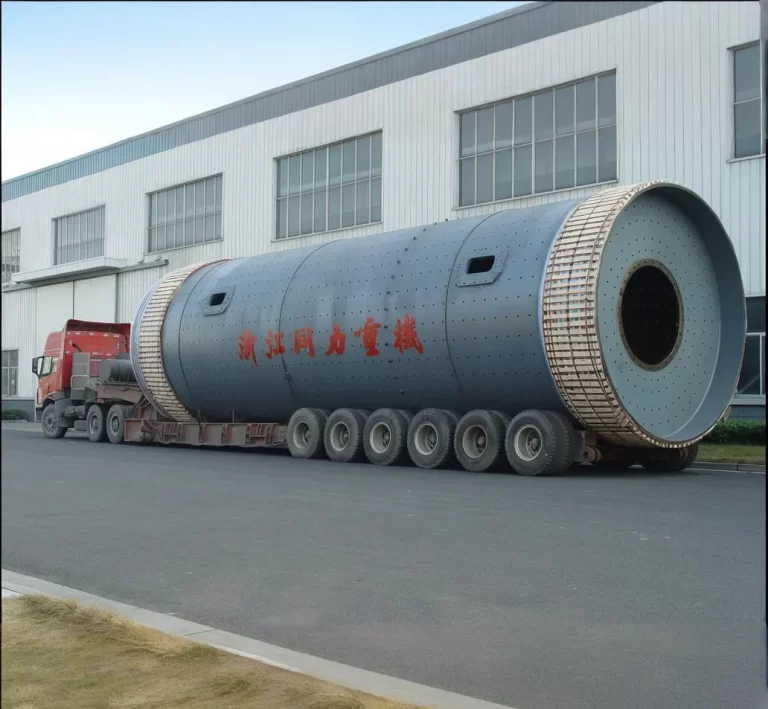

Discover how Vertical Roller Mills (VRMs) enhance efficiency in cement plants through Efficient raw material and clinker grinding.
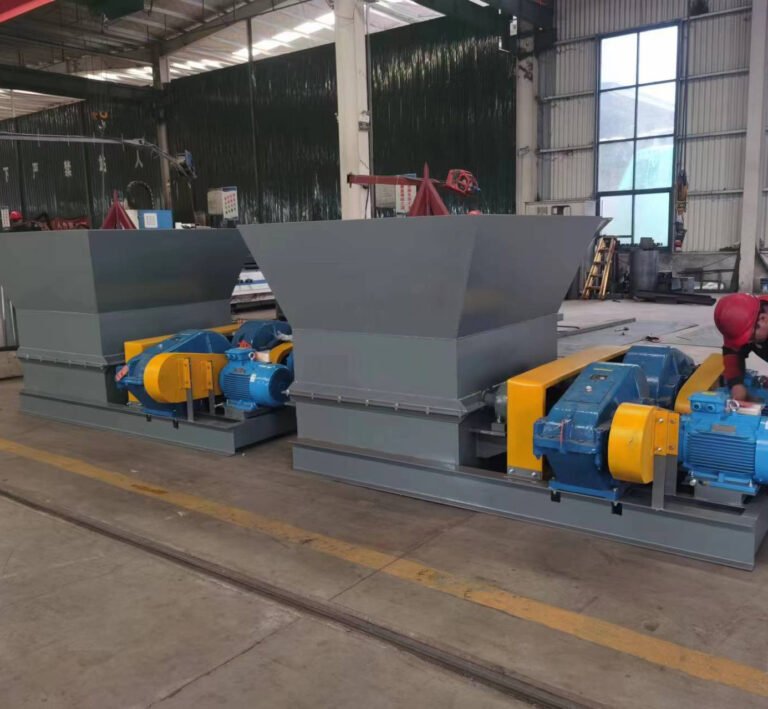
Designed to rapidly and efficiently break up large lumps in organic-inorganic fertilizer production process, suitable for Urea Map DAP KCL…
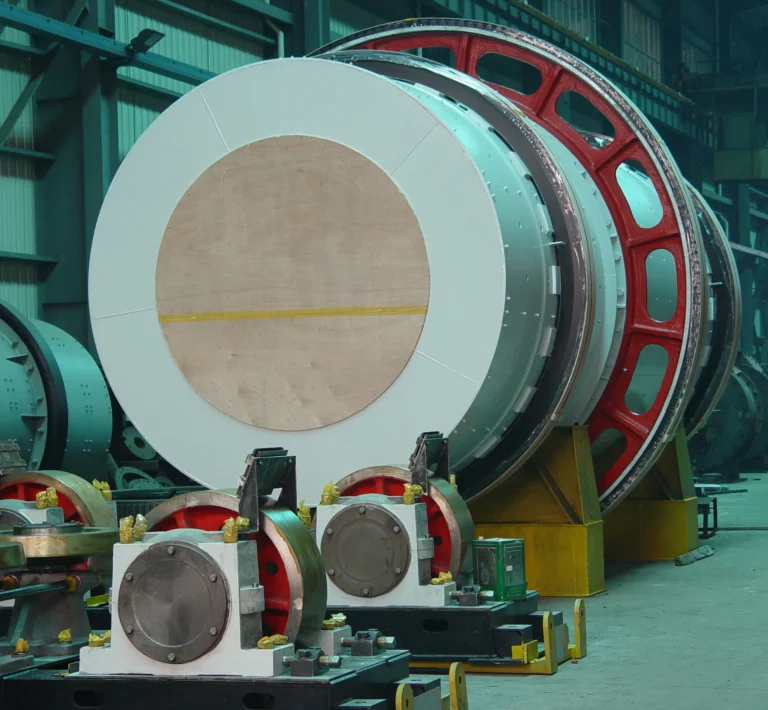
Tongli rotary drum dryer is adaptable to NPK compound organic fertilizer.
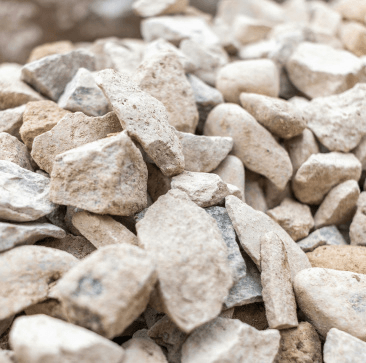
Many industrial chemicals like calcium nitrate and npk fertilizer become compacted during storage and transport. A bulk bag conditioner loosens hardened powders and granules, restoring free-flowing behavior for safe discharge and downstream processing.

Highly hygroscopic fertilizers often cake inside jumbo bags. A bulk bag conditioner breaks up lumps and compaction so that materials like urea, NPK, and MAP can flow smoothly into mixers, hoppers, or blending lines.
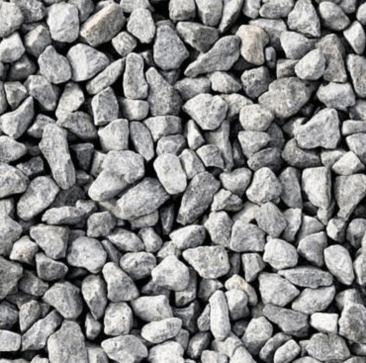
Fine, dense lithium battery materials frequently solidify under pressure. A bulk bag conditioner re-aerates and loosens these powders, ensuring uniform feeding and preventing discharge blockages in battery material production lines.

Sensitive food ingredients absorb moisture and consolidate during storage. A bulk bag conditioner gently breaks the compaction without damaging product quality, allowing smooth unloading for food processing.
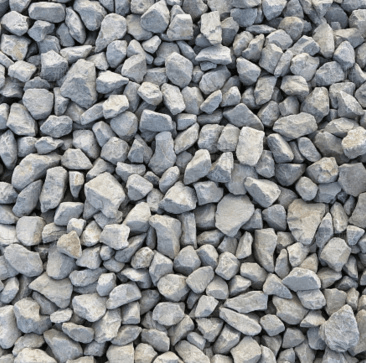
Dense construction materials like cement or fly ash can become rock-hard inside FIBCs. A bulk bag conditioner applies mechanical pressure to de-solidify the contents, improving flow into silos or conveyors.

Certain plastic resins and masterbatch compounds can settle or clump. A bulk bag conditioner restores material looseness so pellets or powders discharge easily into extrusion or molding lines.
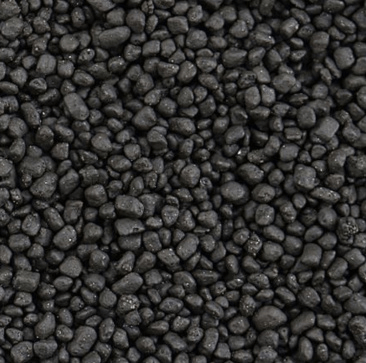
High-value pharmaceutical powders often compact due to fine particle size. A bulk bag conditioner ensures controlled, consistent flow while protecting material integrity during downstream processing.
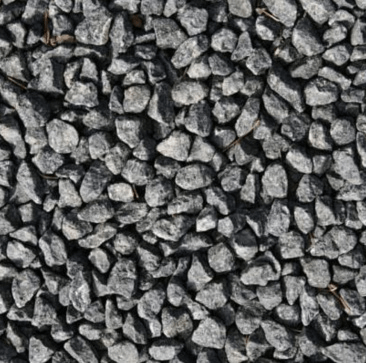
Heavy mineral powders tend to pack tightly under long-distance transport. A bulk bag conditioner breaks down hardened bulk bags, ensuring smooth feeding into grinders, classifiers, or reactors.
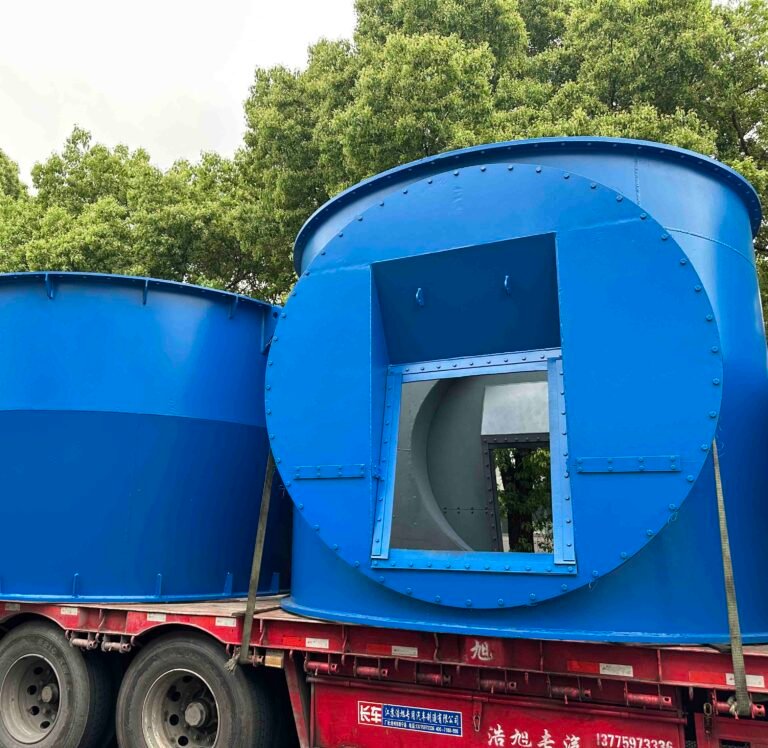
What is a vertical roller mill for cement grinding and raw milling?
Discover what a vertical roller mill (VRM) is and how it’s used in cement grinding and raw milling, working principles in cement production.
April 23, 2025
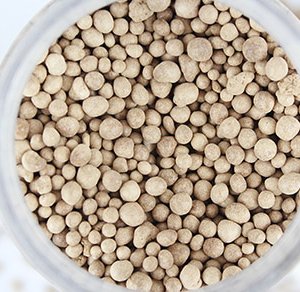
Why Agglomerate Your Material? NPK Compound Fetilizer Agglomeration.
Agglomeration improves fertilizer handling, storage, and spreading efficiency. Fine or dusty raw materials like urea, phosphate, or potassium salts are transformed into strong, round granules.
October 31, 2025
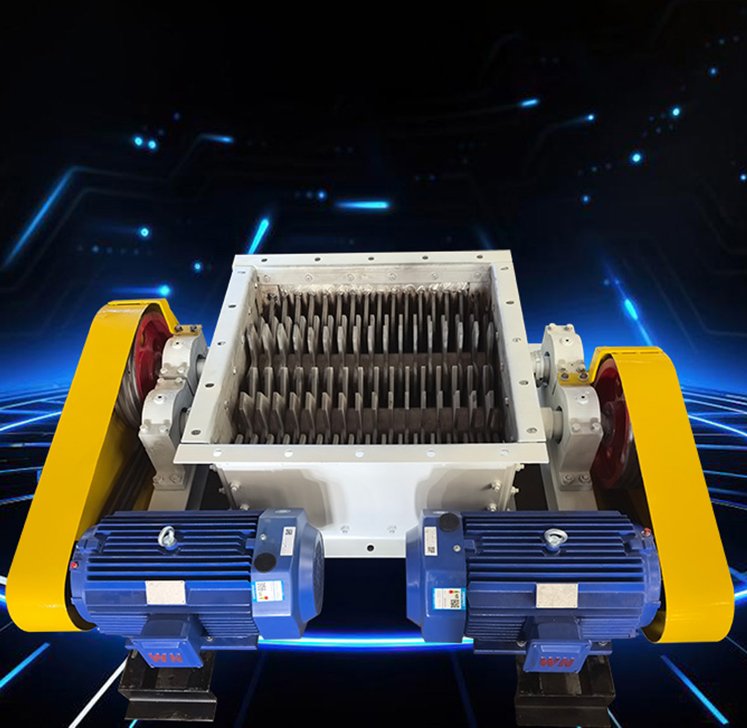
Efficient lump breaker cutter head design for crushing fertilizers, urea, and organic materials. Improve organic fertilizer production flow.
September 05, 2025
You can get in touch with us through the following contact information
AddressNo. 2289 Huancheng South Road, Tongxiang, Jiaxing, Zhejiang Province, China. Zip code:314500
Please fill in the sales inquiry form and our sales representatives will be in touch shortly.