






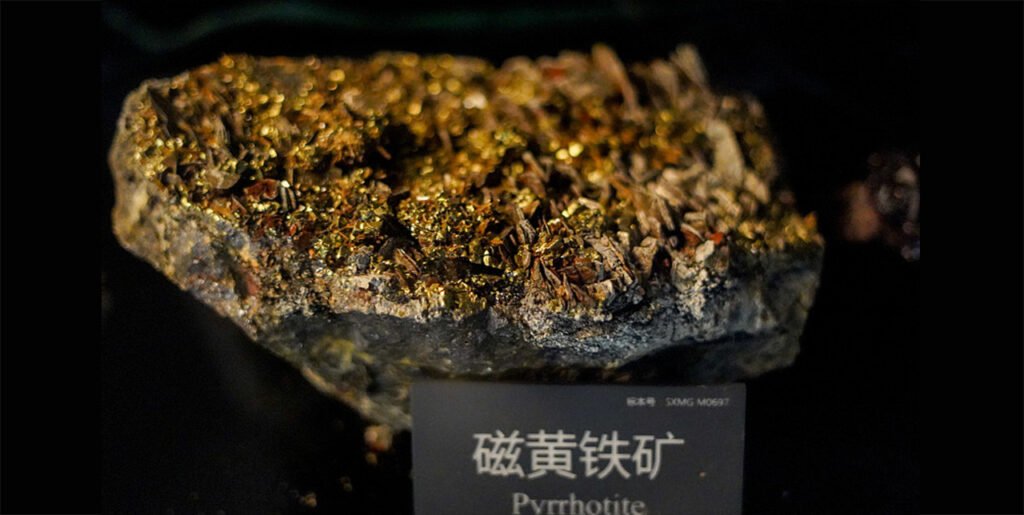
Pyrrhotite (chemical formula: Fe₁₋ₓS) is the most common magnetic iron sulfide mineral in nature, occurring extensively in various endogenic ore deposits. It serves as an important raw material for the extraction of sulfur and the production of sulfuric acid, and acts as a significant host mineral for metals such as nickel and cobalt. Frequently found in close association with minerals like pyrite, chalcopyrite, and pentlandite, pyrrhotite is one of the most thoroughly studied sulfide minerals in the field of mineral processing. This article provides a systematic overview of pyrrhotite—covering its mineral properties, crystal structure, genesis and occurrence, industrial applications, mineral processing techniques, and associated processing equipment—offering a valuable reference for mining enterprises, mineral processing design firms, and professionals involved in equipment selection.
Basic Properties of Pyrrhotite
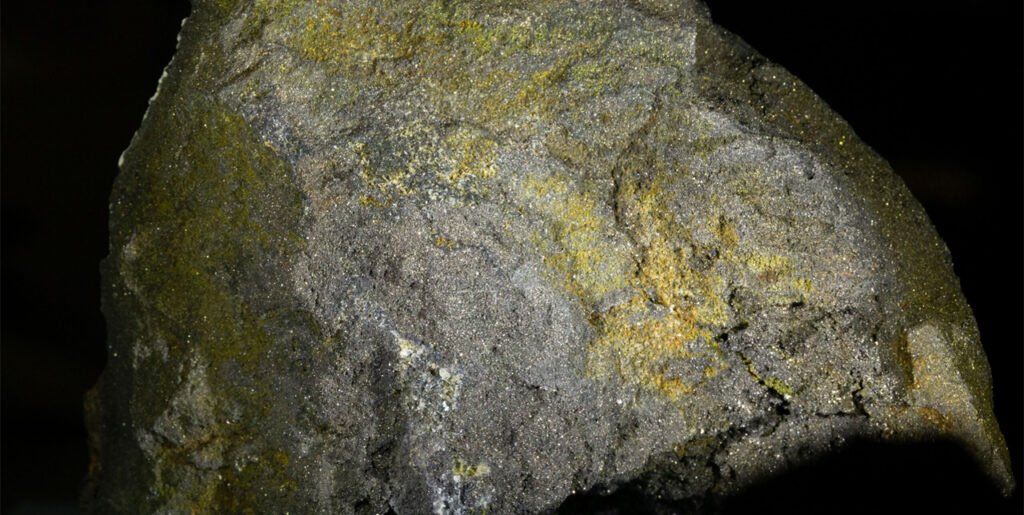
Pyrrhotite is an iron-bearing sulfide mineral. Its name is derived from the Greek word "pyrrhos," meaning "fire-colored," a reference to its bronze-like appearance. Its chemical composition is variable, represented by the general formula Fe₁₋ₓS, where "x" denotes the iron deficiency, typically ranging between 0 and 0.223. Within the mineral, some divalent iron ions (Fe²⁺) are replaced by trivalent iron ions (Fe³⁺); to maintain electrical neutrality, vacancies emerge at the iron sites—a structural feature known as a "defect structure." While the theoretical composition consists of 63.53% iron and 36.47% sulfur, naturally occurring pyrrhotite can contain as much as 39%–40% sulfur, exceeding the theoretical value for stoichiometric FeS.
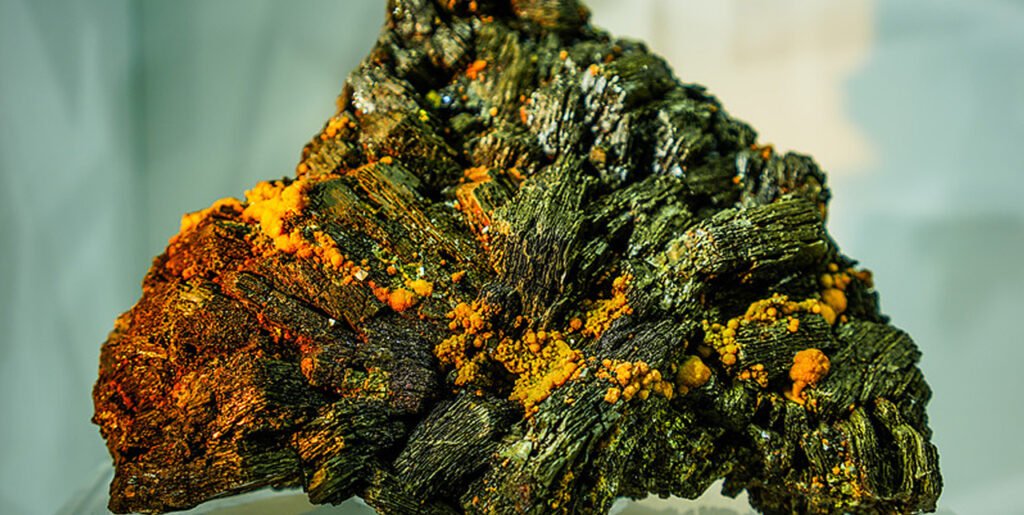
Pyrrhotite exhibits a dark bronze-yellow color, often with a brownish tarnish on its surface. It leaves a bright grey-black to black streak, possesses a metallic luster, and is opaque. It has a Mohs hardness of 3.5–4.5, a relative density of 4.6–4.7, and is electrically conductive.Its magnetism is a key characteristic that distinguishes it from most other sulfides; this magnetism stems from the iron vacancies within its crystal lattice—the greater the iron deficiency, the stronger the magnetism. It is the second most common magnetic mineral in nature, surpassed only by magnetite.
Pyrrhotite typically occurs as dense, massive, or granular aggregates; well-crystallized specimens may appear as pseudo-hexagonal tabular or prismatic crystals. Its oxidation characteristics are a critical consideration for industrial applications. When exposed to air and moisture, the surface of pyrrhotite oxidizes to form iron hydroxides (such as goethite or limonite) and sulfuric acid. In the oxidation zone, pyrrhotite eventually decomposes and transforms into limonite. This property not only complicates its storage and transport but also contributes to the risks it poses when present in construction materials.
| Item | Pyrrhotite | Pyrite |
| Chemical formula | Fe₁₋ₓS (x=0~0.223) | FeS₂ |
| Color | Dark bronze-yellow, with brown tarnish | Light brass-yellow to dark yellow |
| Streak | Bright grayish-black to black | Greenish-black to brownish-black |
| Mohs hardness | 3.5~4.5 | 6~6.5 |
| Magnetism | Weak to strong magnetic | Non-magnetic |
| Sulfur content | 39%~40% | About 53% |
Crystal Structure and Polymorphs of Pyrrhotite
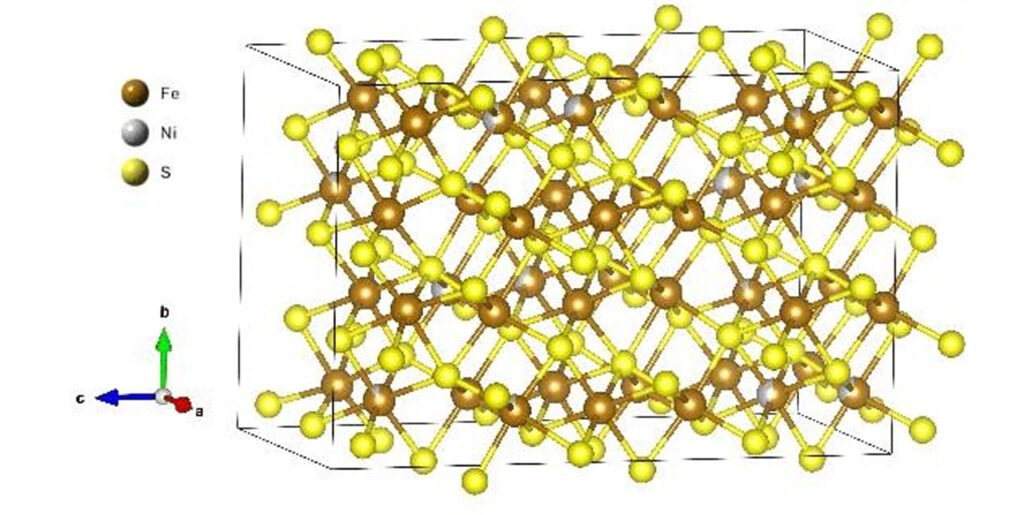
- The crystal structure of pyrrhotite varies according to the degree of iron deficiency. In nature, it primarily occurs in hexagonal and monoclinic forms, with a rare, non-magnetic orthorhombic variant also existing. In approximately 70% of sulfide ore deposits, both hexagonal and monoclinic crystal forms are present.
- Monoclinic pyrrhotite (4C superstructure, approximately Fe₇S₈) features a high proportion of iron vacancies and exhibits strong ferromagnetism; it can be separated via low-intensity magnetic separation and demonstrates good floatability across a wide pH range. Hexagonal pyrrhotite (5C superstructure, approximately Fe₉S₁₀) contains fewer iron vacancies and is paramagnetic; it possesses weak magnetism, requiring high-intensity magnetic separation for recovery, and exhibits relatively poor floatability, as well as a high propensity for sliming and oxidation. A higher S/Fe ratio shifts the pyrrhotite structure toward the monoclinic form, which is associated with stronger magnetism and improved floatability.
- Troilite (FeS) is the iron-rich end-member of the pyrrhotite group; it contains no iron vacancies in its crystal structure, is non-magnetic, and is primarily found in meteorites.
Genetic Types and Major Localities of Pyrrhotite
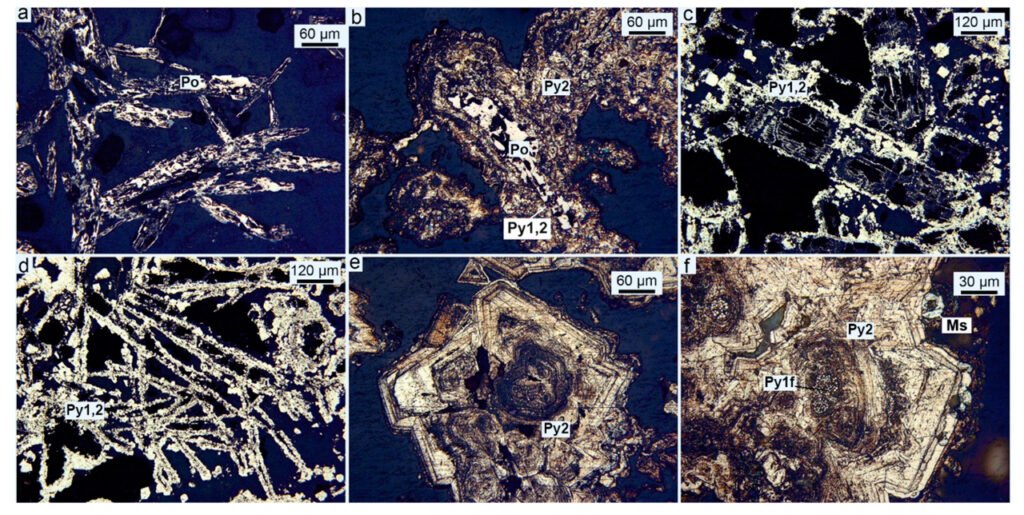
Pyrrhotite primarily occurs in three types of geological environments.
- The first type consists of magmatic copper-nickel sulfide deposits hosted within mafic-ultramafic rock bodies, where pyrrhotite occurs in close association with pentlandite and chalcopyrite, representing the most abundant sulfide mineral by volume in such deposits.
- The second type comprises contact metasomatic (skarn-type) deposits, in which pyrrhotite is found alongside minerals such as chalcopyrite, pyrite, magnetite, and arsenopyrite.
- The third type includes various hydrothermal deposits, such as cassiterite-sulfide deposits. Additionally, submarine hydrothermal vents ("black smokers") precipitate sulfides—including pyrrhotite, pyrite, and sphalerite—during the thermal circulation of seawater through the Earth's crust.
The degree of pyrrhotite enrichment is an important indicator for evaluating magmatic copper-nickel sulfide deposits; its abundant presence typically signifies the occurrence of nickel mineralization.
Globally, pyrrhotite is primarily found in regions with concentrated magmatic sulfide deposits. In China, the Jinchuan copper-nickel deposit in Gansu Province—the third-largest of its kind in the world—contains ore minerals consisting mainly of pyrrhotite, pentlandite, pyrite, and chalcopyrite. The Xiarihamu nickel-cobalt deposit in Qinghai Province is another super-large magmatic nickel-cobalt sulfide deposit discovered in China, with nickel metal reserves of approximately 1.18 million tonnes. In the Huangshan–Jing’erquan metallogenic belt of the Eastern Tianshan Mountains in Xinjiang, copper-nickel deposits such as Tudun, Huangshan, and Huangshan East feature pyrrhotite in close association with pentlandite and chalcopyrite. The Baimazhai copper-nickel (platinum-group element) deposit in Jinping, Yunnan Province, is hosted within mafic-ultramafic intrusive bodies of the Emeishan Large Igneous Province; in its disseminated ore, the volume ratio of pyrrhotite to pentlandite to chalcopyrite is approximately 53:2:1.
Major Producing Regions and Typical Deposits of Pyrrhotite:
| Country/Region | Typical Deposit or Mining Area | Deposit Type |
| Ontario, Canada | Sudbury | Magmatic Cu-Ni sulfide deposit |
| Russia | Norilsk | Magmatic sulfide deposit |
| South Africa | Bushveld Complex | Magmatic sulfide deposit |
| Minnesota, USA | Duluth Complex | Magmatic Cu-Ni sulfide deposit |
| Gansu, China | Jinchuan Cu-Ni deposit | Ultramafic magmatic segregation-type deposit |
| Qinghai, China | Xiarihamu Ni-Co deposit | Magmatic segregation-type Ni-Co sulfide deposit |
| East Tianshan, Xinjiang, China | Huangshan–Jing’erquan metallogenic belt | Magmatic Cu-Ni sulfide deposit |
| Jinping, Yunnan, China | Baimazhai Cu-Ni (PGE) deposit | Mafic–ultramafic intrusive rock deposit |
Industrial Applications of Pyrrhotite
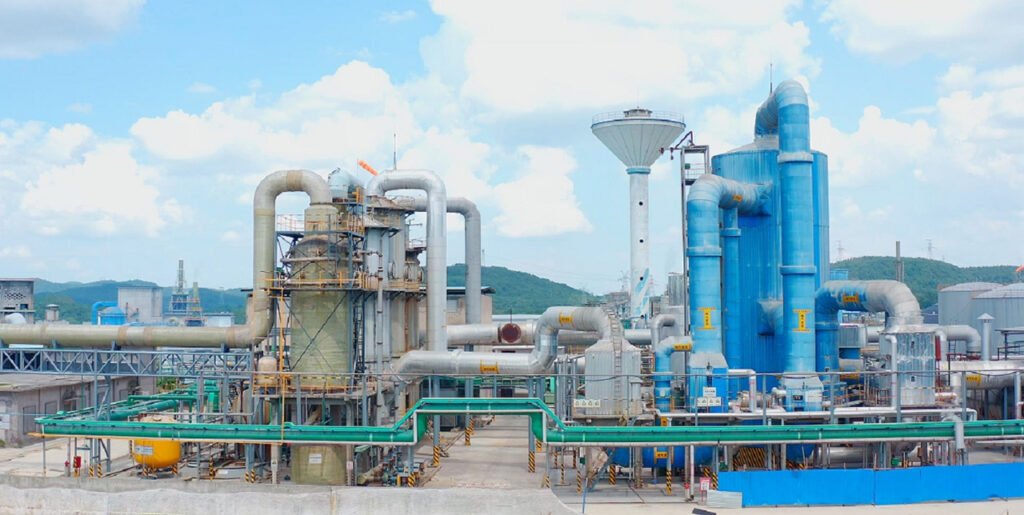
The industrial value of pyrrhotite is primarily reflected in three areas: the utilization of sulfur resources, its role as a metal carrier, and its application as an environmentally friendly material.
- Production of sulfuric acid and sulfur resources. Pyrrhotite, like pyrite, belongs to the category of iron sulfides and serves as a traditional raw material for the manufacture of sulfuric acid. Sulfur-bearing concentrates are roasted in a fluidized-bed roaster at temperatures between 850°C and 950°C, converting the sulfur into sulfur dioxide gas. This gas undergoes purification, conversion, and absorption processes to produce industrial-grade sulfuric acid. The resulting calcine (pyrite cinder) has a high iron content and can be utilized in metallurgical applications, such as iron smelting. Iron sulfide ores with a sulfur content of 30% are sufficient to meet the requirements of sulfuric acid production processes.
- Carrier for metals such as nickel and cobalt. Pyrrhotite is a primary mineral in magmatic copper-nickel sulfide deposits, where it occurs in close association with pentlandite. Nickel can be incorporated into the pyrrhotite structure through isomorphous substitution; consequently, pyrrhotite with a high nickel content can be processed directly as a nickel ore.
- Environmental protection and water treatment. Due to its high chemical reactivity, pyrrhotite can be used to treat wastewater containing heavy metals. Under weakly acidic and anoxic conditions, porous pyrrhotite can remove over 95% of cadmium ions, while oxidized hexagonal pyrrhotite is effective in treating wastewater containing hexavalent chromium. Furthermore, pyrrhotite can serve as an electron donor in autotrophic denitrification processes, facilitating nitrogen and phosphorus removal from wastewater.
- Other applications. Pyrrhotite is widely used in industries such as petrochemicals, rubber, metallurgy, and papermaking, serving as a raw material for the extraction of sulfur and the production of sulfur-based chemical products, including sulfuric acid. Additionally, well-crystallized specimens of pyrrhotite are sought after by mineral collectors.
| Application Field | Specific Uses | Description |
| Chemical Industry | Production of sulfuric acid, sulfur, carbon disulfide | Fluidized-bed roasting of sulfur concentrate for acid production; roasting slag can be used for iron smelting |
| Metallurgy | Recovery of nickel, cobalt, and iron resources | Associated with pentlandite; used as nickel ore when nickel content is high |
| Environmental Protection | Purification of heavy metal wastewater, sewage denitrification | Adsorption and reduction effects; used as electron donor for autotrophic denitrification |
| Building Materials & Daily Use | Raw material for petrochemical, rubber, paper industries | Used as low-cost iron-sulfur containing raw material |
| Magnetism & Collection | Magnetic materials, mineral crystal specimens | Utilizes its magnetic properties; crystals have collection value |
Mineral Processing Technology for Pyrrhotite
Pyrrhotite typically occurs in association with various other sulfides, such as pyrite, chalcopyrite, sphalerite, and galena. Due to complex intergrowth relationships, effective separation is difficult to achieve using a single mineral processing method; therefore, a combined process involving both magnetic separation and flotation is commonly employed in industrial practice.
The challenges in the beneficiation of pyrrhotite primarily stem from three aspects.
- First, monoclinic pyrrhotite is highly magnetic, which causes it to easily report to the iron concentrate during magnetic separation; furthermore, its residual magnetism leads to magnetic flocculation after separation, thereby adversely affecting the grade of the concentrate.
- Second, hexagonal pyrrhotite exhibits poor floatability and tends to end up in the tailings; it is also prone to sliming and oxidation, which interferes with flotation separation.
- Third, the oxidation of pyrrhotite consumes dissolved oxygen in the pulp and engages in electrochemical interactions with associated target sulfide minerals, thereby reducing the selectivity of the flotation process.
A typical process flow (taking a mineral processing plant for low-copper, high-iron, sulfide-type pyrrhotite as an example) is configured in the following sequence: crushing, grinding, classification, copper flotation, magnetic separation and sulfide flotation, and drying.
| Process | Main Equipment | Function and Indicators |
| Crushing | Jaw crusher, cone crusher, vibrating screen | Crush the raw ore to below 20 mm |
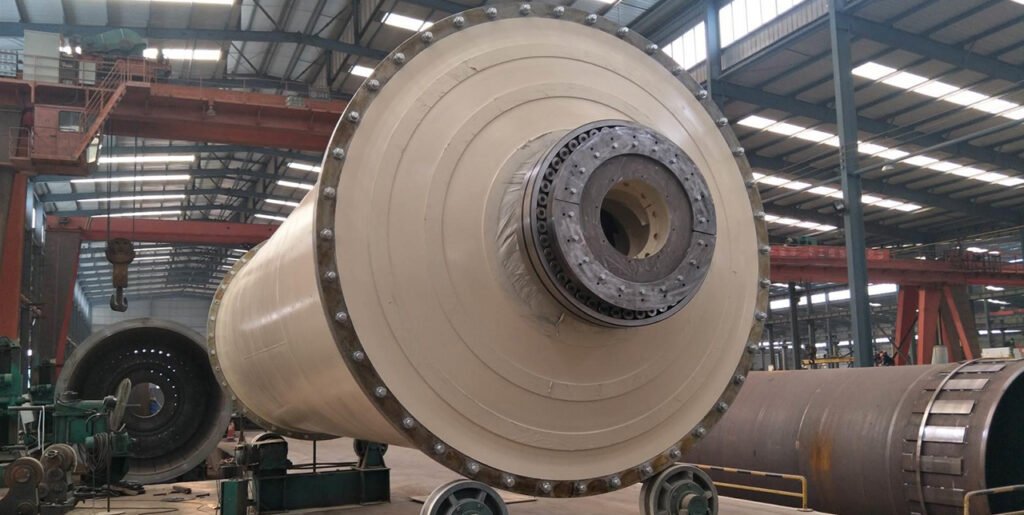
| Grinding | Ball mill | Grind the ore finely to liberate useful minerals as free particles |
| Classification | Spiral classifier | Classify by specific gravity and particle size; remove impurities such as sludge |
| Copper flotation | Flotation machine | One roughing and three cleaning flotations to obtain copper concentrate |
| Magnetic separation and sulfur flotation | Magnetic separator, flotation machine | Magnetic separation of copper flotation tailings to obtain iron concentrate; flotation of magnetic separation tailings to obtain sulfur concentrate |
| Drying | Rotary dryer | Dehydrate and dry the concentrate; moisture can be reduced to 0.5%–1% |
In industrial practice, the reagent regime employed in flotation operations plays a decisive role in separation efficiency. Pyrrhotite is typically floated using xanthate-type collectors. Lime is the most common depressant; by raising the pulp pH to a highly alkaline level (usually above 9 in industrial operations), it promotes the oxidation of the pyrrhotite surface to form a hydrophilic film, thereby achieving depression. Copper sulfate is a frequently used activator, capable of restoring the floatability of previously depressed pyrrhotite; other agents, such as oxalic acid, also demonstrate effective activation for pyrrhotite that has been depressed by lime.
Actual production data indicate that a combined magnetic separation and flotation process can yield favorable separation results. For instance, in a desulfurization test conducted on a high-sulfur magnetite concentrate—containing 55.61% iron and 3.81% sulfur, with pyrrhotite and pyrite as the primary sulfide minerals—a flowsheet consisting of magnetic separation, demagnetization, and combined-activation reverse flotation was utilized. This process yielded an iron concentrate with an iron grade of 66.71% and a sulfur content of 0.33%, achieving an iron recovery of 81.57% and a desulfurization rate of 91.34%, while producing a sulfur concentrate (by-product) with a sulfur grade of 29.98%.
Pyrrhotite Processing Equipment Configuration
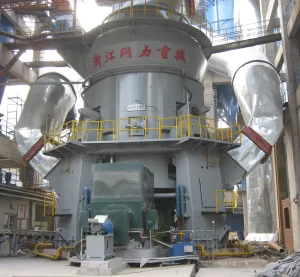
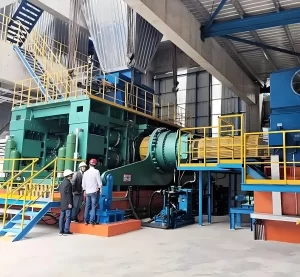
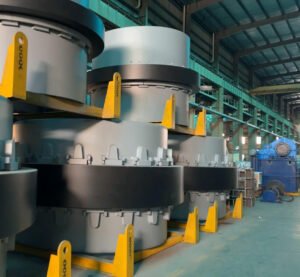
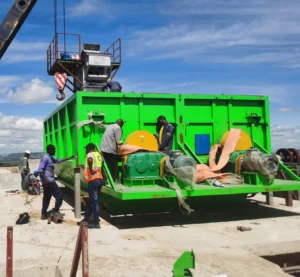
The core equipment in a pyrrhotite processing plant consists of six main categories: crushing, grinding, classification, flotation, magnetic separation, and drying equipment. These units are configured and integrated according to the requirements of each operational stage to form a complete processing workflow. Equipment selection must be based on the results of mineralogical studies—such as the grain size distribution of valuable minerals, the types of associated minerals, and their crystalline structures—as well as the designed processing capacity. Prior to commissioning, mineral processing tests should be conducted to determine the optimal grinding fineness, magnetic field strength, and reagent regime.
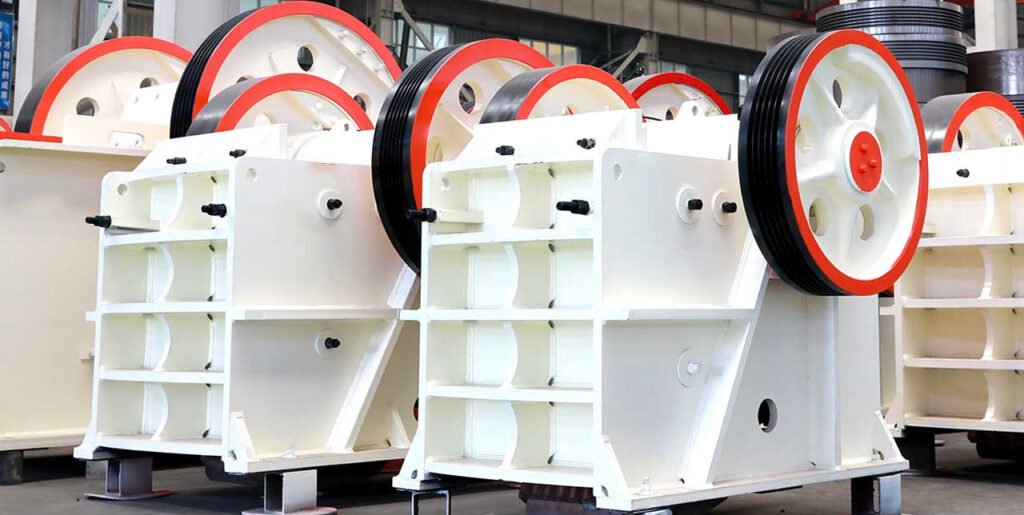
- Jaw Crusher. Used for primary crushing in mineral processing, this equipment handles the first stage of ore reduction, producing a feed size suitable for secondary and tertiary (fine) crushing equipment. Characterized by a simple structure, reliable operation, and strong adaptability to high-hardness ores, the jaw crusher is the most widely used primary crushing equipment in pyrrhotite processing plants.
- Cone Crusher. Employed for secondary and fine crushing, the cone crusher works in tandem with the jaw crusher to further reduce ore size. It is typically integrated with a vibrating screen to form a closed-circuit crushing process, ensuring that the feed size for the grinding circuit remains within specified design parameters. With a high reduction ratio and high throughput, cone crushers are well-suited for processing ores of medium-to-high hardness, such as copper-nickel sulfides.
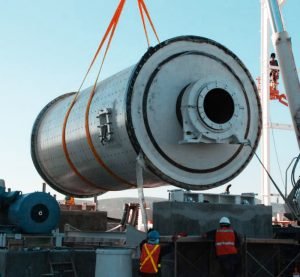
- Ball Mill. Used for the grinding stage, the ball mill reduces crushed ore to the fineness required for flotation, ensuring the full liberation of valuable minerals—such as pyrrhotite and pentlandite—from the gangue. Ball mills are generally operated in a closed circuit with a spiral classifier; the coarse fraction (sand) from the classifier is returned to the ball mill for further grinding, while the overflow proceeds to the flotation stage.
- Spiral Classifier. Operating in a closed circuit with a ball mill, the spiral classifier sorts and washes the ore pulp based on differences in mineral specific gravity and particle size. It directs pulp with the appropriate particle size to the flotation process, while returning coarser material to the ball mill. Known for its simple structure and stable operation, the spiral classifier is widely used in mineral processing plants.
- Magnetic Separator. This equipment achieves separation by exploiting the differences in magnetic susceptibility between pyrrhotite and gangue minerals. Monoclinic pyrrhotite, which is relatively magnetic, can be recovered using low-intensity magnetic separation, whereas hexagonal pyrrhotite—being less magnetic—requires high-intensity magnetic separation equipment. Magnetic separation can be applied to recover pyrrhotite concentrate directly from the ore, as well as for scavenging flotation tailings or desulfurizing iron concentrates.
- Flotation Machine. Used for the separation of target minerals, such as copper and sulfur, via the flotation process. In the beneficiation process for pyrrhotite, a flotation machine utilizes aeration and agitation to create mineralized froth. Target minerals—having adsorbed collectors—are concentrated into this froth, which then undergoes multiple stages of cleaning to yield a high-grade concentrate. The number of flotation cells and their total volume are determined based on the pulp throughput and the required flotation residence time.
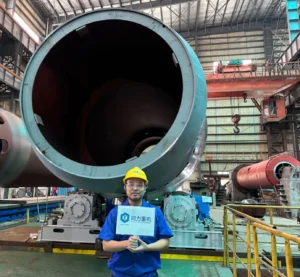
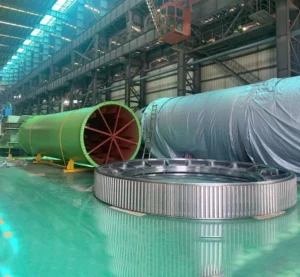
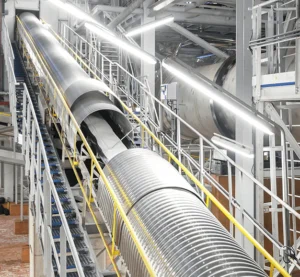
- rotary drum dryer is employed for the dewatering and drying of concentrate products. Concentrates recovered via flotation or magnetic separation are initially discharged as a slurry; even after thickening and filtration, they retain significant moisture. These materials are fed into a rotary dryer, where their moisture content is reduced to 0.5%–1%, meeting the requirements for storage and transport. A rotary dryer consists of a rotating cylindrical shell, internal lifting flights (lifters), a support system (trunnion rollers), and a drive mechanism. Material enters from one end of the cylinder; as the cylinder rotates, the lifting flights raise and cascade the material, ensuring thorough contact and heat exchange with hot flue gases. Once the moisture has evaporated, the dried material is discharged from the opposite end. The exhaust gas, which contains dust, is passed through a dust-collection system for purification before being released into the atmosphere.
| Equipment Type | Process Stage | Role in the Process | Key Selection Considerations |
| Jaw Crusher | Coarse Crushing | First-stage crushing of run-of-mine ore | Feed particle size, processing capacity, crushing ratio |
| Cone Crusher | Medium and Fine Crushing | Further crushing to the required grinding feed size | Closed-circuit screening configuration, product particle size |
| Ball Mill | Grinding | Mineral liberation | Grinding fineness, processing capacity, grinding media configuration |
| Spiral Classifier | Classification | Particle size classification and ore washing | Overflow fineness, classification efficiency |
| Magnetic Separator | Magnetic Separation | Separation of pyrrhotite from gangue minerals | Magnetic field intensity, proportion of monoclinic and hexagonal crystal forms |
| Flotation Machine | Flotation | Separation and concentration of copper and sulfur concentrates | Cell volume, flotation time, aeration rate |
| Rotary Drum Dryer | Drying | Dehydration of concentrate to a moisture content of 0.5%–1% | Heat source type, evaporation intensity, dust collection configuration |
Pyrrhotite Oxidation and Risks to Construction Materials
The oxidation characteristics of pyrrhotite can lead to serious consequences in construction projects. In the Trois-Rivières area of Quebec, Canada, since the late 1990s, the concrete foundations of numerous homes—affecting over 400 property owners—have exhibited premature deterioration, including cracking and spalling, within just two to four years of use. Research has confirmed that the issue stems from the oxidation of pyrrhotite present in the coarse concrete aggregate. The aggregate, identified as anorthositic gabbro, contains pyrrhotite and pyrite in concentrations reaching up to 5%–7% of its total volume. In the presence of moisture and oxygen, the pyrrhotite oxidizes to form iron hydroxides and sulfuric acid; the latter then reacts with components of the cement paste to produce gypsum and ettringite. The expansion in volume of these reaction products causes the concrete to crack and the structure to fail. This case demonstrates that aggregates containing pyrrhotite must undergo rigorous testing and evaluation before being used in the production of concrete.
Conclusion
Pyrrhotite is a naturally abundant and widely distributed magnetic iron sulfide mineral. Its mineralogical properties and crystal structure are closely linked to its processing characteristics; specifically, the presence of iron vacancies dictates variations in its magnetic and flotation properties, which in turn determine the optimal processing route—typically a combination of magnetic separation and flotation. As an important carrier for resources such as sulfur, nickel, and cobalt, and as a material for environmental water treatment, pyrrhotite retains significant, ongoing industrial value. The development of a pyrrhotite processing plant must be grounded in process mineralogy, requiring the strategic configuration of equipment for crushing, grinding, classification, flotation, magnetic separation, and drying, with optimal process parameters established through comprehensive beneficiation testing.