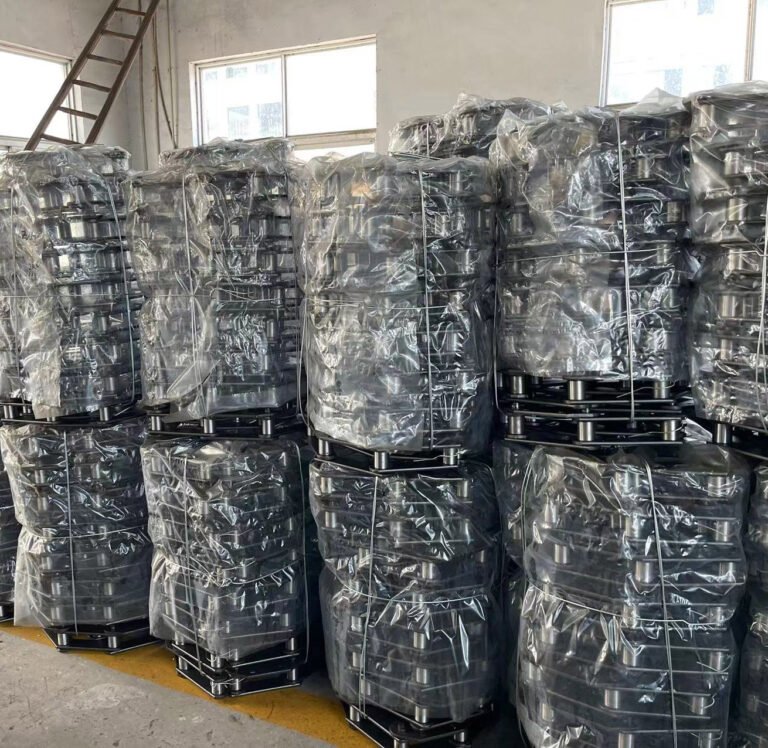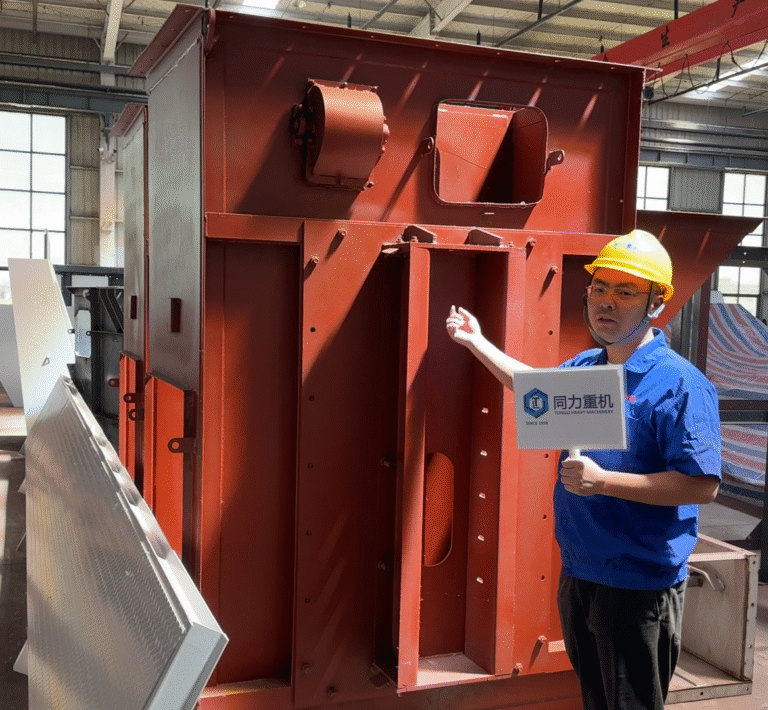







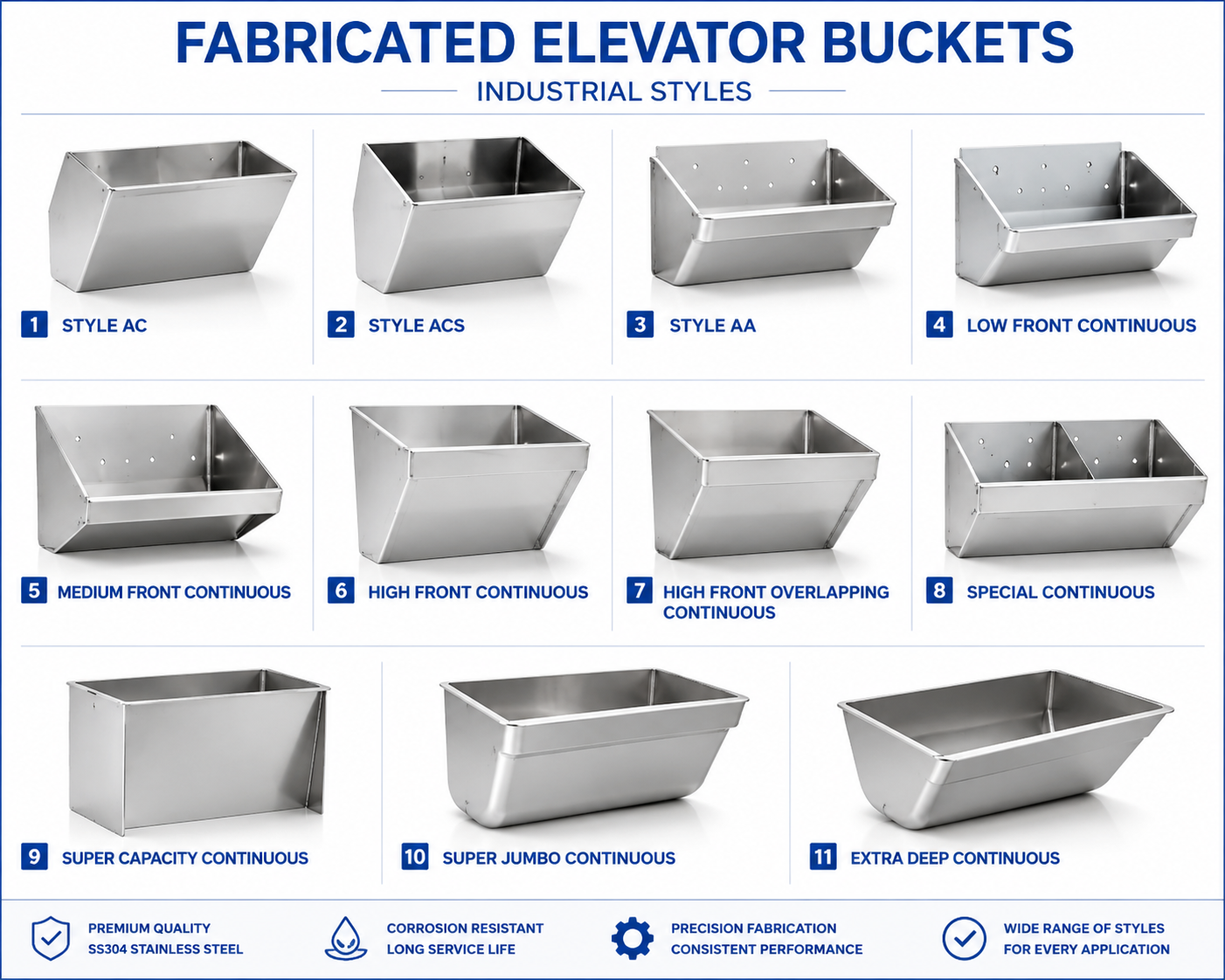
Steel Fabricacted bucket elevator buckets, also known as elevator buckets or buckets for bucket elevators, are the load-carrying components that determine the performance, efficiency, and reliability of any bucket elevator system. Whether installed on an industrial bucket elevator, a bucket elevator conveyor, or a bucket conveyor handling cement, fertilizer, grain, mining, or other bulk materials, the bucket's shape, size, material, and mounting configuration directly affect conveying capacity, discharge efficiency, material spillage, wear life, and overall operating costs. Selecting the wrong bucket can lead to poor filling, excessive carryback, premature wear, and increased maintenance, while the correct bucket design maximizes throughput and extends equipment service life. This comprehensive guide explains everything you need to know about elevator bucket design and selection, from bucket profiles such as AA, AC, ACS, C, MF, HF, and SC to material options, capacity calculations, sizing standards, installation methods, wear analysis, and maintenance best practices. Whether you're designing a new conveying system, replacing worn elevator buckets, or comparing products from a bucket elevator manufacturer or bucket elevator supplier, this guide provides the engineering knowledge and practical selection criteria needed to choose the right bucket for your application and achieve reliable long-term operation.
What Is a Bucket Elevator Bucket?
A bucket elevator bucket is a detachable, replaceable container that is securely mounted to the belt or chain of a bucket elevator to transport bulk materials from the loading point to the discharge point. Depending on the application, elevator buckets are manufactured from a variety of materials, including carbon steel, stainless steel, ductile iron, nylon, UHMW polyethylene (UHMW-PE), polyurethane, and urethane, allowing them to withstand different levels of abrasion, corrosion, impact, and operating temperatures. Different bucket profiles are engineered for specific elevator configurations, including centrifugal discharge, continuous discharge, super-capacity, and high-speed grain elevators, ensuring efficient handling of everything from free-flowing grains and fertilizers to abrasive minerals, cement, and aggregates.
Bucket Elevator Bucket Classification
As Chinese-manufactured bucket elevators continue to gain worldwide adoption, differences in bucket naming conventions have become an increasingly common source of confusion. While China's NE series plate chain bucket elevators use their own bucket model designations, many of these buckets are functionally equivalent to the AA, AC, MF, HF, and other standardized bucket profiles widely used in North America. Because these naming systems evolved independently, equivalent bucket designs often carry completely different model numbers. In this guide, we compare the Chinese and North American bucket classifications side by side, making it easier to identify equivalent bucket types, select compatible replacements, and understand international equipment specifications.
How to Classify Bucket Elevator Buckets?
Bucket elevator buckets can be classified in several ways depending on their discharge method, bucket profile, construction material, mounting method, duty rating, application, and compatibility with belt or chain elevators. Each classification serves a different purpose. For example, the discharge method determines how bulk materials are unloaded, while the bucket profile affects filling efficiency and discharge performance. Material selection influences wear resistance, corrosion resistance, and operating temperature, whereas the mounting method and duty rating determine the bucket's structural strength and suitability for different operating conditions.
Elevator Bucket Classification Table:
| Classification Basis | Types |
| Discharge Method | Centrifugal discharge, Continuous discharge, Positive discharge |
| Bucket Profile / Style | AA, AC, ACS, C, MF, HF, SC, Super Capacity (SC) |
| Bucket Material | Carbon steel, Stainless steel (304/316), HDPE, Nylon, Polyurethane (PU), UHMW-PE, Fiberglass/FRP |
| Mounting Method | Single-bolt, Double-bolt, Three-bolt, Weld-on |
| Duty Rating | Light-duty, Medium-duty, Heavy-duty, Extra-heavy-duty |
| Application | Grain, Cement, Fertilizer, Mining, Biomass, Food, Chemical, Aggregate, Power Plants, Recycling |
| Bucket Depth | Shallow, Medium-depth, Deep |
| Bucket Capacity | Small, Standard, High-capacity, Super-capacity |
| Bucket Lip Design | Standard lip, Reinforced lip, Wear-resistant lip, Serrated lip (special applications) |
| Front Profile | Rounded front, Flat front, High-front, Low-front |
| Operating Temperature | Standard temperature, High-temperature, Heat-resistant |
| Abrasion Resistance | Standard wear, Abrasion-resistant, Impact-resistant |
| Food Grade | Standard industrial, FDA/food-grade |
| ATEX / Explosion Protection | Standard, Anti-static, ATEX-compliant |
| Manufacturing Process | Stamped (pressed), Fabricated (welded), Molded (plastic), Cast |
| Traction Member Compatibility | Belt buckets, Chain buckets |
What Are The Elevator Bucket Types? All Major Bucket Types
The bucket elevator bucket types AA, AC, ACS, C, MF, HF, and SC are traditional North American bucket designs originally developed by bucket manufacturers such as Maxi-Lift, Tapco, Martinsprocket and others. They are not official CEMA standards, but they have become the de facto naming convention used throughout the bucket elevator industry.
Elevator Bucket Types: AA/AC/ACS/MF/HF/SC/C
| Bucket Type | Discharge Type | Main Features | Typical Applications |
| AA Bucket | Centrifugal | Deep digging profile with reinforced lip. The industry-standard general-purpose bucket. | Grain, fertilizer, sand, cement, aggregates, minerals |
| AC Bucket | Centrifugal | Rounded front corners reduce material buildup and improve clean discharge. | Grain, feed, sugar, chemicals, free-flowing materials |
| ACS Bucket | Centrifugal | Modified AC design with smoother interior and larger radius. Better release of sticky products. | Wet fertilizer, sticky minerals, moist chemicals |
| MF (Medium Front) | Continuous | Medium-height front wall provides more capacity while maintaining good discharge trajectory. | Fertilizer, coal, limestone, aggregates |
| HF (High Front) | Continuous | Higher front wall increases bucket volume and reduces spillage during loading. | Heavy bulk solids, clinker, crushed ore, high-capacity elevators |
| SC (Super Capacity) | Continuous | Extra-deep profile offering maximum volumetric capacity per bucket. Requires sufficient bucket spacing and power. | High-throughput grain terminals, mining, fertilizer plants |
| C Bucket | Continuous | Low-profile bucket mounted closely together for gravity discharge instead of centrifugal throwing. | Cement, fly ash, flour, powder, hot clinker, fragile materials |
SC (Super Capacity) Type Buckets For NE/NSE Chain Bucket Elevators
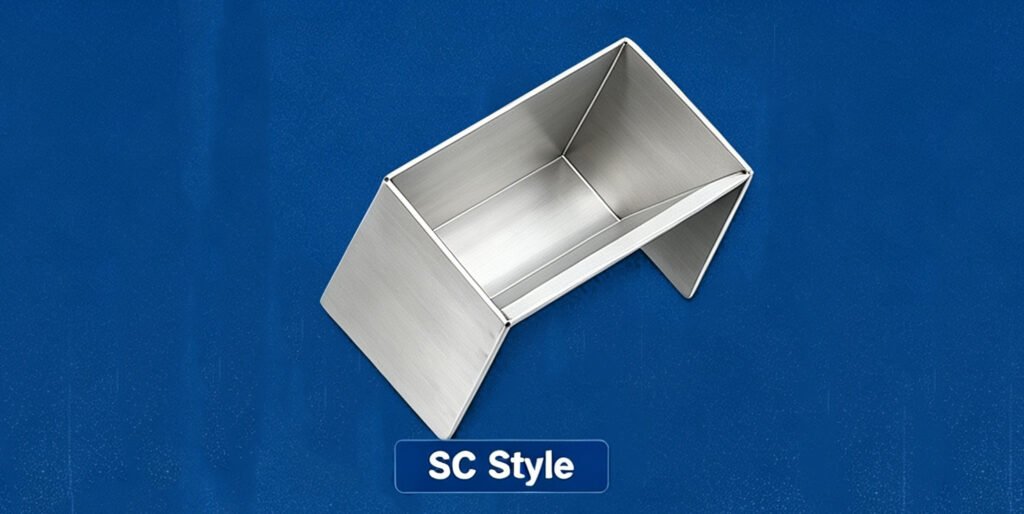
The SC (Super Capacity) bucket is a high-capacity bucket specifically designed for continuous discharge bucket elevators, particularly NE and NSE plate chain bucket elevators. Unlike AA and AC buckets used in centrifugal discharge elevators, the SC bucket operates at lower chain speeds and discharges material by gravity as each bucket feeds directly into the preceding bucket. Its wide, shallow profile with a rounded front edge promotes smooth material flow while minimizing material degradation and carryback. The SC bucket is the bucket style that most closely resembles the standard buckets used on Chinese NE/NSE plate chain bucket elevators, making it the preferred choice for conveying cement clinker, limestone, coal, fertilizer, slag, fly ash, and other powders, granules, and small lumps. Because of its large carrying capacity and closely spaced mounting arrangement, the SC bucket is widely used in the cement, mining, fertilizer, power generation, and bulk material handling industries where high-capacity, continuous conveying is required.
- Designed specifically for continuous discharge NE/NSE plate chain bucket elevators
- Large-capacity, wide-profile bucket for high conveying efficiency
- Closely spaced buckets provide smooth gravity discharge with minimal carryback
- Ideal for powders, granules, and small lump materials in heavy-duty industrial applications
AA Type Elevator Buckets
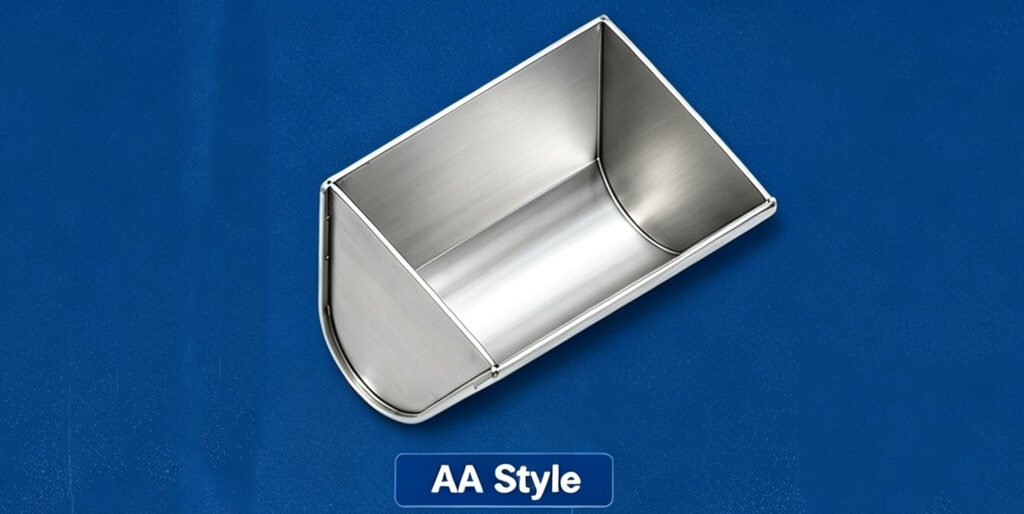
An AA(All Round) bucket is the most widely used centrifugal discharge bucket for bucket elevator system. It features a deep, rounded profile with a reinforced front lip, allowing it to efficiently scoop, carry, and discharge free-flowing bulk materials at high operating speeds. Due to its high filling efficiency and durable construction, the AA bucket has become the industry standard for centrifugal bucket elevators in applications such as grain handling, cement, fertilizer, sand, minerals, and other dry bulk materials. The AA bucket is typically mounted on rubber belt bucket elevators and can also be used on certain chain bucket elevators. It is designed to operate in centrifugal discharge bucket elevator systems, where the material is discharged by centrifugal force as the bucket passes over the head pulley or drive sprocket. Compared with shallower bucket profiles, the AA bucket offers greater volumetric capacity while maintaining good material release characteristics, making it suitable for medium- to high-capacity conveying systems. AA buckets are available in a variety of materials to suit different operating environments, including mild steel, 304 and 316 stainless steel, ductile iron, HDPE, nylon, and polyurethane. Material selection depends on factors such as abrasiveness, corrosion resistance, operating temperature, food-grade requirements, and impact loading.
- Deep bucket profile for high volumetric capacity
- Reinforced front lip for improved wear resistance
- Designed for centrifugal discharge bucket elevators
- Excellent filling efficiency for free-flowing materials
- Available in both metallic and non-metallic materials
- Suitable for medium- and high-speed conveying applications
- One of the most commonly used bucket profiles worldwide
AC Type Steel Fabricated Bucket Elevator
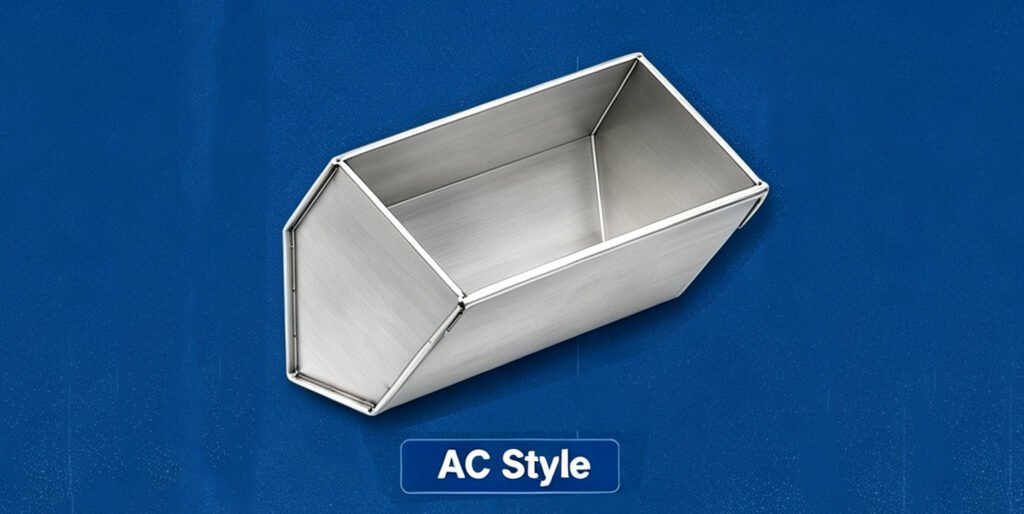
An AC (Added Capacity) bucket is a centrifugal discharge bucket specifically designed to provide greater carrying capacity than a standard AA bucket without requiring significantly wider bucket spacing. Its distinctive high front wall increases the bucket's internal volume, while the angled front face and hooded back allow adjacent buckets to be mounted closer together, maximizing the number of buckets on the belt or chain and increasing overall elevator capacity. Like other centrifugal buckets, the AC style operates at relatively high belt speeds and discharges material by centrifugal force as it passes over the head pulley. It is best suited for dry, free-flowing to moderately free-flowing bulk materials that are not easily damaged, including grain, fertilizer, coal, sand, limestone, and similar materials. The deeper profile also enables the bucket to perform limited digging into the material pile in the boot, improving bucket filling efficiency. AC buckets are commonly mounted on reinforced multi-ply elevator belts or bucket elevator chains, depending on the elevator design. Optional vent holes are often incorporated into the bucket body to improve filling efficiency by allowing trapped air to escape during loading and reducing air resistance during discharge. These features make the AC bucket a popular choice for high-capacity centrifugal bucket elevators where increased throughput is required without substantially increasing elevator size or operating speed.
- High front wall provides greater carrying capacity than AA buckets
- Angled front face and hooded back allow closer bucket spacing
- Designed for centrifugal discharge with excellent digging performance
ACS Type Conveyor Buckets
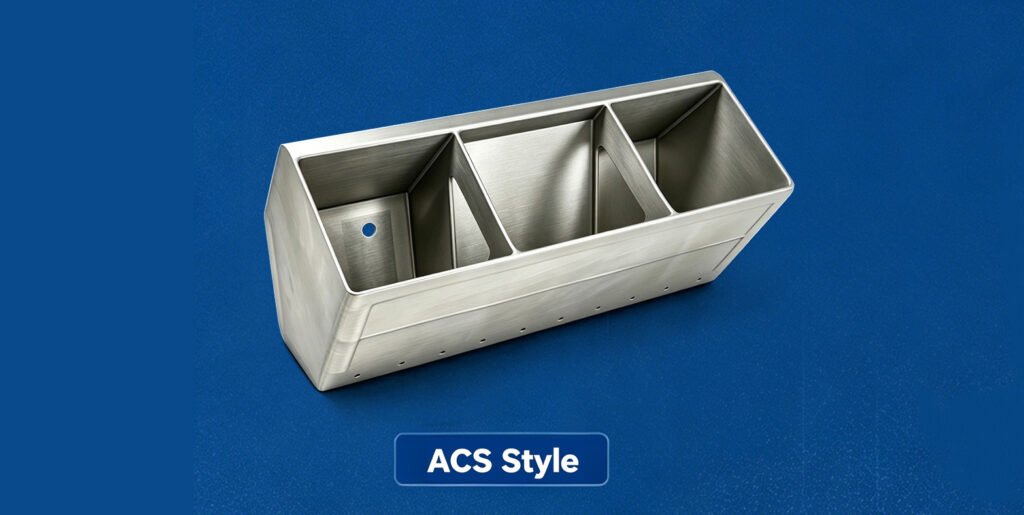
The ACS bucket is much less common than AA or AC, but in North American bucket elevator terminology, ACS stands for Added Capacity Shallow. It combines the higher capacity of an AC bucket with a shallower profile, making it suitable for applications where closer bucket spacing or improved discharge characteristics are required. Compared with the AC bucket, the ACS bucket has a reduced bucket depth, which lowers material retention and provides additional clearance around the head pulley. This design helps improve discharge performance while still delivering greater carrying capacity than traditional AA buckets. Like other centrifugal buckets, the ACS style can perform limited digging in the boot section and is commonly mounted on reinforced elevator belts. The ACS bucket is widely used for conveying grain, feed, fertilizer, seeds, pellets, plastic resin, and other free-flowing bulk materials where a compromise between capacity and discharge efficiency is desired.
- Added-capacity shallow profile for increased throughput with improved discharge
- Shallower design than AC buckets reduces material retention and carryback
- Designed for centrifugal discharge bucket elevators operating at medium to high speeds
- Ideal for dry, free-flowing bulk materials such as grain, fertilizer, pellets, and seeds
MF (Medium Front) Type For Continuous Discharge Industrial Bucket Elevator
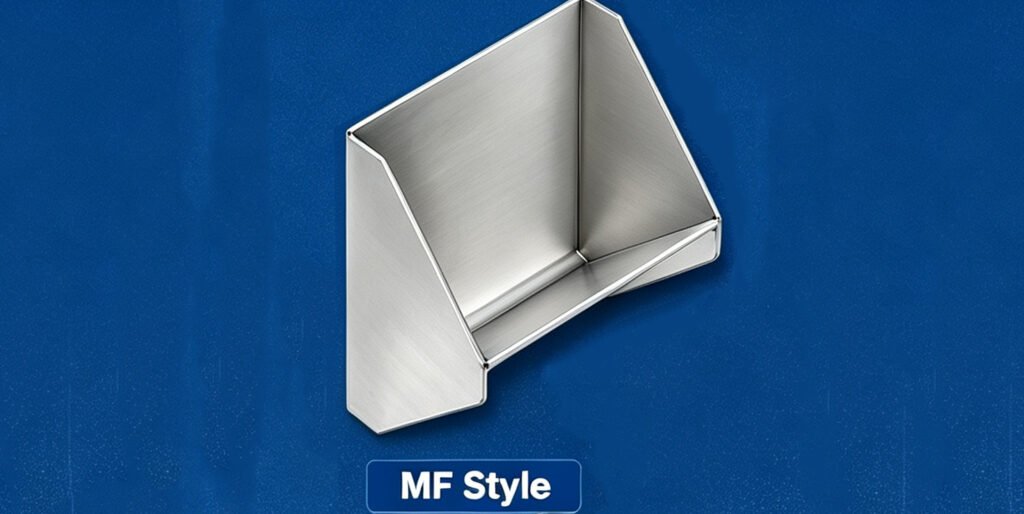
The MF (Medium Front) bucket is a continuous discharge bucket designed for industrial bucket elevators handling powders, granules, and small lump materials. As its name suggests, the MF bucket features a medium-height front wall, providing a balance between carrying capacity and discharge performance. It is installed in a closely spaced overlapping arrangement, allowing each bucket to discharge material by gravity into the preceding bucket as it passes over the head sprocket or head pulley. Compared with the HF (High Front) bucket, the MF bucket offers slightly lower volumetric capacity but provides smoother material flow and reduced carryback for many bulk materials. It is commonly used in continuous discharge belt and chain bucket elevators, including cement, fertilizer, mining, grain, and aggregate processing applications where gentle handling and stable conveying are required.
- Medium front wall balances bucket capacity and discharge efficiency
- Designed for continuous discharge with closely spaced overlapping buckets
- Provides smooth gravity discharge with reduced material degradation
- Suitable for powders, granules, and small lump materials in industrial applications
HF (High Front) Type For Bucket Elevator Conveyor
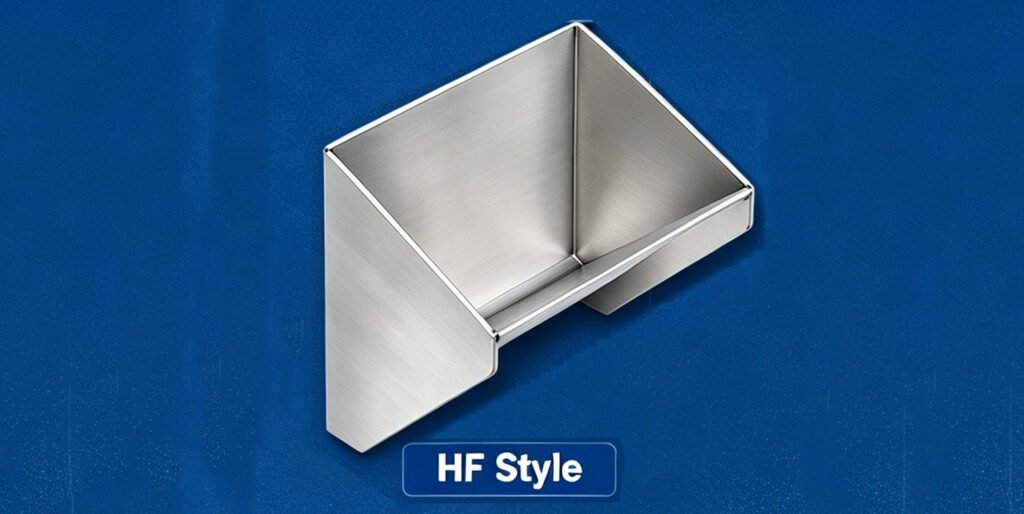
The HF (High Front) bucket is a continuous discharge bucket designed for industrial bucket elevators that require maximum carrying capacity. Its defining feature is the extra-high front wall, which increases the bucket's usable volume while helping to retain material during the upward conveying cycle. Like other continuous discharge buckets, HF buckets are mounted in a closely spaced overlapping arrangement, allowing material to discharge smoothly by gravity into the preceding bucket as it passes over the head sprocket or head pulley. Compared with the MF (Medium Front) bucket, the HF bucket offers greater volumetric capacity, making it suitable for higher-capacity conveying systems. It is widely used in continuous discharge belt and chain bucket elevators handling cement clinker, limestone, fertilizer, coal, aggregates, grains, and other free-flowing to moderately flowing bulk materials where high throughput and gentle material handling are required.
- High front wall provides maximum bucket capacity for increased throughput
- Designed for continuous discharge with closely spaced overlapping buckets
- Gravity discharge minimizes material degradation and carryback
- Ideal for high-capacity industrial applications handling powders, granules, and small lump materials
C Type Elevator Buckets
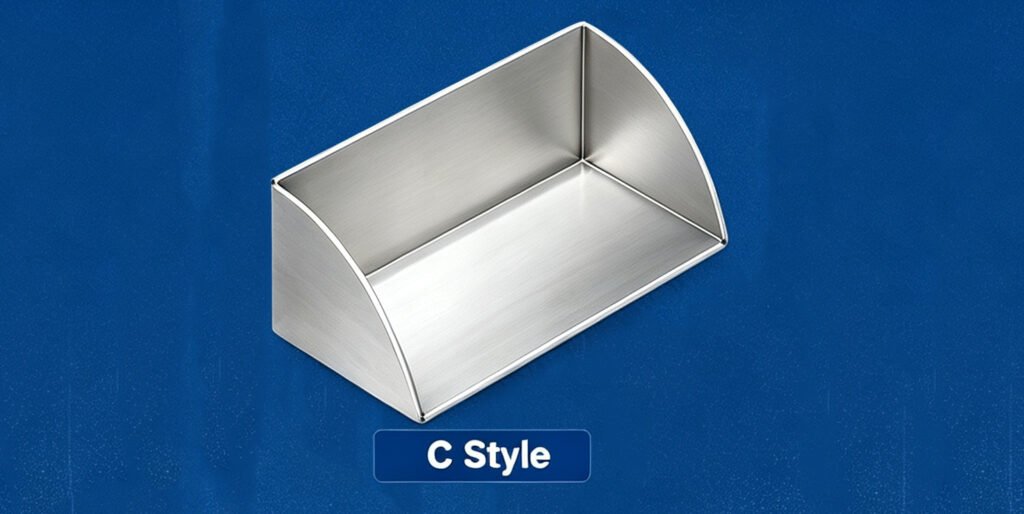
The C Type bucket is a shallow-profile centrifugal discharge bucket designed for handling fragile, lightweight, and free-flowing bulk materials. Unlike AA and AC buckets, which feature deep profiles for maximum capacity and digging action, the C bucket has a low front wall and shallow body that promotes gentle loading and smooth material release. This design reduces impact forces during loading and discharge, helping to minimize product degradation. Because of its shallow geometry, the C bucket is best suited for materials that do not require digging from the elevator boot. Instead, it performs best in flood-fed or controlled-feed applications, where material flows freely into the bucket. Typical applications include grain, seeds, coffee beans, animal feed, plastic pellets, and other products where preserving product quality is more important than maximizing bucket capacity.
Standard Elevator Bucket Dimensions
SC (Super Capacity) Type Buckets For NE/NSE Chain Bucket Elevators Sizes and Dimensions
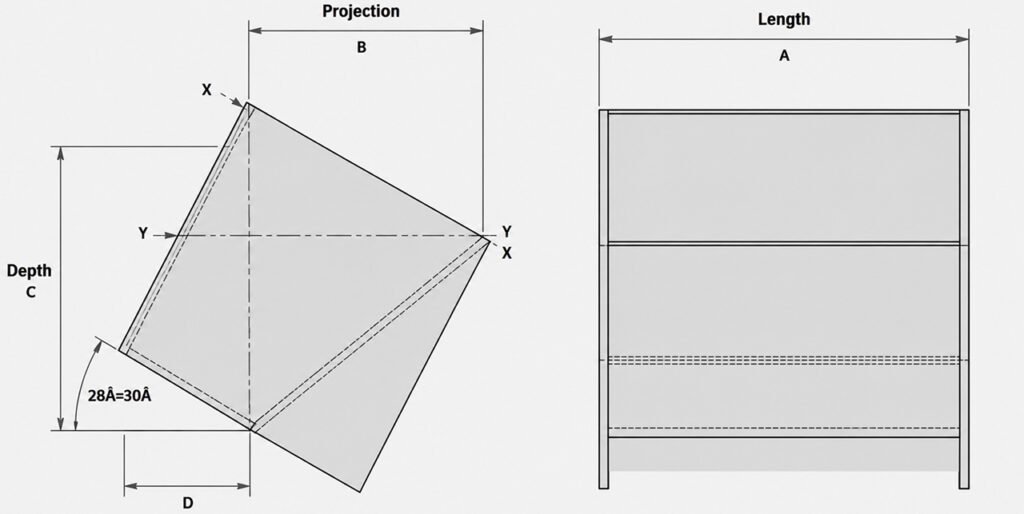
| Size (Nominal) | A Length (cm) | B Projection (cm) | C Depth (cm) | D (cm) | 10 Gauge Steel (≈3.42 mm) kg | 0.1875" Steel (≈4.76 mm) kg | 0.25" Steel (≈6.35 mm) kg | 0.3125" Steel (≈7.94 mm) kg | Gross X-X (cm³) | Y-Y (cm³) |
| 30x22x29.5 | 30 | 22 | 29.53 | 11.59 | 9.98 | 13.15 | 17.69 | 22.23 | 15,291 | 9,911 |
| 36x22x29.5 | 36 | 22 | 29.53 | 11.59 | 10.43 | 14.06 | 18.6 | 23.13 | 17,840 | 11,610 |
| 41x22x29.5 | 41 | 22 | 29.53 | 11.59 | 11.34 | 15.42 | 20.41 | 25.4 | 20,388 | 13,026 |
| 46x22x29.5 | 46 | 22 | 29.53 | 11.59 | 12.25 | 16.33 | 21.77 | 27.22 | 22,836 | 14,725 |
| 51x22x29.5 | 51 | 22 | 29.53 | 11.59 | 13.15 | 17.69 | 23.59 | 29.48 | 25,485 | 16,424 |
| 41x32x44 | 41 | 32 | 44.13 | 16.51 | 19.5 | 26.31 | 34.47 | 43.09 | 43,891 | 31,432 |
| 51x32x44 | 51 | 32 | 44.13 | 16.51 | 22.23 | 30.39 | 39.92 | 49.9 | 54,934 | 39,644 |
| 61x32x44 | 61 | 32 | 44.13 | 16.51 | 25 | 34.02 | 47.17 | 58.97 | 66,038 | 47,572 |
| 76x32x44 | 76 | 32 | 44.13 | 16.51 | 29 | 39.92 | 53.07 | 66.22 | 82,302 | 59,748 |
| 91x32x44 | 91 | 32 | 44.13 | 16.51 | 33.11 | 44.91 | 59.87 | 74.84 | 98,926 | 71,619 |
AA Type Steel Fabricated Bucket Elevator Sizes and Dimensions
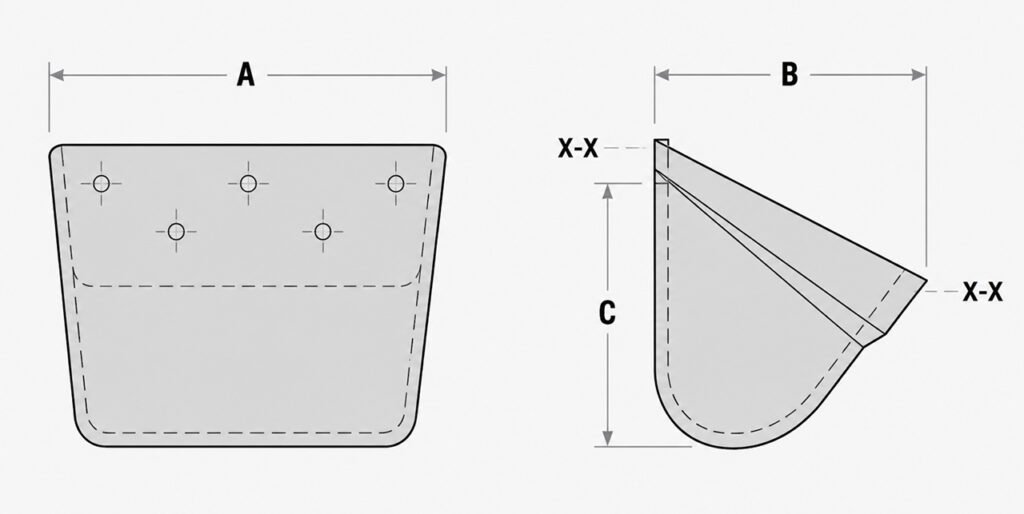
| Size (Nominal) | A Length (cm) | B Projection (cm) | C Depth (cm) | X-X Gross (cm³) | Usable (cm³) | Approx. Weight (kg) |
| 10x7 | 10 | 7 | 7.62 | 250.72 | 188.45 | 0.91 |
| 13x9 | 13 | 9 | 9.53 | 494.79 | 370.26 | 1.45 |
| 15x10 | 15 | 10 | 10.8 | 827 | 620.52 | 1.81 |
| 18x11 | 18 | 11 | 12.07 | 1274.2 | 956.74 | 2.45 |
| 20x13 | 20 | 13 | 13.97 | 1720.65 | 1290.81 | 2.99 |
| 30x13 | 30 | 13 | 13.97 | 2734.2 | 2050 | 4.49 |
| 38x13 | 38 | 13 | 13.97 | 3439.7 | 2579.9 | 5.62 |
| 48x13 | 48 | 13 | 13.97 | 4529.8 | 3,395 | 7.12 |
| 23x15 | 23 | 15 | 15.88 | 2619 | 1,964 | 4.04 |
| 25x15 | 25 | 15 | 15.88 | 3253 | 2439 | 4.45 |
| 28x15 | 28 | 15 | 15.88 | 3634 | 2726 | 4.76 |
| 30x15 | 30 | 15 | 15.88 | 3819 | 2863 | 5.13 |
| 30x18 | 30 | 18 | 18.42 | 5234 | 3926 | 6.31 |
| 36x18 | 36 | 18 | 18.42 | 6315 | 4737 | 7.12 |
| 38x18 | 38 | 18 | 18.42 | 6578 | 4931 | 7.53 |
| 41x18 | 41 | 18 | 18.42 | 7013 | 5261 | 7.94 |
| 36x20 | 36 | 20 | 21.59 | 8104 | 6076 | 8.44 |
| 41x20 | 41 | 20 | 21.59 | 9441 | 7081 | 9.34 |
| 46x20 | 46 | 20 | 21.59 | 10710 | 8033 | 10.3 |
| 51x20 | 51 | 20 | 21.59 | 12404 | 9307 | 11.2 |
| 61x20 | 61 | 20 | 21.59 | 14772 | 11077 | 13.06 |
| 46x25 | 46 | 25 | 26.67 | 16402 | 12297 | 13.11 |
AC Type Elevator Buckets Sizes and Dimensions
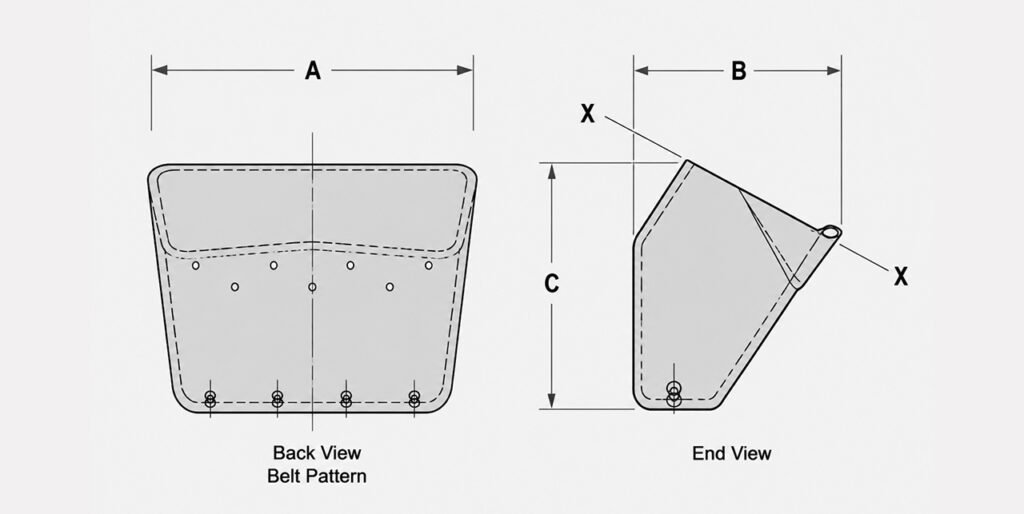
| Size (Nominal) | A Length (cm) | B Projection (cm) | C Depth (cm) | 0.1875" Steel (≈4.76 mm) kg | 0.25" Steel (≈6.35 mm) kg | Gross X-X (cm³) | Y-Y (cm³) |
| 30x20x21.6 | 30 | 20 | 21.59 | 8.26 | 11.02 | 8,495 | 6,513 |
| 36x20x21.6 | 36 | 20 | 21.59 | 9.21 | 12.25 | 10,194 | 7,646 |
| 41x20x21.6 | 41 | 20 | 21.59 | 10.21 | 13.61 | 11,610 | 8,778 |
| 46x25x26.7 | 46 | 25 | 26.67 | 14.15 | 17.69 | 19,638 | 13,875 |
| 51x25x26.7 | 51 | 25 | 26.67 | 15.29 | 19.1 | 21,704 | 15,291 |
| 61x25x26.7 | 61 | 25 | 26.67 | 18.01 | 23.91 | 26,052 | 18,406 |
| 69x30x26.7 | 69 | 30 | 26.67 | 24.4 | 32.43 | 41,625 | 30,299 |
ACS Type For Continuous Discharge Industrial Bucket Elevator Sizes and Dimensions
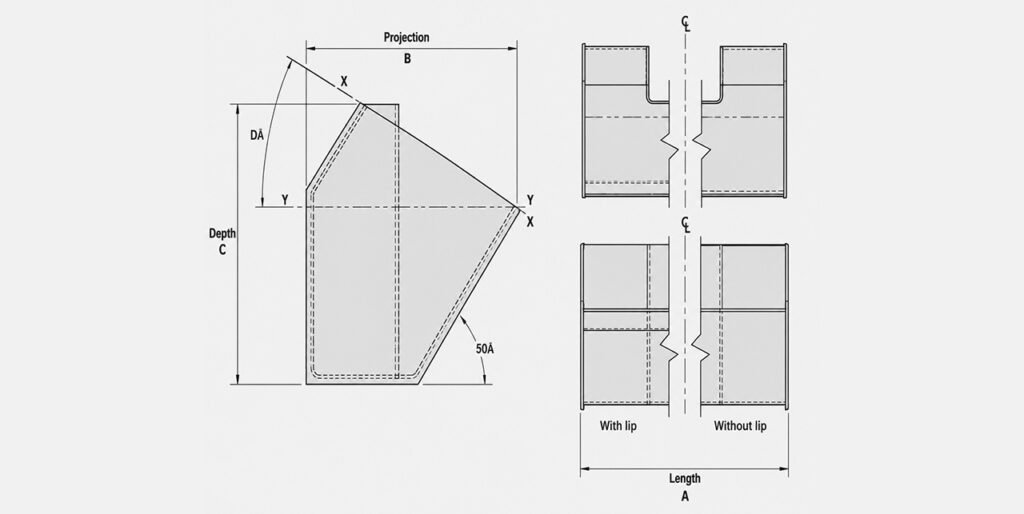
| Size (Nominal) | A Length (cm) | B Projection (cm) | C Depth (cm) | D Degree | Steel (.1875" ≈ 4.76 mm) kg | Aluminum (.1875" ≈ 4.76 mm) kg | Gross X-X With Lip (cm³) | Y-Y w/o Lip (cm³) |
| 36x30x29 | 36 | 30 | 28.89 | 26 | 16.33 | 15 | 14,998 | 10,477 |
| 41x30x29 | 41 | 30 | 28.89 | 26 | 17.69 | 16 | 17,556 | 12,460 |
| 46x30x29 | 46 | 30 | 28.89 | 26 | 19.05 | 17 | 20,105 | 14,442 |
| 53x36x34 | 53 | 36 | 33.97 | 28 | 25.4 | 23 | 30,582 | 22,087 |
| 61x36x34 | 61 | 36 | 33.97 | 28 | 28.12 | 25 | 36,245 | 26,335 |
| 69x38x34 | 69 | 38 | 33.97 | 21 | 32.66 | 29 | 45,873 | 36,528 |
| 76x38x34 | 76 | 38 | 33.97 | 21 | 38.1 | 35 | 52,103 | 41,626 |
MF (Medium Front) Type Conveyor Buckets Sizes and Dimensions
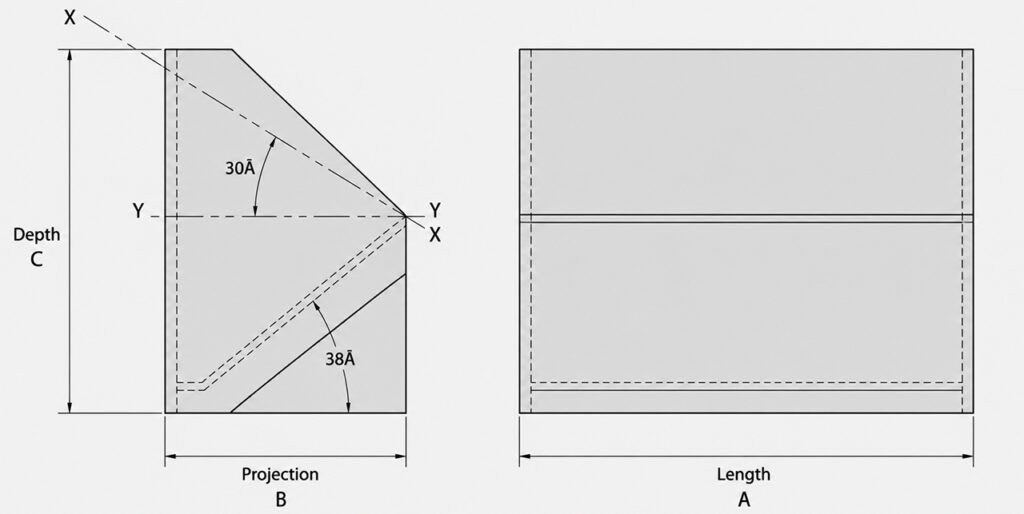
| Size (Nominal) | A Length (cm) | B Projection (cm) | C Depth (cm) | 12 Gauge Steel (≈2.66 mm) kg | 10 Gauge Steel (≈3.42 mm) kg | 0.1875" Steel (≈4.76 mm) kg | 0.25" Steel (≈6.35 mm) kg | Gross X-X (cm³) | Y-Y (cm³) |
| 20x13x20 | 20 | 13 | 19.69 | 2.31 | 2.86 | 4 | 5 | 1,982 | 1,133 |
| 25x13x20 | 25 | 13 | 19.69 | 2.68 | 3.36 | 5 | 6 | 2,548 | 1,416 |
| 23x15x23.5 | 23 | 15 | 23.5 | 3.04 | 3.9 | 5 | 6 | 3,398 | 1,699 |
| 25x15x23.5 | 25 | 15 | 23.5 | 3.27 | 4.17 | 6 | 7 | 3,681 | 1,982 |
| 28x15x23.5 | 28 | 15 | 23.5 | 3.49 | 4.49 | 6 | 8 | 3,965 | 2,265 |
| 30x15x23.5 | 30 | 15 | 23.5 | 3.67 | 4.76 | 7 | 9 | 4,248 | 2,548 |
| 25x18x30 | 25 | 18 | 29.53 | 4.22 | 5.4 | 7 | 8 | 5,097 | 2,832 |
| 30x18x30 | 30 | 18 | 29.53 | 4.72 | 6 | 8.44 | 11.25 | 6,230 | 3,398 |
| 36x18x30 | 36 | 18 | 29.53 | 5.26 | 7 | 9.39 | 12.52 | 7,079 | 3,965 |
| 25x20x30 | 25 | 20 | 29.53 | 4.49 | 5.81 | 8.07 | 10.52 | 6,796 | 3,965 |
| 30x20x30 | 30 | 20 | 29.53 | 5.08 | 6.53 | 9.07 | 11.84 | 7,929 | 4,531 |
| 36x20x30 | 36 | 20 | 29.53 | 5.62 | 7.26 | 10.07 | 13.2 | 9,061 | 5,380 |
| 41x20x30 | 41 | 20 | 29.53 | 6.21 | 7.98 | 11.11 | 14.51 | 10,760 | 6,230 |
| 46x20x30 | 46 | 20 | 29.53 | 6.76 | 8.71 | 12.11 | 15.88 | 11,893 | 7,079 |
| 51x20x30 | 51 | 20 | 29.53 | 7.3 | 9.43 | 13.15 | 17.24 | 13,309 | 7,645 |
| 46x25x38 | 46 | 25 | 38.1 | 8.2 | 11.75 | 16.37 | 21.45 | 18,689 | 10,760 |
| 61x25x30 | 61 | 25 | 29.53 | 9.4 | 12.43 | 17.33 | 22.68 | 24,069 | 14,442 |
| 41x30x45 | 41 | 30 | 44.77 | 10.8 | 13.56 | 18.42 | 24.86 | 24,069 | 13,875 |
| 51x30x45 | 51 | 30 | 44.77 | 13.6 | 15.79 | 21.99 | 28.98 | 30,583 | 17,557 |
| 61x30x45 | 61 | 30 | 44.77 | 16.7 | 18.05 | 25.13 | 33.11 | 36,812 | 20,955 |
HF (High Front) Type Elevator Buckets Sizes and Dimensions
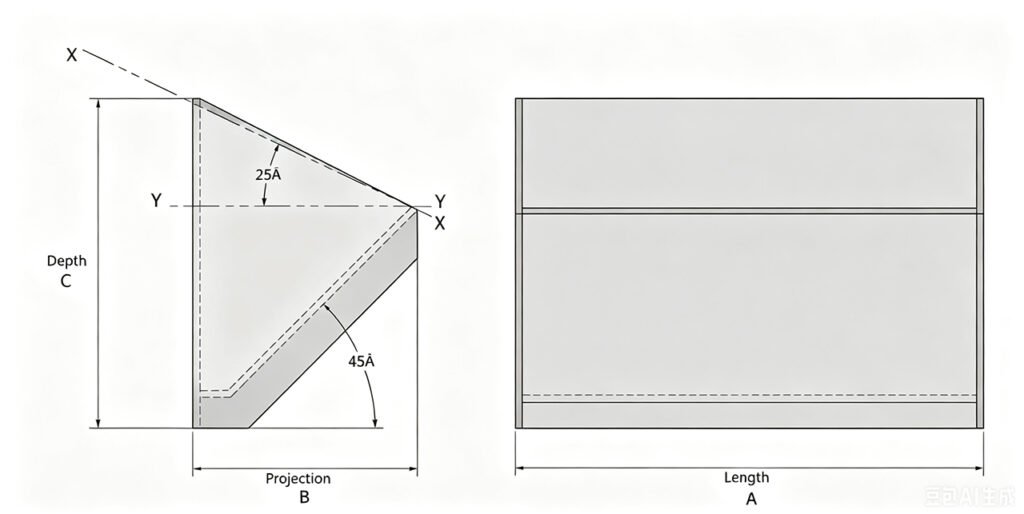
| Size (Nominal) | A Length (cm) | B Projection (cm) | C Depth (cm) | 14 Gauge Steel (≈1.90 mm) kg | 12 Gauge Steel (≈2.66 mm) kg | 10 Gauge Steel (≈3.42 mm) kg | 0.1875" Steel (≈4.76 mm) kg | 0.25" Steel (≈6.35 mm) kg | Gross X-X (cm³) | Y-Y (cm³) |
| 20x13x20 | 20 | 13 | 19.69 | 1.59 | 2.22 | 3 | 4 | 5 | 2,265 | 1,416 |
| 25x13x20 | 25 | 13 | 19.69 | 1.86 | 2.58 | 3 | 5 | 6 | 2,832 | 1,699 |
| 25x15x23.5 | 25 | 15 | 23.5 | 2.3 | 3.27 | 4 | 6 | 8 | 3,965 | 2,832 |
| 30x15x23.5 | 30 | 15 | 23.5 | 2.59 | 3.76 | 5 | 7 | 9 | 5,097 | 3,398 |
| 25x18x30 | 25 | 18 | 29.53 | 3 | 4.13 | 5 | 7 | 9 | 5,663 | 3,681 |
| 30x18x30 | 30 | 18 | 29.53 | 3.31 | 4.67 | 6 | 9 | 11 | 6,796 | 4,531 |
| 36x18x30 | 36 | 18 | 29.53 | 3.72 | 5.22 | 7 | 9 | 12 | 7,929 | 5,097 |
| 30x20x30 | 30 | 20 | 29.53 | 3.63 | 5 | 6.49 | 9.07 | 12 | 8,495 | 5,663 |
| 36x20x30 | 36 | 20 | 29.53 | 4.08 | 6 | 7.26 | 10.16 | 13 | 9,911 | 6,796 |
| 41x20x30 | 41 | 20 | 29.53 | 4.54 | 6.31 | 8.03 | 11.2 | 15 | 11,326 | 7,929 |
| 46x25x38 | 46 | 25 | 38.1 | 6.35 | 8.88 | 11.88 | 16.37 | 22 | 20,388 | 13,592 |
| 41x30x45 | 41 | 30 | 44.77 | 7.35 | 10.52 | 13.74 | 19 | 26 | 25,485 | 18,123 |
| 51x30x45 | 51 | 30 | 44.77 | 8.62 | 12.34 | 15.92 | 22.23 | 30 | 32,564 | 22,653 |
| 61x30x45 | 61 | 30 | 44.77 | 9.94 | 14.24 | 18.37 | 25.54 | 35 | 37,943 | 27,184 |
C Type For Bucket Elevator Conveyor Sizes and Dimensions
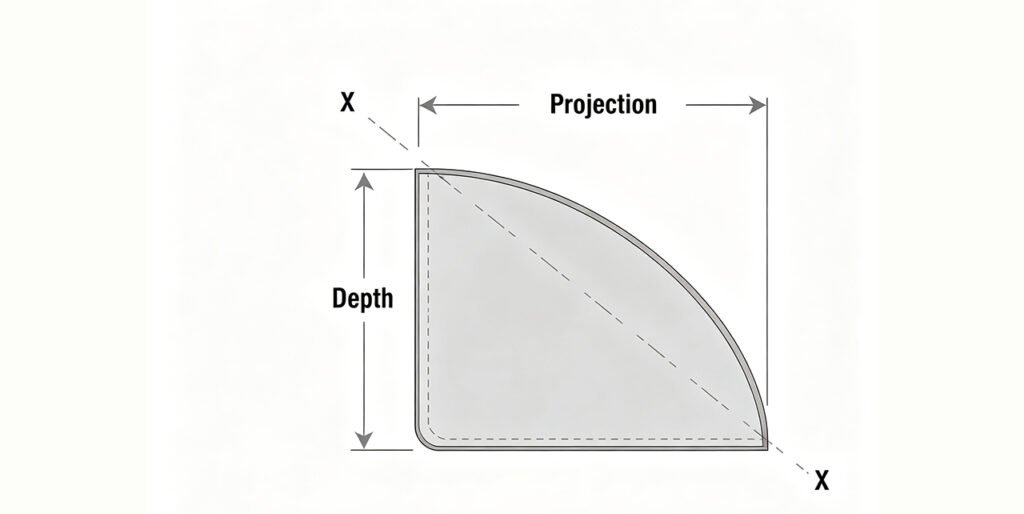
| Standard Bucket Size | Length (cm) | Projection (cm) | Depth (cm) | X-X Capacity (cm³) | 12GA Steel (2.66 mm) kg | 10GA Steel (3.42 mm) kg | 3/16" Steel (4.76 mm) kg |
| 15×11×10 | 15 | 11 | 10.16 | 736 | 0.91 | 1 | 2 |
| 20×11×10 | 20 | 11 | 10.16 | 991 | 1.15 | 1 | 2 |
| 25×13×10 | 25 | 13 | 10.16 | 1,472 | 1.47 | 2 | 3 |
| 30×13×10 | 30 | 13 | 10.16 | 1,727 | 1.7 | 2 | 3 |
| 35×15×10 | 35 | 15 | 10.16 | 2,050 | 2 | 3 | 4 |
| 36×18×13 | 36 | 18 | 12.7 | 3,916 | 2.88 | 4 | 5 |
| 41×18×13 | 41 | 18 | 12.7 | 4,474 | 3.21 | 5 | 7 |
| 46×18×13 | 46 | 18 | 12.7 | 5,050 | 3.6 | 5.5 | 8 |
| 51×18×13 | 51 | 18 | 12.7 | 5,600 | 4 | 6 | 8.5 |
North American vs. Chinese Bucket Elevator Bucket Types
As Chinese bucket elevator manufacturers have expanded into international markets, many engineers encounter two completely different bucket naming systems. In North America, elevator bucket styles such as AA, AC, ACS, C, MF, HF, and SC are widely used, while Chinese bucket elevators typically use designations such as Q, ZD, SD, ZH, SH, and NE based on the elevator series and bucket depth. Although many of these bucket profiles perform similar functions, there is no official one-to-one conversion between the two systems. The American 4B bucket series is based on inch dimensions and proprietary bucket profiles, whereas Chinese bucket standards are based on metric dimensions and national or industry standards. Differences in bucket geometry, digging lip design, side wall angle, mounting hole spacing, bucket projection, and capacity mean that two buckets with similar applications are rarely physically interchangeable. Therefore, the comparison below should be regarded as a functional equivalency guide rather than an exact replacement chart. Before replacing one bucket with another, engineers should always verify bucket width, projection, bolt hole spacing, capacity, and elevator speed.
Comparison of North American and Chinese Bucket Elevator Bucket Types
| North American Bucket | Primary Characteristics | Closest Chinese Equivalent | Notes |
| AA | Standard centrifugal digging bucket | TD-Q / HL-Q Shallow Bucket | Most common functional equivalent |
| AC | Improved AA with cleaner discharge | Modified Q Bucket | Usually custom manufactured |
| ACS | AC with raised side walls | Custom Q Bucket with side guards | No standard Chinese equivalent |
| C | Flat-bottom bucket for sticky materials | TD-ZD / TH-ZH Medium-Deep Bucket | Similar handling characteristics |
| MF | Medium-depth general-purpose bucket | TD-ZD / TH-ZH Medium-Deep Bucket | Closest engineering substitute |
| HF | Deep high-capacity bucket | TD-SD / TH-SH / HL-S Deep Bucket | Similar capacity and application |
| SC | Continuous gravity discharge bucket | NE Continuous Guide Bucket | Similar operating principle rather than bucket shape |
AA Bucket → Chinese TD-Q / HL-Q Shallow Bucket
The AA bucket is the industry's standard centrifugal discharge bucket with a rounded bottom and reinforced digging lip for efficient material pickup. Its closest Chinese equivalent is the TD-Q (or HL-Q) shallow bucket, which serves the same purpose in centrifugal bucket elevators. Although the overall profiles differ slightly, both are intended for conveying free-flowing materials such as grain, cement, sand, and fertilizer. Interestingly, many Chinese plastic bucket manufacturers have adopted the AA designation directly, making "AA bucket" a common name even in China.
AC Bucket → Modified Q Bucket
The AC bucket is an evolution of the AA design with a wider opening and optimized side-wall geometry that promotes cleaner discharge and reduces material carryback. China does not have an official standardized equivalent. Instead, manufacturers typically produce a widened version of the Q bucket when customers require similar performance.
ACS Bucket → Custom Side-Wall Q Bucket
The ACS bucket builds upon the AC design by incorporating raised side walls that reduce spillage in high-speed belt elevators. Since Chinese standards do not include this feature, similar buckets are normally produced as non-standard custom buckets with welded side extensions.
C Bucket → TD-ZD / TH-ZH Medium-Deep Bucket
Unlike the AA family, the C bucket features a flatter bottom profile that minimizes material buildup when handling damp or sticky materials. Functionally, it most closely resembles China's TD-ZD or TH-ZH medium-deep buckets, which are commonly selected for moist sand, sticky powders, and materials that tend to cake.
MF Bucket → TD-ZD / TH-ZH Medium-Deep Bucket
The MF (Medium Front) bucket represents a balanced design between digging efficiency and discharge performance. Chinese engineers typically select TD-ZD or TH-ZH medium-deep buckets when similar conveying characteristics are required, making these the most common engineering substitutes.
HF Bucket → TD-SD / TH-SH / HL-S Deep Bucket
The HF bucket features a deeper profile and larger volumetric capacity for handling dry bulk solids at higher conveying rates. Its closest Chinese counterparts are the TD-SD, TH-SH, and HL-S deep buckets, which are likewise intended for materials such as clinker, coal, crushed stone, and other coarse bulk materials.
SC Bucket → NE Continuous Bucket
The SC bucket differs fundamentally from all of the centrifugal bucket designs above. Instead of throwing material by centrifugal force, SC buckets are installed closely together so that material discharges by gravity over the back of the preceding bucket. This operating principle closely matches the bucket arrangement used on Chinese NE plate chain bucket elevators. While the bucket shapes are not identical, both systems rely on continuous bucket spacing and gravity discharge. An SC bucket should never be replaced with a standard SH or ZH bucket, since the discharge mechanism is completely different.
Bucket Materials and Elevator Buckets Engineering Properties
Bucket elevator buckets are manufactured from a wide range of materials, each offering different levels of wear resistance, corrosion resistance, impact strength, and temperature capability. Selecting the correct bucket material is just as important as choosing the bucket shape, as it directly affects service life, maintenance frequency, and operating reliability. Steel buckets are generally preferred for abrasive and high-temperature applications, while engineering plastics offer excellent corrosion resistance, lower weight, and reduced product contamination. The optimum material depends on the conveyed material, operating temperature, moisture content, and industry requirements such as food safety or explosion protection.
| Material | Wear Resistance | Corrosion Resistance | Temp Limit |
| Q235 Carbon Steel | Medium | Low | 250°C |
| 304 Stainless | Medium | Excellent | 400°C |
| 316 Stainless | Medium | Superior | 400°C |
| HDPE | Good | Excellent | 80°C |
| Nylon | Very good | Excellent | 120°C |
| Polyurethane | Excellent | Excellent | 90°C |
How do I choose the right bucket material?
You can select the bucket based on the following aspects:
Abrasive Wear
When conveying highly abrasive materials such as silica sand, clinker, crushed limestone, quartz, or mineral ores, bucket wear becomes the primary design concern. These materials continuously erode the bucket lip, side walls, and bottom during loading and discharge. For severe abrasive applications, fabricated carbon steel buckets with reinforced digging lips are the most common choice because they offer high structural strength and can be repaired by welding. Polyurethane buckets are also widely used in certain applications due to their exceptional abrasion resistance, particularly where reduced bucket weight and noise are desirable. Selecting a wear-resistant bucket material significantly extends service life and reduces replacement frequency.
Impact Wear
The size and weight of the conveyed material determine the impact forces experienced during loading. Large aggregates, clinker, coal, crushed stone, and coarse minerals generate repeated impact loads that can crack or deform lightweight plastic buckets. For these applications, engineers typically select carbon steel buckets or thicker fabricated steel buckets because of their superior mechanical strength and resistance to deformation. Engineering plastic buckets are generally better suited for lighter, free-flowing bulk materials where impact loading is relatively low.
Corrosion Resistance
Corrosive environments require materials that can withstand chemical attack without contaminating the conveyed product. Fertilizers, salt, wet chemicals, food products, and other moisture-containing materials can rapidly corrode ordinary carbon steel buckets. In these applications, 304 stainless steel provides excellent corrosion resistance for most industrial and food-processing environments, while 316 stainless steel offers superior resistance to chlorides, salt, and aggressive chemicals. Engineering plastics such as HDPE, nylon, and polyurethane are also highly resistant to corrosion and are frequently selected for chemical processing and fertilizer handling because they do not rust.
High-Temperature Applications
Operating temperature is another critical selection factor. Exceeding a bucket material's temperature limit can result in deformation, loss of strength, or premature failure. For handling hot clinker, calcined materials, or other high-temperature bulk solids, fabricated steel buckets are generally preferred because they retain their mechanical strength at elevated temperatures where plastic buckets would soften or deform.
Food-Grade Applications
Food-processing industries require bucket materials that are hygienic, non-toxic, and easy to clean. FDA-compliant HDPE and food-grade nylon buckets are commonly used for conveying grain, flour, sugar, rice, coffee, and other agricultural products because they are lightweight, corrosion-resistant, and do not contaminate the product. For applications requiring frequent washdown, high sanitation standards, or resistance to cleaning chemicals, 304 stainless steel buckets are widely preferred. Their smooth, non-porous surfaces minimize product buildup, simplify cleaning, and reduce the risk of bacterial growth or cross-contamination.
Anti-Static Buckets for Grain Handling
Grain elevators and feed mills present an additional safety challenge due to combustible dust. As plastic buckets travel through the elevator, friction between the bucket, belt, and bulk material can generate static electricity. If static charge accumulates and is discharged in a dust-laden atmosphere, it may provide an ignition source for a dust explosion. To reduce this risk, engineers often specify conductive HDPE or static-dissipative nylon buckets, which safely dissipate electrostatic charge instead of allowing it to build up. In facilities operating in potentially explosive atmospheres, these anti-static bucket materials are commonly selected to help meet ATEX or other explosion-protection requirements while improving overall plant safety.
Selection Guide Table for Bucket Elevator Buckets:
| Application | Recommended Bucket Material |
| Grain | HDPE, Nylon |
| Feed | HDPE |
| Fertilizer | HDPE, Stainless Steel |
| Cement | Carbon Steel |
| Sand | Polyurethane, Steel |
| Clinker | Steel |
| Coal | Steel |
| Salt | 316 Stainless Steel |
| Sugar | 304 Stainless Steel |
| Food | 304 Stainless Steel, Food-grade HDPE |
How Bucket Shape Affects Discharge?
Bucket geometry determines the overall discharge behavior of a centrifugal bucket elevator. The bucket profile controls the centrifugal discharge trajectory, while its internal shape influences material retention and the amount of carryback remaining after discharge. The bucket dimensions must also be matched to the head pulley diameter, as the pulley radius affects the material release point, centrifugal force, and discharge clearance. In addition, the bucket lip angle governs how easily material exits the bucket, balancing complete discharge against premature spillage during conveying. Together, these geometric factors directly affect discharge efficiency, bucket filling efficiency, spillage, wear, and the overall performance of the bucket elevator.
1. Centrifugal Discharge Trajectory
The bucket profile directly influences the forces acting on the material as it separates from the bucket at the head pulley, thereby determining the centrifugal discharge trajectory. Deep buckets with a large curved profile position the material's center of gravity farther inside the bucket. As a result, the material releases later during bucket rotation and follows a longer discharge trajectory. Conversely, shallow buckets with a straighter front wall release the material earlier, producing a shorter throw distance. An improperly designed bucket profile can lead to two common discharge problems: the material may strike the head casing and rebound, or it may be discharged too early and fail to enter the discharge chute. Proper matching of the head pulley diameter and bucket geometry ensures that the centrifugal discharge trajectory is accurately directed into the center of the discharge chute.
2. Material Retention
Material retention refers to the portion of material remaining inside the bucket after discharge that cannot be completely expelled by centrifugal force. Buckets with sharp internal corners or square-bottom dead zones tend to retain material. In contrast, buckets featuring smooth radiused transitions and streamlined bottoms promote complete discharge and minimize residue. When conveying sticky or damp bulk materials, insufficient internal curvature allows material to accumulate along the bucket walls, forming a stable buildup layer. This gradually reduces the bucket's effective carrying capacity and increases the likelihood of carryback.
3. Carryback
Carryback occurs when material is not completely discharged and the remaining material travels around the head pulley with the returning bucket before falling back into the elevator. Buckets with an excessively deep front profile or an inward-curved bucket lip tend to trap material during the final stage of discharge, making carryback more likely. An optimized bucket profile allows the material to empty rapidly during the centrifugal discharge phase so that little or no material remains before the bucket enters the return side. Carryback not only reduces conveying efficiency but also increases wear in the boot section and places additional load on the bucket elevator.
4. Effect of Head Pulley Radius
The head pulley radius determines the bucket's turning radius during discharge, so the bucket geometry must be properly matched to the head pulley size. For the same bucket design, a smaller head pulley produces a tighter turning radius and a more rapid increase in centrifugal force, causing the material to separate from the bucket earlier. A larger head pulley provides a smoother rotation, delaying the material release point. Long, narrow buckets may interfere with one another when installed on small-diameter head pulleys, reducing the available discharge clearance. Shorter, wider buckets are generally better suited to larger head pulleys. When bucket dimensions are not matched to the head pulley radius, even a well-designed bucket may exhibit unstable discharge trajectories and incomplete material discharge.
5. Bucket Lip Angle
The bucket lip is the leading edge of the bucket, and the bucket lip angle is one of the most critical geometric parameters affecting discharge performance. A moderately outward-flared lip allows material to leave the bucket smoothly during centrifugal discharge, improving discharge efficiency. Conversely, an inward-sloping or excessively closed lip restricts the material from exiting the bucket, increasing both material retention and carryback. However, an excessively open lip angle also has disadvantages. During the upward conveying section, material may spill from the bucket before reaching the head pulley. Therefore, the bucket lip angle must be carefully optimized to balance material retention during conveying with complete discharge at the head pulley.
Elevator Buckets Capacity Calculation
The formula: Q=(V×ψ×v×3600)/P
Where:
- Q = Bucket elevator capacity (m³/h)
- V = Bucket volume (m³)
- ψ = Bucket fill factor (typically 0.60–1.00) v = Belt or chain speed (m/s)
- P = Bucket pitch (m), measured from the center of one bucket to the center of the next \
- 3600 = Converts seconds to hours
- If you need the capacity in tons per hour (tph), multiply the volumetric capacity by the bulk density: Qm=Q×ρ
Then provide a worked example.
Example Calculation (NE100 Bucket Elevator)
Suppose an NE100 bucket elevator has the following specifications:
- Bucket volume (V) = 15 L = 0.015 m³
- Bucket pitch (P) = 500 mm = 0.50 m
- Chain speed (v) = 0.60 m/s
- Bucket fill factor (ψ) = 80% = 0.80
- Bulk density (ρ) = 1.20 t/m³ (e.g., cement clinker)
Use the formula Q=(V×ψ×v×3600)/P
in which Q= (0.015×0.80×0.60×3600)/0.5= 51.84 m3/h
Then convert to tons per hour:
Qm=51.84×1.20= 62.2 t/h
How Many Buckets Does a Bucket Elevator Need? Calculation Formula & Example
The number of buckets required for a bucket elevator depends on the total belt or chain loop length and the bucket spacing (pitch). Once these values are known, the calculation is straightforward.
Quick formula:
- Bucket required = [2L + π(D1+D2)/2] / S
where:
- L = Shaft center distance
- D₁ = Head pulley/sprocket diameter
- D₂ = Boot pulley/sprocket diameter
- S = Bucket spacing (pitch)
And below is a step-by-step break down of how to calculate it.
Step 1. Measure the Shaft Center Distance
Measure the center-to-center distance between the head pulley (or sprocket) and the boot pulley (or sprocket). Calculate the vertical length of the elevator:
Vertical Length= 2 × Shaft Center Distance
*This represents the two straight vertical sections of the belt or chain.
Step 2. Calculate the Belt/Chain Wrap Around the Pulleys
The belt or chain wraps approximately halfway around both the head and boot pulleys. Calculate the circumference of each pulley:
- C1=π×D1
- C2=π×D2
Where:
- D₁ = Head pulley (or sprocket) diameter
- D₂ = Boot pulley (or sprocket) diameter
Since only about half of each circumference is included in the loop:
Wrap length = (C1+C2)/2 or Wrap length= π(D1+D2)/2
Step 3. Calculate the Total Belt/Chain Loop Length
Add the straight vertical length and the wrap length.
- Total Loop length = (2 x Shaft centers) + π(D1+D2)/2
Step 4. Divide by Bucket Spacing
Finally, divide the total loop length by the bucket spacing (bucket pitch).
- Number of Buckets = total loop length / bucket spacing
Example Calculation:
Given that:
- Shaft center distance = 25m
- Head pulley diameter = 0.8m
- Boot pulley diameter = 0.8m
- Bucket spacing = 0.5m
Now apply the formula we get:
[2L + π(D1+D2)/2] / S = [2 *25 + π(0.8+0.8)/2] / 0.5 = 106 buckets
Bucket Spacing and Mounting
Bucket spacing, also called bucket pitch, is the center-to-center distance between two adjacent buckets. It determines how many buckets pass the head pulley each second and therefore has a direct impact on conveying capacity. Incorrect bucket spacing reduces conveying capacity, while improper mounting can cause bucket loosening, belt damage, chain wear, or premature bolt failure. The relationship between bucket spacing and capacity is expressed by the standard bucket elevator equation:
P(bucket pitch) = (V×ψ×v×3600)/ Q in which the variables we have explain prior, Reducing the bucket pitch increases the number of buckets per meter, thereby increasing theoretical capacity. However, buckets cannot be spaced arbitrarily close together. Insufficient spacing can reduce loading efficiency, restrict discharge clearance around the head pulley, and increase the risk of bucket interference, especially on elevators with small head pulleys. Excessive spacing has the opposite effect, lowering the number of buckets carrying material and reducing overall elevator capacity.
Bucket Spacing in Belt Bucket Elevators
In centrifugal discharge belt bucket elevators, bucket spacing is generally selected according to the bucket projection and the required discharge trajectory. Typical bucket pitches range from 2.0 to 3.0 times the bucket projection, although the exact value depends on the bucket type, head pulley diameter, and belt speed. Higher-speed centrifugal elevators generally require greater bucket spacing to prevent discharged material from striking the following bucket. Standard bucket pitches commonly range from 150 mm to 400 mm, depending on the bucket size and elevator capacity.
Bucket Spacing in Chain Bucket Elevators
Chain bucket elevators, including NE plate chain and TH round-link chain elevators, typically operate at lower chain speeds than belt elevators. Because the buckets travel more slowly and discharge by gravity or continuous flow, they can often be installed with closer spacing. Typical chain bucket pitches include 250 mm, 315 mm, 400 mm, 500 mm, and 630 mm, depending on the elevator model and bucket dimensions. The bucket pitch is usually standardized by the chain pitch, making it an integral part of the chain design rather than an independently selected dimension.
Single-Row vs. Double-Row Bucket Mounting
Bucket elevators are available in single-row and double-row bucket arrangements.
- A single-row configuration mounts one bucket across the width of the belt or chain and is commonly used for small- and medium-capacity elevators.
- A double-row configuration mounts two narrower buckets side by side on the same belt or chain. This arrangement significantly increases conveying capacity without increasing elevator speed, making it common in high-capacity cement, mining, and bulk material handling applications. Double-row mounting also distributes the load more evenly across wide belts or dual-strand plate chains, reducing bending stresses and improving operational stability.
Bucket Bolt Patterns
The bolt pattern depends on the bucket size, operating load, and bucket material. Small buckets typically use a two-bolt mounting pattern, while medium and large buckets generally use three- or four-bolt configurations to distribute the load more evenly. Heavy-duty steel buckets handling abrasive materials often require additional bolts or reinforced mounting holes to withstand repeated impact loading. Proper bolt spacing is essential to prevent localized stress concentrations and cracking around the mounting holes.
Why Are Backing Washers Used?
Backing washers, also called bucket washers or reinforcing washers, are installed on the inside of the bucket to spread the clamping force of the bucket bolts over a larger surface area. Without backing washers, the bolt head concentrates the load at a single point, which can deform thin steel buckets or crack plastic buckets over time. Reinforcing washers reduce stress concentrations, improve bolt retention, and significantly extend bucket service life, particularly in high-capacity or abrasive applications.
Bucket Bolt Torque Requirements
Bucket bolts must be tightened to the manufacturer's recommended torque to ensure a secure connection without damaging the bucket or belt. Under-tightened bolts may loosen under vibration, allowing bucket movement that enlarges the bolt holes and accelerates wear. Over-tightening can deform steel buckets, crack plastic buckets, or crush the belt carcass, reducing belt life. Because bolt diameter, bolt grade, bucket material, and belt thickness all influence the required tightening force, there is no universal torque specification. For most industrial bucket elevators, manufacturers specify tightening torques based on the bolt size (such as M10, M12, or M16) and fastener grade. As a general practice, bucket bolt torque should always be checked after the initial commissioning period and included in routine maintenance inspections, as vibration and belt settling can reduce clamping force over time.
Common Buckets For Bucket Elevator Wear Patterns
Bucket wear patterns provide valuable insight into the operating condition of a bucket elevator. The location and type of wear—such as lip erosion, side wall abrasion, cracked bolt holes, bucket deformation, or excessive carryback—can often be traced to specific issues including abrasive materials, misalignment, improper bucket mounting, overloading, or unsuitable bucket geometry. Identifying these wear patterns early allows operators to correct the root cause before they lead to reduced conveying efficiency, unplanned downtime, or bucket failure.
| Wear Pattern | Probable Cause | Why It Happens | Corrective Action |
| Bucket lip erosion | Highly abrasive materials (silica sand, clinker, mineral ores), excessive loading velocity | The bucket lip is the first point of contact during loading and experiences continuous abrasion, gradually reducing bucket capacity and discharge performance. | Use hardened steel, wear-resistant alloy, or polyurethane buckets; reduce loading velocity; install replaceable wear lips if applicable. |
| Side wall wear | Belt or chain misalignment, bucket rubbing against casing, material buildup | Misalignment causes one side of the bucket to contact the elevator casing or guide rails, producing uneven wear and increasing power consumption. | Realign the belt or chain, adjust tracking, inspect head and boot pulleys/sprockets, and remove material buildup. |
| Bucket bottom wear | Dragging through accumulated material in the boot | Excessive material accumulation prevents the buckets from clearing the boot, causing the bucket bottoms to scrape through bulk material on every cycle. | Improve boot cleanout, repair discharge problems, and maintain proper boot clearance. |
| Cracked bolt holes | Overtightened or loose bucket bolts, cyclic vibration, insufficient backing washers | Repeated loading concentrates stress around the bolt holes, eventually causing fatigue cracks that may lead to bucket failure. | Tighten bolts to the manufacturer's recommended torque, use backing washers, replace worn bolts, and inspect for vibration. |
| Bucket deformation | Overloading, impact loading from large lumps, material blockage | Excessive forces permanently bend the bucket, reducing filling efficiency and causing discharge problems. | Reduce the feed rate, install a lump breaker if required, and select a heavier-duty bucket design. |
| Bucket cracking | Metal fatigue, repeated impact loading, low-temperature embrittlement, manufacturing defects | Repeated stress cycles initiate cracks, typically at corners, welds, or bolt holes, which propagate until failure. | Replace damaged buckets, reduce impact loading, use thicker or higher-strength bucket materials, and inspect regularly for fatigue cracks. |
| Bucket edge chipping (plastic buckets) | Impact from large or sharp materials | Plastic bucket edges can chip or fracture when subjected to repeated impact from coarse aggregates or rocks. | Use steel buckets for heavy-duty service or select reinforced engineering plastic buckets designed for impact resistance. |
| Bucket-to-bucket interference | Incorrect bucket spacing, oversized buckets, incorrect head pulley diameter | Adjacent buckets contact each other during operation, leading to impact damage, excessive vibration, and fastener loosening. | Verify bucket pitch, bucket dimensions, and compatibility with the head pulley diameter. |
| Excessive carryback | Poor bucket geometry, sticky material, insufficient centrifugal force | Material remains inside the bucket after discharge and returns around the head pulley, increasing wear in the boot section. | Select a bucket with improved discharge characteristics, optimize operating speed, or use continuous discharge buckets for sticky materials. |
| Uneven bucket wear | Uneven loading, belt tracking problems, misaligned loading chute | Material consistently impacts one side of the bucket, producing localized wear and imbalance. | Center the loading chute, correct belt tracking, and ensure uniform material distribution. |
FAQ Frequently Asked Questions:
How Bucket Elevator Buckets Work with the Belt or Chain?
Bucket elevator buckets are securely attached to the traction member—either the elevator belt or elevator chain—using bucket bolts, mounting hardware, or clamping devices. Once installed, the buckets travel continuously in a closed loop together with the belt or chain. During operation, the head pulley (belt type) or head sprocket (chain type) provides the driving force, pulling the traction member and carrying all buckets vertically inside the elevator casing. After discharging their contents at the head section, the empty buckets return to the boot section along the descending side.
Relationship Between Bucket Elevator Buckets, Boot Loading, and Head Discharge
At the boot section, buckets are filled with material as they pass around the boot pulley or boot sprocket. In centrifugal discharge elevators, the buckets dig into the material pile, while in continuous discharge elevators, they are typically filled by gravity. The bucket shape, capacity, and bucket spacing determine how efficiently the buckets are filled. At the head section, the buckets pass around the head pulley or head sprocket and discharge the material by centrifugal force, gravity, or a combination of both. A well-designed bucket ensures complete discharge, while a poor design can cause material carryback, fallback, and reduced conveying efficiency.
Why Bucket Design Affects Capacity and Power Consumption
The effective bucket volume and bucket profile determine how much material each bucket can carry. Buckets with a high fill factor and efficient discharge achieve greater conveying capacity at the same operating speed, while poorly designed buckets reduce throughput through incomplete filling or discharge. Bucket design also affects power consumption. Small-capacity buckets require higher operating speeds to achieve the same capacity, increasing energy use. Poor discharge causes material recirculation, while heavier buckets and inefficient digging profiles increase the load on the drive system, resulting in higher power consumption.
For centrifugal discharge bucket elevators, the AA bucket is the most widely used profile because its deep shape provides excellent digging performance and efficient material discharge at higher belt speeds. AC buckets offer greater capacity than AA buckets and are suitable for handling larger volumes of free-flowing materials. ACS (Super Capacity) buckets feature an even deeper profile and increased volume, making them ideal for maximizing throughput while reducing the number of buckets required. MF (Medium Front) buckets have a medium-height front wall that provides a balance between capacity and smooth discharge, making them suitable for a wide range of industrial materials. HF (High Front) buckets have a taller front wall that helps retain light or fluffy materials during loading and conveying, reducing spillage before centrifugal discharge at the head pulley. The best bucket profile ultimately depends on the material's flow characteristics, required capacity, and operating speed, although AA buckets remain the standard choice for most centrifugal discharge applications.
For continuous discharge bucket elevators, SC (Super Capacity) buckets are the preferred choice because they are specifically designed for closely spaced buckets operating at lower chain speeds, allowing material to discharge gently by gravity into the preceding bucket. Their large capacity and deep profile maximize conveying efficiency while minimizing material degradation. MF (Medium Front) and HF (High Front) buckets are also commonly used for continuous discharge systems, particularly when handling powders, granules, or fragile bulk materials that require controlled, low-impact discharge. The best bucket profile depends on the material properties and required capacity, but SC buckets are generally considered the standard for plate chain continuous discharge elevators such as NE and NSE models.
No. A larger bucket does not always increase bucket elevator capacity. While a larger bucket can carry more material per cycle, the overall conveying capacity also depends on the bucket spacing (pitch), belt or chain speed, fill factor, material bulk density, and the elevator's loading and discharge efficiency. If the bucket is oversized for the application, it may not fill completely or discharge properly, reducing performance and increasing material carryback. For the best results, the bucket size should be selected together with the elevator speed and material characteristics to achieve the required capacity efficiently.
The best bucket material depends on the bulk material being conveyed. Carbon steel buckets are the standard choice for heavy-duty materials such as cement clinker, crushed limestone, coal, cement, and mineral ores because they offer high strength, excellent wear resistance, and can withstand high temperatures. Stainless steel buckets are commonly used for food products, sugar, salt, chemicals, and corrosive materials where hygiene or corrosion resistance is required. HDPE or nylon plastic buckets are ideal for grain, corn, wheat, rice, soybeans, animal feed, and fertilizers because they are lightweight, corrosion-resistant, and gentle on the product. For highly abrasive materials such as silica sand, quartz, glass cullet, and certain mineral products, polyurethane (urethane) buckets provide superior abrasion resistance and longer service life. Choosing the right bucket material helps maximize service life, reduce maintenance, and improve conveying efficiency.
Stainless steel elevator buckets should be used when conveying corrosive, wet, or hygienic materials that could damage carbon steel or require strict cleanliness standards. They are commonly used in the NPK compound fertilizer, dap fertilizer, urea fertilizer raw material conveying and in food, pharmaceutical, chemical, and salt industries for handling products such as sugar, flour, grains, starch, salt, chemicals, and corrosive powders. Stainless steel also provides excellent resistance to rust and moisture, making it the preferred choice for outdoor, washdown, or high-humidity environments where long-term corrosion resistance is essential.
Struck capacity is the volume of material a bucket holds when it is filled level with the top edge, with no material heaped above the rim. Water-level capacity is measured the same way using water and is often used by manufacturers as a standardized reference because it provides a consistent and accurate volume measurement. In practice, the actual amount of bulk material a bucket carries is usually higher than the struck capacity due to heaping, but it depends on the material's flow properties and the bucket's fill factor.
There is no universal bucket fill factor for all applications. Most bucket elevators are designed with a fill factor of 75% to 90%, depending on the material's flow characteristics and loading conditions. Free-flowing materials such as grain, cement, fly ash, and plastic pellets can often achieve fill factors of 85–90%, while sticky or poorly flowing materials such as wet sand, clay, or sludge may only reach 60–75%. For compound fertilizer (NPK), however, engineers typically use a fill factor of around 67%. Although NPK is free-flowing, its granules do not pack as efficiently as grain, and overfilling can increase particle breakage, spillage, and carryback—particularly in continuous discharge bucket elevators, where material must flow smoothly by gravity from one bucket to the next. Using a 67% fill factor also provides a safety margin for variations in feed rate and particle size, resulting in more reliable long-term operation. Manufacturers typically recommend the appropriate fill factor based on the bucket design, material properties, and operating conditions to ensure accurate capacity calculations.
Bucket lips wear faster than the side walls because they are the first part of the bucket to contact the bulk material during loading. As the bucket digs into the material, the leading edge experiences continuous abrasion and impact from particles such as clinker, sand, limestone, coal, and mineral ores. During discharge, the bucket lip also guides the material out of the bucket, creating additional friction. Because of this concentrated wear, the bucket lip typically reaches the end of its service life before the side walls. For highly abrasive applications, buckets with reinforced wear lips or abrasion-resistant materials are often recommended to extend service life.
Bucket mounting holes can crack due to repeated cyclic stresses, excessive loading, or improper installation. The highest stresses are concentrated around the bolt holes as the bucket is repeatedly loaded and discharged, which can eventually lead to fatigue cracks. Common causes include loose or over-tightened bolts, bucket misalignment, overloading, worn chains or belts, and excessive vibration. Using the correct bolt torque, ensuring proper bucket alignment, and performing regular inspections can significantly reduce the risk of mounting hole cracks and extend bucket service life.
Elevator buckets should be replaced when wear begins to affect conveying performance or structural integrity. Common signs include severely worn bucket lips, cracks around the mounting holes, deformed or bent bucket bodies, excessive corrosion, or holes worn through by abrasive materials. Replacing damaged buckets before they fail helps prevent material spillage, chain or belt damage, and unplanned downtime. Regular inspections allow worn buckets to be identified and replaced before they cause more costly repairs. Detailed indications are as below:
1. Visible cracks, splits, holes, perforations or permanent deformation on the bucket body, front lip, backplate and mounting lugs.
2. Severe abrasion and thinning of bucket walls, especially the cutting edge/lip for scooping material; thin sections risk rupture during operation.
3. Broken, worn or elongated mounting holes; buckets cannot be firmly secured to the belt/chain, leading to shifting, collision or detachment.
4. Significant bending, warping or distortion that disrupts proper material scooping, causes spillage and reduces elevator capacity.
5. Bucket surface hardening, brittleness, aging (plastic/nylon buckets) from temperature, chemical corrosion or UV exposure.
6. Repeated material leakage due to damaged geometry, which causes excessive backflow, power waste and equipment wear.
7. Partial bucket loss or large chipping of the front lip that prevents effective pickup of bulk solids.
For cement and cement clinker, steel fabricated elevator buckets are the best choice because they provide the strength and wear resistance needed for continuous industrial service. Carbon steel buckets are commonly used for conveying cement powder, while abrasion-resistant or reinforced steel buckets are recommended for abrasive materials such as clinker. In centrifugal discharge elevators, AA buckets are the standard profile, whereas SC (Super Capacity) buckets are preferred for continuous discharge chain bucket elevators. The ideal bucket selection depends on the material's abrasiveness, temperature, and the elevator's operating speed.
For fertilizer applications, the best bucket choice depends on the elevator type and fertilizer characteristics. For granular fertilizers such as NPK, urea, and compound fertilizer, stainless steel AA buckets are commonly used on TGD steel cord rubber belt bucket elevators because they provide good corrosion resistance, smooth material flow, and gentle handling at higher belt speeds. For NE or NSE continuous discharge plate chain bucket elevators, stainless steel SC (Super Capacity) buckets can be used when corrosion resistance and product cleanliness are required. For general fertilizer handling, carbon steel buckets are also widely used due to their high strength and cost-effectiveness, especially when abrasion is the main concern. The final selection depends on the fertilizer type, moisture content, abrasiveness, temperature, and whether the elevator uses centrifugal or continuous discharge operation.
For grain handling, the best bucket choice depends on the elevator type and required capacity. Plastic buckets (HDPE or nylon) are most commonly used for wheat, corn, rice, soybean, and other agricultural products because they are lightweight, corrosion-resistant, and provide gentle handling to minimize grain damage. For centrifugal discharge belt bucket elevators, AA or ACS buckets are widely used because their deep profile provides good filling efficiency and smooth discharge at higher speeds. For continuous discharge elevators, SC (Super Capacity) buckets are suitable when large capacity and gentle handling are required. In general, plastic AA buckets for centrifugal elevators and plastic SC buckets for continuous discharge elevators are the most common choices for grain applications.
Some elevator buckets have double-thick lips to improve wear resistance and extend service life in abrasive applications. The bucket lip is the first area to contact the material during loading, so it experiences the highest impact and abrasion from materials such as clinker, limestone, sand, coal, and mineral ores. A reinforced double-thick lip provides additional material in this high-wear zone, helping prevent deformation, cracking, and premature failure. These buckets are commonly used in heavy-duty industrial applications where maintenance downtime is costly and longer bucket life is required.
Hardfacing on an elevator bucket is a wear-resistant layer applied to high-wear areas, such as the bucket lip, to significantly extend service life when handling abrasive materials. It is commonly used for applications involving clinker, limestone, sand, mineral ores, and other highly abrasive materials where standard steel buckets wear too quickly. Chromium carbide hardfacing provides excellent resistance against sliding abrasion and is widely used for general industrial wear protection. Tungsten carbide hardfacing offers even higher wear resistance and is used in extremely abrasive applications where maximum service life is required. By reinforcing the bucket lip and other contact areas, hardfacing reduces maintenance frequency and helps prevent unexpected bucket failure.
A digger bucket is an elevator bucket designed with a reinforced front edge and digging profile to scoop material directly from the boot section of a bucket elevator. It is commonly used in centrifugal discharge elevators handling bulk materials such as cement, clinker, limestone, coal, grain, and aggregates. The bucket's strong lip allows it to cut into the material pile efficiently while resisting impact and abrasion during loading. AA and AC bucket profiles are typical examples of digger-style buckets, offering good filling performance and durability for high-speed elevator applications.
When ordering elevator buckets, it is recommended to order the related mounting hardware and maintenance spare parts together to ensure correct installation and reduce future downtime. Common spare parts include elevator bolts such as Norway bolts, Euro bolts, flanged bolts, and hex head bolts, selected according to whether the buckets are mounted on a belt or chain system. Other essential items include fender washers, lock nuts, flat washers, and hex nuts to provide secure bucket fastening and prevent loosening during operation. For belt bucket elevators, it is also advisable to keep belt splice kits and belt punches available for field repairs and maintenance. Bucket mounting templates can help ensure accurate bucket spacing and alignment during installation. For heavily worn equipment, spare replacement belts or chains should also be considered to minimize downtime and restore elevator performance quickly.
Before buying elevator buckets, you should ask the manufacturer about bucket material, design, capacity, and compatibility with your elevator system. Important questions include: What bucket material is recommended for my application (carbon steel, stainless steel, HDPE, nylon, or polyurethane)? Which bucket profile is suitable (AA, AC, ACS, MF, HF, or SC)? What is the actual bucket capacity and recommended fill factor for my material? Are the buckets compatible with my belt, chain, bolt pattern, and elevator model? You should also confirm the wear resistance, temperature limit, impact strength, and expected service life under your operating conditions. For industrial applications, it is also important to ask about manufacturing standards, quality inspection, available spare parts, lead time, and technical support to ensure reliable long-term operation.
Chinese NE buckets can replace some SC-style continuous discharge buckets, but they are not a direct replacement for AA buckets. The closest equivalent to a Chinese NE bucket in the North American bucket naming system is the SC (Super Capacity) bucket, because both are designed for continuous discharge elevators with closely spaced buckets running at relatively low speeds. Their working principle is similar: material is discharged by gravity into the next bucket rather than being thrown out by centrifugal force.
The main difference is the bucket profile and naming system. AA buckets are typically used for centrifugal discharge elevators and have a different shape, often with a deeper digging profile and a rounded bottom design to improve scooping and high-speed discharge performance. NE/SC buckets, on the other hand, are designed for continuous discharge applications and usually have a different front wall and mounting arrangement.
However, this does not mean Chinese manufacturers cannot produce AA-style buckets. The bucket designation systems are different between China and North America, and the names do not always correspond directly. If the customer provides the bucket drawing, dimensions, mounting hole pattern, capacity, and material requirements, Chinese bucket manufacturers can manufacture equivalent AA, SC, MF, HF, or other bucket profiles according to the required specification. The key is matching the bucket geometry and mounting design, not simply comparing the bucket name.
AA, AC, and MF bucket names are not official international standards. These designations mainly originated from the North American bucket elevator industry and have become widely recognized industry naming conventions, especially among bucket manufacturers and users. They describe common bucket profiles and their typical applications, such as AA buckets for centrifugal discharge elevators, AC buckets for higher-capacity centrifugal service, and MF (Medium Front) buckets for continuous discharge applications.
Different regions and manufacturers may use different naming systems. For example, Chinese manufacturers often use designations such as NE, TH, and TGD buckets based on the elevator series or application rather than the North American profile names. Therefore, when purchasing replacement buckets internationally, it is more important to confirm the bucket dimensions, capacity, mounting hole pattern, material, and operating conditions rather than relying only on the bucket name. A manufacturer with the correct drawings can usually produce equivalent buckets regardless of the naming system used.
No, there is no single international standard that defines the mounting hole positions, spacing, and dimensions for bucket elevator buckets. Most bucket mounting designs, including the bolt hole locations, back plate dimensions, and mounting pitch, are based on industry practices, manufacturer standards, and specific elevator designs rather than a universal standard.
The most recognized bucket elevator bucket manufacturers worldwide include Martin Sprocket & Gear, Tapco, Maxi-Lift, 4B Components, Muller Beltex, Beumer Group, Aumund Group, Rexnord, FEECO International, KWS Manufacturing, Universal Industries, Tongli Heavy Machinery, WAMGROUP. Publish detailed bucket dimensional charts, including mounting hole patterns and spacing, but these are generally their own product standards developed from industry experience rather than mandatory international specifications. These designs have become widely accepted because many bucket elevator manufacturers follow similar dimensions, making replacement buckets easier across different suppliers.
In practice, bucket mounting compatibility depends on several factors, including:
Bucket profile and size (AA, AC, ACS, MF, HF, SC, etc.)
Mounting hole diameter and spacing
Number of mounting holes
Back mounting surface dimensions
Bolt type and fastening method
Belt width or chain attachment design
Bucket pitch and elevator design
For example, a replacement bucket may have the same capacity and profile as an original bucket but still cannot be installed if the rear mounting hole pattern does not match. Therefore, when replacing buckets, engineers usually compare the original bucket drawing, bolt pattern, and mounting dimensions rather than relying only on the bucket name.
Although there is no universal standard, many experienced bucket manufacturers can produce replacement buckets for Martin, Tapco, Maxi-Lift, or other brands if the customer provides the original drawings, samples, or key dimensions. The most important requirement is ensuring the new bucket matches the existing mounting geometry and operating conditions.
Installing buckets on a chain bucket elevator requires correct positioning, alignment, and fastening to ensure reliable operation. First, the buckets are mounted onto the chain attachments or bucket mounting brackets at the specified pitch according to the elevator design. The bucket holes must align accurately with the mounting holes on the chain attachment, and the correct bucket bolts, nuts, and washers should be used and tightened to the recommended torque. Buckets should be installed evenly on both sides of the bushed roller chain to maintain proper balance and prevent uneven loading. After installation, check that the buckets have the correct spacing, are aligned with the sprockets, and have sufficient clearance inside the casing to avoid interference. Finally, rotate the elevator manually to confirm smooth movement before starting operation. Proper bucket installation helps prevent bolt loosening, chain wear, vibration, and premature bucket failure.