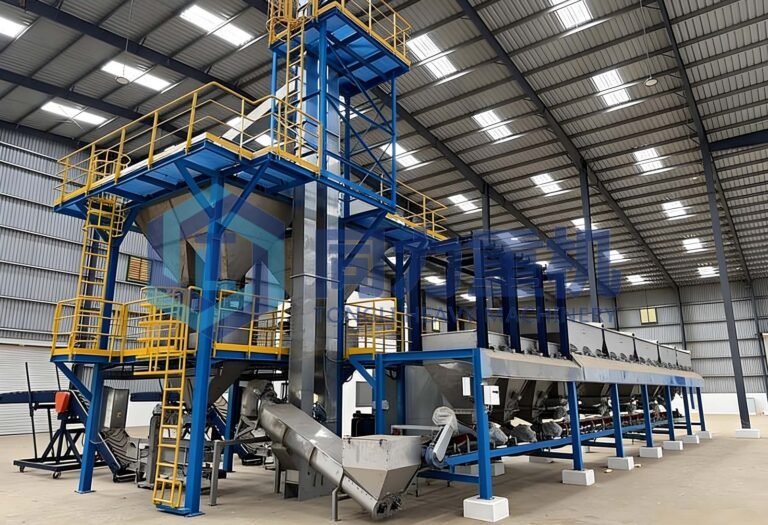
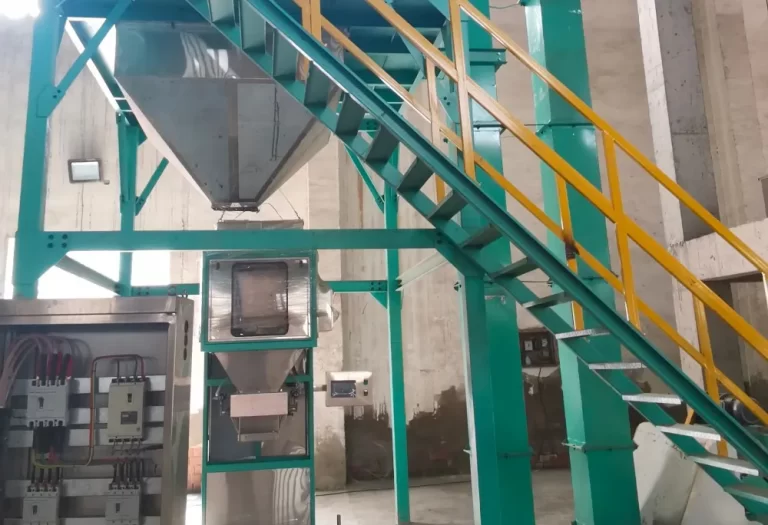
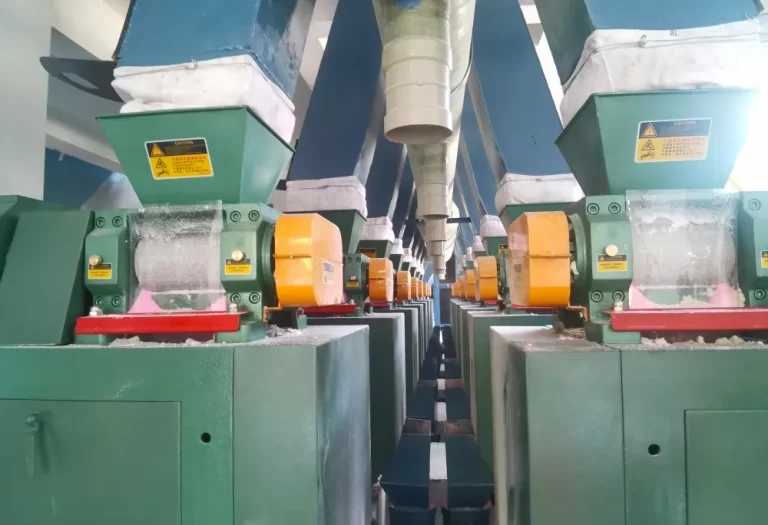
A chain bucket elevator is a continuous vertical bulk material conveying system that transports powders, granules, pellets, and lump materials using buckets mounted on a traction member—either a plate chain, round link chain, or steel cord rubber belt. Tongli manufactures three bucket elevator series to suit different operating requirements: NE Plate Chain Bucket Elevators for high-capacity and high-speed conveying, TH Round Link Chain Bucket Elevators for compound fertilizer conveying applications, and TGD Steel Cord Belt Bucket Elevators for ultra-high lifting heights and large-capacity continuous operation. Buckets are mounted at optimized spacing to ensure stable material discharge while minimizing back-legging, spillage, and product degradation. With a fully enclosed casing, low power consumption, and modular construction for simplified maintenance, Tongli bucket elevators are widely used for conveying cement clinker, limestone, slag, coal, fertilizer, grain, minerals, chemicals, biomass, and food products in cement plants, fertilizer plants, mining operations, grain terminals, and other industrial processing facilities.
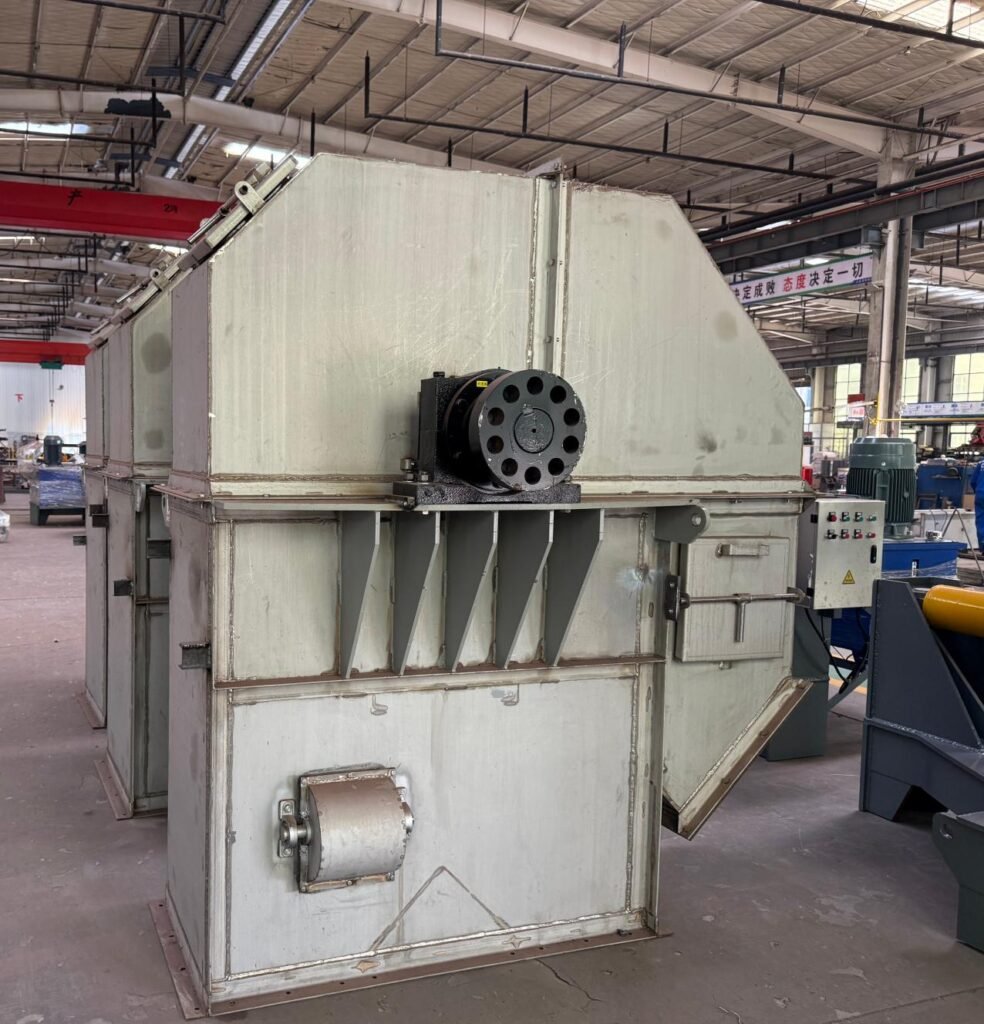
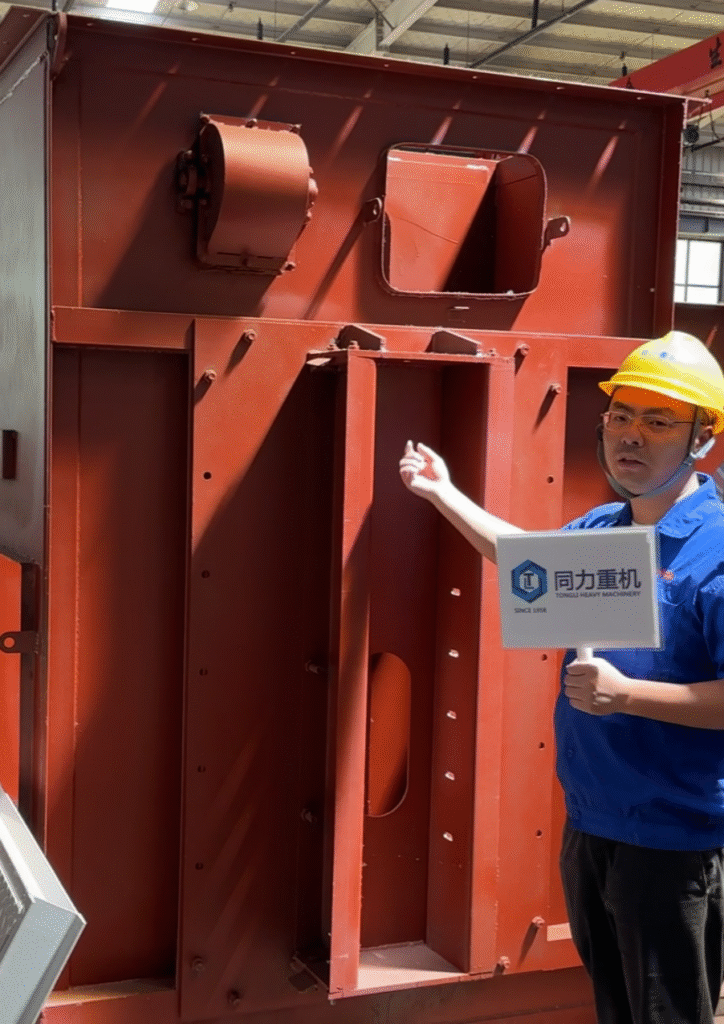
Cost-effective and reliable vertical conveying
A MACHINE YOU CAN DEPEND ON!
The bucket elevator can be supplied in either belt or chain configurations, depending on the conveyed material, application requirements, operating capacity, and site conditions. The most common types are below:
Tongli offers two types of chain bucket elevators: single chain and double bushed roller chain. The NE30 and NE50 use a single-center plate chain, with the chain mounted at the center of the bucket, making them suitable for medium-capacity conveying. Double-chain design, with two plate chains mounted on both sides of the bucket to provide higher strength and greater conveying capacity. For example, the NE50 has a design capacity of 60 m³/h while the NE100 has a design capacity of 110 m³/h. Plate chain bucket elevators are continuous discharge elevators, using closely spaced buckets that discharge material by gravity as they pass over the head sprocket. Unlike centrifugal discharge elevators, the material flows smoothly into the discharge chute with assistance from the following bucket rather than being thrown out by centrifugal force. They operate at relatively low chain speeds, typically 0.5–0.8 m/s, ensuring gentle material handling and reliable conveying of abrasive and heavy bulk materials.
Round-link chain bucket elevator conveyor are suitable for conveying powders, granules, and small lump materials with a bulk density of up to 1.5 t/m³, low to medium abrasiveness, and material temperatures up to 250°C. Bucket elevators conveyor use dual high-strength alloy steel round-link chains as the traction element, with scoop feeding and mixed (gravity-assisted) discharge. Standard bucket elevator conveyor models range from TH160 to TH400, offering theoretical capacities of 16–110 m³/h and lifting heights of up to 40 m. Compared with plate chain bucket elevators, TH bucket elevator conveyor feature a simpler structure and lower initial cost, but their round-link chains are more susceptible to elongation and wear, making NE plate chain bucket elevators the preferred choice for applications requiring capacities above 60 m³/h or lifting heights exceeding 30 m.
Steel cord belt bucket elevators use a steel cord reinforced rubber belt as the traction element made to handle a variety of free-flowing dry materials with small to medium lump size. Driven by friction between the belt and head pulley, they employ centrifugal discharge and typically operate at belt speeds of 1.4–2.0 m/s. Designed for conveying dry powders and fine granular bulk materials, they offer capacities ranging from 35 to 690 m³/h, can achieve lifting heights of up to 150 m, and are suitable for material temperatures up to 130°C under standard conditions, with special steel cord belts available for operation at temperatures of up to 150°C. The drive drum is fitted with replaceable friction linings, allowing the linings to be exchanged without opening or removing the belt, reducing maintenance time and improving serviceability.
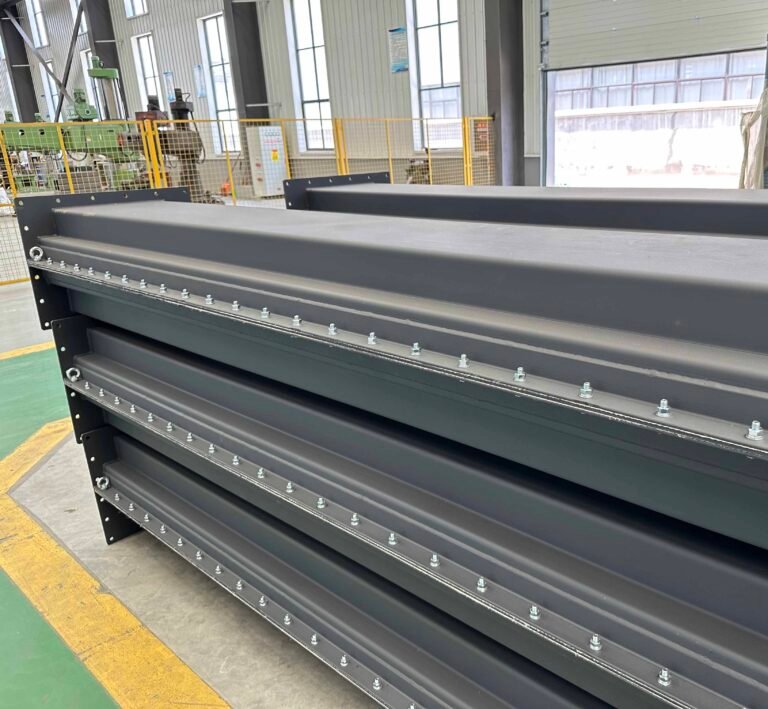

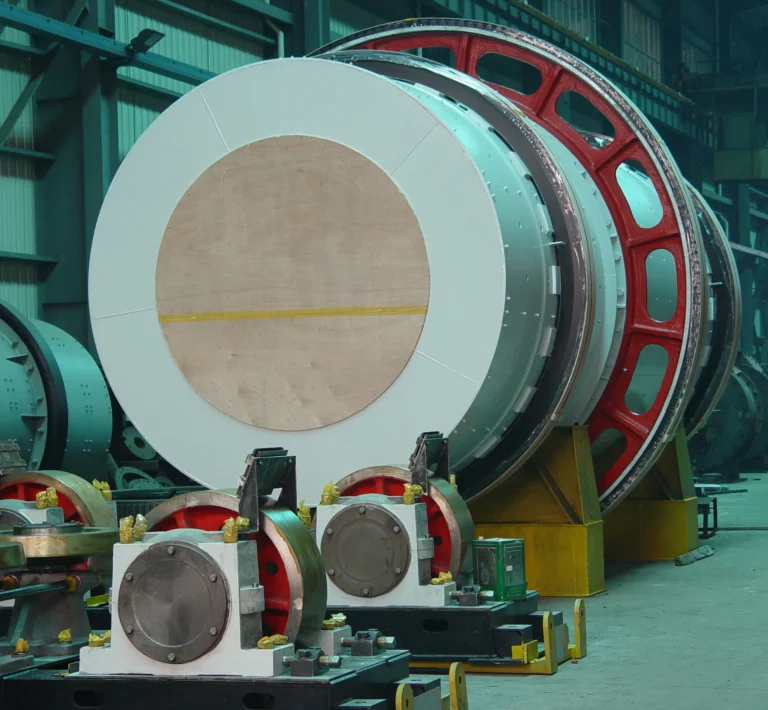
Tongli rotary drum dryer is adaptable to NPK compound organic fertilizer.


Elevate your fertilizer handling with our state-of-the-art bucket elevator.
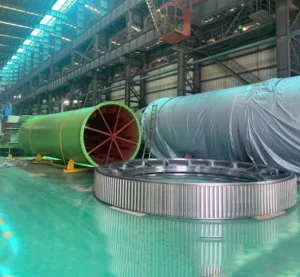
Tongli offers both solid (integral) and segmented sprocket or so called traction wheels designs to meet different maintenance and application requirements. The segmented design allows individual tooth segments or tooth rings to be replaced on-site without removing the shaft, significantly reducing maintenance downtime and operating costs. Unlike conventional cast sprockets, Tongli adopts a modular hub-and-segmented tooth ring construction, featuring a ZG310-570 cast steel hub combined with forged 40Cr alloy steel tooth segments. The sprocket teeth are precision-machined and quenched to a surface hardness of HRC 50–56, providing excellent wear resistance and extended operating life under high-load conveying conditions. Standard configurations include 12 teeth with a 200 mm chain pitch (Z12/P200, Ø772 mm), ensuring accurate chain engagement and smooth power transmission. Both the head and boot section sprockets utilize the same segmented construction, allowing worn tooth rings to be replaced individually without removing the shaft, significantly reducing maintenance downtime. The head shaft is manufactured from 40Cr alloy steel, while the tail shaft uses high-strength 45 steel, and both are supported by genuine SKF spherical roller bearings to ensure reliable operation, high radial load capacity, and long service life in demanding industries such as cement, mining, fertilizer, and metallurgy.
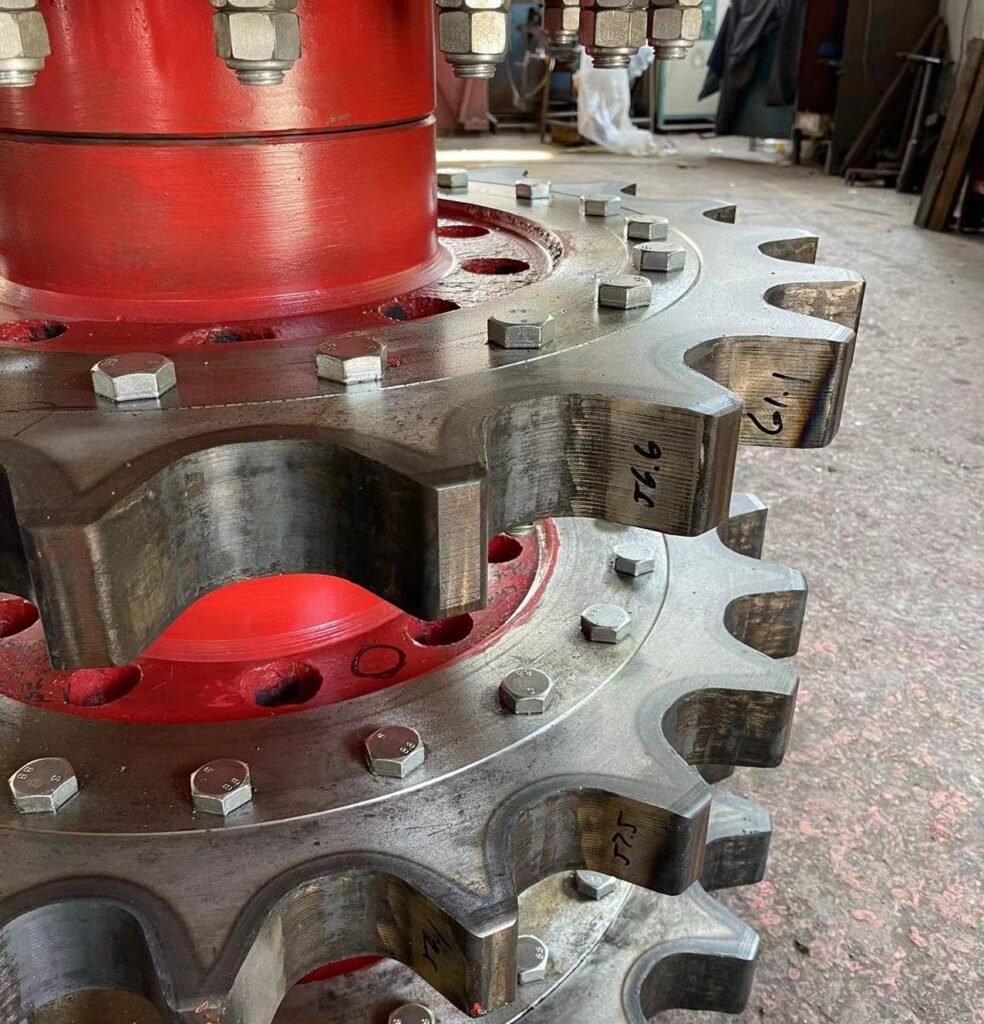
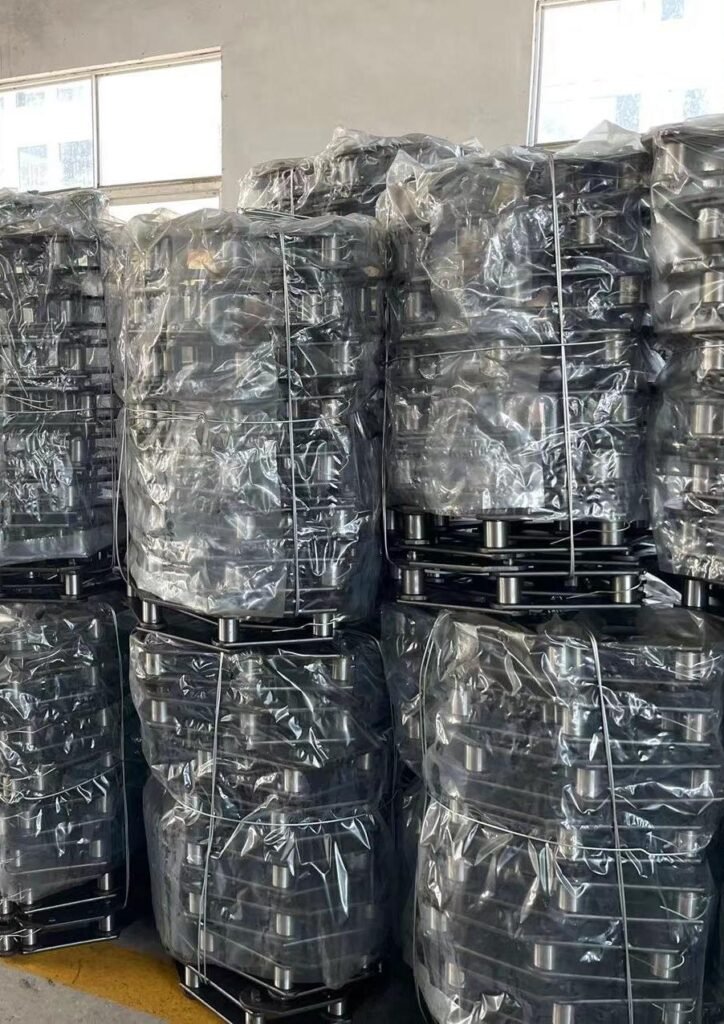
Complete In-House Manufacturing of Grain Elevator Chains and Industrial Bucket Elevator Chains.
Tongli TGD Series Steel Cord Belt Bucket Elevator is designed for high-capacity, long-distance vertical conveying of free-flowing bulk materials. Using a tear-resistant steel cord rubber belt as the traction member, it transmits power through drive pulley friction instead of chains and sprockets, eliminating chain wear, elongation, jumping, and breakage while reducing maintenance costs. Continuously spaced buckets ensure smooth loading and discharge, while an automatic gravity take-up system maintains constant belt tension to prevent belt slippage and misalignment. The drive unit can be equipped with a hardened helical gearbox, fluid coupling, backstop, and auxiliary maintenance drive for soft starting and safe operation. Featuring a fully enclosed dust-tight casing, lifting heights up to 150 m, low vibration, and lower energy consumption than comparable chain bucket elevators, the TGD series is suitable for conveying dry powders and granular materials up to 130°C, including grain, wheat, rice, corn, soybeans, feed, flour, cement powder, fly ash, limestone powder, and NPK fertilizer. In recent years, Tongli has supplied more than 80 TGD bucket elevators for high-tower NPK fertilizer production lines, where they are primarily used for raw material conveying prior to granulation.
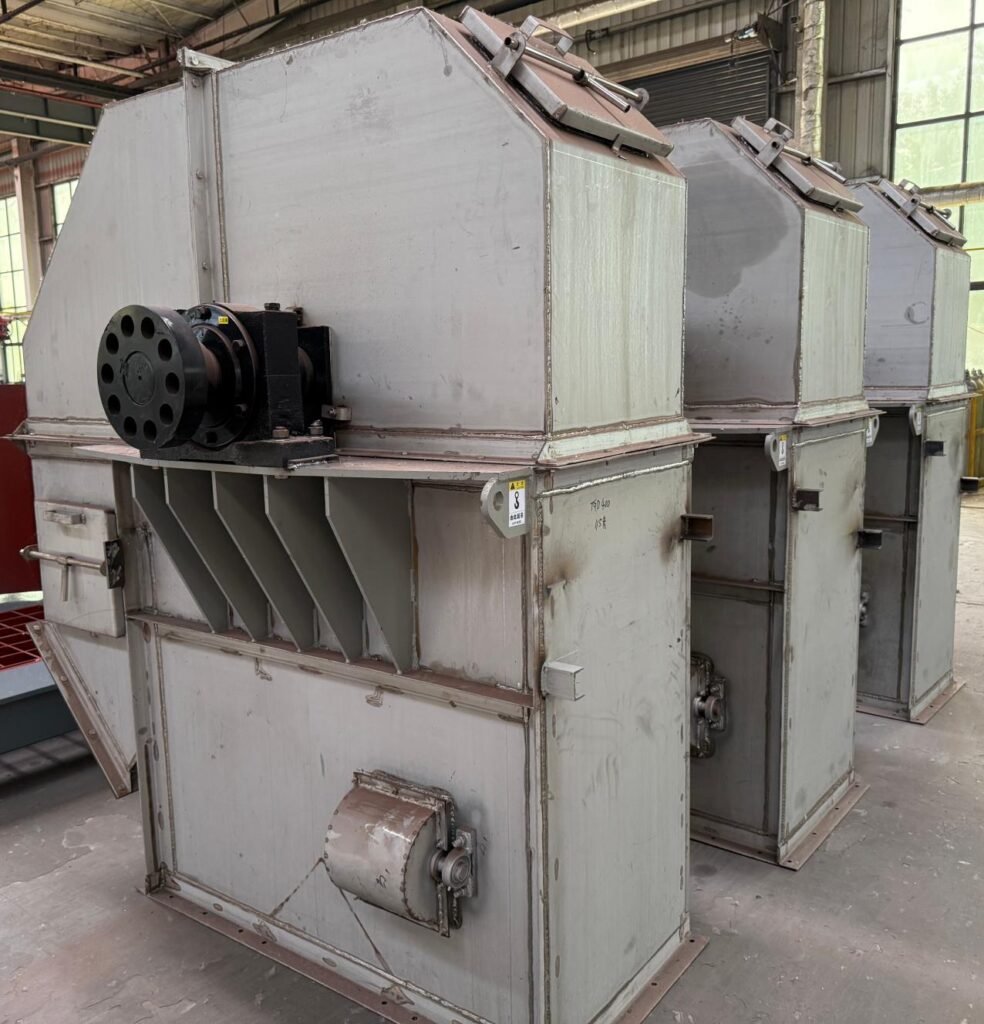
| Component | Function | Typical Material / Specification | Tongli Design Features |
| Head Section | Houses the drive assembly and discharges material from the buckets. | 5 mm Q235B heavy-duty steel casing | Reinforced welded head casing designed for outdoor installation and continuous heavy-duty operation. |
| Head Shaft | Transmits torque from the gearbox to the drive sprocket. | 40Cr alloy steel | High-strength alloy steel shaft supported by SKF 22226 spherical roller bearings for high radial loads and long service life. |
| Head Sprocket | Drives the chain and buckets. | ZG310-570 cast steel hub + forged 40Cr segmented tooth ring | Replaceable segmented tooth ring, quenched to HRC 50–56, reducing maintenance time and replacement costs. |
| Buckets | Scoop, elevate, and discharge bulk materials. | Thickened Q235B steel, 6 mm side & bottom plates | Heavy-duty deep buckets with 0.034 m³ capacity, 600 mm width, and 400 mm pitch for high filling efficiency. |
| Plate Chain | Carries the buckets and transmits lifting force. | 40Cr chain plates, 42CrMo pins, 20CrMo bushings, 40Cr rollers | Manufactured entirely in-house. Chain plates are tempered to HB289–329, pins quenched to HRC50–56, bushings carburized to HRC58–62, rollers quenched to HRC48–54. Breaking strength reaches 550 kN per chain. |
| Trunking (Casing) | Encloses the elevator and guides bucket travel. | 4 mm Q235B steel plates | Heavy-duty single-channel welded casing minimizes dust leakage and improves structural rigidity. |
| Boot Section | Receives incoming material and maintains chain tension. | 5 mm Q235B steel casing | Includes adjustable take-up device for maintaining proper chain tension and simplifying maintenance. |
| Tail Shaft | Supports the return sprocket and guides chain movement. | 45 steel | Equipped with SKF 22220K spherical roller bearings for reliable operation under continuous loading. |
| Tail Sprocket | Guides the return chain back to the boot. | ZG310-570 hub + forged 40Cr segmented tooth ring | Same segmented construction as the head sprocket, allowing on-site tooth ring replacement without removing the shaft. |
| Drive Unit | Supplies power to the elevator. | IE3 motor + FLENDER gearbox + fluid coupling | Direct-drive configuration with FLENDER B4SH gearbox, SIEMENS/INNOMOTICS IE3 motor, fluid coupling, and backstop for smooth starting and reverse rotation protection. |
| Take-up Device | Maintains correct chain tension. | Mechanical screw take-up | Compensates for chain elongation, preventing chain jumping and ensuring stable operation. |
| Safety Devices | Protect the equipment during operation. | Speed switch, level switch, backstop | Includes speed monitoring, material level detection, anti-reverse device, and optional chain break and bearing temperature monitoring. (Usually not required but can be added with additional cost) |
| Inspection Platform & Ladder | Provides safe maintenance access. | Carbon steel platform with safety cage | Supplied for outdoor installations, allowing safe inspection of the head, trunking, and drive assembly. |
| Material | Typical Particle Size | Recommended Bucket Elevator | Why? |
| Cement Powder | 10–100 μm | Steel Cord Belt Bucket Elevator | Fine powder, high capacity, low abrasion, ideal for tall silos and cement grinding plants. |
| Raw Meal | 20–200 μm | Steel Cord Belt Bucket Elevator | Fine dry powder requiring high-capacity vertical conveying. |
| Cement Clinker | 5–50 mm | Plate Chain Bucket Elevator | Hot, abrasive, and coarse particles require heavy-duty chains and steel buckets. |
| Limestone | 10–80 mm | Plate Chain Bucket Elevator | Large, abrasive lumps with high impact loading. |
| Granulated Blast Furnace Slag | 5–30 mm | Plate Chain Bucket Elevator | Dense and abrasive granules; suitable before grinding. |
| Ground Granulated Blast Furnace Slag (GGBFS) | 5–50 μm | Steel Cord Belt Bucket Elevator | Fine powder conveyed efficiently to storage silos. |
| Gypsum Rock | 10–50 mm | Plate Chain Bucket Elevator | Coarse rock with moderate abrasion. |
| Gypsum Powder | 20–150 μm | Steel Cord Belt Bucket Elevator | Fine powder with low impact requirements. |
| Fly Ash | 1–100 μm | Steel Cord Belt Bucket Elevator | Extremely fine powder requiring enclosed, dust-tight conveying. |
| Coal | 10–50 mm | Plate Chain Bucket Elevator | Irregular, abrasive particles; chain construction offers better durability. |
| Sand | 0.1–5 mm | High-Speed Plate Chain Bucket Elevator | Abrasive granular material requiring high wear resistance. |
| Grain (Corn, Wheat) | 3–12 mm | Steel Cord Belt Bucket Elevator | Gentle conveying minimizes kernel damage and supports high lifts. |
| Rice | 5–10 mm | Steel Cord Belt Bucket Elevator | Low-impact handling reduces cracked grains. |
| Soybeans | 5–12 mm | Steel Cord Belt Bucket Elevator | Gentle handling minimizes seed cracking. |
| NPK Compound Fertilizer | 2–6 mm | Steel Cord Belt Bucket Elevator or High-Speed Plate Chain Bucket Elevator or Round Link Chain Bucket Elevator | Belt elevators minimize granule breakage; chain elevators are suitable for higher abrasion and larger capacities. |
| Urea Granules | 2–4 mm | Steel Cord Belt Bucket Elevator | Minimizes granule breakage and dust generation. |
| DAP/MAP Fertilizer | 2–5 mm | Steel Cord Belt Bucket Elevator | Gentle handling preserves particle integrity. |
| Biomass Pellets | 6–12 mm | Steel Cord Belt Bucket Elevator | Reduces pellet degradation and fines generation. |
| Wood Chips | 20–80 mm | Plate Chain Bucket Elevator | Handles large, irregular particles more reliably. |
| Iron Ore | 10–100 mm | Plate Chain Bucket Elevator | Very high density and abrasion require heavy-duty chains. |
| Bauxite | 10–80 mm | Plate Chain Bucket Elevator | Heavy, abrasive ore with high impact loads. |
| Phosphate Rock | 10–50 mm | Plate Chain Bucket Elevator | Coarse mineral requiring wear-resistant construction. |
| Parameter | TH160 | TH250 | TH315 | TH400 | TH500 | TH630 | TH800 | TH1000 | TH1250 |
| Capacity (m³/h) | 19–30 | 30–48 | 35–59 | 58–94 | 75–118 | 114–185 | 150–240 | 240–360 | 360–540 |
| Bucket Capacity (L) | 1.2–1.9 | 3.0–4.8 | 3.75–6.0 | 5.9–9.5 | 9.3–15.0 | 14.6–23.6 | 24–38 | 38–60 | 60–95 |
| Bucket Pitch (mm) | 360 | 450 | 512 | 512 | 688 | 688 | 920 | 920 | 1001 |
| Round Link Chain Size (mm) | Φ12 × 45 | Φ18 × 64 | Φ18 × 64 | Φ18 × 64 | Φ22 × 86 | Φ22 × 86 | Φ26 × 92 | Φ26 × 92 | Φ28 × 92 |
| Minimum Breaking Strength per Chain (kN) | ≥170 | ≥320 | ≥320 | ≥320 | ≥480 | ≥480 | ≥570 | ≥570 | ≥660 |
| Bucket Speed (m/s) | 1.2 | 1.2 | 1.4 | 1.4 | 1.5 | 1.5 | 1.6 | 1.6 | 1.6 |
| Drive Sprocket Speed (r/min) | 62.5 | 46.8 | 42.5 | 37.6 | 35.8 | 31.8 | 30.5 | 24.4 | 28 |
| Maximum Lump Size (mm) | 20 | 25 | 35 | 40 | 50 | 60 | 75 | 85 | 100 |
| Model | Capacity (m³/h) | Bucket Filling Factor (%) | Bucket Volume (m³) | Bucket Pitch (m) | Bucket Speed (m/min) |
| NE15 | 10–16 | 70 | 0.0025 | 0.2032 | 21–31 |
| NE30 | 20–32 | 70 | 0.0078 | 0.3048 | 19–31 |
| NE40 | 28–45 | 70 | 0.0095 | 0.25 | 18–29 |
| NE50 | 35–60 | 70 | 0.0147 | 0.3048 | 19–31 |
| NE100 | 75–110 | 70 | 0.035 | 0.4 | 22–31 |
| NE150 | 120–170 | 70 | 0.0522 | 0.4 | 22–31 |
| NE200 | 170–230 | 70 | 0.0846 | 0.5 | 24–33 |
| NE300 | 250–340 | 70 | 0.1275 | 0.5 | 24–33 |
| NE400 | 310–420 | 70 | 0.1825 | 0.6 | 24–33 |
| NE500 | 350–480 | 70 | 0.208 | 0.6 | 24–33 |
| Model | Pulley Diameter (mm) | Bucket Speed (m/s) | Bucket Width (mm) | Bucket Capacity (L) | Average Conveying Capacity (m³/h)* |
| TGD315 | 630 | 0.31 | 315 | 6.5 | 59–76 |
| TGD400 | 800 | 1.5 | 400 | 14.5 | 130–170 |
| TGD500 | 800 | 1.5 | 500 | 18 | 162–212 |
| TGD630 | 1000 | 1.55 | 630 | 29 | 257–314 |
| TGD800 | 1000 | 1.55 | 800 | 37 | 328–401 |
| TGD800H | 1250 | 1.98 | 800 | 46 | 434–565 |
| TGD1000 | 1250 | 1.98 | 1000 | 57 | 539–700 |
| TGD1250 | 1250 | 1.98 | 1250 | 72 | 693–859 |
| TGD1400 | 1250 | 1.98 | 1400 | 99 | 945–1117 |
| TGD1600 | 1250 | 1.98 | 1600 | 113 | 1585–1874 |
The bucket elevator is a type of continuous conveying equipment designed for the vertical transport of bulk materials; it primarily consists of buckets, a traction element (chain or belt), a drive unit, a casing, and a tensioning mechanism. During operation, the drive unit propels the traction element in a continuous loop; buckets scoop up material at the bottom and elevate it to the top, where the material is discharged via centrifugal force or gravity, thereby achieving vertical upward transport. Characterized by a compact structure and a small footprint, bucket elevators are widely used in industries such as grain processing, construction materials, mining, and chemicals to convey granular, powdery, and small-lump materials. However, they are suitable only for materials with good flowability and are not appropriate for conveying damp, sticky, or easily agglomerating raw materials.
The main difference is how the material is discharged at the head section. In a centrifugal discharge bucket elevator, the buckets travel at higher speeds, and centrifugal force throws the material into the discharge chute. Proper operating speed is essential to ensure complete discharge. This design is best for free-flowing, non-fragile materials and offers higher conveying capacities.
In a continuous discharge bucket elevator, the buckets are mounted close together and are not designed to dig material from the boot section. Instead, material is fed directly into the buckets, then at the head section it is gently dropped onto the back (bottom panel) of the preceding bucket and funneled into the discharge chute by gravity, minimizing material degradation.
Neither is universally better. Centrifugal discharge is ideal for high-capacity handling of free-flowing materials, while continuous discharge is the better choice for fragile, abrasive, or dusty materials that require gentle handling.
Centrifugal discharge bucket elevators typically use AA-style buckets, which feature a wear lip that provides additional strength and extended service life during digging. Other commonly used bucket styles include AC, ACS, and Style C, depending on the material characteristics and application.
Continuous discharge bucket elevators typically use MF-style buckets. Since continuous elevators are not designed to dig material from the boot section, these buckets are designed for gentle gravity discharge rather than aggressive scooping. Other common bucket styles include HF and SC buckets (for dual-chain bucket elevators).
In general, AA, AC, ACS, and Style C buckets are preferred for high-speed centrifugal discharge of free-flowing materials, while MF, HF, and SC buckets are designed for low-speed continuous discharge of fragile, abrasive, or dusty materials that require gentle handling.
"AA, AC, ACS, C, MF, HF, and SC are widely recognized bucket style designations used by many North American bucket manufacturers. Although these names are not defined by international standards such as ISO or CEMA, they have become de facto industry terminology and are commonly referenced in bucket elevator design and replacement catalogs."
AA Bucket – The most widely used digging bucket for centrifugal discharge bucket elevators. It features a deep profile and reinforced wear lip for improved digging performance and longer service life.
AC Bucket – Similar to the AA bucket but with a modified profile to improve filling and discharge for certain bulk materials.
ACS Bucket – A variation of the AC bucket with an optimized lip or side profile, depending on the manufacturer.
Style C Bucket – A shallower bucket typically used in lighter-duty centrifugal discharge applications.
MF Bucket – The standard bucket for continuous discharge bucket elevators. Its rounded profile allows material to flow smoothly into the preceding bucket for gentle gravity discharge.
HF Bucket – A deeper continuous-discharge bucket designed for higher capacity while maintaining gentle material handling.
SC Bucket – A heavy-duty bucket designed for dual-chain continuous bucket elevators, commonly used for large-capacity industrial applications.
Low-profile buckets – For sticky or sluggish materials.
Vented buckets – Designed to improve filling and discharge of fine powders by allowing trapped air to escape.
Plastic (HDPE, Nylon, Urethane) buckets – Used for corrosive, food-grade, or lightweight applications.
Steel buckets – Available in stamped, fabricated, stainless steel, and weldless designs for heavy-duty service.
A solid sprocket is manufactured as a single piece. It has a lower initial cost and a simple, rigid construction, but replacing it typically requires removing the shaft or dismantling part of the elevator. This results in longer downtime and higher maintenance labor.
A segmented sprocket is divided into multiple bolted sections that can be replaced individually without removing the shaft. The most common industrial configuration is a 4-piece segmented sprocket, while some manufacturers, such as Tsubaki, offer designs with 12 replaceable tooth segments, where only the worn teeth are replaced instead of the entire sprocket.
For most industrial bucket elevators, a 4-piece segmented sprocket already provides the key maintenance advantage—individual segments can be replaced directly on the shaft, eliminating the need to remove the drive assembly. This significantly reduces maintenance time and minimizes production downtime.
Although 12-segment sprockets allow even smaller wear parts to be replaced, the additional segmentation offers limited practical benefit for most applications while increasing manufacturing complexity and cost. Unless the elevator operates under extremely severe wear conditions or has very large sprockets requiring frequent tooth replacement, a 12-segment design is generally unnecessary.
In most cases, a 4-piece segmented sprocket is the recommended choice. It offers an excellent balance of cost, durability, and maintainability, allowing worn gear teeth to be replaced on-site without removing the shaft, making it the preferred solution for the vast majority of industrial bucket elevators.
For grain handling applications, the Tongli TGD Series Steel Cord Belt Bucket Elevator or so called gentle seed elevators is the preferred choice. Unlike chain bucket elevators, the TGD series uses a steel cord reinforced rubber belt as the traction member, providing smoother and more stable operation with significantly lower vibration. Combined with continuously spaced buckets, the elevator gently lifts grain while minimizing impact, kernel breakage, and product degradation.
The steel cord belt also allows higher conveying speeds, lifting heights of up to 150 m, and lower energy consumption than comparable chain bucket elevators. An automatic gravity take-up system maintains constant belt tension to prevent slippage and belt misalignment, ensuring reliable long-term operation with minimal maintenance.
The TGD series is ideal for handling wheat, rice, corn, soybeans, barley, feed pellets, flour, seeds, and other free-flowing agricultural products, making it the preferred solution for grain silos, grain terminals, feed mills, flour mills, rice processing plants, and agricultural storage facilities where gentle material handling and low product damage are essential.
A bucket elevator operates by using a continuous loop of chain or belt fitted with evenly spaced buckets to transport bulk materials vertically. As the traction member rotates around the head and tail pulleys or sprockets, the buckets scoop material from the boot section and carry it upward inside the enclosed casing. When the buckets reach the head section, the material is discharged through the outlet by either centrifugal force or gravity, depending on the bucket elevator design. The empty buckets then return to the boot section along the return side, where the cycle repeats continuously for efficient vertical conveying.
A centrifugal discharge bucket elevator operates at relatively high belt or chain speeds (typically 1.0–2.0 m/s for chain elevators and 2.0–3.5 m/s for belt elevators). Buckets are spaced apart on the chain or belt, allowing each bucket to scoop material independently from the boot. As the buckets pass around the head pulley or sprocket, the high rotational speed generates sufficient centrifugal force to throw the material out of the bucket into the discharge chute.
A continuous discharge bucket elevator operates at a lower conveying speed and uses closely spaced or overlapping buckets. Material is loaded directly into the buckets with minimal digging action. As each bucket passes over the head section, the material flows gently by gravity into the back of the preceding bucket and then into the discharge chute, rather than being thrown outward by centrifugal force. This gentle discharge method minimizes material degradation and is ideal for fragile, abrasive, or large lump materials.
Bucket elevators can be classified according to their discharge method, traction member, and application.
1. Centrifugal Discharge Bucket Elevator – Uses high operating speed and centrifugal force to discharge free-flowing materials such as grain, cement, sand, and fertilizer.
2. Continuous Discharge Bucket Elevator – Uses closely spaced buckets and gravity discharge for gentle handling of fragile, abrasive, or lumpy materials such as clinker, limestone, coal, and food products.
3. Positive Discharge Bucket Elevator – Features specially guided buckets that positively invert at the head section for complete discharge of sticky or sluggish materials.
Based on the traction member, bucket elevators are available as:
1. Chain Bucket Elevator – Uses plate chains or round link chains for heavy-duty, high-temperature, and abrasive materials.
2. Steel Cord Belt Bucket Elevator – Uses a steel cord reinforced rubber belt for high-capacity, high-lift applications such as grain terminals, cement plants, and fertilizer plants.
3. Fabric Belt Bucket Elevator – Uses a textile-reinforced rubber or PVC belt for light-duty applications, especially in grain and food processing industries.
Other specialized designs include:
1. Multiple-Discharge Bucket Elevator – Discharges material at multiple outlet points along the elevator.
2. Indexing Bucket Elevator – Moves buckets intermittently rather than continuously, commonly used in food, pharmaceutical, and packaging industries.
3. Z-Type and C-Type Bucket Elevator – Designed for combined horizontal and vertical conveying with gentle product handling, widely used in food and packaging applications.
The greatest advantage of a bucket elevator—and the reason it was developed—is its ability to lift bulk materials vertically while occupying minimal floor space. During the Industrial Revolution, grain mills, ports, and warehouses needed an efficient way to transport grain and other bulk materials to upper floors. The alternatives were manual labor or long inclined belt conveyors, which required extensive floor space and became increasingly impractical as facilities expanded vertically.
Today, the same principle remains even more valuable. Industrial land and building costs continue to rise worldwide, making floor space one of the most expensive resources in a production plant. For example, to lift material 50 meters, an inclined belt conveyor requires a conveyor more than 100 meters long, together with a large steel support structure and a substantial installation footprint. In contrast, a bucket elevator occupies only a small vertical area while achieving the same lifting height, significantly reducing land requirements, structural steel costs, and overall plant construction expenses.
This compact design is particularly important for grain mills, flour mills, feed plants, and grain storage silos, where available space is often limited and equipment must fit into multi-story process layouts. By conveying materials vertically instead of diagonally, bucket elevators allow engineers to maximize storage capacity and production efficiency within a confined site.
In addition to its space-saving design, a bucket elevator features a fully enclosed casing that minimizes dust emissions and material spillage, offers low energy consumption per ton of material conveyed, and provides reliable continuous operation for materials such as grain, cement, fertilizer, minerals, and chemical powders.
Although bucket elevators are highly efficient for vertical bulk material conveying, they are not the ideal solution for every application. Their main limitations include the following:
1. Material Degradation
Centrifugal discharge bucket elevators operate at relatively high speeds, causing the buckets to rapidly rotate around the head pulley or sprocket. The resulting impact and material-to-material collisions can damage fragile products such as grain, fertilizer granules, pellets, and other brittle materials. For applications where product integrity is critical, a continuous discharge bucket elevator is generally a better choice.
2. Unsuitable for Wet or Sticky Materials
Materials with high moisture content or strong adhesion tend to stick to the buckets and casing, causing material build-up, poor discharge, and blockages. Severe accumulation can overload the elevator and result in unplanned shutdowns.
3. More Difficult Maintenance
Because the chain, buckets, and other moving components are enclosed within a vertical casing, maintenance requires stopping the elevator and opening inspection covers. Internal repairs are often performed in confined spaces, making component replacement more time-consuming than on open conveyor systems.
4. Higher Maintenance Costs Than Belt Conveyors
For chain bucket elevators, components such as chains, pins, bushings, rollers, sprockets, and buckets are wear parts that are continuously subjected to impact and abrasion. These components require periodic inspection and replacement, resulting in higher long-term maintenance costs than conventional belt conveyors.
5. Risk of Material Blockage
If the feed rate exceeds the elevator's rated capacity or discharge becomes restricted, material can accumulate in the boot section. Blockages rapidly increase operating loads and may trigger overload protection or, in severe cases, cause chain breakage or bucket damage.
6. Material Fallback (Back-Legging)
Centrifugal discharge bucket elevators may experience material fallback (back-legging), where a portion of the material falls back into the return leg instead of being completely discharged. This increases wear on the boot section and reduces conveying efficiency.
7. Limited Conveying Capacity
Although bucket elevators are excellent for vertical conveying, their maximum throughput is generally lower than that of wide belt conveyors or steep-incline belt conveyors of similar overall dimensions. They are therefore less suitable for ultra-high-capacity conveying applications.
8. High Installation Accuracy Required
Bucket elevators are tall vertical structures with a high center of gravity. Proper foundation design and precise vertical alignment are essential. Poor installation can cause chain or belt misalignment, uneven wear, increased vibration, and reduced equipment life.
1 Material parameters: material name, bulk density, particle size, temperature, moisture content, viscosity, and whether the material is fragile or corrosive;
2 Conveying capacity: required conveying tonnage per hour;
3 Lifting conditions: vertical lifting height, and layout requirements for inlet and outlet positions;
4 Discharge method: centrifugal, gravity, or mixed discharge;
5 Machine type: round-link chain, plate-link chain, or belt-type bucket elevator;
6 Operating environment: indoor/outdoor, and requirements for dust-proofing or explosion-proofing;
7 Material requirements: choice of carbon steel or stainless steel for the casing and buckets;
8 Anxillary requirements: Any mandatory brand requirement like need for ABB drive motors, Flender gearboxes, or maintenance platforms.
A grain leg is a type of bucket elevator specifically designed for grain handling. All grain legs are bucket elevators, but not all bucket elevators are grain legs. Industrial bucket elevators often use plate chains or round link chains to handle heavy, abrasive, or high-temperature materials, whereas grain legs typically use belt-driven systems to provide higher speeds and gentler handling with minimal grain damage. For example, Tongli's TGD Series Steel Cord Belt Bucket Elevator is well suited for use as a grain leg, thanks to its steel cord reinforced rubber belt, high lifting capacity (up to 150 m), low vibration, and gentle handling characteristics, making it suitable for grain silos, flour mills, feed plants, and grain storage facilities.
A grain leg is the name commonly used in the grain handling industry for a bucket elevator designed to vertically convey agricultural products such as wheat, corn, rice, soybeans, barley, oats, seeds, flour, and feed. The term originated because the tall, narrow elevator resembles a "leg" extending up the side of a grain elevator or storage silo. In engineering terms, a grain leg and a bucket elevator operate on the same principle: buckets mounted on a belt (most common) or chain continuously scoop material from the boot section, lift it vertically, and discharge it at the head section.
Selecting the right bucket elevator depends on the material characteristics, conveying capacity, lifting height, discharge method, operating temperature, abrasiveness, moisture content, particle size, bulk density, and installation environment.
1. Material Type
Different materials require different bucket designs and elevator types. Free-flowing materials such as grain, cement, and fertilizer are suitable for deep buckets, while sticky materials such as clay or wet sludge perform better with shallow or wide-mouth buckets to reduce material buildup. Corrosive materials may require stainless steel components or corrosion-resistant coatings.
2. Conveying Capacity
The required capacity determines the bucket size, bucket spacing, chain or belt width, and drive power. Small capacities are commonly handled by belt bucket elevators, while medium and large capacities are better suited to heavy-duty plate chain or round link chain bucket elevators. A 10–20% capacity margin is recommended to prevent continuous overload operation.
3. Lifting Height
Lifting height determines the required chain or belt strength. Belt bucket elevators are generally suitable for lifts below 20 m, while plate chain and round link chain elevators are preferred for higher lifting heights and heavier loads. Tall elevators may also require intermediate service platforms and reinforced casing structures.
4. Discharge Method
Centrifugal discharge is suitable for dry, free-flowing materials such as grain, cement, fertilizer, and sand. Continuous (gravity) discharge operates at lower speeds and is recommended for fragile, abrasive, or large materials such as clinker, limestone, and minerals. Positive discharge is used for sticky materials that require complete bucket emptying.
5. Material Temperature
Standard rubber belts are suitable for ambient-temperature materials. Materials above 60°C generally require heat-resistant belts or chain bucket elevators. Hot clinker and calcined ore above 200°C require steel buckets, alloy steel chains, and heat-resistant designs.
6. Abrasiveness
Highly abrasive materials such as clinker, slag, and mineral ores should use plate chain bucket elevators, wear-resistant steel buckets, and alloy steel chains. Low-abrasion materials such as grain, flour, and feed are well suited to belt bucket elevators.
7. Moisture Content
Dry materials are suitable for most bucket elevators. Wet or sticky materials tend to adhere to the buckets and casing, causing buildup and blockages. Wide-mouth buckets, smooth bucket surfaces, or bucket-cleaning devices help improve discharge performance.
8. Particle Size
Fine powders and small granules can use standard bucket designs. Large lumps require larger buckets, wider casing clearance, and properly sized inlet openings to prevent jamming. Mixed particle sizes often require lower conveying speeds to reduce impact and bucket wear.
9. Bulk Density
Bulk density affects bucket capacity, chain or belt tension, motor power, and structural strength. High-density materials such as iron ore or clinker require stronger chains, larger drive systems, and higher safety factors than lightweight materials such as grain or biomass.
10. Installation Environment
Outdoor installations typically require weather-resistant paint or hot-dip galvanized steel. Corrosive environments may require stainless steel construction, while grain handling facilities often require anti-static belts, explosion-proof motors, and dust control systems.
Steel cord belt bucket elevators provide the highest conveying speeds, capacities, and lifting heights, making them ideal for dry powders and small granular materials. Plate chain bucket elevators operate at lower speeds with continuous gravity discharge, making them better suited for hot, abrasive, lumpy, or fragile materials that require gentle handling. High-speed plate chain bucket elevators bridge the gap between the two, offering higher capacity than conventional plate chain designs while maintaining good performance for granular and moderately abrasive materials. The optimal selection depends on the required conveying capacity, lift height, material temperature, abrasiveness, particle size, and maintenance requirements.
1. Speed (Operating Speed)
The TGD steel cord belt bucket elevator is a high-speed centrifugal discharge model; it typically operates at a linear speed of 1.4–2.0 m/s and relies on centrifugal force for discharge. The NSE high-speed plate chain elevator operates at approximately 0.8–1.2 m/s, utilizing inflow feeding and induced discharge. The NE standard plate chain elevator is a low-speed model operating at only 0.4–0.6 m/s, relying entirely on gravity discharge. Speed hierarchy: TGD > NSE > NE. High speeds ensure effective discharge of powdered materials for the TGD, but also increase the risk of breakage due to impact for large lumps or fragile materials. The low-speed NE model is best suited for materials prone to breakage, while the NSE model offers a balanced solution between capacity and material integrity.
2. Capacity (Conveying Capacity)
For a given casing width, the TGD model features closely spaced buckets and high linear speeds, resulting in a higher theoretical maximum volumetric capacity—large models can reach 1,800–2,000 m³/h. The NSE model utilizes large-capacity buckets in a tight arrangement and inflow feeding, resulting in almost no loss from bottom scooping; the capacity of medium-to-large NSE models approaches that of the TGD. The NE model operates at lower speeds with wider bucket spacing, resulting in a significantly lower rated conveying capacity than the other two for the same width. Note: The TGD is unsuitable for large lumps, and capacity cannot be fully utilized when handling large-particle materials. In contrast, the NE and NSE models are better adapted to lumpy and abrasive materials, offering greater stability in actual effective conveying.
3. Lift Height
The TGD model utilizes a steel-cord rubber belt as the traction element; it features low self-weight and high specific strength. A single unit can achieve a standard maximum lift height of 80–120 m, making it the preferred choice among the three for ultra-high lift applications. The NSE plate-chain model has a conventional single-unit limit of 50–65 m. The NE plate-chain model is constrained by the self-weight of the chain and sprocket load capacity; its standard operating height is ≤50 m, as chain tension rises sharply in ultra-high lift scenarios, significantly increasing the risk of wear and chain breakage. For projects exceeding 60 m, TGD should be evaluated first; for heights under 50 m involving high-temperature or highly abrasive materials, NE/NSE plate-chain models are preferred.
4. Maintenance (Maintainability and O&M Costs)
TGD models have very few wear parts and are free from issues related to chain pin or bushing wear; the unit operates with low noise. Key risks center on belt tearing or the loosening of bucket bolts; however, if the belt suffers localized damage, the entire section usually requires replacement, resulting in longer downtime. Wear parts for NE and NSE plate-chain models include the chain, pins, and wear-resistant bushings for the head and tail sprockets; these require regular lubrication and monitoring of chain elongation. Their advantage lies in the ability to replace chain segments or perform localized repairs. Among them, the NE chain operates under lower loads and wears more slowly than the NSE chain, whereas the NSE chain experiences a marked increase in wear rates under high-speed conditions. TGD is the optimal choice for long-term continuous operation where minimal inspection is desired; plate-chain models are suitable for projects where sourcing a full replacement belt is difficult on-site but regular chain maintenance is feasible.
5. Temperature (Material Temperature Limit)
TGD models are constrained by the rubber belt material; standard versions allow material temperatures up to 120°C, while special heat-resistant steel-cord belts can handle up to 150°C. Prolonged contact with high-temperature materials is strictly prohibited, as heat accelerates rubber aging and delamination. NE and NSE models utilize metal plate chains with consistent temperature resistance, allowing for long-term material temperatures up to 250°C without the limitations of rubber aging; they are the only viable choice for handling clinker, hot ore, or materials discharged from high-temperature roasting processes. If the material temperature consistently exceeds 150°C, TGD models are immediately ruled out.
6. Applications (Operating Conditions and Materials)
TGD models are suitable for drying powders, small granules, and materials with low-to-moderate abrasiveness at ambient temperatures; typical applications include raw meal, cement, fly ash, and grain. They are unsuitable for large lumps, sticky or wet materials, high-temperature materials, or highly abrasive ores. NE low-speed plate-chain elevators are suited for lumpy, highly abrasive, fragile, or high-temperature materials—such as limestone, cement clinker, and lump coal—and are the preferred choice when strict limits on material breakage are required. NSE high-speed plate-chain elevators occupy a middle ground, suitable for small-to-medium granules and moderately abrasive materials requiring higher throughput; they are commonly used for dried sand, gravel, and fine slag. Selection rule of thumb: Choose TGD for ambient-temperature powders and ultra-high lifts; choose NE for high-temperature lumps and applications requiring minimal breakage; choose NSE for medium-to-high capacity needs involving granular materials where efficiency is a priority.
The maximum lifting height of a bucket elevator depends primarily on the traction member. Plate chain bucket elevators are typically suitable for lifting heights of 40–80 m, although specially engineered models can exceed this range for certain applications. Steel cord belt bucket elevators are the preferred choice for high-lift applications and can achieve lifting heights of 150 m or more.
Steel cord belt bucket elevators are better suited for tall installations because the steel cord reinforced rubber belt has a much higher strength-to-weight ratio than steel chains. The belt is lighter, reducing the dead load that the drive system must lift, while its high tensile strength allows it to withstand greater operating tension. In contrast, as lifting height increases, the self-weight of a chain rises significantly, resulting in higher chain tension, increased wear on sprockets and bearings, greater power consumption, and a higher risk of chain elongation or failure.
As a general guideline, plate chain bucket elevators are recommended for hot, abrasive, or heavy-duty materials with lifting heights up to 40–80 m, while steel cord belt bucket elevators are the preferred solution for long-distance vertical conveying of powders and granular materials at heights exceeding 80 m, especially in cement plants, grain terminals, and fertilizer production lines.
It depends on the material's temperature, abrasiveness, particle size, and fragility. Steel cord belt bucket elevators are best suited for dry powders and small granular materials such as cement, fly ash, gypsum powder, grain, rice, wheat, soybeans, fertilizer, biomass pellets, and fine sand, where high capacity and lifting heights of over 100 m are required.
Plate chain bucket elevators are preferred for cement clinker, limestone, slag, coal, hot materials, and highly abrasive minerals, as their heavy-duty steel chain construction withstands high temperatures (up to approximately 250°C), impact loading, and severe wear.
High-speed plate chain bucket elevators provide a balance between the two, making them suitable for fertilizer granules, dried sand, gypsum, coal, slag, and other medium-sized granular materials requiring both high throughput and excellent durability. Selecting the correct bucket elevator ensures reliable conveying performance, minimizes material degradation, and maximizes equipment service life.
For most cement plant applications, the Tongli NE plate chain bucket elevator is the preferred choice because it is specifically designed to handle hot, abrasive, and heavy bulk materials such as limestone, cement clinker, gypsum rock, coal, and granulated slag. Unlike belt bucket elevators, the steel plate chain is not affected by high temperatures and can continuously convey materials up to 250°C, making it ideal for clinker transport after the rotary kiln or clinker cooler.
The NE series bucket elevator operates at a low speed (typically 0.4–0.6 m/s) with continuous gravity discharge, which minimizes material impact, reduces bucket wear, and lowers clinker degradation compared with high-speed centrifugal discharge elevators. Its heavy-duty construction, forged alloy steel chains, and segmented sprockets also provide excellent resistance to abrasion and shock loading while simplifying maintenance by allowing worn sprocket segments to be replaced individually.
For finished cement powder, raw meal, or fly ash, however, steel cord belt bucket elevators are often preferred because they offer higher conveying capacities, lifting heights exceeding 150 m, and lower energy consumption. As a result, many modern cement plants use plate chain bucket elevators for hot process materials and steel cord belt bucket elevators for fine powders and finished products, selecting each according to the specific conveying duty.
the steel cord belt bucket elevator is the preferred choice for most grain handling applications because it provides high capacity, gentle material handling, and excellent performance over long lifting heights. Its high operating speed (typically 1.4–2.0 m/s) and lightweight steel cord reinforced belt allow conveying heights of 150 m or more, making it ideal for grain silos, flour mills, rice mills, feed plants, and grain terminals.
Unlike chain bucket elevators, the rubber belt runs more smoothly with lower vibration and noise, helping reduce kernel breakage and preserving the quality of wheat, corn, rice, soybeans, barley, and other grains. The fully enclosed design also minimizes dust emissions and cross-contamination, while the corrosion-resistant belt eliminates the need for chain lubrication, reducing maintenance requirements.
For applications handling dry, free-flowing grain and seeds, a continuous (gravity) discharge bucket elevator is generally recommended because it provides the gentlest material handling and minimizes product damage. Combined with plastic or HDPE buckets, it further reduces impact, seed cracking, and product loss during conveying.
Bucket elevator chains wear out primarily due to abrasion, inadequate lubrication, heavy cyclic loads, misalignment, harsh operating conditions, and normal component wear. The most common causes include:
1. Abrasive Materials
Highly abrasive materials such as cement clinker, limestone, slag, sand, and mineral ores allow fine particles to enter the clearance between the pins and bushings, acting like grinding media and causing continuous abrasive wear. Material buildup in the boot section can also increase friction on the return chain.
2. Insufficient Lubrication
Dust, moisture, and long lubrication intervals can destroy the protective oil film between the pins, bushings, and rollers, resulting in metal-to-metal contact and rapid adhesive wear. Moisture may also emulsify grease, significantly reducing its lubricating performance.
3. Heavy Loads and Impact Forces
Frequent starts and stops, uneven material feeding, large lump impacts, and high lifting heights subject the chain to repeated cyclic loading. These conditions accelerate fatigue wear, chain elongation, and ultimately shorten chain service life.
4. Misalignment
Misaligned sprockets, shafts, or guide rails cause uneven loading and poor sprocket engagement, leading to one-sided wear, chain wandering, edge wear, and increased friction between the chain and elevator casing.
5. Harsh Operating Conditions
High temperatures reduce lubricant effectiveness, while moisture and corrosive dust promote rust and surface deterioration. Dust accumulation on sprocket teeth can also alter the tooth profile, causing abnormal chain engagement and accelerated wear.
6. Worn Sprockets and Chain Elongation
As sprocket teeth wear and the chain pitch gradually elongates, proper meshing is lost, leading to tooth jumping, concentrated wear, and increased impact loads. Mixing new and worn chain sections should also be avoided, as uneven load distribution can significantly reduce the service life of the entire chain system.
Belt bucket elevator belt slippage occurs when the friction between the drive pulley and the belt becomes lower than the torque required to move the elevator. The most common causes include:
1. Insufficient Belt Tension
Over time, steel cord rubber belts experience gradual elongation. If the gravity take-up or tensioning device is not adjusted, the normal force between the belt and the drive pulley decreases, reducing available friction. Newly commissioned elevators often experience the largest belt elongation and therefore have the highest risk of slippage during the initial operating period.
2. Reduced Pulley Friction/Worn Pulley Lagging
Worn or damaged pulley lagging, as well as dust, moisture, oil, or fine material buildup on the pulley surface, can significantly reduce the coefficient of friction. Even with proper belt tension, inadequate traction may still cause the belt to slip.
3. Wet Belt or Contaminated Pulley Surface
Water, oil, dust, or fine powder on the belt or pulley creates a lubricating layer that greatly reduces friction. This is especially common in humid environments or when conveying damp materials.
4. Elevator Overloading
When the feed rate continuously exceeds the elevator's rated capacity, the buckets become overloaded and the drive system requires higher torque. Once the required torque exceeds the maximum frictional force between the belt and the drive pulley, belt slippage occurs.
5. Boot Choking or Material Blockage
Material buildup, uncontrolled feeding, or large lumps trapped in the boot can dramatically increase running resistance. The sudden increase in traction load often causes immediate belt slippage, and prolonged slipping can generate excessive heat and damage the belt.
6. Harsh Material or Environmental Conditions
High humidity, wet materials, and fine dust can continuously contaminate the belt and pulley contact surfaces, reducing traction. High-temperature materials may also accelerate rubber aging and hardening, further lowering the belt's friction performance.
7. Drive System or Installation Problems
Misaligned pulleys, insufficient motor or gearbox output, brakes that fail to release completely, or improper starting under heavy load can all increase resistance or reduce driving force, leading to belt slippage.
Bucket elevator blockage is one of the most common causes of unplanned downtime in bulk material handling systems. It typically occurs when material cannot be discharged or conveyed at the same rate it enters the elevator, resulting in material accumulation in the boot section. Common causes include excessive feed rates, sticky or poorly flowing materials, poor discharge, oversized feed, boot buildup, mechanical failures, and improper operating procedures.
1. Excessive or Uncontrolled Feed Rate
When the material feed rate continuously exceeds the bucket elevator's rated capacity, the buckets cannot discharge material fast enough, causing material to accumulate in the boot section until blockage occurs. Conveyors without variable-speed control or feed regulation are particularly susceptible to sudden overloads that can quickly choke the elevator.
2. Sticky or Poor-Flowing Materials
Materials with high moisture content, stickiness, or a tendency to cake can adhere to the buckets and casing walls. Over time, the buildup narrows the internal conveying space, while caked material fails to discharge completely and gradually accumulates in the boot, eventually causing blockage.
3. Poor Material Discharge
An undersized discharge outlet, improper discharge chute design, or an incorrect bucket type can prevent complete material discharge. The remaining material falls back into the boot section, and continuous material recirculation eventually leads to choking and blockage.
4. Oversized Material or Foreign Objects
Large lumps, wood, metal debris, or other foreign objects can become trapped between the buckets and casing or between the buckets and the boot pulley/sprocket. This obstructs bucket movement, causing localized jamming that rapidly develops into a complete blockage.
5. Boot Material Accumulation
The boot section has limited space, and spilled or returning material must be cleaned regularly. If material is allowed to accumulate—especially damp or abrasive material—it can harden over time, interfere with bucket movement, and eventually block the elevator.
6. Mechanical Failures
Mechanical problems such as chain seizure, belt mistracking, seized bearings, drive slippage, or traction system failure increase conveying resistance and reduce bucket speed. While material continues to enter the elevator, it can no longer be conveyed upward efficiently, resulting in rapid blockage of the boot section.
7. Improper Operation and Startup Procedures
Restarting a bucket elevator while it is still filled with material greatly increases the starting load, making it difficult for the buckets to lift the accumulated material. Frequent start-stop cycles, emergency shutdowns, or improper operating procedures also significantly increase the likelihood of blockage.
Bucket elevator chain jumping or chain skipping is typically caused by chain wear, sprocket wear, installation errors, improper chain tension, impact loading, or mismatched components. The most common causes include:
1. Chain Elongation Due to Wear
As the chain operates over time, wear between the pins and bushings gradually increases the chain pitch. Once the elongated chain no longer matches the original sprocket tooth pitch, proper meshing is lost, causing the chain to ride over the sprocket teeth and skip during operation.
2. Sprocket Misalignment
If the head and boot sprocket shafts are not parallel, the sprockets are not properly centered, or the chain guides are misaligned, the chain will run off-center and experience uneven loading. This prevents proper engagement with the sprocket and significantly increases the likelihood of chain jumping.
3. Worn or Damaged Sprockets
Continuous abrasion from dust and conveyed materials gradually wears the sprocket teeth, causing tooth profile deformation, pitting, and excessive wear. In addition, hardened material buildup, rust, or dust packed into the tooth pockets can prevent the chain from seating fully, causing it to lift and skip over the sprocket teeth.
4. Incorrect Chain Tension
A chain that is too loose will vibrate excessively and may disengage from the sprocket under fluctuating loads. Conversely, a chain that is over-tensioned accelerates wear on both the chain and sprocket, eventually leading to poor meshing and chain skipping.
5. Impact Loads and Overloading
Uneven material feeding, oversized lumps, or material blockages generate sudden impact and cyclic loads on the chain. These shock loads can momentarily lift the chain out of the sprocket tooth pockets, resulting in tooth jumping during operation.
6. Mismatched or Worn Components
Mixing new and worn chain sections or using chains and sprockets with different pitches or incompatible specifications creates uneven load distribution and improper meshing. This frequently results in chain jumping and, if left uncorrected, can lead to chain twisting, chain breakage, bucket detachment, and major equipment failure.
Back-legging is a bucket elevator discharge problem in which material fails to enter the discharge chute and instead rebounds into the up-leg (ascending side) of the elevator. It should not be confused with down-legging, where material falls into the return side. Back-legging most commonly occurs in high-speed centrifugal discharge bucket elevators, where excessive belt speed alters the material's discharge trajectory. It can also result from worn or deformed buckets, incorrect bucket geometry, missing or poorly designed discharge baffles, obstructions at the discharge throat, or airflow disturbances inside the head casing. Continuous back-legging causes the ascending buckets to repeatedly re-handle discharged material, reducing conveying capacity, increasing power consumption and chain/belt loads, raising the risk of boot blockage, and accelerating both material degradation and component wear.
The replacement cycle for bucket elevator chains is influenced by a combination of factors, the service life of a bucket elevator chain depends on the material being conveyed, operating hours, maintenance practices, and chain quality. Under normal operating conditions, a high-quality plate chain bucket elevator typically lasts 3–5 years, while chains handling highly abrasive materials such as cement clinker, slag, limestone, or mineral ores may require replacement after 1–2 years. In contrast, chains used for lighter-duty applications with proper lubrication and alignment can remain in service for 10 years or more. Factors affecting the service life time of the chain are as follows:
1. Material Properties (Corrosiveness & Abrasiveness)
The material being conveyed has the greatest impact on bucket elevator chain life. In dry, low-abrasion applications such as grain or cement powder, a high-quality alloy steel chain typically lasts 3–5 years. For highly abrasive materials such as cement clinker, slag, or ore, abrasive particles wear the pins and bushings, reducing service life to 1.5–3 years. Materials containing moisture, acids, or alkalis cause both wear and corrosion, and severe corrosive conditions can shorten chain life to less than one year unless corrosion-resistant chains are used. As an industry guideline, chains should be replaced when chain elongation reaches 2–3%.
2. Lubrication
Proper lubrication greatly extends chain life by reducing wear between the pins and bushings. A continuous lubricating film can increase service life by 40–60%. However, bucket elevators operate in dusty environments where grease can become contaminated, while high temperatures may cause the lubricant to harden or lose its effectiveness. Poor lubrication leads to metal-to-metal contact and rapid wear. An automatic lubrication system provides better protection than manual greasing. If lubrication cannot be maintained, the chain should be inspected more frequently for elongation and wear.
3. Maintenance
Regular maintenance helps maximize bucket elevator chain life. This includes checking chain elongation, adjusting chain tension, cleaning material buildup in the boot, aligning the head and boot shafts, and correcting chain misalignment or blockages. Poor maintenance causes uneven loading and concentrated wear, leading to premature failure. Mixing new and worn chain sections should also be avoided because it creates uneven load distribution. Chains with cracked side plates or heavily worn pins should be replaced immediately.
4. Heat Treatment Quality
Heat treatment is just as important as the steel grade. Proper quenching, tempering, carburizing, and induction hardening give the chain high surface hardness, a tough core, and excellent fatigue resistance. Poor heat treatment produces soft components that wear quickly, while excessive hardening makes the chain brittle and more likely to crack. A properly heat-treated chain will achieve its designed service life, whereas simply using thicker steel cannot compensate for poor heat treatment.
5. Chain Selection & Design Margin
Selecting a heavy-duty chain with a higher breaking strength than the minimum required can significantly extend service life. A stronger chain operates under lower working stress, reducing fatigue, chain elongation, and pin-and-bushing wear. This is especially important for high-lift elevators, heavy materials, frequent start-stop cycles, and impact loading. For example, Tongli's heavy-duty double-strand plate chains provide a minimum breaking strength of 550 kN per strand, allowing them to handle heavy loads with a greater safety margin and longer service life. However, even the strongest chain still requires proper lubrication and maintenance to achieve its full design life.
Bucket elevator chains should be replaced based on wear rather than operating time. The industry standard is to replace the chain when chain elongation reaches approximately 2–3%, as excessive pitch extension leads to poor sprocket engagement, chain jumping, and accelerated wear. Actual service life depends on the material being conveyed, operating hours, lubrication, and maintenance. Under normal continuous operation, bucket elevator chains handling dry grain (wheat, corn, etc.) typically last 4–6 years because of the material's low abrasiveness. Chains conveying compound fertilizer generally last 2.5–4 years, as moisture absorption and mild chemical corrosion accelerate wear. For finished cement, a medium-abrasive dry powder, the typical service life is 2–3 years. Chains handling cement clinker experience the shortest lifespan—typically 1.5–2.5 years—due to the combination of high temperature and severe abrasion. Regular inspection of chain elongation, pin-and-bushing wear, lubrication condition, and sprocket wear is the most reliable way to determine the correct replacement time and prevent unexpected failures.
There is no fixed, universal replacement cycle for bucket elevator buckets; their service life is primarily determined by operating conditions such as material abrasiveness, temperature, feed impact, bucket material, operating speed, and the frequency of material jams. Buckets should be inspected regularly for wear, cracks, and deformation, and replaced promptly if perforations, through-cracks, or severe deformation occur. Under standard operating conditions—involving continuous 24-hour operation and conventional carbon steel buckets—the estimated service life is 4–7 years for grain (e.g., wheat, corn; low abrasiveness, ambient temperature, gentle particles), 2.5–4 years for compound fertilizer (mildly corrosive, moderately abrasive, prone to moisture absorption and caking), 1–2 years for cement clinker (high temperature, highly abrasive, heavy lump impact), and 2–3 years for finished cement (moderately abrasive, dry powder). Using wear-resistant steel plate for buckets can extend service life by 30%–60%, whereas buckets made of standard thin steel plate have a shorter lifespan; conversely, frequent jams, violent impacts from large lumps, or corrosive/moist materials can reduce service life by 40% or more. While localized damage can be repaired temporarily, simultaneous replacement of the entire set is recommended if there is extensive cracking or widespread thinning due to wear; ensuring uniform loading is also essential to prevent off-center loads from placing excessive strain on the chains or belts.
The core differences between plate-chain and round-link chain bucket elevators lie in their traction structures, load-bearing characteristics, and suitable operating conditions. Plate-chain buclet elevators utilize plate-type bushing roller chains for traction; they offer high structural rigidity and smooth operation, withstand significant impact loads, and are suitable for conveying lumpy, highly abrasive, and high-temperature materials. They support high-capacity inflow feeding and operate with relatively low noise, though they have a higher dead weight and limitations regarding lifting height. In contrast, round-link elevators use welded round-link chains, offering greater flexibility, simpler construction, and lower costs; the chain's flexibility allows for the use of smaller-radius head and tail sprockets. However, they have weaker impact resistance and generate more vibration and noise during operation; the chains are prone to elongation and tooth skipping due to wear, making them better suited for conveying small-to-medium-sized, moderately abrasive materials. Plate-link models generally handle higher material temperatures, making them ideal for applications involving cement clinker or ore, whereas round-link models are more commonly used for small-to-medium-sized aggregates and standard powdered materials. Additionally, plate-chain systems facilitate the installation of large-capacity buckets for high-throughput conveying, whereas round-link systems are less reliable under conditions involving great lifting heights or heavy impact loads. Regarding maintenance, replacing a single link in a round-link chain is relatively simple, whereas plate-link systems often require the inspection or replacement of entire chain sections.
Compared with one-piece solid sprockets, segmented sprockets offer significant maintenance and lifecycle advantages. When the sprocket teeth become worn, pitted, or deformed, only the damaged tooth segments need to be replaced instead of removing the entire traction chain, main shaft, and sprocket hub. This greatly reduces maintenance downtime while lowering labor and lifting costs. Segmented sprockets are also easier to transport and install in the field. Large solid sprockets can weigh several tons and often require special transportation and heavy lifting equipment, whereas segmented designs can be shipped and assembled in individual sections, eliminating many transportation restrictions.
Another major advantage is reduced spare parts cost. Since the hub is reused, only the worn tooth segments are replaced rather than discarding the complete sprocket assembly. In heavy-duty plate chain bucket elevators, chain misalignment or uneven loading often causes one side of the sprocket teeth to wear faster than the other. Segmented sprockets allow only the affected tooth segments to be replaced, making maintenance both economical and efficient.
However, segmented sprockets require higher manufacturing accuracy and proper bolt tightening procedures. The fastening bolts should be inspected regularly to ensure they remain properly secured, preventing loose segments that could lead to chain jumping, excessive vibration, or even equipment failure.
A one-piece solid sprocket also has several unique advantages. Because it is machined from a single component, it has greater structural rigidity and more consistent tooth geometry, eliminating joint interfaces between segments. This results in more stable chain engagement and removes the possibility of loose or misaligned tooth segments, reducing routine maintenance since no segment bolts require periodic inspection. The continuous tooth profile also distributes loads more evenly during operation, providing better stress distribution under heavy loads, frequent shock loading, and cyclic fatigue conditions. Heat treatment is applied uniformly across the entire sprocket, eliminating stress concentrations associated with segmented joints and improving fatigue resistance. The main disadvantage of a solid sprocket is maintenance. Once the teeth become excessively worn, the entire sprocket must be removed and replaced, requiring disassembly of the shaft and chain. Large solid sprockets are also more difficult to transport and install because of their weight, resulting in longer shutdowns and higher replacement costs.
There are three primary causes for cracking in bucket elevator buckets: first, impact loads—such as the impact from large material chunks during feeding or jams caused by blockages—which lead to stress-induced cracking due to repeated impacts; second, long-term overload operation, where the buckets consistently bear loads exceeding design specifications, causing cracks to propagate under alternating stress; and third, improper material selection, such as insufficient plate thickness or steel properties (wear resistance and toughness) that are ill-suited to the abrasive and high-impact operating conditions. Additionally, welding defects and misalignment during installation introduce supplementary loads that further accelerate crack formation.
A backstop (backstop clutch or backstop device) is installed on bucket elevators to prevent reverse rotation when the drive motor stops or during a power failure. Once the motor is shut down, the weight of the loaded buckets can cause the traction chain or belt to rotate backward under gravity. This reverse movement may result in material rollback, chain derailment, bucket damage, belt slippage, or even catastrophic failure of the drive system. The backstop automatically locks the drive shaft whenever reverse rotation is detected, allowing normal forward rotation while instantly preventing backward movement. Backstops are particularly important for high-lift, heavy-duty chain bucket elevators handling materials such as cement clinker, limestone, ore, fertilizer, and slag, where the weight of the loaded elevator generates substantial reverse torque. Compared with mechanical braking systems, a backstop is maintenance-free, engages automatically, and provides reliable protection for both the bucket elevator and downstream equipment. For detail reason please check below:
1. Prevent Reverse Rotation and Protect Critical Components
The primary purpose of a bucket elevator backstop is to prevent reverse rotation after a power failure or drive system malfunction. When a fully loaded bucket elevator stops unexpectedly, the weight of the material generates a substantial reverse torque. In high-lift, heavy-duty elevators, the shock load during reverse rotation can reach 3–5 times the normal operating load. Without a backstop, uncontrolled reverse motion can cause buckets to strike the boot sprocket or pulley, permanently stretch the chain, and severely damage the sprocket teeth. As a general engineering practice, the backstop torque rating should be at least 1.5–2.0 times the calculated reverse static torque to ensure adequate safety.
2. Prevent Boot Blockage and Reduce Restart Overload
Because the loaded (up-going) side of the bucket elevator is much heavier than the return side, the elevator naturally tends to rotate backward after shutdown. If reverse rotation occurs, the material inside the ascending buckets is dumped back into the boot, where several tons of material can accumulate within minutes. Restarting the elevator under these conditions may increase motor starting torque to more than twice the rated load, resulting in overload trips, motor damage, or even chain failure. A properly functioning backstop prevents material rollback and allows the elevator to restart under normal conditions.
3. Maintain Stable Process Flow
Modern cement, fertilizer, mining, and grain plants operate as continuous interlocked production systems. Reverse rotation interrupts material flow, causing uncontrolled spillage, upstream material accumulation, and downstream material starvation. This disrupts process balance and, in batching systems such as compound fertilizer production, can lead to inaccurate dosing and off-specification products. A backstop helps maintain stable material flow throughout the production line by preventing reverse movement.
4. Improve Equipment Safety and Meet Industry Standards
Uncontrolled reverse rotation is one of the most dangerous failure modes in a bucket elevator. The higher the lift height, the greater the stored gravitational energy. Under heavy loads, reverse rotation can lead to chain breakage, coupling failure, flying components, and serious mechanical hazards. For this reason, international and national conveyor design standards generally require vertical bucket elevators to be equipped with a reliable backstop or anti-reverse device, particularly for high-capacity industrial applications.
5. Reduce Downtime and Maintenance Costs
A reliable backstop locks the elevator in position immediately after shutdown, allowing operators to restart the equipment once the fault has been cleared. Without a backstop, reverse rotation often results in damaged chains, buckets, belts, and sprockets, followed by lengthy manual removal of accumulated material from the boot. Preventing just one reverse-rotation incident can save days of repair time, significant spare-part costs, and substantial production losses, making the backstop one of the most cost-effective safety devices on a bucket elevator.
The two most common mechanical backstops used on bucket elevators are sprag backstops and band backstops, each suited to different operating conditions.
1. Sprag Backstop (Recommended for Heavy-Duty Bucket Elevators)
A sprag backstop uses wedge-shaped sprags between the inner and outer races to provide instantaneous one-way locking when reverse rotation occurs. It offers high torque capacity, fast engagement, and excellent reliability for heavy-duty applications such as NE plate chain bucket elevators handling clinker, limestone, cement, and other bulk minerals. Sprag backstops are available as external units mounted on the gearbox high-speed or low-speed shaft for easy maintenance, or as integrated backstops built inside the gearbox, which save space but require gearbox disassembly if replacement is needed. For large bucket elevators, non-contact sprag backstops are generally preferred because the sprags disengage during normal operation, minimizing wear and extending service life.
2. Band Backstop
A band backstop consists of a brake band, brake drum, and counterweight lever. When reverse rotation begins, the brake band tightens around the drum to stop the elevator from rotating backward. Its simple construction and low cost make it suitable for small- to medium-sized belt bucket elevators used in grain handling, feed mills, and compound fertilizer plants. However, it has lower torque capacity than a sprag backstop and allows a small amount of reverse movement before locking, making it unsuitable for high-lift, heavy-load, or high-temperature applications.
A fluid coupling (hydraulic coupling) is installed between the motor and gearbox to provide soft starting, overload protection, and smoother power transmission, especially on large chain bucket elevators. During startup, it gradually transmits torque through hydraulic fluid instead of a direct mechanical connection, reducing starting current by 30–50% and minimizing shock loads on the chain, buckets, sprockets, gearbox, and motor. If the elevator becomes overloaded due to boot blockage or excessive material, the fluid coupling slips, limiting the transmitted torque and helping prevent chain breakage, gearbox damage, or motor overload. It also absorbs vibration and torsional shock during normal operation, extending the service life of drive components. Fluid couplings are most commonly used on heavy-duty chain bucket elevators with separate motors and gearboxes. Compact gearmotors with integrated motor-gearbox units usually do not require a fluid coupling, as they operate at lower output speeds and transmit torque directly through the reducer.
Standard safety features for the bucket elevator include a backstop to prevent reverse rotation upon shutdown; heavy-duty models are equipped with a torque-limiting fluid coupling to enable soft starting and overload protection. The equipment requires a stall monitoring switch to detect chain skipping or belt slippage, and a material level switch at the base to provide early warning of bottom-end blockages. Steel-cord belt bucket elevators are additionally equipped with belt misalignment switches, while units handling flammable or explosive dust must incorporate explosion venting devices. The entire machine is also fitted with local emergency stop buttons, maintenance access doors, and safety guardrails to ensure comprehensive on-site operational safety. For detail:
1. Backstop
Prevents the equipment from reversing due to the weight of the material during shutdown; avoids hopper impact, machine jamming caused by material accumulation at the bottom, and major safety accidents. It is a mandatory safety feature for large and medium-sized heavy-duty bucket elevators.
2. Torque-limiting fluid coupling (for heavy-duty models)
Enables soft starting and cushions startup shock; slips to limit torque during material jams or overloads, protecting the motor, gearbox, and chain or belt from damage. Elastic couplings may be used as an alternative for lightweight, low-power equipment.
3. Speed monitoring device / Speed switch
Monitors the running speed of the traction element in real-time. Triggers an alarm and interlocked shutdown in the event of chain tooth skipping, belt slippage, or drive failure resulting in low or excessive speeds; prevents wear from idling or machine stalling due to jams.
4. Belt alignment switch (only for TGD steel-cord belt bucket elevators)
Monitors lateral belt deviation; triggers an alarm and shutdown if the belt drifts significantly, preventing the belt from rubbing against the casing and tearing. Generally not installed on plate-chain bucket elevators.
5. Level sensor (at the bottom casing)
Monitors the height of material accumulation in the base; triggers an interlocked shutdown if the accumulation reaches a critical level, preventing severe stalling or the snapping of chains or belts.
6. Explosion panel / Explosion relief vent (for conveying flammable/explosive powders such as pulverized coal, flour, or compound fertilizer)
Provides directional pressure relief during an internal dust explosion to prevent casing rupture, ensuring compliance with dust explosion safety standards. Not required when conveying materials with no explosion risk, such as clinker, raw meal, or ore.
7. Inspection door, safety guardrail, and emergency stop button
Facilitates maintenance and allows for immediate local shutdown during emergencies; standard safety features for industrial machinery.
Yes, but the maximum material temperature depends on the traction system rather than the steel buckets themselves. Steel buckets can easily handle temperatures above 130°C; the limiting factor is whether the elevator uses a chain or a belt.
For conveying 130°C cement clinker, a plate chain bucket elevator with steel buckets is the preferred solution. The steel chain can continuously withstand material temperatures of 200–250°C, while offering excellent resistance to abrasion, impact, and heavy loads. This is why chain bucket elevators are the standard choice in cement plants for hot clinker handling.
For belt bucket elevators, the belt type is critical. Conventional fabric-reinforced rubber belts are generally limited to 60–80°C and should never be used for 130°C materials. Heat-resistant steel cord rubber belts can handle continuous material temperatures of approximately 130–150°C, making them suitable for hot powders such as cement meal or fly ash. However, they are not recommended for long-term conveying of hot clinker, as the sharp, abrasive particles and localized high temperatures accelerate rubber aging, steel cord corrosion, and increase the risk of belt damage or tearing.
The main difference between a head pulley and a head sprocket is the traction element and drive principle. A head pulley is used on steel cord belt bucket elevators, while a head sprocket is used on chain bucket elevators (plate chain or round link chain).
A head pulley is a smooth or rubber-lagged drum that drives the belt through friction between the pulley surface and the belt. Because it relies on friction, sufficient belt tension and pulley wrap angle are essential to prevent belt slippage. Belt-driven elevators are typically used for powders and small granular materials such as grain, flour, cement, fertilizer, and fly ash, where high speed, high capacity, and tall lifting heights are required.
A head sprocket features machined teeth that positively engage with the chain pins and bushings, providing positive mechanical drive without relying on friction. Since there is no risk of belt slip, chain bucket elevators are better suited for heavy-duty applications, including cement clinker, limestone, slag, coal, and other abrasive or high-temperature materials. However, chain systems require regular inspection for chain elongation, sprocket wear, and possible chain jumping caused by worn components or improper alignment.
Structurally, head pulleys are smooth drums with no teeth, while head sprockets are available as either solid one-piece sprockets or segmented sprockets, allowing worn tooth segments to be replaced individually without changing the entire sprocket. In general, steel cord belt bucket elevators with head pulleys are preferred for free-flowing powders and fine particles, whereas plate chain bucket elevators with head sprockets are the industry standard for high-temperature, heavy-impact, and abrasive materials.
Bucket elevator capacity is determined by bucket volume, bucket spacing (pitch), belt or chain speed, bucket fill factor, and the bulk density of the material. The theoretical volumetric capacity can be calculated using:
Capacity (m³/h) = Bucket Volume × Number of Buckets Passing per Hour × Fill Factor
The number of buckets passing depends on the bucket spacing and the belt or chain speed. Larger buckets, closer bucket spacing, and higher operating speeds increase capacity. The fill factor (typically 75–90%) accounts for the fact that buckets are rarely filled to 100% in actual operation due to material flow characteristics. To convert volumetric capacity to mass capacity, multiply by the material's bulk density:
Capacity (t/h) = Capacity (m³/h) × Bulk Density (t/m³)
In practice, the actual capacity is also influenced by the bucket type, discharge method (centrifugal or continuous), material flowability, particle size, and moisture content. High-speed centrifugal bucket elevators generally achieve higher capacities for free-flowing materials, while continuous bucket elevators operate at lower speeds to minimize material degradation when handling fragile or abrasive products.
The bucket filling ratio (fill factor) is the percentage of a bucket's geometric volume that is actually filled with material during operation. In practice, bucket elevators are not designed to operate with 100% bucket filling, as overfilling can lead to spillage, carryback, and poor discharge performance.
For centrifugal discharge bucket elevators, the typical fill factor is 55–75%, with 55–65% being common for high-speed operation. For continuous bucket elevators, which operate at lower speeds and use gravity discharge, the fill factor is typically 75–90% because the buckets are filled more gently.
The bucket filling ratio is mainly affected by the following factors:
1. Material flowability: Free-flowing materials such as cement, grain, or fly ash fill buckets more efficiently than sticky or cohesive materials.
2. Bucket speed: Higher belt or chain speeds reduce filling time and increase centrifugal effects, often lowering the fill factor. Lower speeds generally allow buckets to fill more completely.
Material particle size: Large or irregular particles occupy more void space inside the bucket, reducing the effective fill ratio.
3. Bucket design: Deep buckets usually achieve higher fill ratios for free-flowing materials, while shallow buckets are preferred for sticky materials to improve discharge.
4. Loading conditions: A properly designed inlet and controlled feed rate help buckets fill evenly. Overfeeding or poor inlet design can cause spillage, while underfeeding reduces capacity.
Bucket elevator chains use different heat treatment processes for different components to achieve the best balance of strength, toughness, and wear resistance.
For plate chain bucket elevators (NE sleeve roller chains), the inner and outer chain plates are quenched and tempered (Quenching & Tempering) to achieve a hardness of approximately HB 280–340. This provides high tensile strength, excellent toughness, and fatigue resistance, allowing the chain to withstand repeated tensile and impact loads. The pins, bushings, and rollers are typically carburized, quenched, and low-temperature tempered (Carburizing + Quenching + Low Tempering), with some manufacturers using carbonitriding for even greater wear resistance. This produces a surface hardness of HRC 58–62 while maintaining a tough core, greatly reducing wear between the pins and bushings and minimizing chain pitch elongation—one of the most important factors affecting chain life in abrasive applications such as cement clinker and slag.
For round link chain bucket elevators (TH type), the entire chain is generally quenched and tempered rather than carburized. This provides high overall toughness and impact resistance, making round link chains well suited for heavy-duty conveying of bulk materials where shock loading is common.
Alloy steel chains offer significantly higher strength, wear resistance, fatigue life, and heat treatment performance than ordinary carbon steel chains, making them the preferred choice for heavy-duty bucket elevators. Elements such as chromium (Cr) and molybdenum (Mo) improve hardenability, toughness, and resistance to impact and abrasion, allowing the chain to operate reliably under heavy loads and in abrasive materials such as cement clinker, slag, and limestone.
For example, 40Cr alloy steel is commonly used for chain plates because it can be quenched and tempered to achieve high tensile strength and excellent fatigue resistance. 42CrMo alloy steel is widely used for pins due to its superior strength and toughness, enabling it to withstand repeated shear and impact loads without cracking. 20CrMo carburizing steel is typically selected for bushings, as it can be carburized and hardened to achieve a wear-resistant surface hardness of HRC 58–62 while maintaining a tough core, greatly reducing pin-and-bushing wear and extending chain service life.
In comparison, ordinary carbon steel chains have lower strength, lower hardenability, and poorer wear resistance. They wear more quickly, stretch sooner due to pin and bushing wear, and generally require more frequent replacement, especially in high-capacity or abrasive conveying applications. As a result, alloy steel chains typically provide a much longer service life and lower lifetime maintenance costs than carbon steel chains.
A gravity take-up uses a counterweight to automatically maintain constant tension as the belt or chain stretches during operation. It continuously compensates for elongation without manual adjustment, reducing the risk of belt slip or chain slack. Gravity take-up systems are commonly used on tall, high-capacity steel cord belt bucket elevators, where belt elongation is greater and stable tension is essential for reliable friction drive. They provide the most consistent tension but require additional installation space and have a higher initial cost.
A screw take-up uses adjusting screws to manually move the head or boot shaft, increasing or decreasing belt or chain tension. It has a simple, compact, and low-cost design, making it suitable for small and medium-sized chain bucket elevators and short-lift belt elevators. However, because it cannot automatically compensate for chain or belt elongation, the tension must be checked and adjusted periodically during maintenance.
So in summary both gravity take-up and screw take-up are used to maintain proper belt or chain tension in a bucket elevator, but they operate differently and are suited for different applications.
A segmented sprocket can be replaced in 2–4 hours, depending on the sprocket size and the number of segments. Most heavy-duty bucket elevators use 4-piece segmented sprockets, allowing technicians to replace only the worn tooth segments instead of removing the complete sprocket, shaft, and chain. In many cases, the replacement can be performed without dismantling the bucket elevator chain, significantly reducing maintenance time and crane requirements. Compared with a one-piece solid sprocket—which often requires 8–24 hours or longer due to chain removal and shaft disassembly—a segmented sprocket greatly minimizes production downtime and maintenance costs. This is why 4-piece segmented sprockets are widely used on large plate chain bucket elevators in cement, mining, and bulk material handling plants where rapid maintenance is essential.
Replacing a solid head sprocket is a major maintenance task because the sprocket cannot be removed in sections. The bucket elevator chain, shaft, bearings, and drive components must all be dismantled. A typical replacement procedure is as follows and it usually take 8-24 hours to do so:
1. Shut down and lock out the equipment. Disconnect electrical power, isolate all energy sources, and completely empty the bucket elevator to eliminate the risk of material falling during maintenance.
Open the head inspection covers and remove any guards around the drive assembly to gain access to the head shaft and sprocket.
2. Support the bucket chain with chain blocks (hoists). Install two chain hoists, one on each side of the head section, to support the chain and prevent it from dropping into the casing when disconnected.
3. Disconnect the chain. Remove the connecting link (or disconnect the chain at a suitable location) and carefully secure both chain ends with the hoists so they remain suspended inside the casing.
4. Remove the drive components. Disconnect the motor coupling or gearbox output coupling if necessary, remove the shaft locking device, and take off the bearing covers and seals.
5. Remove the bearing housings. Unbolt the pillow block or flange bearings from both sides of the head section. Depending on the design, the bearings may also need to be pulled from the shaft using a bearing puller.
6. Lift out the head shaft assembly. Using an overhead crane or hoist, carefully withdraw the head shaft together with the solid sprocket, as the sprocket cannot pass through the casing while mounted on the shaft.
7. Remove the old sprocket. Depending on the shaft connection, remove the locking assembly, taper-lock bushing, or keys, then slide or press the solid sprocket off the shaft. Heavy-duty sprockets often require hydraulic pullers or a workshop press.
8. Install the new sprocket. Mount the new sprocket onto the shaft, install the key or locking device, and verify that the sprocket is correctly positioned and aligned.
9. Reinstall the shaft assembly. Lift the shaft back into the head section, reinstall the bearing housings, tighten all mounting bolts to the specified torque, and reconnect the drive coupling.
10. Reconnect the chain. Rejoin the chain using the connecting link, remove the hoists, adjust the chain tension, and verify that the sprocket teeth mesh correctly with the chain.
11. Perform alignment and commissioning. Rotate the elevator by hand to check for smooth operation, inspect chain alignment and sprocket engagement, lubricate all bearings and chains, then perform a no-load test followed by a full-load test before returning the elevator to service.
Bucket elevator installation begins with a reinforced concrete foundation built according to the manufacturer's drawings. Depending on the design, the elevator is mounted using either embedded steel plates installed during civil construction or anchor bolts followed by secondary grouting after the boot section is positioned. Once the foundation has fully cured, installation starts from the boot section, followed by the intermediate trunking sections and finally the head section. During assembly, a laser level or plumb line is used to check the elevator's vertical alignment, while all flange joints are fitted with gaskets and evenly tightened to prevent dust leakage.
After the casing is assembled, the head shaft, head sprocket (or pulley), and boot shaft are installed. The head and boot shafts must be carefully aligned so they remain parallel and centered. The bucket chain or steel cord belt is then installed inside the casing, connected into a continuous loop, and the buckets are bolted on at the specified spacing with all buckets facing the correct direction.
Next, install the drive system, including the motor, gearbox, fluid coupling (if used), and backstop, and accurately align the shaft coupling. Safety devices such as the speed switch, boot level switch, inspection platforms, and safety guards should also be installed before commissioning.
After installation, adjust the chain or belt take-up system to achieve the correct tension, ensuring both sides are evenly tensioned to prevent chain misalignment or uneven wear. Finally, inspect all bolts, bucket fasteners, sprockets, bearings, and moving parts, remove any debris from inside the elevator, and manually rotate the system several revolutions to confirm there is no interference. Perform a no-load test first to verify smooth operation, chain tracking, and proper sprocket engagement. Once the no-load test is successful, gradually introduce material and conduct a full-load commissioning test, confirming that all safety interlocks and monitoring devices operate correctly.
Proper maintenance is essential to maximize the service life, safety, and conveying efficiency of both chain and belt bucket elevators. Routine inspections should include the buckets, chains or belts, sprockets or pulleys, bearings, shafts, gearbox, and drive system to identify wear, loose fasteners, chain elongation, belt damage, bucket cracks, or misalignment before they lead to costly failures. Chain or belt tension should be checked regularly, as excessive tension accelerates wear on bearings and drive components, while insufficient tension may cause chain jumping, belt slippage, and reduced conveying efficiency.
All moving components—including bearings, chains, and gearboxes—should be lubricated according to the manufacturer's recommendations using the correct lubricant grade. Lubrication points should also be inspected for dust, moisture, or other contaminants, while over-lubrication should be avoided as it can attract dust and damage seals. During routine maintenance, inspect the boot, inlet, discharge chute, and casing for material buildup, leakage, or blockages. Proper material loading, suitable bucket selection, and matching the conveying speed to the material characteristics help minimize spillage and premature wear. Finally, regularly test safety devices such as backstops, speed switches, belt or chain alignment switches, level sensors, and emergency stop systems to ensure reliable and safe operation.
Yes. A magnetic coupling (permanent magnetic coupling) can be installed on a bucket elevator as an alternative to a fluid coupling. Like a fluid coupling, it is mounted between the electric motor and the gearbox to provide soft starting and overload protection. Instead of transmitting torque through hydraulic oil, a magnetic coupling uses a non-contact magnetic field. If the elevator becomes overloaded or blocked, the coupling automatically slips to protect the motor, gearbox, chain, and buckets, then resumes normal torque transmission once the overload is removed.
Compared with a fluid coupling, a magnetic coupling requires no oil, eliminating the risk of oil leakage and reducing maintenance. It also tolerates slight shaft misalignment better and generally operates with lower vibration. However, its purchase cost is significantly higher, and heat dissipation can become a concern in high-power, heavy-duty applications. For this reason, fluid couplings remain the standard choice for most new cement, clinker, and raw material bucket elevators due to their proven reliability and lower cost, while magnetic couplings are typically selected for retrofit projects or applications with strict environmental requirements where oil leakage is unacceptable. It is important to note that a magnetic coupling cannot replace a backstop, as it provides overload protection only and does not prevent reverse rotation after a power failure.
1. Pre-operation Safety Check
Check all bolts, buckets, chains or belts for looseness, wear and deformation. Ensure the backstop, speed switch, level switch and emergency stop devices are functional. Verify no foreign objects inside the elevator casing. Confirm proper tension of chain or belt and good sealing of all inspection doors.
2. Strict Startup Procedure
Start the bucket elevator empty first. No material feeding before full-speed no-load running. Observe operating condition for abnormal noise, vibration, slipping or chain jumping. Feeding can only begin after stable no-load operation.
3. Overload and Blockage Prevention
Do not overload the elevator. Avoid sudden massive feeding which causes blockage. Once material blocking occurs, stop the machine first before cleaning. Never clean blockage while equipment is running. The fluid coupling or magnetic coupling provides overload protection, but improper feeding must be avoided manually.
4. Anti-reverse Safety Control
The backstop is a mandatory safety device. It prevents reverse rotation caused by material gravity during power failure or sudden stop. Do not operate the elevator if the backstop is damaged or invalid. Reverse rotation will cause bucket collision, chain damage and severe boot blockage.
5. Running Operation Safety
Keep away from rotating parts, head drive unit and running casing during operation. Do not open inspection doors while running. Observe temperature, vibration and material conveying condition continuously. Stop immediately if abnormal slipping, noise or overheating occurs.
6. Maintenance and Repair Safety
Always perform lockout tagout (LOTO) before maintenance, inspection or repair work. Completely cut off power and confirm static stop. Do not adjust chain tension, repair buckets or clean residual material during operation. After maintenance, check all tools and parts are removed from casing before restarting.
7. Special Reminder for Different Types
For chain type elevators: Focus on chain elongation, sprocket wear and bolt loosening prevention. For belt type (TGD) elevators: Focus on belt deviation, rubber aging and heat resistance when conveying hot materials. For hot material conveying: Strictly control material temperature to avoid thermal damage to belts and components.
8. Post-shutdown Safety
Stop feeding first, keep the elevator running until all internal material is fully discharged, then shut down the equipment. Clean site, record operating status and report any abnormal faults for timely handling.
1. Structural Design:
Heavy-duty welded Q235B casing
Modular trunking
Reinforced head and boot
Factory pre-assembly
2. Drive System
FLENDER gearbox
Fluid coupling
Backstop
Auxiliary drive
3. Traction System
TGD: Steel cord rubber belt
NE: Double-strand plate chain
TH: Round link chain
4. Core Components
In-house manufactured chains
Forged segmented sprockets
SKF bearings
Heat-treated alloy steel
CNC-machined shafts
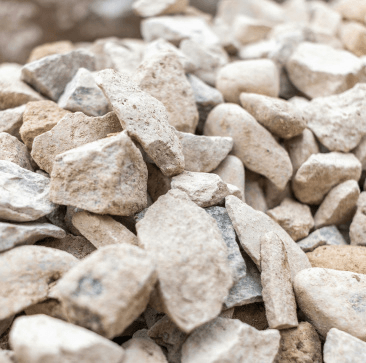
TH round link chain bucket elevators are widely used in compound fertilizer, organic fertilizer, chemical, building materials, and grain processing plants for conveying finished fertilizer granules, urea, ammonium sulfate, potassium chloride (MOP), monoammonium phosphate (MAP), diammonium phosphate (DAP), limestone powder, gypsum, cement, fly ash, grains, and other free-flowing powders or granules. They are particularly suitable for medium-capacity conveying (typically ≤100 m³/h) and material temperatures up to 250°C, making them a cost-effective choice for conveying hot materials discharged from dryers or coolers. However, due to the greater elongation and wear of round link chains, TH bucket elevators are generally not recommended for highly abrasive materials, lifting heights above 40 m, or high-capacity applications, where NE plate chain bucket elevators provide longer service life and lower maintenance.

Centrifugal discharge bucket elevators operate at relatively high belt or chain speeds, allowing material to be discharged by centrifugal force as the buckets pass over the head pulley or sprocket. Material is loaded by scooping at the boot section, while specially designed inlet chutes help improve bucket filling and reduce digging resistance. Centrifugal discharge bucket elevators are best suited for conveying dry, free-flowing powders, granules, and small lump materials with good flowability and low moisture content. Typical applications include compound fertilizer granules, urea, potassium chloride (MOP), monoammonium phosphate (MAP), diammonium phosphate (DAP), wheat, corn, soybeans, cement, fly ash, dry sand, plastic pellets, sugar, and pulverized coal. Due to the high-speed discharge, these elevators are ideal for materials that can tolerate minor particle degradation, but they are not recommended for sticky, wet, cohesive, large-sized, or fragile materials, such as slow-release fertilizers or organic fertilizers, where adhesion, incomplete discharge, or particle breakage may occur.
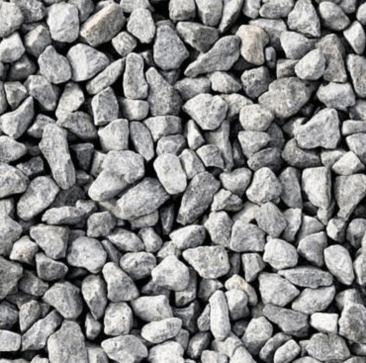
Continuous discharge bucket elevators are ideal for conveying dry, free-flowing powders, granules, and medium-sized lump materials that require gentle handling and minimal particle degradation. Typical applications include grains, rice, compound fertilizer granules, plastic pellets, cement clinker, limestone, coke, food-grade granular products, and slag. The closely spaced buckets provide smooth, gravity-assisted discharge with low dust generation and minimal product damage, making this design particularly suitable for fragile or abrasive materials. However, they are not recommended for sticky, wet, or highly cohesive materials that tend to adhere to the bucket surfaces, resulting in incomplete discharge or material buildup.
NSE super high capacity high-speed plate chain continuous discharging bucket elevators are designed for conveying free-flowing powders, granules, and small to medium-sized lump materials at high capacities ranging from 100 to 2,000 m³/h and lifting heights of up to 80 m. Utilizing a double-row plate chain and continuous gravity discharge, they operate at chain speeds of approximately 0.8–1.2 m/s and are suitable for material temperatures up to 250°C under standard conditions. Typical applications include cement clinker, limestone, gypsum, slag, coal, coke, iron ore, aggregates, fly ash, cement, and other highly abrasive bulk materials in the cement, mining, metallurgy, and power industries. The robust double-chain design provides excellent load distribution, wear resistance, and long service life, making the NSE series ideal for heavy-duty continuous operation.
Mill duty centrifugal bucket elevators are heavy-duty versions of centrifugal discharge elevators designed specifically for continuous industrial service in cement, mining, quarrying, and mineral processing plants. Unlike standard centrifugal elevators, they utilize reinforced AC buckets, heavy-duty rollerless chains or steel-reinforced rubber belts, and head traction wheels or lagged drive pulleys to withstand high impact loads and severe abrasion. Direct bucket loading minimizes digging action and significantly reduces bucket and boot wear while maintaining the high conveying capacities characteristic of centrifugal discharge. They are particularly suited for handling abrasive powders, granules, and small to medium-sized lumps, including cement clinker, crushed limestone, gypsum, sand, aggregates, mineral ores, coal, coke, and fly ash, but are not recommended for sticky, wet, or highly cohesive materials that may adhere to the buckets and impair discharge.

Steel cord belt centrifugal discharge bucket elevators are designed for conveying dry, free-flowing bulk materials with a bulk density up to 0.77 t/m³ (60 lb/ft³). Typical applications include grains, frac sand, cement raw meal, cement, fly ash, compound fertilizer granules, and other moderately abrasive powders and fine granular materials. The steel cord reinforced rubber belt provides smooth, stable operation with low material degradation, making it suitable for high-capacity and high-lift conveying. However, these elevators are not recommended for sticky, wet, cohesive, large lump, or highly abrasive materials, which may cause excessive belt wear, bucket buildup, or incomplete discharge.
Twin-trunk (double-trunk) bucket elevators feature two separate enclosed casings, with the loaded buckets traveling in one trunk and the return buckets in the other. This configuration provides greater structural rigidity, improved operational stability, and easier maintenance, making it particularly suitable for high-capacity, high-lift conveying applications. Twin-trunk bucket elevators are widely used in the cement, mining, power generation, fertilizer, grain handling, and bulk material processing industries, where they convey powders, granules, and small to medium-sized lump materials, including cement clinker, limestone, gypsum, slag, coal, coke, grains, fly ash, and aggregates. Compared with single-trunk designs, the twin-trunk configuration offers improved alignment, reduced casing deformation, and enhanced reliability for continuous heavy-duty operation.
Z-type overlapping bucket elevators use a series of pivoting, overlapping buckets that remain level throughout horizontal and vertical conveying, allowing bulk materials to be transported in a single enclosed system without intermediate transfer points. This design provides exceptionally gentle handling with minimal product degradation and spillage, making it ideal for food products, seeds, fertilizer granules, plastic pellets, chemicals, and other fragile free-flowing bulk materials.
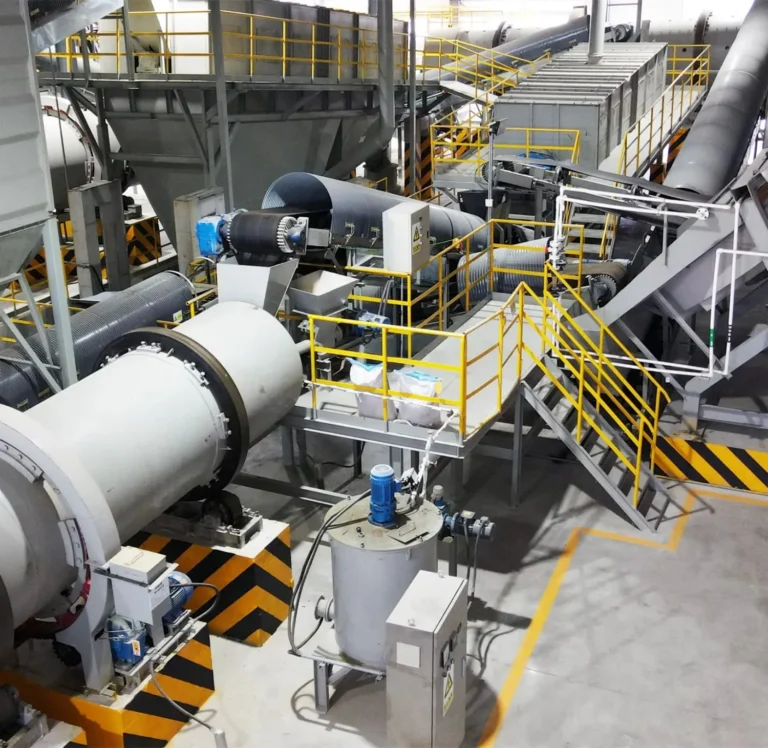
Guide to Organic-Inorganic Fertilizer Production
“Explore the advantages of organic-inorganic fertilizer production line”
December 03, 2024
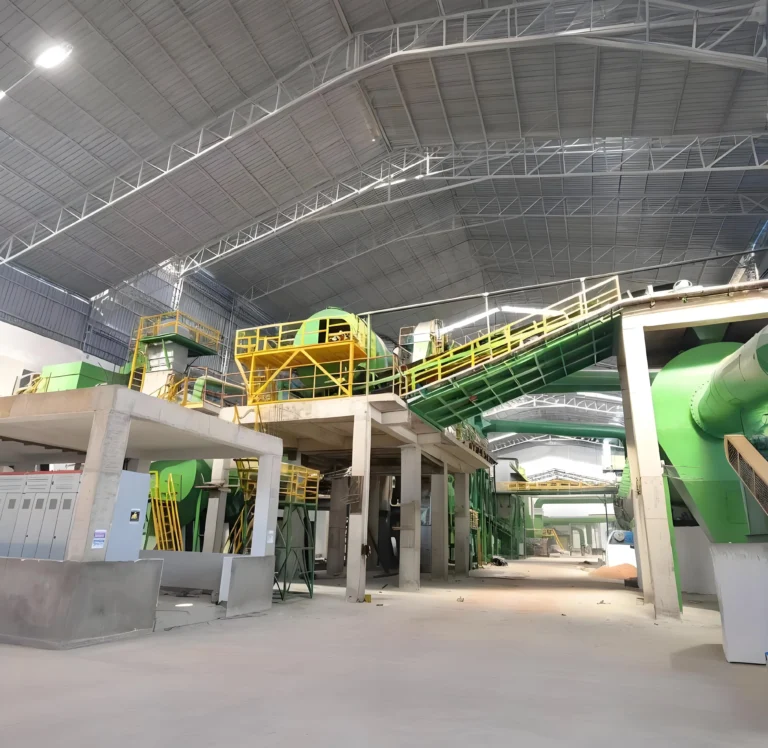
November 23, 2024
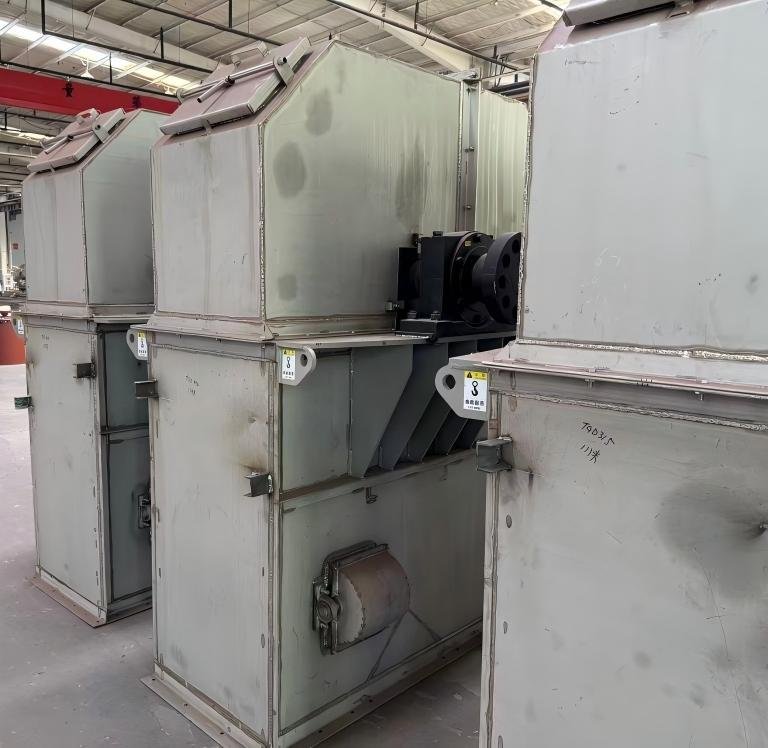
A bucket elevator is a vertical conveying system engineered for the continuous lifting of bulk materials, with grain legs being a common alternative name for this type of equipment.
August 29, 2026
You can get in touch with us through the following contact information
AddressNo. 2289 Huancheng South Road, Tongxiang, Jiaxing, Zhejiang Province, China. Zip code:314500
Please fill in the sales inquiry form and our sales representatives will be in touch shortly.