






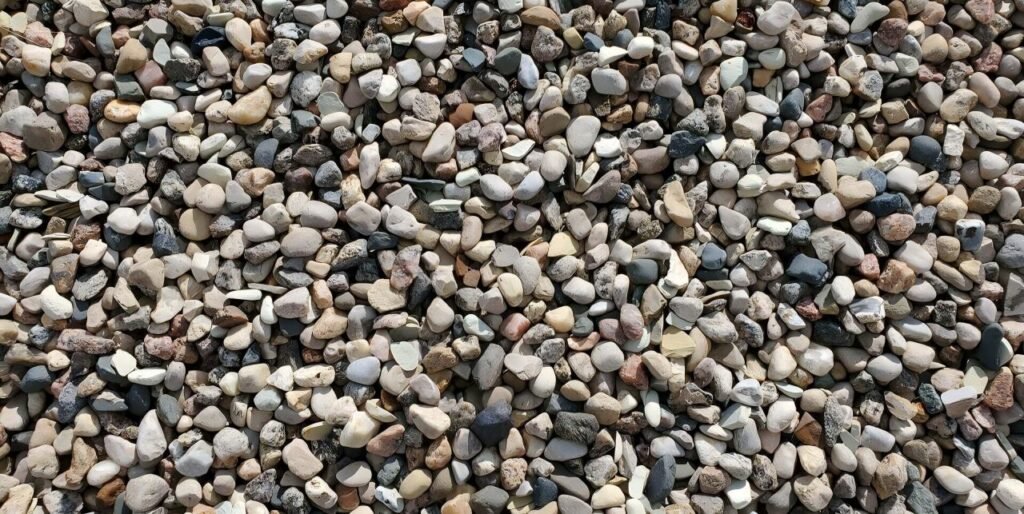
Pea gravel is a naturally rounded aggregate with particle sizes ranging from 1/4 to 3/8 inch—named for its resemblance to the size of a pea—and is widely used globally in landscaping, drainage, and construction. This article systematically outlines the definition, international classification standards, and key physical-mechanical properties of pea gravel; compares its performance and application limits against crushed stone; and details the technical requirements, design and construction standards, and operation and maintenance protocols for various application scenarios. Additionally, it analyzes the processing workflow and quality control logic for natural pea gravel, explores pathways for substituting natural aggregates, and examines the role of construction material equipment in supporting the industry, thereby providing a comprehensive reference for engineering selection, production management, and industrial upgrading.
Definition and Classification System of Pea Gravel Materials
Basic Definition and Formation Mechanism of Pea Gravel
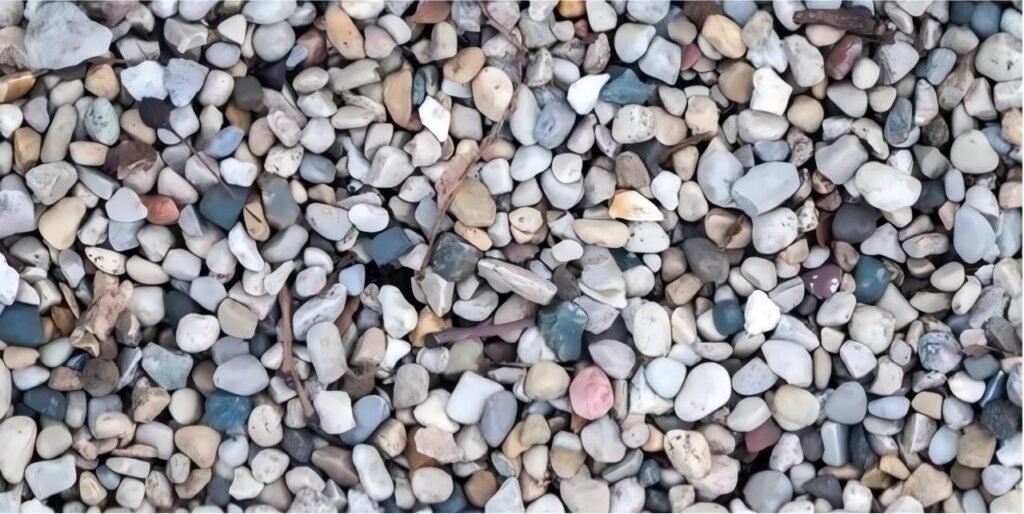
Pea gravel is classified as a natural coarse aggregate formed through the long-term natural weathering, water erosion, and mutual abrasion of parent rock; the particles feature smooth surfaces and rounded edges, lacking the sharp fracture faces typical of mechanically crushed stone. Its primary particle size range is 1/4 to 3/8 inch, with the 3/8-inch size being the standard market specification. Particle shapes vary naturally—ranging from round and oval to partially fractured—resulting in a lack of uniform geometry.
Mineral composition is determined by the parent rock of the source location; common lithologies include granite, basalt, limestone, and quartzite, yielding natural hues such as gray, beige, brown, white, and black, with most products consisting of a multi-colored mix. Key physical properties include a bulk density of 1,450–1,600 kg/m³, a specific gravity of 2.55–2.70, a Mohs hardness of 5–7, and a water absorption rate of less than 1.5%.
In addition to naturally occurring varieties, the market also offers manufactured pea gravel; this is produced by mechanically crushing large raw stones and then processing them in a tumbling machine to shape and smooth the edges, thereby simulating the rounded form of natural gravel while achieving superior precision and uniformity in particle size.
Internationally Recognized Grading Standards for Pea Gravel
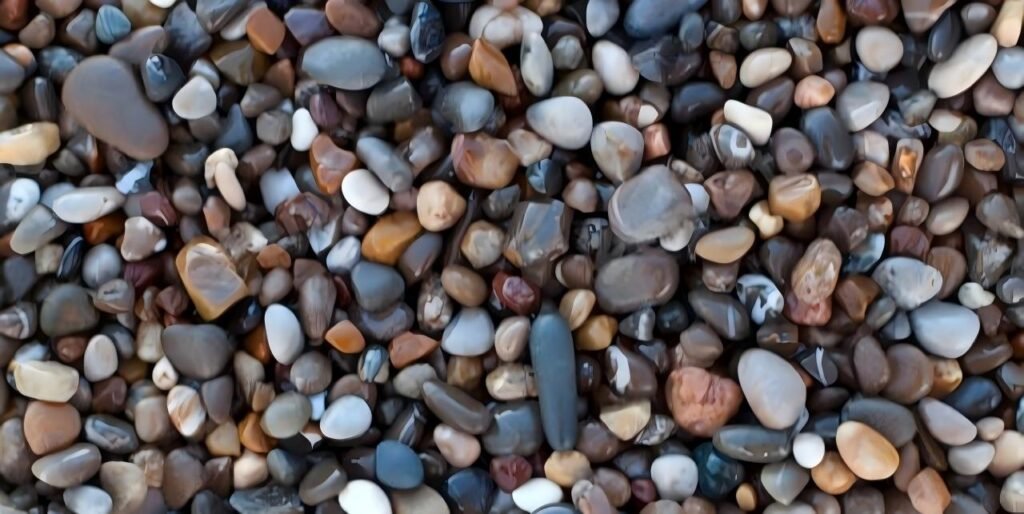
In the field of international engineering, aggregate grading is primarily based on the ASTM C33 standard, which specifies requirements for the gradation, impurity content, and soundness of coarse and fine aggregates used in concrete. Crushed stone is classified using numerical designations; generally, a lower number corresponds to a larger particle size. Among these, #57 and #67 are the most widely used standard sizes in North American engineering. The complete grading specifications and their corresponding applications are detailed in the table below:
| Grade Number | Particle Size Range | Common Uses |
| #1 | 2–4 inches (50–75mm) | Heavy-duty road base, erosion control projects |
| #3 | 1/2–2 inches (12–50mm) | Railway ballast, drainage systems, road base |
| #5 | 1 inch and smaller (12–25mm) | Road base, paver base, residential driveways |
| #8 | 3/8 inch (5–9.5mm) | Concrete mix, asphalt production, landscape decoration |
| #10 | Stone dust / screenings (<5mm) | Paver base, concrete blocks, compacted grading material for garden paths |
| #57 | 3/4 inch (9.5–25mm) | Drainage projects, concrete & asphalt base, standard material for French drains |
| #67 | 3/4 inch grade (max < 19mm) | Concrete slab base, base for local roads and highways |
| #411 | #57 gravel + #10 stone dust blend | Compacted stable base for driveways, parking lots, and building foundations |
Pea gravel falls under the category of coarse aggregates defined in the standards and must meet the following core quality requirements:
- Gradation requirements: Particle sizes must fall within the specified nominal range, and the proportions of oversized and undersized particles must be controlled within permissible limits to ensure a stable gradation;
- Impurity limits: The content of organic matter, clay lumps, friable particles, and deleterious minerals must not exceed specified limits to prevent adverse effects on concrete durability and structural stability;
- Soundness requirements: Mass loss after repeated freeze-thaw or sodium sulfate immersion cycles must remain below standard limits to ensure the material's long-term performance in harsh environments;
- Alkali-reactivity requirements: For concrete used in moist environments, the content of alkali-reactive aggregates must be controlled within safe limits to prevent volumetric expansion and cracking caused by alkali-aggregate reactions.
In the fields of landscape and drainage engineering, in addition to gradation requirements, a cleanliness criterion has been introduced; specifically, the fines content of washed-grade products must be less than 1% to prevent fine particles from clogging voids and impairing drainage efficiency.
Main Types of Natural Gravel
Natural gravel can be categorized into various types based on particle size, shape, and application. Pea gravel is one of the finest-grained and most refined varieties; other common types include the following:
- River Pebbles: Ranging from 1 to 6 inches in size, these are formed by long-term river erosion and feature highly rounded surfaces; they are primarily used for landscaping, dry creek bed edging, and soil erosion control projects.
- Bank Gravel: Unsorted, raw gravel containing a mix of sand, soil, and particles of varying sizes; low in cost, it is mainly used for large-scale fill operations, roadbed slopes, and engineering sub-bases where aesthetics are not a priority.
- Beach Gravel: Formed by wave action, these stones are exceptionally smooth and often used in high-end landscaping; due to their salt content, they require washing to remove salt before use in applications adjacent to concrete.
- Decorative Gravel: Comprising products with unique lithologies—such as volcanic rock, crushed marble, and slate—these are selected primarily for their color and texture, and are used specifically for garden landscaping and pathway decoration.
Physical and Mechanical Properties and Comparative Analysis of Pea Gravel
Basic physical parameters
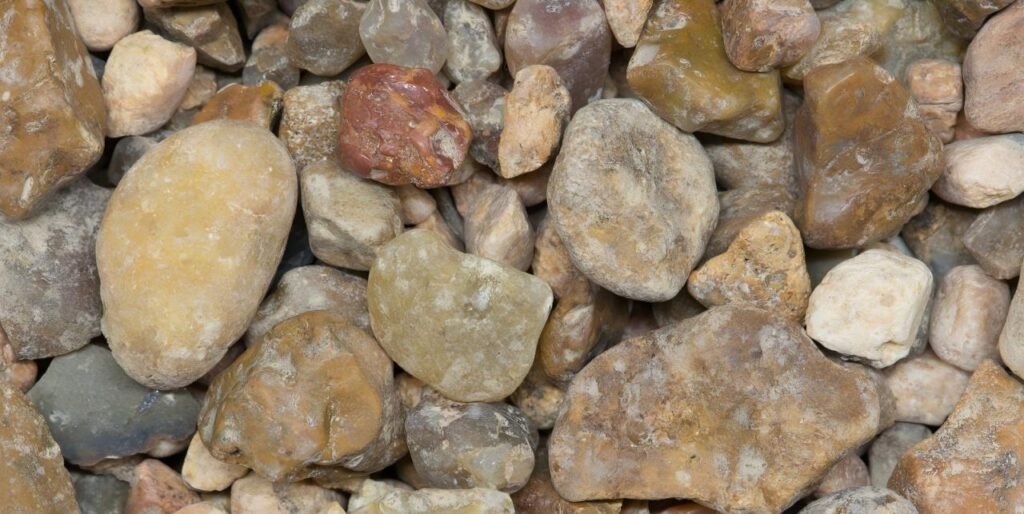
Clean, single-sized pea gravel features an inter-particle void ratio of 30%–40% and a stable permeability rate of 4–6 inches per hour under normal conditions. Due to the rounded, non-angular nature of the particles, internal aggregate interlock is weak; consequently, the material cannot form a rigid monolithic structure through compaction, and the particles are prone to relative displacement and surface settlement under load.
Regarding thermal properties, pea gravel has lower heat absorption and storage capacities than rigid paving materials such as concrete and asphalt. In high-temperature summer conditions, its surface temperature remains lower than that of rigid paving, helping to mitigate the urban heat island effect in the surrounding area.
Core Engineering Performance
- Permeability and Drainage: Pea gravel with uniform particle size creates continuous void channels, allowing for rapid rainwater infiltration and minimizing surface ponding. Being clean and free of fines, it resists pore clogging over the long term, resulting in a slower decline in drainage performance compared to graded aggregates with high fines content.
- Mechanical Stability: A layer of pure pea gravel has limited load-bearing capacity; without a supporting base layer, it can only withstand pedestrian traffic, as vehicular or heavy equipment loads quickly cause rutting and depressions. Particle displacement is the primary mode of deformation; structural strength cannot be enhanced through compaction, and the material undergoes only natural settlement over time.
- Durability: As a rock-based material, pea gravel is highly resistant to weathering and corrosion, maintaining physical stability over the long term. Its service life is not limited by material aging but is primarily influenced by external factors such as particle loss, pore clogging, and weed encroachment.
- Compatibility with Concrete: When used as a coarse aggregate in concrete, the rounded particles improve the workability of the mix and reduce mixing resistance. However, the mechanical interlock with the cement paste is weaker than that of angular crushed stone, resulting in slightly lower compressive strength for the same mix proportions; consequently, the dosage of cementitious materials may require adjustment. With appropriate mix design, pea gravel concrete can exhibit a 10%–20% increase in tensile strength and superior crack resistance compared to conventional crushed stone concrete.
Comparison of Properties: Pea Gravel vs. Crushed Stone
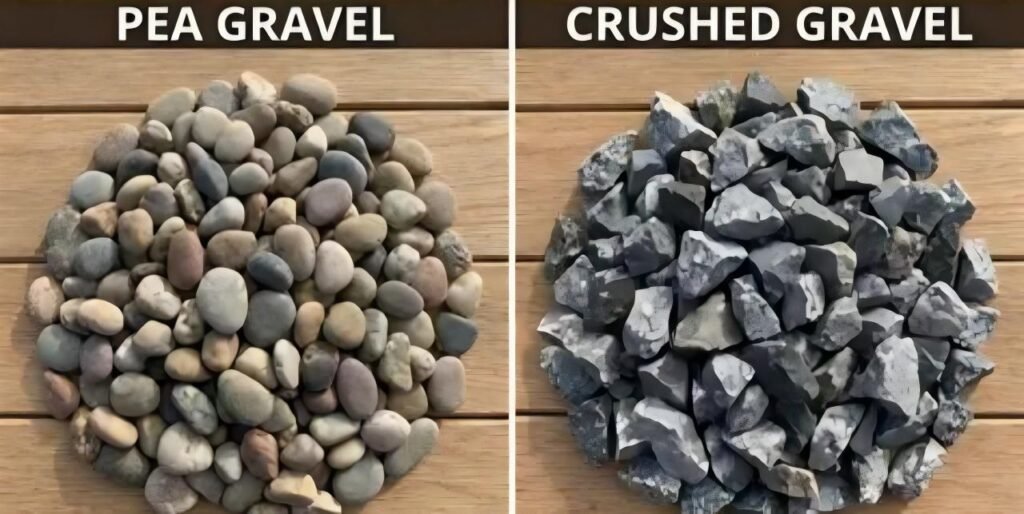
Crushed stone is an artificial aggregate produced through mechanical crushing and screening; it differs significantly from pea gravel in terms of physical form and engineering properties, as summarized in the comparison table below:
| Performance Dimension | Pea Gravel | Crushed Stone |
| Formation Method | Formed by natural weathering and water erosion; or mechanically shaped | Large rocks mechanically crushed and screened |
| Particle Shape | Smooth surface, rounded edges | Sharp corners, angular and fractured faces |
| Interlocking Ability | No interlocking effect, prone to displacement under pressure | Strong interlocking, forms stable structure after compaction |
| Compaction Characteristics | Cannot be compacted into a solid mass, only natural settlement | Can be compacted to form a rigid structural layer |
| Permeability | Excellent, uniform voids with stable drainage rate | Clean crushed stone drains well; graded crushed stone has reduced permeability |
| Particle Size Uniformity | Natural variation in particle size | Precise screening and grading, high size consistency |
| Walking Foot Feel | Soft and comfortable touch, suitable for barefoot walking | Rough surface, noticeably uncomfortable / “pebbly” underfoot |
| Load-bearing Capacity | Suitable only for pedestrian loads | Can withstand vehicle loads, suitable for structural base layers |
| Maintenance Requirements | Requires regular raking, repositioning, and replenishment | Highly stable after compaction, low maintenance |
| Concrete Bonding | Weak bonding with cement paste, may require adjusted mix design | Strong bonding with cement paste, higher structural strength |
| Core Applications | Landscape surface layer, drainage fill, decorative landscaping | Structural base layers, load-bearing pavements, engineering cushion layers, structural concrete |
Primary Application Areas and Technical Requirements for Pea Gravel
Landscape Paving Works
Landscape paving is the core application scenario of pea gravel, including terraces, walkways, garden borders, children's activity areas and other subdivided scenarios.
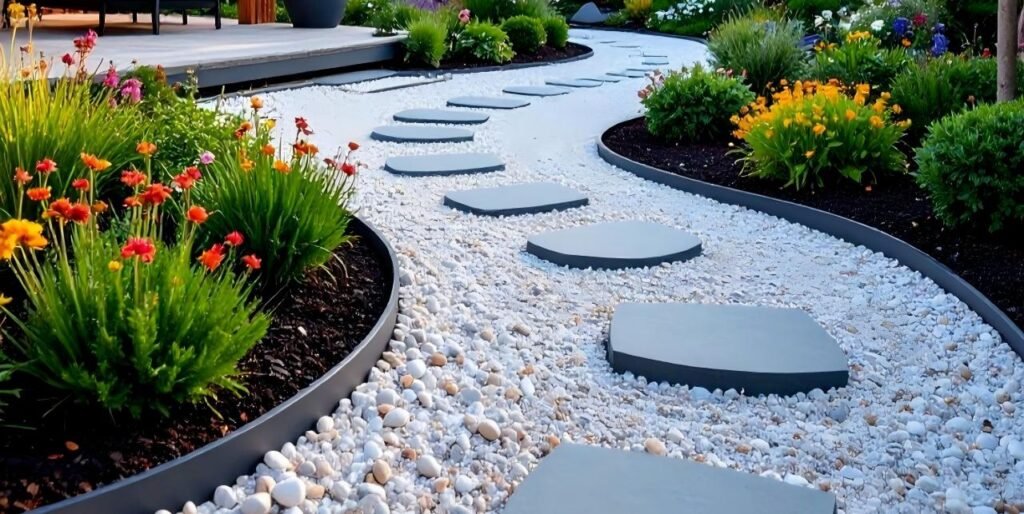
- Patios and walkways: Typically laid at a thickness of 2–3 inches, requiring edge restraints to prevent the gravel from spreading. Key advantages in this application include ease of installation, a soft feel underfoot, and excellent drainage, making it ideal for low-traffic leisure areas.
- Children's and pet play areas: The rounded, smooth-edged granules minimize the risk of bumps and scrapes; the material is highly permeable, preventing puddles or mud after rain and allowing the surface to dry quickly.
- Garden bed surfacing and gap filling: It serves as a durable alternative to organic mulch for garden beds, as it does not decompose and requires no annual replacement; it can also be used to fill gaps between paving stones or stepping stones, creating a permeable surface.
The general technical requirements for landscape paving installations are as follows: edge restraints must be installed; permeable geotextile must be laid underneath to suppress weed growth; and heavy-duty facilities require separate load-bearing foundations.
Drainage and Seepage Control Engineering
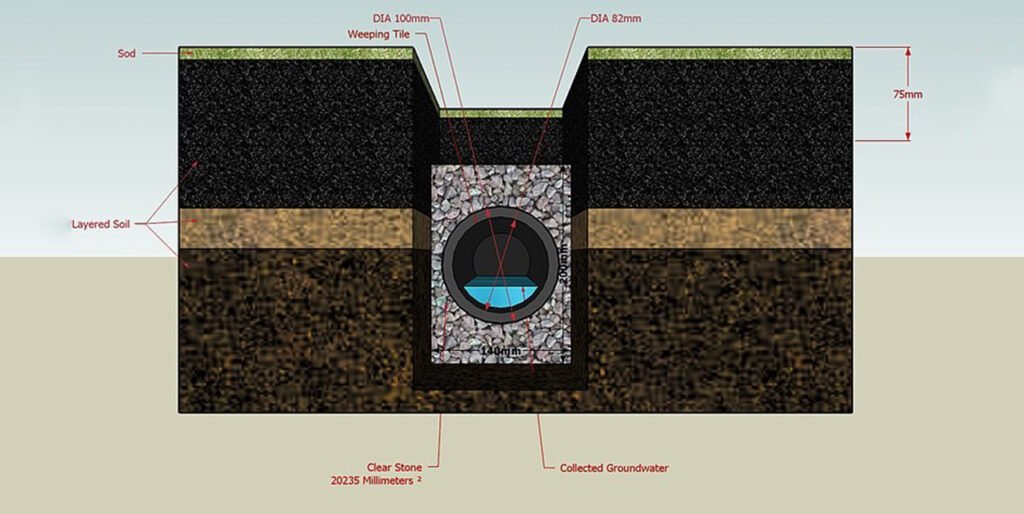
Pea gravel is a common fill material for various types of shallow drainage systems; key application scenarios include:
- French Drains: Used as the standard backfill material surrounding perforated drainage pipes; washed, clean aggregate—free of stone dust and fine particles—is required to prevent pipe clogging. Typically applied in a 3–4 inch layer, it utilizes continuous void spaces to rapidly collect groundwater and channel it into the pipe.
- Stormwater Infiltration Systems: Serves as the fill layer for dry wells, rain gardens, and infiltration basins; it filters suspended solids from stormwater while facilitating rapid infiltration to recharge groundwater and reduce the load on municipal drainage systems.
- Building Foundation Drainage: A layer of pea gravel laid along the exterior of the building foundation diverts surface runoff away from the structure, minimizing water accumulation around the foundation and reducing the risk of basement seepage.
- Downspout Splash Pads: Placed beneath downspouts to dissipate the force of falling water, preventing soil erosion and the formation of puddles or depressions.
Construction and Building Materials Sector
- Decorative Concrete: Pea gravel serves as the primary aggregate for exposed-aggregate concrete. After pouring, processes such as water washing or acid etching are used to remove the surface cement paste, revealing the rounded gravel particles. This creates a slip-resistant, aesthetically pleasing decorative finish widely used for patios, pool decks, walkways, and commercial plazas.
- Lightweight Concrete Mixes: Small-sized pea gravel can be used to formulate non-load-bearing lightweight concrete. This reduces the self-weight of structural elements while enhancing thermal insulation properties, making it suitable for garden features and landscape structures.
- Prefabricated Building Materials: It is used in the production of prefabricated materials such as permeable pavers and landscape blocks, enhancing both their permeability and aesthetic texture.
Environment and Other Applications
- Filtration Support Layer: Serves as a support layer for filter media in systems such as water treatment facilities and constructed wetlands; it supports the overlying media while ensuring unimpeded water flow, requiring high particle hardness and chemical stability.
- Environmental Remediation: Can be used as an auxiliary layer for acidic soil amendment or as a carrier for adsorbing waterborne pollutants; certain gravels with high calcium and magnesium content are suitable for carbon mineralization and sequestration, where the calcium and magnesium components react with carbon dioxide to form carbonates.
- Industrial Packing Material: Used as support or filtration packing in various industrial applications, requiring resistance to acid and alkali corrosion and adequate mechanical strength.
Design, Construction, and Operation & Maintenance of Pea Gravel Landscape Paving
Dosage Calculation and Cost Composition
The quantity of pea gravel required depends on both the surface area and the depth of the layer; the standard depth for landscape surfacing is 2 inches, while areas subject to heavy loads or high wear may require a depth of up to 4 inches. Based on a standard 3/8-inch product size, the quantities required for various surface areas are outlined in the table below:
| Paving Area (ft) | Quantity for 2-inch Thickness (Tons) | Quantity for 4-inch Thickness (Tons) |
| 8×8 | 0.54 | 1.08 |
| 10×10 | 0.84 | 1.68 |
| 12×12 | 1.21 | 2.42 |
In terms of cost, the material price for bulk pea gravel ranges from $26 to $68 per cubic yard, varying based on origin, rock type, and cleanliness. The all-inclusive cost for professional installation—covering labor and materials—ranges from $7 to $20 per square foot; this encompasses site excavation, base preparation, edging installation, material transport, and surface laying. DIY installation can significantly reduce labor costs, making it the preferred choice for low-budget projects.
Key Points of Structural Design
- Base Layer Design: Pea gravel alone cannot support loads; a crushed stone base layer is essential. Standard practice involves laying a 2-inch thick layer of graded crushed stone, which is then wetted and compacted to form a stable, load-bearing foundation that distributes overhead loads and prevents the gravel from sinking into the underlying soil.
- Edge Restraint Design: All pea gravel areas require a rigid edge restraint structure to prevent the gravel from scattering or migrating outward. Suitable materials include metal, stone, or precast concrete, each varying in cost and service life.
- Weed Control Design: Installing a permeable geotextile fabric between the crushed stone base and the pea gravel surface layer blocks weed seeds in the soil from sprouting upward while allowing water to drain through. Note that geotextile fabric only delays weed growth rather than eliminating it permanently; weeds may still emerge if organic matter accumulates on the surface.
- Handling Heavy Objects: Heavy items such as fire pits or heavy outdoor furniture should not be placed directly on the pea gravel surface, as this causes localized sinking. Instead, place these objects on a dedicated crushed stone footing or a solid pad, then fill the surrounding area with pea gravel to blend the edges.
Standard Construction Procedure
The standard installation process for pea gravel paving consists of 10 steps, as follows:
- Site Excavation: Remove the top 4 inches of soil within the paving area, clearing away turf, roots, stones, and other debris.
- Subgrade Leveling: Level the excavated soil base, adjust the drainage slope, and remove obstacles such as tree roots and large stones.
- Subgrade Compaction: Compact the base soil using compaction equipment to minimize future settlement and deformation.
- Edge Restraint Installation: Install a rigid edge restraint structure along the perimeter of the paving area and secure it firmly.
- Base Layer Installation: Fill with a 2-inch layer of graded crushed stone and level it roughly.
- Watering: Water the crushed stone base to allow fine particles to fill the voids.
- Base Layer Compaction: Compact the crushed stone base using compaction equipment to create a stable, load-bearing structure.
- Geotextile Installation: Lay permeable geotextile over the compacted base, overlapping the seams.
- Surface Layer Installation: Pour a 2-inch layer of pea gravel and distribute it evenly across the paving area.
- Surface Leveling: Rake the gravel surface smooth to complete the installation.
For areas with high foot traffic that demand greater stability, cellular plastic stabilization grids offer an effective solution. These grids feature a honeycomb-like structure; when installed over the base layer, they confine pea gravel within individual cells to restrict lateral particle movement. This significantly enhances surface stability and minimizes issues such as gravel scattering and surface depressions, all while maintaining the surface's inherent permeability.
Operations and Maintenance Management and Service Life Analysis
Routine maintenance requirements
- Leveling and Grooming: Pea gravel is not self-leveling; depressions caused by foot traffic or compression do not resolve on their own. Periodic manual raking is required to level the surface and return scattered stones to their proper place.
- Debris Removal: Use a leaf blower to clear lightweight debris such as fallen leaves and twigs; do not use a broom, as this can scatter the gravel particles.
- Winter Maintenance: Allow accumulated snow to melt naturally. If anti-slip measures are necessary, use materials like fine sand, sawdust, or wood chips; avoid coarse de-icing salts to prevent damage to surrounding vegetation.
- Replenishment: Inspect for gravel loss annually and replenish areas where material has been displaced or depressions have formed, ensuring the surface maintains the proper thickness and levelness.
Service Life and Influencing Factors
Pea gravel possesses inherently stable physical properties and is not subject to material degradation or lifespan limits; with regular maintenance and replenishment, the surfacing system can remain in use indefinitely. Without such maintenance, however, issues such as weed overgrowth, gravel scattering, and uneven depressions will arise within one to two years, rendering the surface unusable.
Key factors influencing service life include the structural integrity of the edging, the quality of base layer compaction, the condition of the geotextile fabric, the extent of surrounding soil erosion, and the frequency of routine maintenance. Among these, edging failure and weed encroachment are the most common causes of system failure.
Processing, Preparation, and Quality Control of Pea Gravel
Processing flow for natural pea gravel
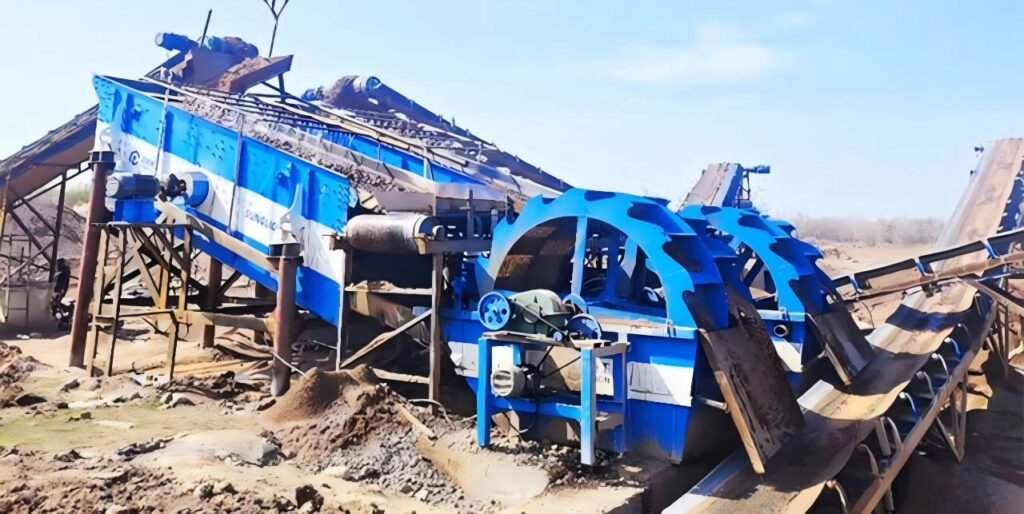
The production and processing of natural pea gravel comprises five core stages: raw material extraction, primary screening, washing and impurity removal, precision grading, and finished product stockpiling. Following extraction from riverbeds or quarry sites, the raw gravel undergoes primary screening to remove oversized particles and soil impurities, followed by washing to eliminate surface dust and fine particles; finally, it is sorted into specific size grades using multi-layer screening equipment and stockpiled by category for sale.
Production process for manufactured pea gravel
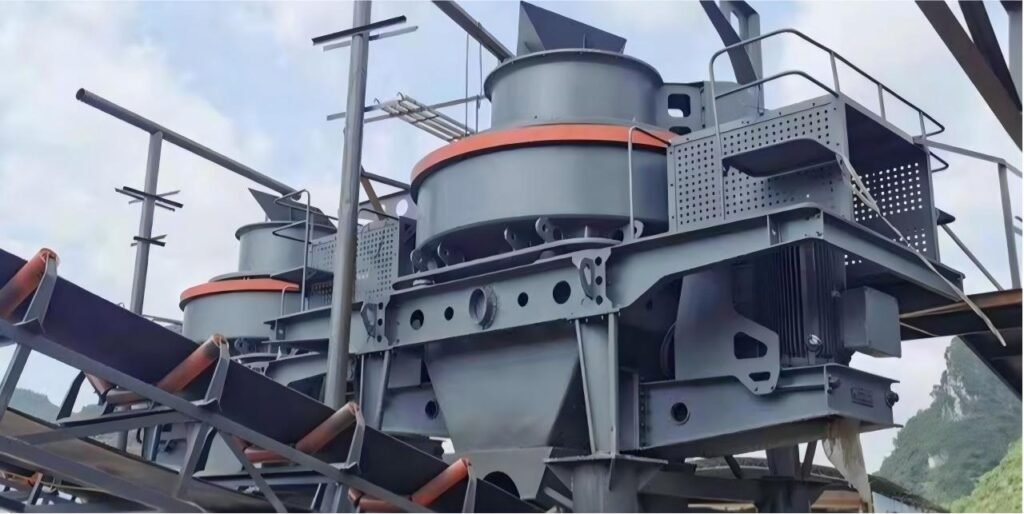
Manufactured pea gravel is produced from large raw stones through a process comprising primary crushing, secondary and tertiary crushing, shaping and smoothing, screening and classification, washing to remove impurities, and final stockpiling. Large raw stones are first crushed to a medium size, followed by further size reduction; the material then passes through drum-type shaping equipment to smooth out sharp edges—mimicking the rounded form of natural gravel—before final screening yields the product at the target particle size. Compared to natural gravel, this product offers superior particle size uniformity and allows for precise control over gradation, meeting the requirements of high-standard engineering projects.
Key Quality Control Indicators
Particle Size Gradation: A core quality control metric that directly impacts drainage performance, paving evenness, and suitability for the project. High-precision screening ensures that the finished product's particle size falls within the nominal range and that the proportions of oversized and undersized particles remain within specified limits.
Cleanliness: If pea gravel contains excessive stone dust or soil, fine particles will gradually settle and clog the voids during use, significantly shortening the drainage system's lifespan and increasing the likelihood of weed growth. A washing process is crucial for ensuring cleanliness; the washed product is ready for immediate use in drainage projects.
Particle Shape: Roundness determines the feel underfoot and interlocking characteristics; landscaping products require higher roundness, whereas requirements for engineering fill materials can be somewhat more relaxed.
Durability and Impurities: Materials must comply with ASTM C33 standards, avoiding soft particles and harmful minerals to ensure long-term performance.
Impact of Processing Equipment on Finished Product Quality
The performance of aggregate processing equipment directly determines the upper limit of the finished product's quality. Professional, integrated crushing and screening solutions can enhance the quality of pea gravel and associated aggregates across four dimensions:
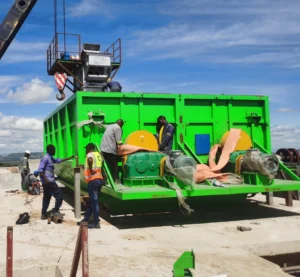
- Precision Grading Capability: Multi-layer vibrating screening equipment enables precise separation within narrow particle size ranges, ensuring uniform particle sizes and stable gradation to meet the tolerance requirements of various engineering applications. Matching equipment across the entire process—from primary raw material screening to final precision grading—enhances efficiency and reduces the rate of off-specification particle sizes.
- Cleanliness Control: Integrated washing and dust removal systems effectively eliminate soil and stone dust adhering to the gravel surface, keeping the fines content within standard limits to ensure product permeability and structural stability.
- Particle Shape Optimization: Shaping equipment and crushers with optimized crushing chambers increase the proportion of cubical particles while minimizing elongated and flaky ones; for manufactured gravel, roundness can be precisely controlled to balance aesthetic appeal with engineering performance.
- Enhanced Production Efficiency: Automated production lines enable continuous operation, reducing quality fluctuations caused by manual intervention while boosting output to meet the supply demands of large-scale projects. Mobile crushing and screening equipment can be deployed directly to raw material sources or project sites for on-site processing and grading, thereby reducing material transportation costs and losses while allowing for flexible adjustments to product specifications based on project needs.
Pathways for Substituting Natural Aggregates and Industrial Support from Building Material Equipment
Current Supply and Demand Status of Natural Gravel and the Demand for Alternatives
As ecological protection policies tighten and regulations regarding sand and gravel extraction from natural riverbeds intensify, the output of natural "pea gravel" has gradually declined, while procurement and transportation costs continue to rise. Meanwhile, demand for aggregates in sectors such as infrastructure, landscaping, and real estate development remains steady; the widening supply-demand gap for natural aggregates is driving the industry to shift toward manufactured aggregates and recycled aggregates derived from solid waste.
Compared to natural aggregates, manufactured aggregates offer advantages such as controllable particle sizes, stable gradation, and reliable supply, allowing them to precisely meet the performance requirements of various projects. Recycled aggregates made from solid waste—capable of utilizing industrial slag and construction debris—deliver both environmental and economic benefits, representing a key direction for the future development of the aggregate industry.
Technical pathways for solid waste-based artificial aggregates
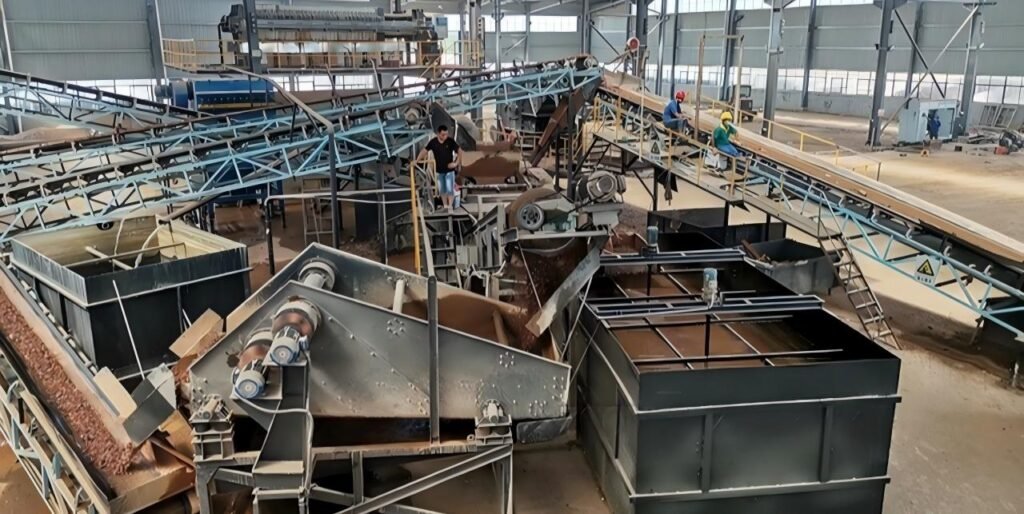
The current mainstream technological pathways for substituting natural gravel fall primarily into two categories:
- Crushed Recycled Aggregate: Produced from raw materials such as construction waste, waste concrete blocks, and industrial residues through crushing, screening, and shaping processes. These recycled aggregates come in various particle sizes and can substitute for natural crushed stone and gravel in applications such as road base layers, landscape paving, and non-load-bearing concrete. This technology involves a mature process and low production costs, and it has already been implemented on a large scale in numerous municipal road projects.
- Sintered Artificial Aggregate: Produced from solid wastes—such as sludge, coal gangue, fly ash, steel slag, and blast furnace slag—through batching, grinding, granulation, and high-temperature calcination. The resulting products are high-performance lightweight aggregates (such as ceramsite) or artificial coarse aggregates. These aggregates are lightweight, high-strength, and offer thermal insulation properties; their performance can be tailored via the formulation, with some metrics surpassing those of natural gravel. They are suitable for use in structural concrete, landscaping projects, and water treatment, while simultaneously enabling the harmless disposal and resource utilization of large volumes of solid waste.
The Application Value of Building Material Processing Equipment in the Aggregate Industry
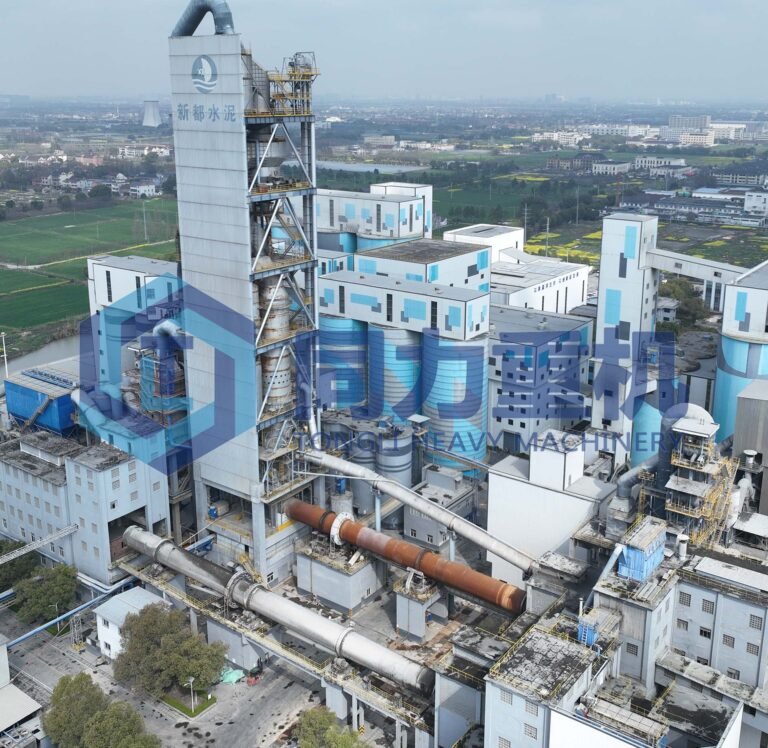
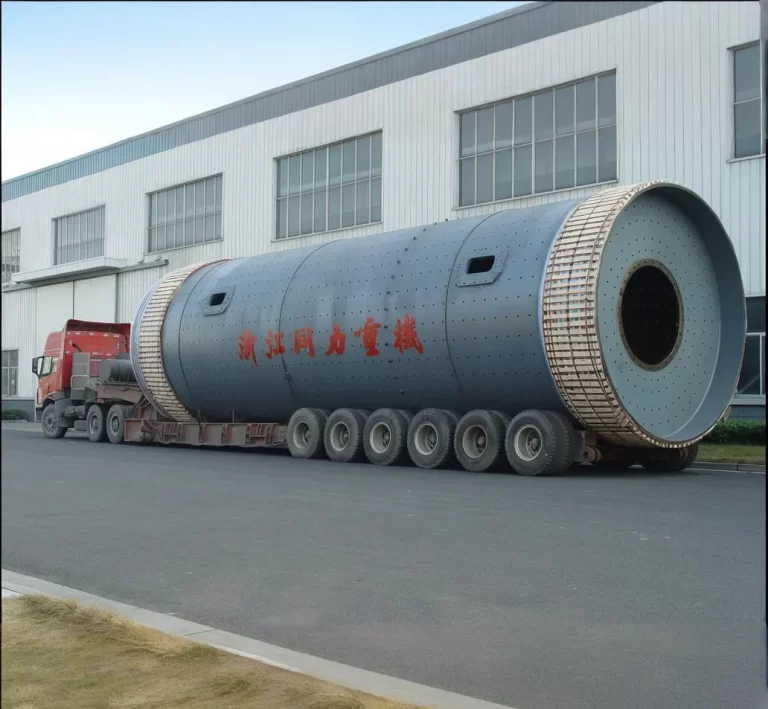
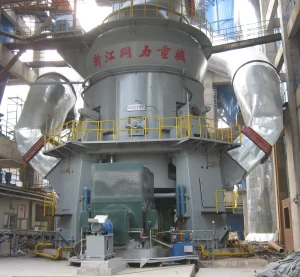
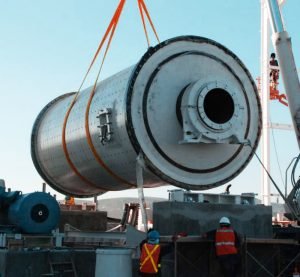
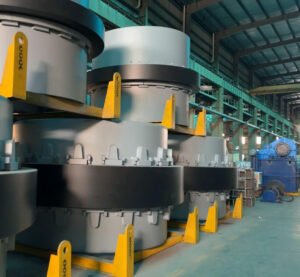
- Solid Waste Raw Material Pre-treatment: High-efficiency grinding equipment—such as vertical roller mills and ball mills—enables the fine grinding of solid waste materials like steel slag, blast furnace slag, and coal gangue. This ensures the required fineness and homogenization of raw materials for sintered aggregates, providing high-quality feedstock for subsequent granulation and calcination processes. Proven expertise in cement grinding technology is directly transferable to solid waste powder preparation, ensuring product consistency and production efficiency.
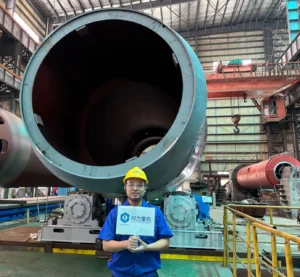
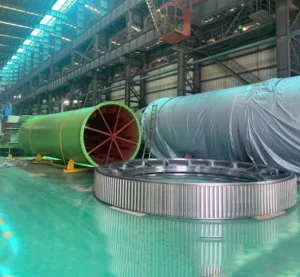
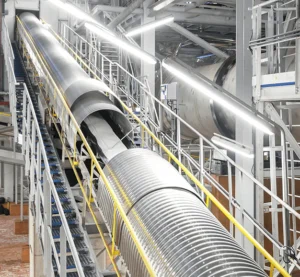
- Core Calcination Equipment: High-temperature calcination equipment, such as rotary kilns, serves as the heart of the sintered artificial aggregate production line. These units facilitate continuous high-temperature calcination with precise control over firing temperatures and atmospheres, thereby guaranteeing key aggregate properties like strength and porosity. Leveraging technical experience from cement calcination allows for optimized thermal efficiency, reduced energy consumption, and higher product quality yields.
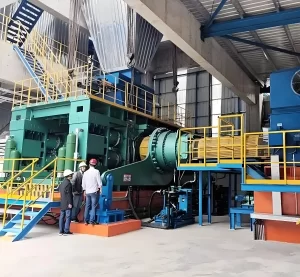
- Integrated Production Line Solutions: Equipment manufacturers with EPC (Engineering, Procurement, and Construction) capabilities provide comprehensive services covering the entire process—from raw material handling, grinding, granulation, and calcination to final product screening. By applying automated control systems typical of cement production to aggregate lines, these solutions enhance process intelligence while reducing labor costs and minimizing quality fluctuations.
Conclusion
Pea gravel is a natural aggregate with distinctive characteristics; its excellent permeability, pleasant tactile quality, and ease of installation make it highly valuable for landscaping, drainage systems, and decorative construction materials. However, its limitations—specifically poor interlocking capability, limited load-bearing capacity, and high maintenance requirements—define the boundaries of its application. In engineering practice, selection must be tailored to specific site requirements, and performance shortcomings can be mitigated through measures such as proper base-layer preparation, edge detailing, and the optimization of stabilization grids; additionally, combining pea gravel with crushed stone to create composite structures can balance functional performance with user experience.
At the industry level, as natural gravel resources become increasingly scarce, manufactured aggregates and recycled aggregates derived from solid waste are emerging as vital supplementary and alternative options. Building material equipment manufacturers can leverage their technical expertise in grinding, calcination, and integrated production-line engineering to provide the core equipment and solutions needed to upgrade the aggregate industry, thereby driving the sector toward resource efficiency and environmental sustainability.