






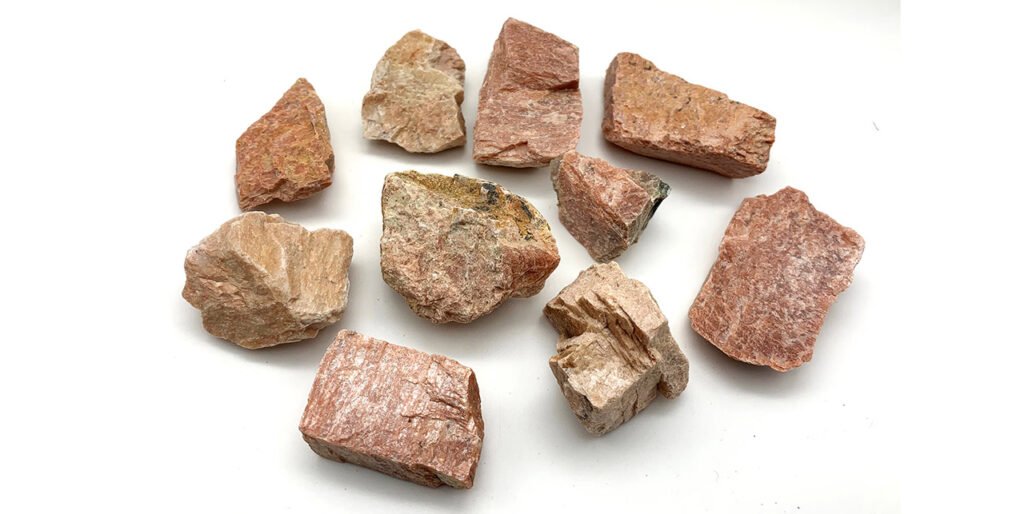
The feldspar group comprises the most abundant rock-forming minerals in the Earth's crust; classified as framework aluminosilicates, they hold significant value in petrological research, industrial production, and the gemstone industry. As the most widely distributed mineral group—accounting for over 50% of the crust's total weight—feldspars are ubiquitous in igneous, metamorphic, and sedimentary rocks, serving as key indicator minerals for determining rock genesis and reconstructing magmatic evolutionary history. Human utilization of feldspar dates back to Neolithic pottery making; following the Industrial Revolution, the large-scale expansion of the glass and ceramic industries established feldspar as one of the world's most produced non-metallic minerals.Natural feldspar ores typically contain impurities such as quartz, mica, and iron-titanium oxides. Most low-grade ores are unsuitable for direct industrial use and require processing—including crushing, grinding, purification, and pulverization—to meet the specific grade, particle size, and purity requirements of various downstream industries. The processing precision, production efficiency, and energy consumption associated with feldspar mining depend entirely on the performance and process configuration of the heavy-duty equipment employed. Starting with the fundamental mineralogical properties of feldspar, this paper systematically constructs a comprehensive understanding of the mineral—tracing the logical chain from "resource endowment" and "processing requirements" to "equipment support" and "industrial application"—thereby providing a reference for feldspar mine development, equipment selection, and industrial upgrading.
Basic mineralogical characteristics of feldspar
Evolution of the Name
The English term "feldspar" derives from the German feldspath; the element "feld" means "field," reflecting the fact that early mineral specimens were frequently discovered in field environments, while "spar" is a geological term for non-metallic minerals with distinct cleavage, accurately describing the cleavage characteristics of feldspar minerals. In 1747, the Swedish mineralogist Johan Gottschalk Wallerius formally designated this group of minerals as "feldspar," a name that remains in use today.
Chemical composition and crystal structure
Feldspars are tectosilicate minerals with a general chemical formula of X(Al,Si)₄O₈, where X represents cations—primarily potassium, sodium, and calcium—though trace elements such as barium, strontium, and rubidium may also be present. Silicon-oxygen and aluminum-oxygen tetrahedra link via shared apical oxygen atoms to form a three-dimensional framework, with large interstitial voids occupied by alkali or alkaline-earth metal cations to maintain charge balance.At high temperatures, potassium-sodium feldspars and sodium-calcium feldspars can form continuous isomorphous series; as temperatures drop, exsolution occurs within the solid solution, creating oriented mineral lamellae—the fundamental cause of special optical phenomena such as adularescence and labradorescence. Twinning is widespread among feldspar-group minerals, with over twenty known twinning laws; notably, polysynthetic twinning in plagioclase and Carlsbad twinning in alkali feldspar serve as key diagnostic features.
Physical properties
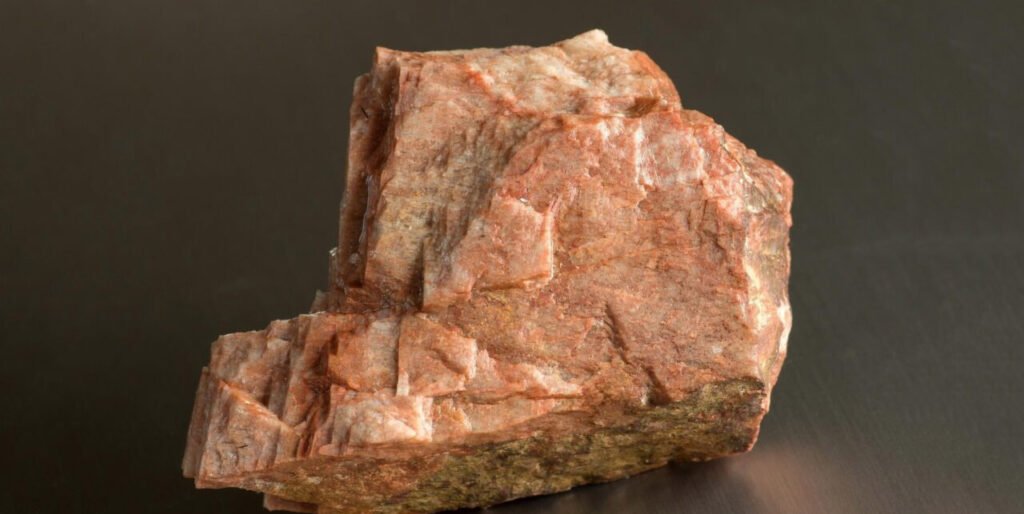
Minerals of the feldspar group share similar overall physical properties and exhibit prominent common characteristics:
- Optical properties: Vitreous luster, with pearly luster appearing on cleavage surfaces; transparency ranges from transparent to opaque; colors are diverse—influenced by composition, trace elements, and inclusions—spanning white, gray, pink, yellow, green, blue, red, and black.
- Mechanical properties: Mohs hardness of 6–6.5; brittle; exhibits two sets of well-developed to perfect cleavage (the angle between cleavage planes is 90° for monoclinic feldspars and approximately 87° for triclinic feldspars); density increases with calcium content, ranging from 2.55 to 2.76 g/cm³.
- Thermal properties: Melting points vary with composition (approximately 1100°C for albite, 1200°C for K-feldspar, and 1550°C for anorthite); melting at high temperatures to form a glass phase serves as the basis for its application as a flux.
| Property Category | Specific Indicator | Parameter Range |
| Mechanical Properties | Mohs Hardness | 6 ~ 6.5 |
| Density | 2.55 ~ 2.76 g/cm³ | |
| Cleavage | Two sets, perfect to complete | |
| Tenacity | Brittle | |
| Optical Properties | Luster | Vitreous luster |
| Transparency | Transparent ~ opaque | |
| Color | Multicolored series, varies with composition and impurities | |
| Structural Properties | Crystal System | Monoclinic system, triclinic system |
Classification system
Based on chemical composition and crystal structure, the feldspar group can be divided into two main isomorphous series, corresponding to three end-member components.
| End-member Mineral | Chemical Formula | Crystal System | Density (g/cm³) | Main Cation |
| Potassium feldspar (K-feldspar) | KAlSi₃O₈ | Monoclinic / Triclinic | 2.55–2.58 | Potassium |
| Albite (Sodium feldspar) | NaAlSi₃O₈ | Triclinic | 2.62 | Sodium |
| Anorthite (Calcium feldspar) | CaAl₂Si₂O₈ | Triclinic | 2.76 | Calcium |
Alkali feldspar series
Composed of potassium feldspar and albite end-members, these minerals are classified into three types based on formation temperature and structural order: sanidine forms in high-temperature, rapid-cooling environments and is commonly found in volcanic rocks; orthoclase forms under moderate cooling rates and is a typical rock-forming mineral in acidic intrusive rocks such as granite; and microcline forms in low-temperature, slow-cooling environments, exhibits the highest degree of order, and often occurs as large crystals in pegmatites.
Plagioclase series
Composed of albite and anorthite end-members, the plagioclase series is classified into six continuously transitional mineral species based on the molar proportion of the anorthite component: albite, oligoclase, andesine, labradorite, bytownite, and anorthite. Plagioclase is a primary rock-forming mineral in mafic and intermediate igneous rocks, and its specific composition (grade) serves as the core basis for rock classification and naming.
Geological Occurrence and the Global Resource Landscape
Geological Occurrence and the Rock Cycle
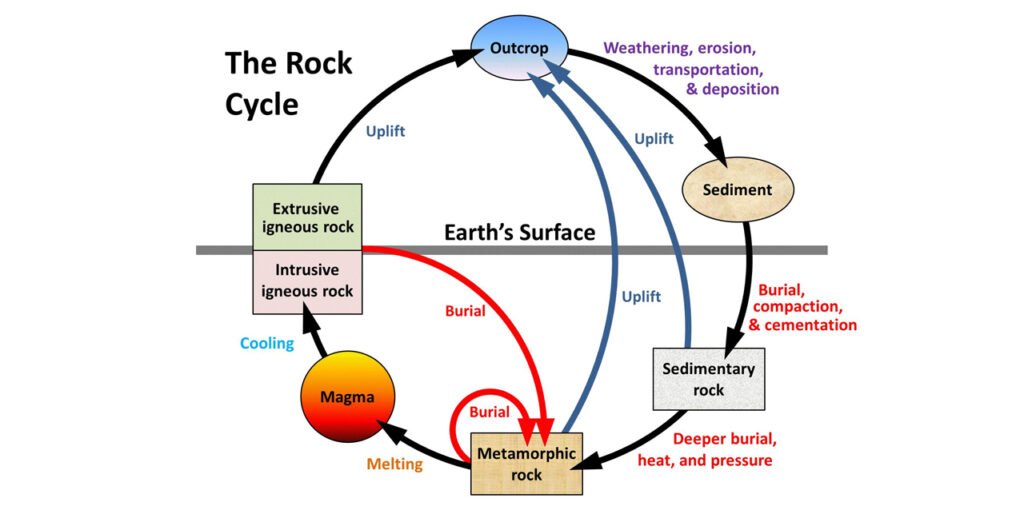
Feldspars participate extensively in the complete rock cycle and occur in all three major rock types:
- Igneous rocks: Approximately 60% of feldspar occurs in igneous rocks, primarily as a product of magmatic crystallization. Acidic rocks are dominated by alkali feldspar, while basic rocks are dominated by plagioclase; feldspar content is extremely low in ultrabasic rocks.
- Metamorphic rocks: Approximately 30% of feldspar occurs in metamorphic rocks. Feldspar can form through both regional and contact metamorphism, and is abundant in medium- to high-grade metamorphic rocks such as gneiss and granulite.
- Sedimentary rocks: Approximately 10% of feldspar occurs in sedimentary rocks, originating as clastic material from the weathering and erosion of source rocks. Feldspar is chemically less stable than quartz and readily decomposes during weathering to form clay minerals like kaolinite, serving as a significant source material for clay deposits.
In addition to Earth's crust, feldspar minerals have also been detected in lunar rocks, Martian rocks, and certain meteorites, making them common constituent minerals of rocky bodies in the solar system.
Global Resource Distribution and Supply-Demand Patterns
Global feldspar resources are abundant and widely distributed. According to data from the U.S. Geological Survey (USGS), annual global production ranges from approximately 26 million to 29 million tonnes, with major producers including Turkey, India, China, Iran, Italy, and Thailand. Based on their geological origins, deposits are classified into types such as albitite, pegmatite, granite, arkose, nepheline syenite, and hydrothermal alteration. Among these, weathered granite deposits hold the largest reserves, while pegmatite deposits—characterized by the highest grades and lowest impurity levels—serve as the primary source of raw material for high-end feldspar products.
Two significant trends currently characterize the global development of feldspar resources. First, the proportion of high-grade, easily beneficiated ore is steadily declining; ores that are low-grade, contain fine-grained inclusions, or have high impurity levels are increasingly becoming the focus of development, thereby raising the precision requirements for beneficiation and purification equipment. Second, downstream industries are demanding higher standards for purity, fineness, and whiteness, driving the feldspar processing sector to upgrade from simple crushing and screening to deep processing and refined production.
In terms of consumption patterns, the ceramics industry is the largest application sector, accounting for 60%–70% of total global consumption, followed by the glass industry at approximately 20%–25%. The remaining 10% is utilized in applications such as fillers, abrasives, welding electrodes, and chemicals. Driven by the growth of industries producing high-end ceramics, specialty glass, and functional fillers, the market demand for low-iron, high-purity feldspar continues to rise.
Core mechanical systems for industrial processing of feldspar ores
The processing workflow for feldspar ore is designed around three core objectives: particle size control, impurity removal, and performance enhancement. Each type of heavy-duty equipment addresses specific challenges within the processing stages, serving as essential infrastructure for the large-scale, low-cost, and high-value utilization of feldspar resources. The following section details the direct correspondence between the core equipment and the specific stages of the processing workflow.
Crushing and screening equipment
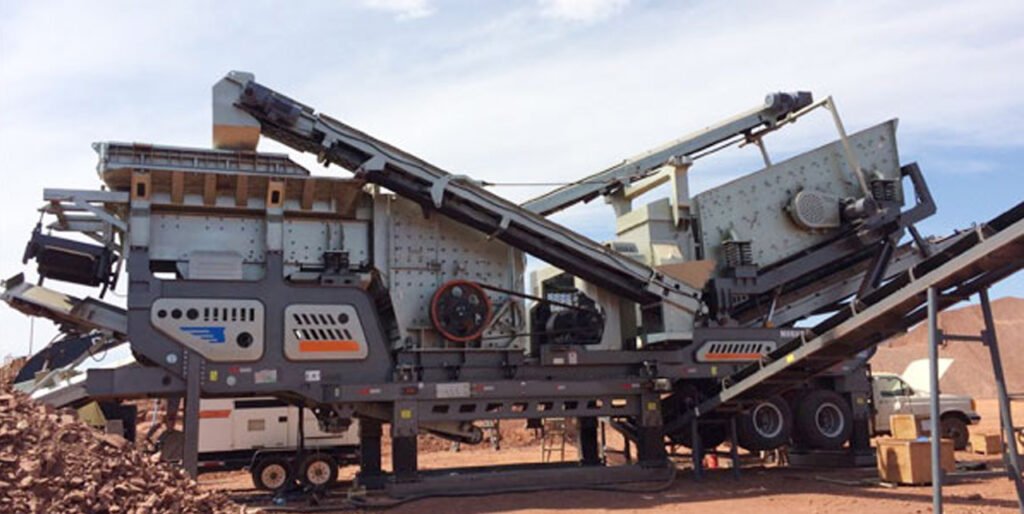
Run-of-mine feldspar varies significantly in lump size; blasting in open-pit mines can yield fragments exceeding one meter in diameter, whereas the subsequent grinding stage requires a stable feed size of 8–15 mm. Furthermore, feldspar—with a Mohs hardness of 6–6.5—is classified as a medium-hard material; it is often associated with harder minerals like quartz, leading to high equipment wear and energy consumption during crushing. The industry generally adheres to the principle of "more crushing, less grinding"—since the specific energy consumption of crushing is only one-fifth to one-third that of grinding, employing multi-stage crushing to reduce the feed size for the grinding mill is a key strategy for feldspar processing plants to cut costs and boost efficiency.
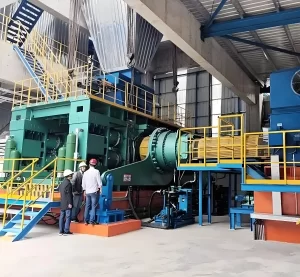
- Jaw Crusher: The jaw crusher is the standard equipment for the primary (coarse) crushing stage in feldspar processing. Utilizing the principle of extrusion crushing, its high-manganese steel liners—fitted to both the movable and fixed jaws—withstand the abrasive wear caused by the high hardness of feldspar and quartz. Its deep crushing chamber accommodates large run-of-mine ore, and single-unit capacities range from tens to over a thousand tons per hour, making it the universal choice for the initial crushing stage at all feldspar mines.
- Cone Crusher: The cone crusher is the preferred mainstream equipment for the secondary and tertiary (fine) crushing stages of feldspar. Operating on the principle of inter-particle (lamination) crushing suitable for medium-hard materials, it offers a longer service life for wear parts and lower operating and maintenance costs compared to impact crushers when processing hard feldspar ore. It produces uniformly shaped particles with low flake and needle content and minimal over-crushing, thereby preventing the loss of fine feldspar particles and ensuring a stable feed size for subsequent grinding stages. Hydraulic cone crushers, in particular, feature "tramp iron" protection and automatic chamber-clearing functions; they effectively handle waste rock and foreign objects mixed with the ore, reduce downtime caused by malfunctions, and serve as standard equipment for large-scale feldspar processing plants.
- Mobile Crushing Station: Designed for scenarios such as scattered feldspar deposits, small-to-medium open-pit mines, and sites with complex terrain unsuitable for fixed crushing plants, mobile jaw and cone crushing stations can move directly to the mining face. They perform crushing operations on-site, eliminating short-distance ore transport costs and the need for extensive infrastructure investment, while allowing for flexible relocation as the mining face advances.
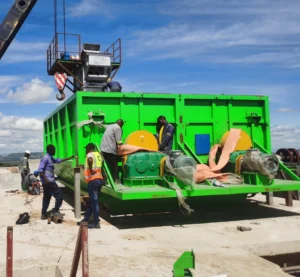
- Auxiliary Screening and Conveying Equipment: Vibrating feeders are positioned upstream of the crushers to ensure uniform, continuous feeding; their grizzly bar structure pre-separates fines and soil, reducing unnecessary wear on the crushing chamber and enhancing efficiency. Circular vibrating screens work with the crushers to form a closed-circuit system, returning oversized material for re-crushing to ensure the output consistently meets size specifications; multi-deck screens can simultaneously separate products into various size fractions to suit diverse downstream requirements. Belt conveyors link the various stages of the process, enabling continuous material transfer and serving as the foundational infrastructure for continuous production in feldspar processing plants.
Grinding and classification equipment
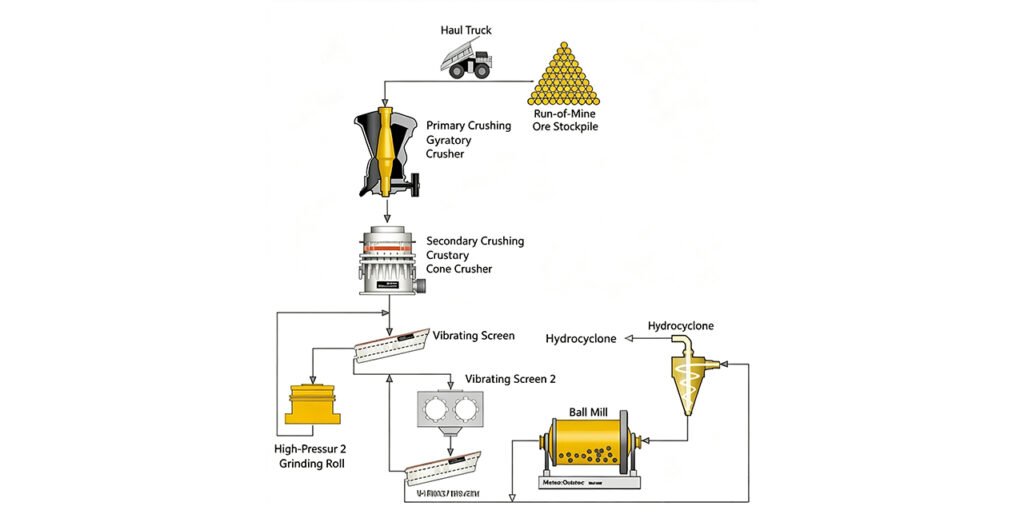
The primary objective of the grinding process is to achieve sufficient liberation of feldspar from gangue minerals, thereby providing suitable feed material for subsequent separation stages. Feldspar is brittle; over-grinding tends to generate excessive fines, which not only increases reagent consumption but also impairs separation precision. Conversely, insufficient grinding leads to inadequate mineral liberation, resulting in reduced concentrate grade and recovery rates. Consequently, the grinding process imposes strict requirements regarding equipment stability and the ability to control grinding fineness.
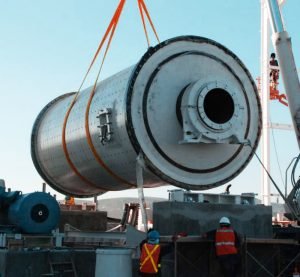
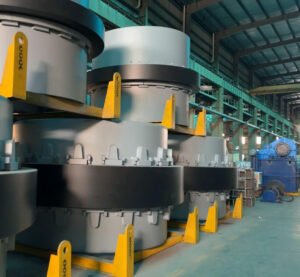
- Overflow Ball Mill: The overflow ball mill is the standard equipment for wet grinding of feldspar, utilized by over 80% of feldspar processing plants worldwide. Featuring a horizontal cylindrical structure and adjustable steel ball charges, it allows for precise control of grinding fineness by regulating rotational speed and ball load. It produces uniform particle sizes with controllable over-grinding, perfectly meeting the feed requirements for subsequent feldspar flotation and magnetic separation processes. To address the specific wear characteristics of feldspar ore, the mill can be fitted with high-manganese steel or rubber liners, adapting to various grinding conditions and extending equipment service life.
- Energy-saving Ball Mill: Designed to tackle high energy consumption in feldspar processing, this mill incorporates hydrostatic/hydrodynamic bearings, an optimized gear transmission system, and upgraded liner materials. These features reduce main motor power consumption by 15%–20%. For medium-sized feldspar mines processing hundreds of thousands of tons annually, a single unit yields significant electricity savings, making it a prime choice for technical upgrades and modernization of existing mines.
- Double-inlet/Double-outlet Ball Mill and Autogenous Mill: For large-scale feldspar mines with capacities exceeding one million tons, the double-inlet/double-outlet ball mill—featuring simultaneous feeding and discharging at both ends—offers substantially higher throughput and can be paired with classification equipment to form a closed-circuit grinding loop. Ultra-large mines may opt for autogenous (AG) or semi-autogenous (SAG) mills, which utilize the ore itself as the grinding medium; this eliminates intermediate and fine crushing stages, simplifies the process flow, and reduces operation and maintenance costs in the crushing section.
- Auxiliary Classification Equipment: Spiral classifiers and hydrocyclones are standard components of the grinding circuit. They classify particles by size, returning coarse particles to the ball mill for regrinding while allowing properly sized fine particles to proceed to the separation stage. The integrated configuration of classification equipment and ball mills is crucial for ensuring consistent grinding fineness and enhancing separation efficiency.
Mineral Processing and Purification Equipment
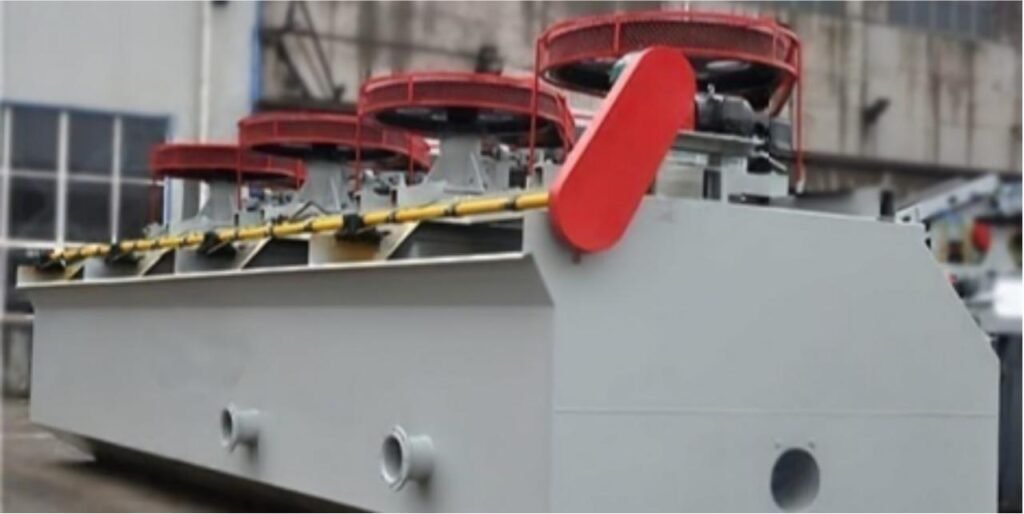
Raw natural feldspar ore typically contains excessive levels of impurities such as iron, titanium, mica, and quartz. Iron impurities, in particular, are a critical limiting factor for feldspar products; they cause black spots and reduce whiteness in fired ceramics, while impairing light transmission in glass production. While feldspar intended for general construction use may only require crushing, screening, and classification, industrial-grade and high-end ceramic-grade feldspar must undergo purification. Mineral processing and purification are essential for upgrading feldspar products from low-value-added construction materials to high-value-added industrial raw materials.
- High-Intensity Magnetic Separation Equipment: Magnetic separation is the preferred process for iron removal from feldspar, with wet high-gradient high-intensity magnetic separators serving as essential core equipment for high-purity feldspar production. Iron impurities in feldspar often exist as weakly magnetic minerals—such as hematite, limonite, and biotite—and are finely disseminated, making them difficult to remove effectively with standard low-intensity magnetic separators. High-gradient high-intensity magnetic separators generate magnetic field strengths of 1.2–1.8 T; by utilizing flux-concentrating media to create a high-gradient magnetic field, they efficiently capture fine, weakly magnetic iron and titanium impurities, reducing the Fe₂O₃ content in feldspar concentrate to below 0.1% and meeting raw material standards for high-end ceramics and ultra-white glass. In arid regions with water scarcity, dry high-intensity magnetic separators may be used; this offers a simpler process flow that eliminates the need for auxiliary dewatering equipment.
- Flotation Machines: Flotation is the key process for separating feldspar from quartz and removing mica and sulfide impurities; mechanically agitated flotation machines serve as the core equipment in feldspar purification lines. For feldspar-quartz separation, the industry has widely adopted fluoride-free and acid-free flotation processes; by optimizing reagent regimes and flotation flowsheets, efficient feldspar enrichment is achieved while ensuring environmental compliance. The flotation circuit typically employs a multi-stage tank configuration—comprising scavenging, roughing, and cleaning stages—which can be flexibly adjusted based on run-of-mine ore grade to balance concentrate quality and recovery rates. For feldspar ores with high mica content, flotation can be prioritized to remove mica before proceeding to feldspar-quartz separation, thereby significantly enhancing the quality of the final concentrate.
- Dewatering and Solid-Liquid Separation Equipment: Feldspar concentrate exiting the flotation stage has a moisture content exceeding 60% and requires a two-stage dewatering process involving thickening and filtration. Center-drive thickeners utilize gravity settling to pre-concentrate the slurry to 50%–60% solids, thereby reducing the load on downstream filtration equipment. Ceramic vacuum filters or disc filters perform the final dewatering step, reducing the concentrate's moisture content to below 10% to meet feed requirements for subsequent transportation and drying operations. The dewatering equipment is equipped with a return water system, allowing mineral processing wastewater to be recycled after treatment and thereby reducing fresh water consumption.
Thermal processing equipment
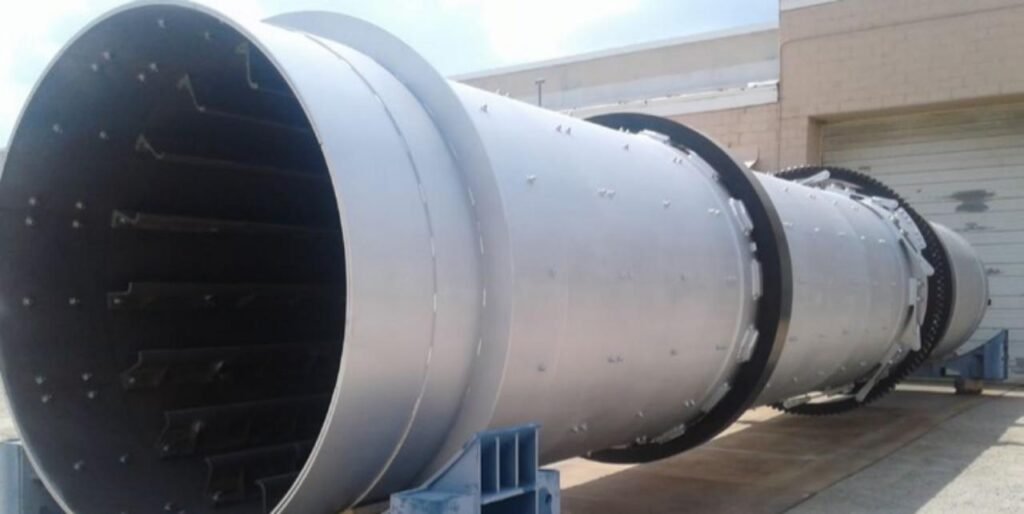
The ceramic and glass industries impose strict requirements on the moisture content of feldspar raw materials—typically mandating levels below 1%—necessitating the drying of wet-basis concentrates. Certain feldspar products requiring high whiteness must undergo calcination to remove organic matter and achieve bleaching or whitening; additionally, feldspar ores containing associated rare metals require roasting to facilitate element activation and separation.
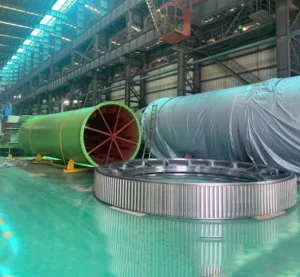
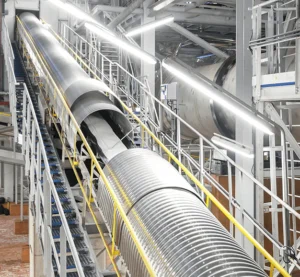
- Rotary Dryer: The rotary dryer is the standard, mainstream equipment for drying feldspar concentrate. Its inclined rotating drum is equipped with internal lifting flights that repeatedly lift and shower the feldspar particles, ensuring full contact with hot air; this results in high drying efficiency and large processing capacity suitable for continuous production. The moisture content of the discharged material can be stably controlled to below 1%, fully meeting the raw material moisture standards of the ceramics and glass industries. For fine-powdered feldspar, the system can be equipped with sealing structures and dust removal units to minimize material loss and dust emissions during drying, thereby complying with environmental regulations.
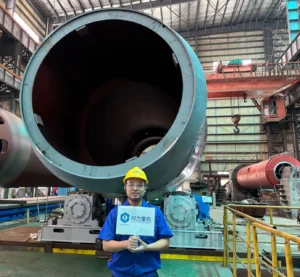
- Metallurgical Rotary Kiln: Metallurgical rotary kilns are used for the calcination and purification, activation and modification, and comprehensive utilization of associated resources of feldspar. For feldspar concentrate requiring calcination for whitening, the high-temperature environment within the kiln removes organic matter and color-causing impurities, thereby enhancing product whiteness. For ores containing associated rare metals—such as lithium feldspar and rubidium feldspar—roasting in a rotary kiln serves as a critical preliminary step for subsequent leaching and extraction. Chemical-grade rotary kilns offer precise control over the calcination atmosphere and temperature profile, meeting the modification requirements for specialty feldspar powders and supporting the development of high-value-added feldspar products.
Powder deep-processing equipment
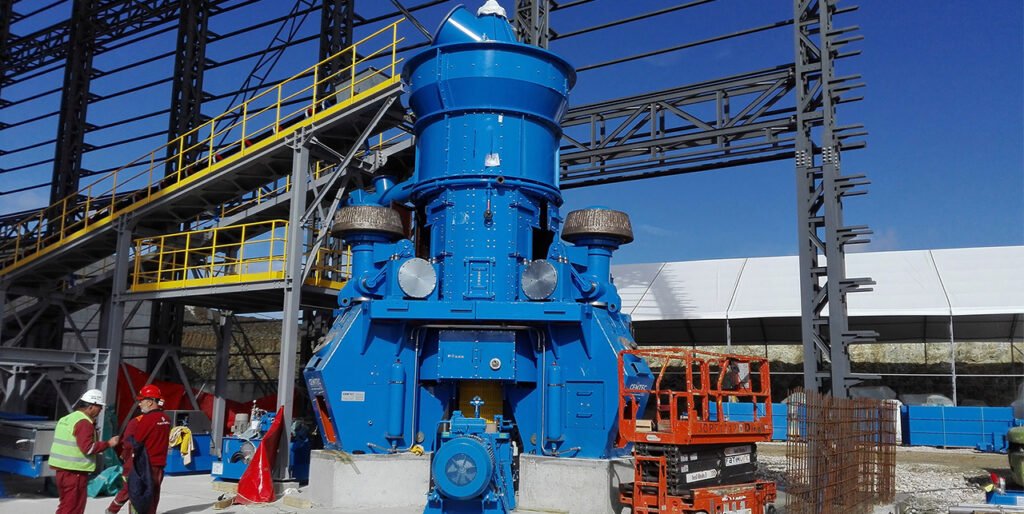
Feldspar powder fineness requirements vary significantly across downstream industries: standard architectural ceramics require 80–200 mesh; high-end tableware and specialty glass require 325 mesh; and functional fillers and specialty ceramics require ultrafine powder of 1,000 mesh or higher. Powder fineness and purity directly determine product pricing, making deep processing the key pathway to enhancing the value-added of feldspar products.
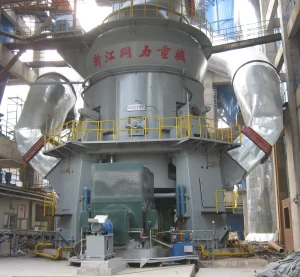
- Vertical Roller Mill (VRM): The vertical roller mill is the preferred equipment for upgrading large-scale feldspar powder processing. It integrates drying, grinding, classifying, and conveying into a single unit, resulting in a streamlined process flow and a compact footprint. To handle the medium-hard nature of feldspar, the grinding rollers and table utilize specialized wear-resistant materials. The built-in classifier allows for flexible control of product fineness—adjustable anywhere within the 80–400 mesh range—ensuring uniform particle size and optimal particle size distribution. Compared to traditional ball mill and classifier setups, the vertical roller mill system reduces specific energy consumption by 30%–40% and offers superior environmental performance, making it the mainstream choice for medium-to-large feldspar processing plants.
- Ultrafine Vertical Roller Mill: Designed to meet the demand for ultrafine feldspar powder (1000–2500 mesh), this mill features a multi-stage classification system that enables precise control of sub-micron fineness, yielding high-purity products with a narrow particle size distribution. The resulting ultrafine feldspar powder is suitable for applications such as high-end plastic and coating fillers and specialty ceramic raw materials, offering significantly higher added value compared to standard feldspar powder.
| Process Stage | Core Equipment | Core Pain Points Solved | Product Positioning |
| Crushing & Screening | Jaw crusher, cone crusher, mobile crushing station, vibrating screen | Reduce particle size of large raw ore, control feed size for grinding | Primary processing, construction sand/gravel / coarse-grained feldspar |
| Grinding & Classification | Overflow ball mill, energy-saving ball mill, classifier | Liberate mineral particles, control grinding fineness | Preparation of feed for beneficiation |
| Beneficiation & Purification | High-gradient magnetic separator, flotation machine, thickener, vacuum filter | Remove iron, titanium, mica impurities; separate feldspar and quartz | Industrial-grade concentrate, raw material for ceramics / glass |
| Thermal Treatment | Rotary dryer, metallurgical rotary kiln | Control moisture content, calcination for whitening and activation | High-end industrial raw material, modified feldspar powder |
| Powder Deep Processing | Vertical mill, ultra-fine vertical mill | Produce powders of different fineness, increase added value | Powder products, fillers / special ceramic raw materials |
| Tailings Treatment | Filter press | Dry discharge of tailings, wastewater recycling | Green mine supporting facilities |
Industrial Application Areas of Feldspar
Ceramic industry
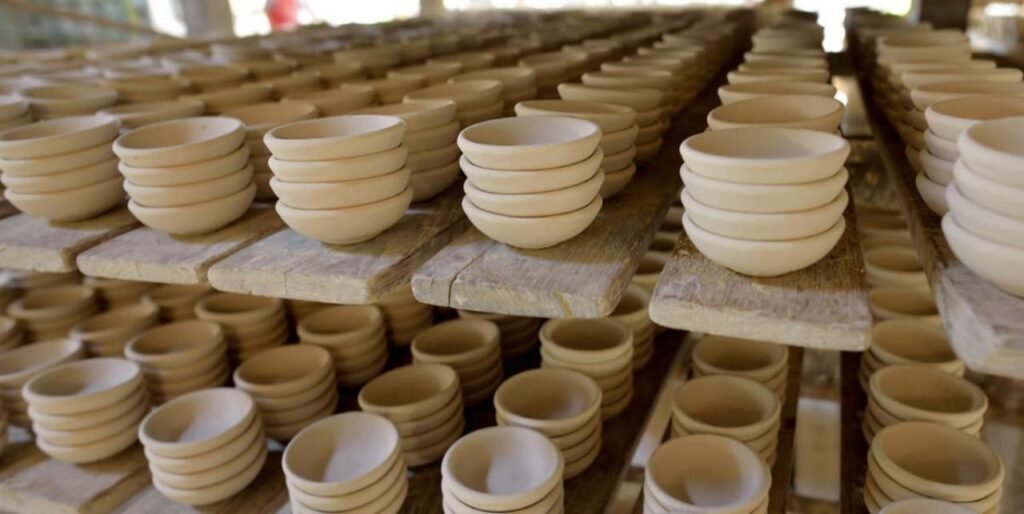
Ceramics represent the largest application sector for feldspar, which is integral to both body and glaze formulations. Acting as a flux, feldspar melts at high temperatures to form a glassy phase that fills the voids between particles, thereby promoting densification and reducing both firing temperatures and energy consumption; simultaneously, it enhances the mechanical strength, chemical stability, and thermal stability of the ceramic product.
In the production of architectural, sanitary, and tableware ceramics, potassium feldspar and sodium feldspar are blended in specific proportions to fine-tune firing temperatures and product properties. With the widespread adoption of digital inkjet printing technology, sodium feldspar—valued for its low melting point and excellent vitrification characteristics—is extensively used in base glaze formulations to optimize ink color rendering and improve pattern clarity. For high-end products such as glass-ceramics and transparent glazes, feldspar serves as a crucial raw material for controlling crystallization processes and enhancing glaze surface performance.
Glass industry
Feldspar is one of the three primary raw materials in glass production; it supplies alumina to the glass while acting as a fluxing agent that lowers the melting temperature of silica sand, reduces soda ash consumption, and decreases energy usage. The alumina content in feldspar significantly enhances the glass's chemical stability, mechanical strength, and thermal shock resistance, while also reducing the tendency for crystallization.
Feldspar is widely used in the production of flat glass, container glass, and fiberglass. In recent years, the application of lithium-bearing feldspar as a novel fluxing agent has expanded; the lithium oxide it contains can further lower the melting temperature and reduce fuel consumption, while also allowing for a higher proportion of cullet (recycled glass) usage, thereby supporting low-carbon production in the glass industry.
Fillers and Functional Materials
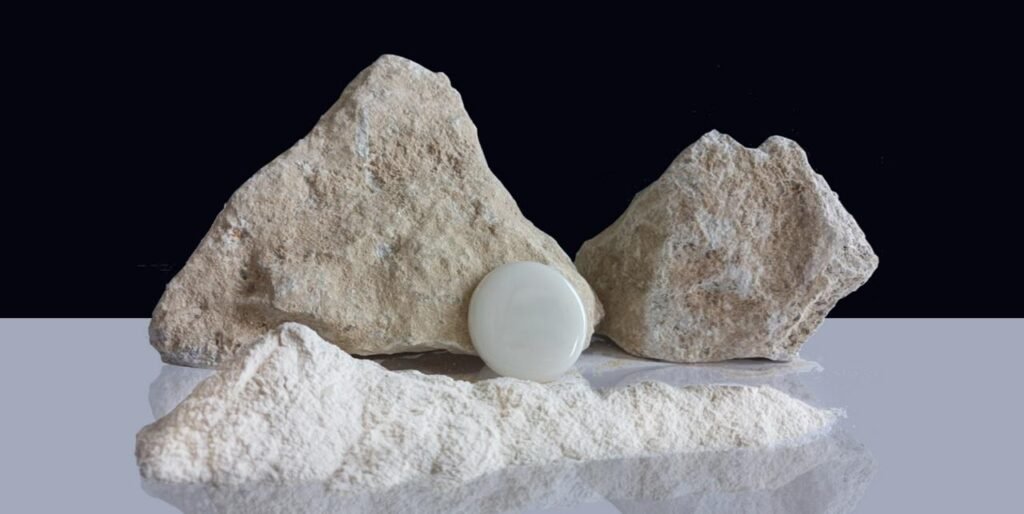
Finely ground feldspar powder serves as a functional filler in products such as coatings, plastics, rubber, and adhesives, enhancing material hardness, wear resistance, dimensional stability, and weatherability. Compared to traditional fillers like calcium carbonate and talc, feldspar offers superior chemical stability and moderate hardness, striking a balance between material performance and processing costs.
In the field of silicone elastomers, feldspar powder can replace crystalline silica as a reinforcing filler; it maintains mechanical properties while reducing health risks, making it widely used in applications such as automotive seals and electronic potting compounds.
Construction and Decoration Materials
Feldspathic rocks with uniform texture and attractive coloration—such as syenite and granite—serve as important architectural facing stones, utilized in applications ranging from dry-hung exterior cladding and interior flooring to countertops. Certain feldspar aggregates featuring distinctive textures and colors can also serve as materials for decorative carving, used in the creation of handicrafts and architectural decorative elements.
Emerging Applications in Environment and Materials
Modified natural feldspar minerals can serve as adsorbents and photocatalyst supports for treating textile dyeing and heavy-metal-laden wastewater. Potassium feldspar possesses inherent ion-exchange properties; when loaded with active components, it can catalyze the degradation of organic pollutants under visible light. It is a low-cost, environmentally friendly material currently undergoing laboratory research and small-scale pilot testing.
Varieties and Quality Evaluation of Feldspar-Group Gemstones
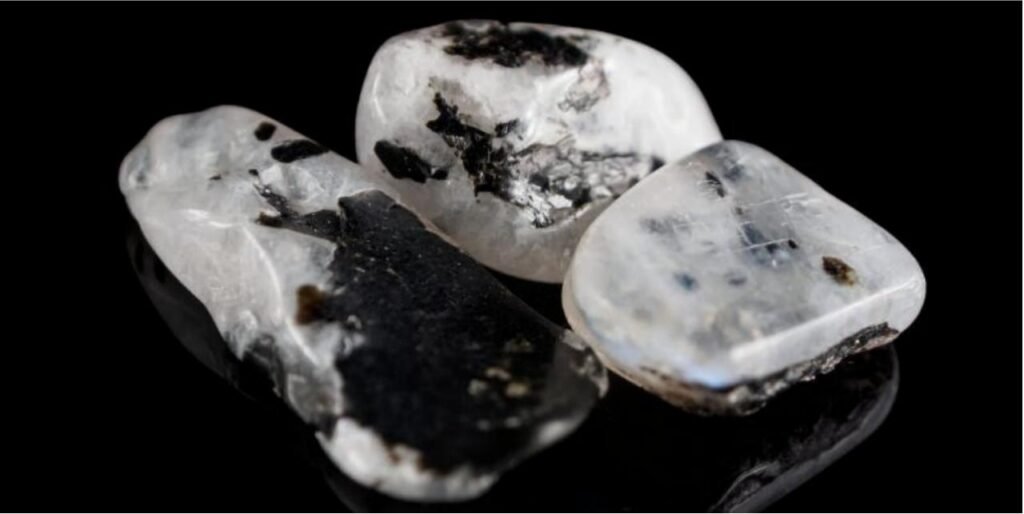
The feldspar group is a significant category of colored gemstones; several varieties possess unique aesthetic appeal due to distinctive optical effects. Gem-quality feldspar is primarily found in pegmatites and hydrothermal veins—occurring in relatively low proportions—and high-quality varieties hold value for collectors.
- Moonstone: Moonstone is a gemstone variety formed through the exsolution of orthoclase and albite; it is the birthstone for June. Its characteristic "moonlight" effect (adularescence) arises from the scattering and interference of light by thin exsolution lamellae. High-quality moonstone features a translucent, milky-white base with a bright blue sheen that shifts fluidly as the gem is turned, offering a soft, ethereal appearance. Body colors range from colorless and white to yellow, pink, gray, and brown; the most valuable varieties are highly transparent, nearly colorless, and exhibit a strong blue sheen. Certain oriented inclusions can produce a cat's-eye or asterism effect, marking these as rare varieties.
- Amazonite: Amazonite is a blue-green variety of microcline feldspar; its coloration is attributed to the presence of rubidium and lead within the crystal lattice. Colors range from pale blue-green to deep turquoise, often accompanied by a distinctive white, grid-like pattern of twinning lamellae. Amazonite is abundant and affordably priced, making it widely used in jewelry settings and carvings. High-quality specimens display uniform, rich color and fine texture, free from significant cracks or impurities.
- Sunstone: Sunstone is primarily identified by its aventurescence—a glittering effect caused by the reflection of light off internally oriented, thin platelets of hematite, goethite, or copper minerals. This creates a uniform golden to orange-red sparkle reminiscent of scattered sunlight. Most sunstones are varieties of oligoclase or andesine, with body colors typically ranging from golden yellow and orange-red to brownish-tan. Sunstones from Oregon, USA, contain copper inclusions that produce vivid, rich colors—sometimes displaying multicolored hues like red and green—and are highly prized in the market.
- Labradorite: Labradorite is characterized by a striking iridescence known as labradorescence (or "spectrolite" in its most colorful form). Internal polysynthetic twinning and exsolution lamellae cause light interference, producing a play-of-color that shifts through blue, green, yellow, orange, red, and purple as the gem is rotated. Standard labradorite typically has a gray to dark gray body color and ranges from translucent to opaque; high-quality specimens exhibit vivid, saturated iridescence that covers the entire surface without significant dark patches. The mineral marketed as "rainbow moonstone" is essentially a transparent to translucent white labradorite; it is named for its resemblance to moonstone and is characterized by a play-of-color dominated by blue-violet hues, though it differs from true moonstone in mineralogical classification.
- Rare varieties: Anorthoclase is a high-temperature, sodium-rich feldspar variety with limited localities—such as Mount Erebus in Antarctica—and gem-quality crystals are extremely rare, catering primarily to the mineral collecting market. Transparent crystals of albite, bytownite, and anorthite can also be fashioned into faceted gemstones; these are mostly held by mineral collectors and do not see widespread use in commercial jewelry.
Gemstone Quality Evaluation and Care
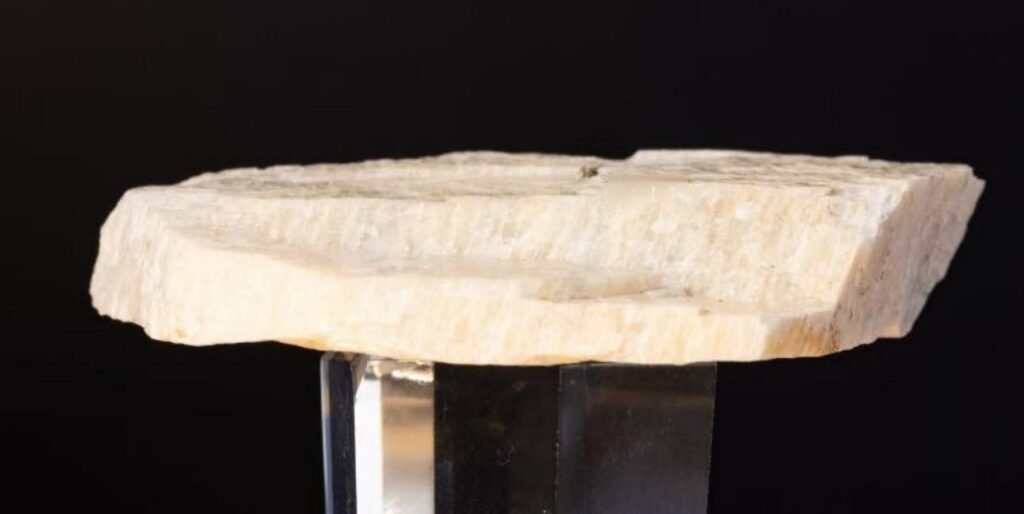
- Quality Evaluation Criteria: For transparent feldspar gemstones lacking special optical effects, evaluation criteria align with those for standard colored gemstones, focusing primarily on color saturation, clarity, cut, and weight; varieties with vivid color, high clarity, and substantial weight command higher value. For feldspar gemstones exhibiting special optical effects, evaluation centers on four dimensions: first, the quality of the host material (lighter body color and higher transparency equate to higher value); second, the quality of the optical effect (more vivid color and higher brightness equate to higher value); third, the coverage of the effect (ideally covering the entire top surface evenly with no "blind spots"); and fourth, cutting orientation (for cabochons, the base must be parallel to the exsolution or twinning layers to ensure the effect is best viewed from the front).
- Care and Maintenance: Feldspar has a Mohs hardness of 6–6.5—moderate among gemstones—and possesses two sets of well-developed cleavage planes; its toughness is relatively low, making it prone to cracking along cleavage planes upon impact. Avoid knocks, bumps, or crushing forces during wear and storage; store individually in a soft-lined jewelry box to prevent surface abrasion caused by friction with harder gemstones.Feldspar is not resistant to strong acids or alkalis; avoid contact with chemicals such as cosmetics, perfumes, and cleaning agents to prevent surface corrosion and loss of luster. Clean by gently wiping with a soft cloth and room-temperature water; ultrasonic and steam cleaning are not recommended, as vibration and high heat can expand internal fractures or even cause the gemstone to shatter.
- Common Enhancement and Treatment Methods: Feldspar enhancements and treatments on the market generally fall into four categories: first, wax impregnation, which fills surface cleavage fractures to improve luster and clarity—a widely accepted industry practice; second, coating, where a colored film is applied to the surface to simulate iridescence or enhance color; third, diffusion treatment, using copper ion diffusion to turn grey labradorite red or orange-red, with the color confined to a thin surface layer; and fourth, dyeing, where light-colored feldspar is dyed a vivid blue-green to imitate high-quality amazonite, resulting in color concentration within fractures. The latter three types of treatments must be clearly disclosed at the point of sale, and consumers can identify them through methods such as magnified inspection or spectroscopic analysis.
Conclusion
As the most abundant rock-forming minerals in the Earth's crust, feldspars hold significant value for both geological research and industrial application, while also yielding several gemstone varieties prized for their unique optical effects. From a mineralogical perspective, the isomorphous series and exsolution structures characteristic of feldspars serve not only as key indicators for reconstructing rock formation environments and cooling histories but also as the underlying causes of their distinctive optical phenomena.
From an industrial standpoint, the development and utilization of feldspar rely heavily on integrated heavy-duty processing equipment. Technological advancements across the entire process chain—including crushing and screening, grinding and classification, beneficiation and purification, and deep powder processing—continue to drive the efficient use of low-grade feldspar resources and enhance product value-added. Driven by the high-end upgrading of traditional sectors like ceramics and glass, alongside expansion into emerging fields such as functional fillers and environmental materials, market demand for high-end, high-purity feldspar products is set to grow; consequently, the associated heavy-duty equipment will continue to evolve toward larger scales, greater intelligence, and greener operations.
In the realm of gemstones, the feldspar group occupies a stable position in the colored gemstone market, thanks to unique optical effects and accessible pricing. Market awareness of mainstream varieties like moonstone and labradorite is steadily rising, while the collectible value of rarer varieties is becoming increasingly apparent. Future optimizations in source exploration and cutting/polishing techniques promise to further enrich the diversity and quality of feldspar gemstones. Overall, feldspar is a vital mineral resource spanning basic geological research, traditional industrial production, and cultural consumption; its development is deeply intertwined with equipment technology, offering significant potential for industrial upgrading and expanded applications.